Lee County Swimming Pool Planning: A Geotechnical Framework for Avoiding Permit Rejection
My experience engineering and planning pools across Lee County, from the dense canal lots of Cape Coral to the larger estates in Fort Myers, has revealed a critical flaw in the standard process. Most homeowners and even some builders focus on aesthetics first—the shape, the tile, the water features. This approach frequently leads to massive budget overruns, permit delays, and even structural failure. The single most expensive mistake I see is underestimating our unique ground conditions. My entire planning philosophy is built on a site-first diagnostic. I don't begin with a design; I begin with a deep understanding of the specific parcel of land. This reverses the typical workflow and eliminates 90% of the potential problems before a single drawing is made. I developed this methodology after witnessing a newly built pool in a Bonita Springs community suffer a catastrophic shell crack, all because the initial plan ignored the high water table and unstable sandy soil.My Site-First Diagnostic for Lee County Pools
A generic pool plan downloaded from the internet or provided by a volume builder is fundamentally incompatible with the geotechnical realities of Southwest Florida. Our environment, with its high water table, sandy soil, and hurricane-prone climate, demands a bespoke engineering solution. My diagnostic process starts with two non-negotiable data points: a soil boring test and a hydrological survey. Without this, any plan is pure speculation. I insist on this because I’ve been called in to fix projects where excavation hit the water table unexpectedly, turning the site into a muddy pit and instantly adding 25% to the project cost for dewatering and foundation stabilization. A standard plan doesn't account for the immense hydrostatic pressure that will be exerted on an empty pool shell from the outside, a constant threat in areas near the Caloosahatchee River or the Cape Coral canals.Decoding the Lee County Geotechnical Report
The report I commission goes far beyond a simple soil check. I am looking for three specific metrics that dictate the entire engineering strategy for the pool. Understanding these is the difference between a pool that lasts 5 years and one that lasts 30.- Soil Bearing Capacity: This tells me how much weight the soil can safely support. In much of Lee County, the bearing capacity is low. This metric directly informs the thickness of the concrete shell and the specifications for the rebar grid. A low capacity might necessitate a monolithic pour, where the pool floor and walls are poured as a single, continuous unit for superior strength, rather than in separate sections.
- Water Table Elevation: I need to know the seasonal high water table mark. This dictates the required placement and type of the hydrostatic relief valve at the bottom of the pool. A malfunctioning or improperly specified valve is the primary cause of pools "popping" out of the ground during a drain. I saw this happen on a property near Lakes Park after heavy summer rains.
- Percolation Rate: This measures how quickly water drains through the soil. A slow "perc" rate, common in areas with more clay content, means the deck and surrounding area need a more aggressive drainage plan to prevent standing water, which can compromise the pool's foundation and the home's slab over time.
The Phased Implementation Protocol
Once the site-first diagnostic is complete, I move to a phased implementation. Each step is a checkpoint to ensure engineering integrity and compliance with Lee County's increasingly stringent building codes, especially post-Hurricane Ian.Phase 1: Structural Engineering & Material Specification
Based on the geotechnical data, I specify the core components. This isn't just "concrete and steel"; it's a precise prescription.
- Concrete PSI (Pounds per Square Inch): I will specify a minimum of 4000 PSI shotcrete or concrete, often higher for waterfront properties on Sanibel or Captiva where saltwater exposure is a factor.
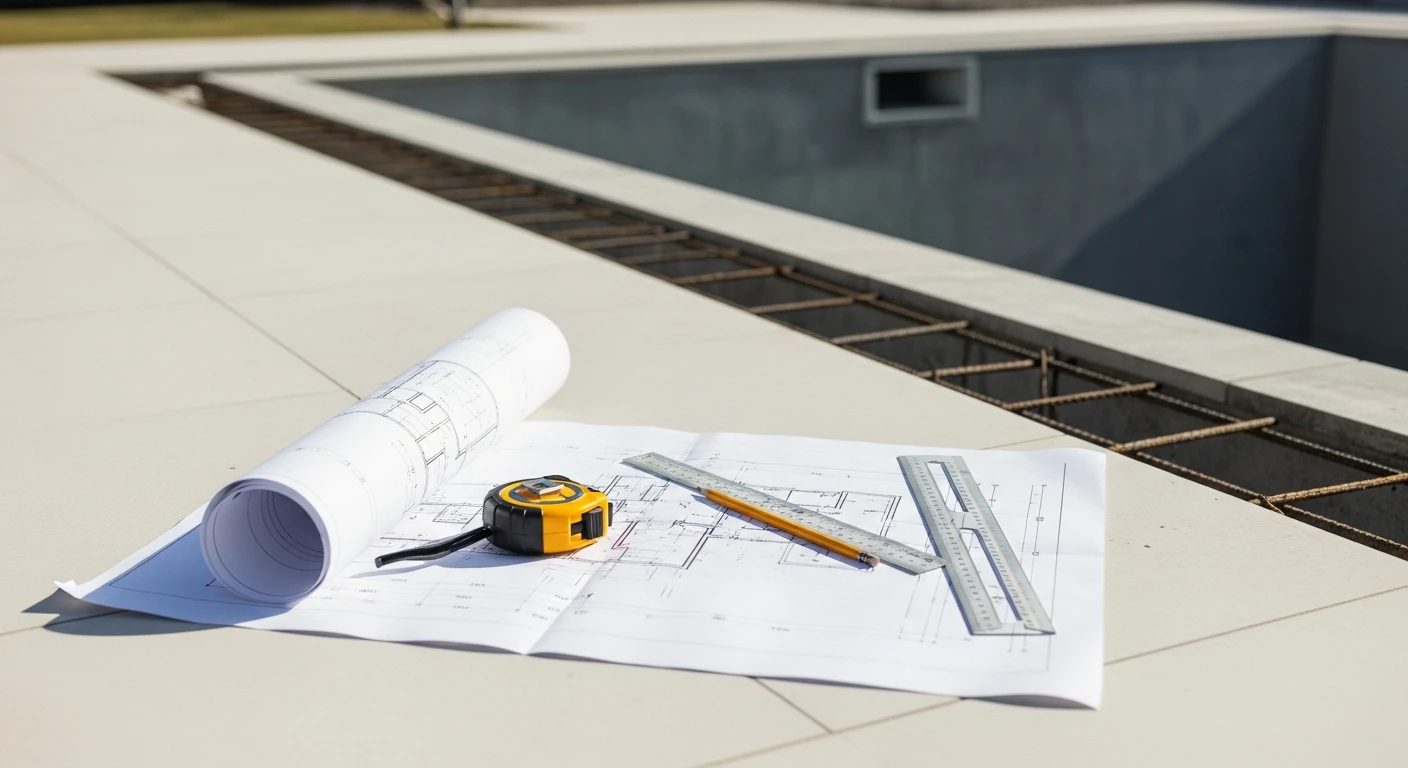
- Rebar Grid: The plan will detail the rebar size (e.g., #4 rebar) and the exact spacing (e.g., 8 inches on center). I often specify an epoxy-coated rebar in coastal zones to prevent corrosion that can "bleed" through the finish.
- Plumbing & Hydraulics: I calculate the required turnover rate to size the pump and filter correctly. A critical action here is specifying a variable-speed pump, which is not only required by code in many cases but can reduce energy consumption by up to 70% compared to old single-speed models.
Phase 2: Precision Adjustments for Durability and Compliance
This is where my experience prevents the common failures I see in the field. These are the small details that have a massive impact on the pool's lifespan and safety.
- Screen Enclosure Footers: A standard patio slab is not an adequate foundation for a hurricane-rated screen enclosure. I mandate that the cage footers be integrated directly with the pool's bond beam, creating a unified, reinforced structure designed to withstand wind loads exceeding local code requirements.
- Bond Beam Reinforcement: The bond beam is the upper "rim" of the pool. I have a proprietary detail for adding extra steel reinforcement at the corners and stress points, which is where cracks typically form first.
- Waterproofing & Finish: Before the final surface (like PebbleTec or tile) is applied, I require a specific multi-layer cementitious waterproofing application. Skipping this step is a common shortcut that leads to delamination and costly resurfacing down the road.
Written by

Tags
swimming pool designs and plans
build swimming pools
backyard landscape design with pool
swimming pool deck plans
Swimming Pool Planning in Lee FL FAQ
What is the process of planning a swimming pool?
Our swimming pool planning process begins with a consultation to understand your needs and preferences. We'll then conduct a site analysis to determine the feasibility of building a pool on your property. Next, we'll create a custom design and layout, taking into account factors such as pool size, shape, and depth. Finally, we'll provide a detailed estimate and timeline for the construction process.
What are the benefits of hiring a professional pool planner?
Hiring a professional pool planner ensures that your pool is designed and built to your exact specifications, taking into account local building codes and regulations. We'll also help you make informed decisions about pool size, shape, and features, ensuring that your pool meets your needs and budget.
What factors should I consider when planning a swimming pool?
When planning a swimming pool, consider factors such as pool size, shape, and depth, as well as the type of pool you want (e.g., in-ground, above-ground, saltwater). Also, think about pool features such as lighting, filtration systems, and accessories like heaters and pumps.
How long does the pool planning process take?
The pool planning process typically takes several weeks to a few months, depending on the complexity of the project and the availability of our team. We'll work closely with you to ensure that the process is efficient and effective.
What is the cost of pool planning services?
The cost of pool planning services varies depending on the scope of the project and the level of customization required. We offer competitive pricing and will provide a detailed estimate and timeline for your project.
Do you offer pool design and construction services?
Yes, we offer comprehensive pool design and construction services, from initial planning to final installation. Our team of experienced professionals will work with you to bring your pool vision to life.
What kind of pools do you specialize in?
We specialize in designing and building a wide range of pools, including in-ground, above-ground, saltwater, and infinity pools. We're equipped to handle projects of all sizes and complexity.
Can I customize my pool design?
Absolutely! We encourage customization and will work with you to create a unique pool design that reflects your personal style and preferences.
What kind of materials do you use for pool construction?
We use high-quality materials and equipment for pool construction, including durable pool liners, pumps, filters, and heaters. We'll work with you to choose the best materials for your project.
Do you provide maintenance and repair services for existing pools?
Yes, we offer maintenance and repair services for existing pools, including cleaning, testing, and balancing of pool water, as well as repairs to pool equipment and structures.