Swimming Pool Planning in Osceola County: A Geotechnical Framework to Prevent Shell Cracking and Deck Heave
My primary focus in swimming pool planning isn't the aesthetics; it's the unseen geotechnical challenges that can lead to catastrophic failure within a decade. In Osceola County, I’ve personally witnessed pools in beautiful Kissimmee vacation homes and St. Cloud family residences suffer from severe shell cracks and deck heave—all because the initial plan completely ignored the region's high water table and inconsistent soil composition. These are not minor cosmetic issues; they are structural failures costing upwards of $30,000 to remediate. This is why my entire approach is built on a pre-emptive diagnostic framework. Before a single shovel hits the ground, I insist on a site-specific analysis that directly informs the engineering of the pool shell and the surrounding hardscape. This isn't an upsell; it's a non-negotiable first step to protect a significant investment, especially in an area where intense summer rains can turn stable ground into a liability overnight.My Diagnostic Protocol for Osceola's Challenging Soil Conditions
The biggest mistake I see builders make, particularly those from outside Central Florida, is treating every plot of land the same. The sandy loam found in parts of Celebration behaves entirely differently from the dense clay layers common near East Lake Tohopekaliga. A standard-spec pool shell that works in a dry climate will fail here. My proprietary methodology centers on identifying the dominant soil type and the seasonal water table height before any design is finalized. I developed this after a project in Poinciana where a builder proceeded with a standard excavation during a dry spell. Six months later, after a typically wet summer, the hydrostatic pressure from the now-saturated ground literally "floated" the shallow end of the pool by two inches, cracking the skimmer lines and main drain. The entire structure had to be demolished. This expensive lesson reinforced my belief: the ground dictates the engineering, not the other way around.Deconstructing the Geotechnical Survey: Key Data Points for Pool Stability
A proper survey for a pool goes beyond just marking property lines. It's an invasive, data-driven process. Here’s what I mandate for every project I consult on:- Soil Boring Analysis: We must understand the soil layers. I require at least two borings to a depth of 15 feet. This tells me if we're dealing with sand, clay, or organic muck. This data directly influences the need for over-excavation and engineered fill. Using native, unstable soil as backfill is a primary cause of deck failure.
- Standard Penetration Test (SPT): This test measures the density of the soil at various depths. A low blow count indicates loose soil that requires significant compaction or replacement. I will not approve a project with an SPT N-value below 10 at the pool's foundation depth without a geogrid reinforcement plan.
- Piezometer Installation: This is a simple observation well to measure the true height of the water table. We monitor it for several days, especially after a rain event, to find the peak hydrostatic level. This number is critical for engineering the hydrostatic relief valve and determining if a permanent dewatering system is necessary.
The Phased Implementation: From Excavation to Plumbing
With the geotechnical data in hand, the construction plan becomes a precise engineering exercise, not guesswork. I oversee the process with a checklist of critical quality control points that prevent the most common, and costly, installation errors.- Excavation & Sub-base Compaction: After digging to the specified depth, the sub-base is laid. For most of Osceola's soil, I specify a 6-inch layer of #57 crushed stone, compacted in lifts to 95% proctor density. This creates a stable, free-draining foundation that mitigates pressure from groundwater.
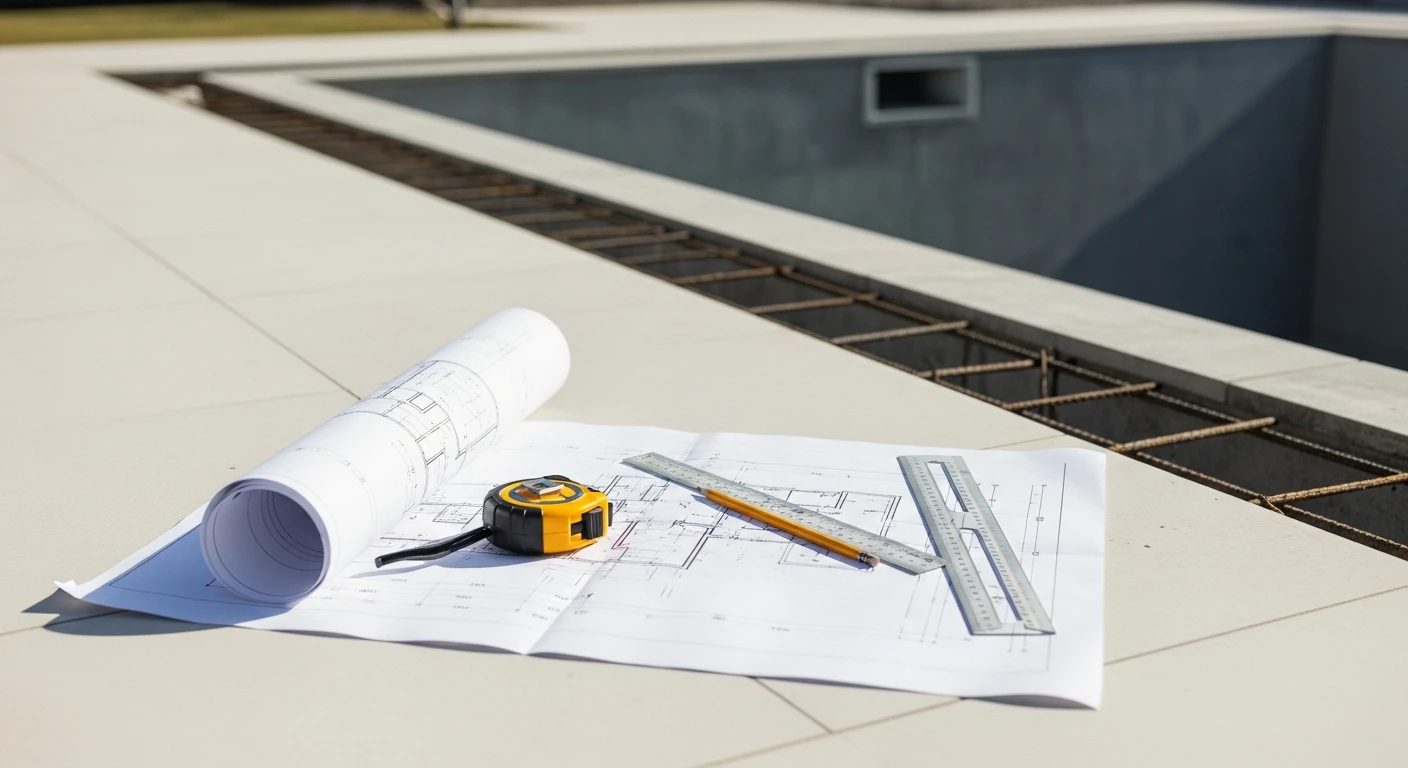
- Steel Rebar Grid Integrity: I insist on a #3 rebar grid tied at 8-inch on-center, which is tighter than the industry standard of 10 or 12 inches. All steel must be placed on "dobies" (concrete spacers) to ensure it's fully encapsulated by at least 3 inches of gunite, preventing future rust and spalling.
- Plumbing & Pressure Testing: Every single plumbing line—skimmers, returns, main drain—must be pressure tested to 35 PSI and hold for 24 hours before any gunite is shot. I once caught a pinhole leak in a return line behind the steel grid on a project. Finding it then saved an estimated $15,000 in demolition and repair had it been discovered after the pool was finished.
- Gunite Application & Curing: The gunite application must be continuous to avoid cold joints. After application, the curing process is paramount. The shell must be hosed down 2-3 times daily for a minimum of 7 days to ensure it reaches its designed compressive strength of 4,500 PSI. Skipping this step is the leading cause of "shrinkage cracks."
Post-Gunite QA: My Non-Negotiable Quality Checks
The job isn't done after the shell is in place. The finishing details determine the pool's longevity and usability, especially given the intense Osceola County sun and humidity that can degrade inferior materials. I use a laser level to verify the pool beam is perfectly level to within 1/8 of an inch across its entire perimeter before any tile is set. I also personally inspect the waterproofing membrane applied to the beam, ensuring 100% coverage to prevent water from seeping behind the tile and causing it to fail. The choice of interior finish, whether it's a durable pebble aggregate or a classic plaster, must come with a clear UV-resistance rating suitable for the Florida climate. Before you approve any final design, have you asked your builder to quantify the hydrostatic pressure tolerance of your pool shell and how their dewatering strategy will guarantee it?Written by

Tags
swimming pool designs and plans
build swimming pools
backyard landscape design with pool
swimming pool deck plans
Swimming Pool Planning in Osceola FL FAQ
What is the process of planning a swimming pool?
Our swimming pool planning process begins with a consultation to understand your needs and preferences. We'll then conduct a site analysis to determine the feasibility of building a pool on your property. Next, we'll create a custom design and layout, taking into account factors such as pool size, shape, and depth. Finally, we'll provide a detailed estimate and timeline for the construction process.
What are the benefits of hiring a professional pool planner?
Hiring a professional pool planner ensures that your pool is designed and built to your exact specifications, taking into account local building codes and regulations. We'll also help you make informed decisions about pool size, shape, and features, ensuring that your pool meets your needs and budget.
What factors should I consider when planning a swimming pool?
When planning a swimming pool, consider factors such as pool size, shape, and depth, as well as the type of pool you want (e.g., in-ground, above-ground, saltwater). Also, think about pool features such as lighting, filtration systems, and accessories like heaters and pumps.
How long does the pool planning process take?
The pool planning process typically takes several weeks to a few months, depending on the complexity of the project and the availability of our team. We'll work closely with you to ensure that the process is efficient and effective.
What is the cost of pool planning services?
The cost of pool planning services varies depending on the scope of the project and the level of customization required. We offer competitive pricing and will provide a detailed estimate and timeline for your project.
Do you offer pool design and construction services?
Yes, we offer comprehensive pool design and construction services, from initial planning to final installation. Our team of experienced professionals will work with you to bring your pool vision to life.
What kind of pools do you specialize in?
We specialize in designing and building a wide range of pools, including in-ground, above-ground, saltwater, and infinity pools. We're equipped to handle projects of all sizes and complexity.
Can I customize my pool design?
Absolutely! We encourage customization and will work with you to create a unique pool design that reflects your personal style and preferences.
What kind of materials do you use for pool construction?
We use high-quality materials and equipment for pool construction, including durable pool liners, pumps, filters, and heaters. We'll work with you to choose the best materials for your project.
Do you provide maintenance and repair services for existing pools?
Yes, we offer maintenance and repair services for existing pools, including cleaning, testing, and balancing of pool water, as well as repairs to pool equipment and structures.