Pool Chemical Balance in Osceola County: My Protocol for 30% Less Chemical Use and Zero Algae Blooms
The primary reason your pool in Osceola County is constantly cloudy or fighting off algae isn't just the intense Florida sun or the daily summer downpours; it's the reactive chemical cycle most owners are trapped in. I see this constantly, from single-family homes in St. Cloud to vacation rentals in Celebration. You shock the pool, it looks great for a day, and then the cycle repeats. My entire approach is built on breaking this expensive cycle. It's a proactive strategy focused on creating a chemically "buffered" environment that resists the dramatic swings caused by our local weather. This isn't about adding more chlorine; it's about making the chlorine you do use work up to 50% more effectively by stabilizing its foundation: the water's alkalinity and pH.Beyond Test Strips: My Predictive Buffering Method for Florida Pools
After years of servicing pools across Osceola County, I developed what I call the Predictive Buffering Method. It’s a direct response to the unique challenges here: high UV exposure that burns off unstabilized chlorine in hours and torrential rain that dilutes everything, crashing pH levels and inviting algae. The method's core principle is that Total Alkalinity (TA) is the most critical metric to manage, not chlorine. Most pool owners focus on the chlorine level and pH, but they are treating symptoms. Total Alkalinity is the anchor for your pH. If your TA is unstable, your pH will swing wildly, and chlorine efficacy plummets when pH is out of its ideal range (7.4-7.6). I once took over a pool in a Kissimmee community that was using three times the normal amount of chlorine, yet it was always green. The problem wasn't the sanitizer; their TA was below 40 ppm, making the water too volatile for the pH to hold steady for even a single afternoon.The Alkalinity-First Principle: Why Your pH Keeps Crashing
Think of Total Alkalinity as your pool water's ability to resist changes in pH. It's a buffer. The relentless Osceola sun and the acidic nature of our rain constantly push your pH down. Without a proper TA level (ideally 80-120 ppm), any rainstorm or even a high bather load will cause a pH crash. When pH drops below 7.2, chlorine becomes hyperactive and burns off too quickly. When it rises above 7.8, the chlorine becomes sluggish and ineffective, allowing algae to take hold. My methodology dictates that you *never* adjust pH until your TA is locked in. The second critical component, especially for unscreened pools common in the area, is Cyanuric Acid (CYA). This is your chlorine's sunscreen. Without a CYA level of 30-50 ppm, the sun will destroy most of your free chlorine in under two hours. However, too much CYA (over 100 ppm), often caused by overusing stabilized chlorine pucks, leads to a condition called chlorine lock, where the chlorine is present but unable to sanitize. Balancing this is a technical skill that standard test strips just don't explain well.Executing the Weekly Stabilization Protocol
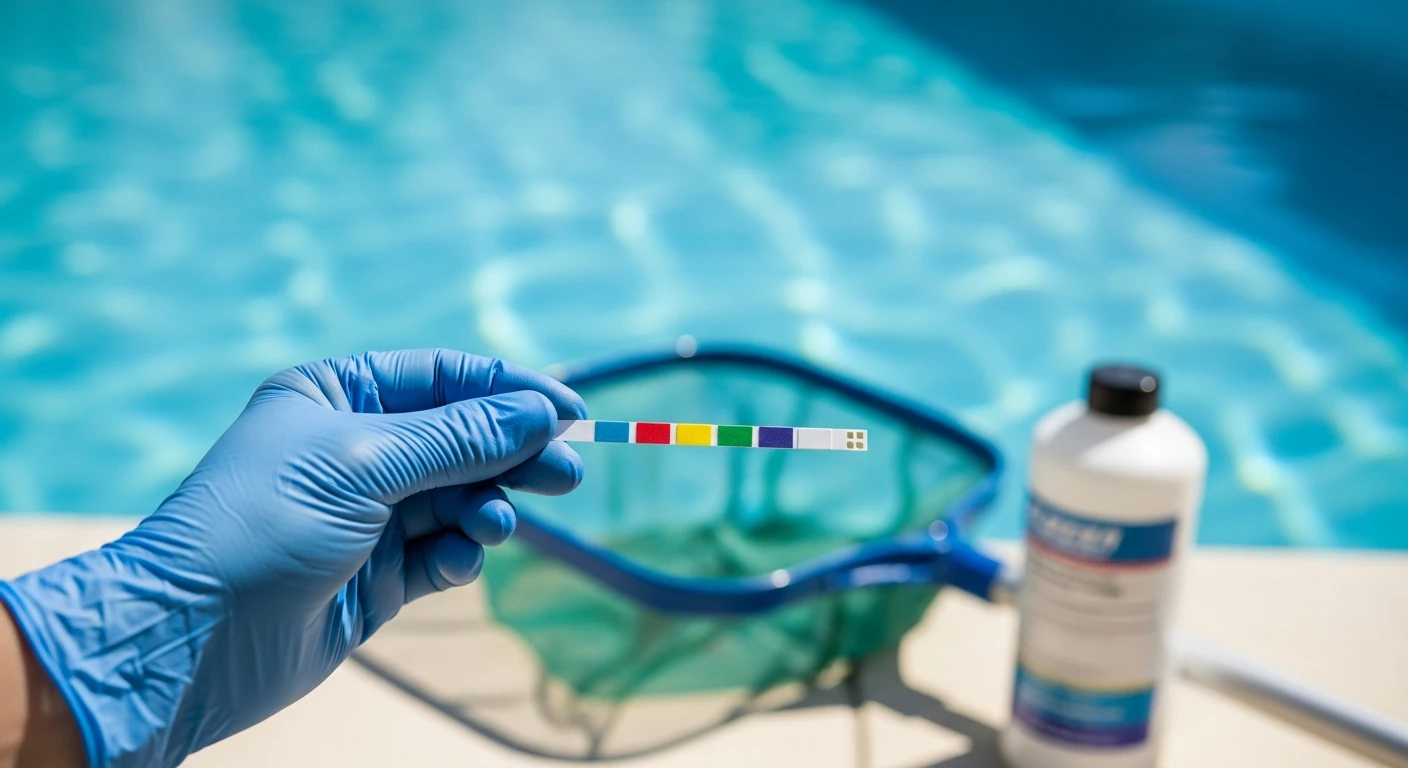
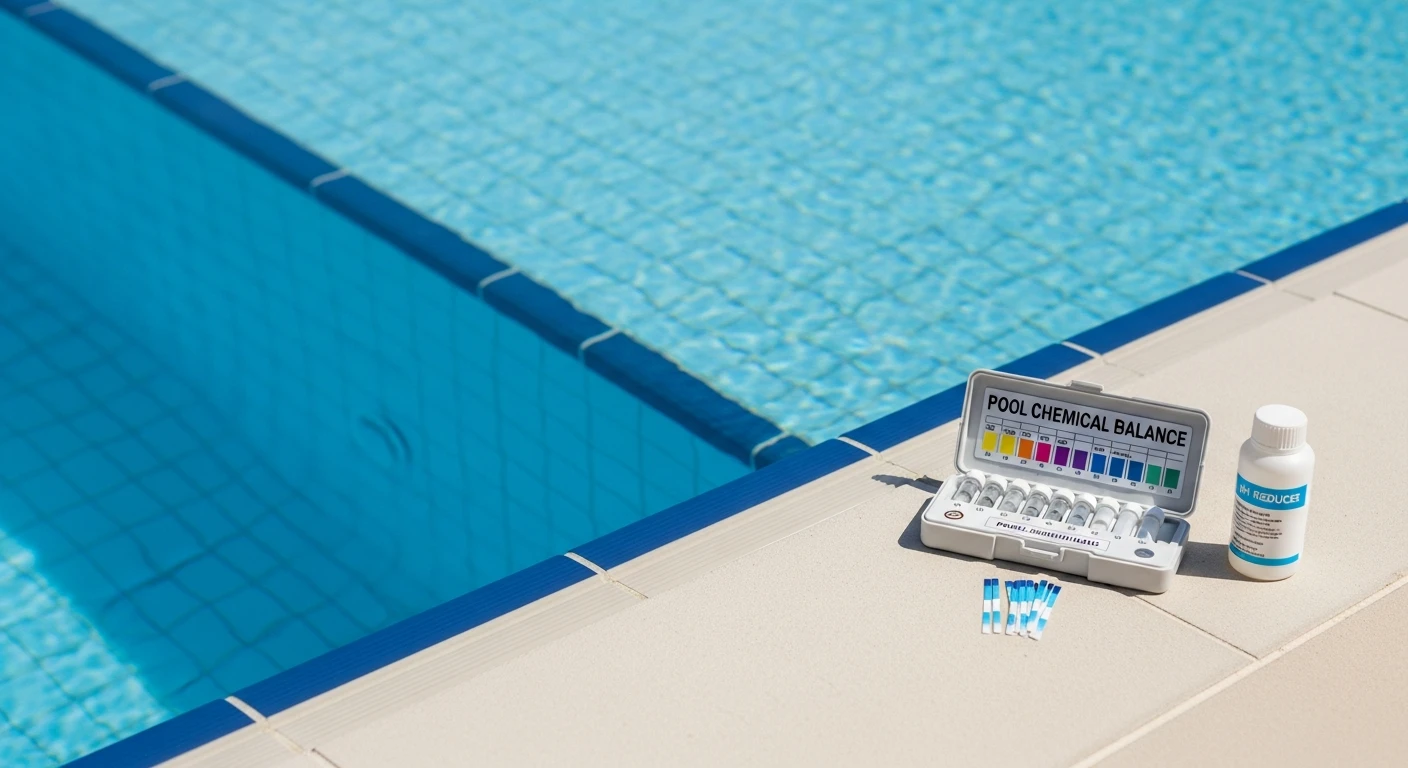
This is the exact, ordered process I use. Following this sequence is non-negotiable for achieving stability. Do not skip steps or change the order.- Step 1: Test in Order. Using a reliable Taylor Test Kit (not strips), I test the water in this specific sequence: Total Alkalinity, pH, Free Chlorine (FC), and Cyanuric Acid (monthly).
- Step 2: Adjust Total Alkalinity FIRST. This is the foundation. If your TA is low, you will add sodium bicarbonate (baking soda) to raise it. If it's high, aeration or small, careful doses of muriatic acid are used. My goal is to lock it in at 100 ppm.
- Step 3: Adjust pH SECOND. Only after the TA has circulated and stabilized for a few hours do I address the pH. To lower pH, I use muriatic acid. To raise it, I use soda ash. Because the TA is correct, the pH will now hold steady.
- Step 4: Adjust Sanitizer LAST. Now that the water is balanced and receptive, I adjust the chlorine level. This ensures maximum efficacy and prevents waste. For Osceola County, I aim for a Free Chlorine level between 2.0 and 4.0 ppm.
Fine-Tuning for Osceola's Rainy Season and High UV
The difference between an amateur and a professional approach is anticipating environmental impact. During the rainy season (typically June-September), I make two critical adjustments. First, I maintain the TA on the higher end of the scale, around 110-120 ppm, to provide a stronger buffer against the acidic rain. Second, I perform a preventative "shock" treatment *before* a major storm system is forecast to arrive, not after the pool has already turned. This elevates the chlorine level to handle the organic debris and contaminants the rain will introduce. For pools with high sun exposure, especially in newer developments without mature landscaping, ensuring the CYA level is a solid 50 ppm is the single most important factor in preventing daily chlorine loss. A pool with 10 ppm of CYA can lose 90% of its chlorine by 2 p.m., while a pool with 40 ppm might only lose 30%. This is a massive reduction in chemical demand. Now that you understand the buffering hierarchy, how will you adjust your shock treatment timing to account for the Total Dissolved Solids (TDS) creep that's inevitable in our local water supply?Written by

Tags
balance pool water
pool alkalinity increaser
pool chemical balance
pool ph balance
Pool Chemical Balance in Osceola FL FAQ
What is pool chemical balance?
Pool chemical balance refers to the process of maintaining the optimal levels of chemicals in your pool water to ensure a safe and healthy swimming environment. This includes adjusting the levels of chlorine, pH, alkalinity, and calcium hardness to prevent damage to your pool and its equipment, as well as to maintain the overall appearance and quality of the water.
Why is pool chemical balance important?
Pool chemical balance is crucial because it helps to prevent a range of issues, including eye and skin irritation, respiratory problems, and damage to your pool and its equipment. Additionally, proper chemical balance can help to extend the lifespan of your pool and its components, reducing the need for costly repairs and replacements.
How often should I test my pool water for chemical balance?
It is recommended to test your pool water at least once a week, or more frequently if you notice any changes in the appearance or smell of the water. This will help you to identify any imbalances and take corrective action before they become major issues.
What are the common signs of pool chemical imbalance?
Common signs of pool chemical imbalance include cloudy or murky water, eye and skin irritation, and the presence of algae or other contaminants. Other signs may include unusual odors, slimy or sticky surfaces, and damage to your pool or its equipment.
Can I perform pool chemical balance tests myself?
Yes, you can perform pool chemical balance tests yourself using test kits or strips available at most pool supply stores. However, if you are unsure of how to interpret the results or are not comfortable with the testing process, it is recommended to consult with a professional pool technician.
What should I do if my pool water is out of balance?
If your pool water is out of balance, it is essential to take immediate action to correct the imbalance. This may involve adding chemicals to the water, such as chlorine or pH increaser, or taking steps to remove contaminants or debris from the pool. It is recommended to consult with a professional pool technician if you are unsure of how to correct the imbalance.
How can I maintain pool chemical balance over time?
To maintain pool chemical balance over time, it is recommended to establish a regular maintenance routine that includes regular testing and adjustment of the chemical levels. Additionally, it is important to ensure that your pool is properly filtered and cleaned, and that any debris or contaminants are removed from the water on a regular basis.
Can I use homemade pool chemical treatments?
No, it is not recommended to use homemade pool chemical treatments, as they may not be effective or safe for your pool and its users. Instead, it is recommended to use pool chemicals that are specifically designed and formulated for use in pools, and to follow the instructions provided by the manufacturer.
How can I prevent pool chemical imbalance in the future?
To prevent pool chemical imbalance in the future, it is recommended to establish a regular maintenance routine that includes regular testing and adjustment of the chemical levels. Additionally, it is important to ensure that your pool is properly filtered and cleaned, and that any debris or contaminants are removed from the water on a regular basis.