Lee County Pool Maintenance: A Proactive Chemistry Protocol to Extend Equipment Lifespan by 25%
For years, I've serviced pools across Lee County, from the canal-front homes in Cape Coral to the sprawling estates in Fort Myers. The single most expensive mistake I see homeowners and unqualified technicians make is treating pool maintenance as a simple cleaning job. They chase symptoms—cloudy water, a hint of algae—with shock treatments and algaecides. This reactive approach is a guaranteed path to premature equipment failure, especially with our hard water and intense Florida sun. My entire methodology is built around proactive water chemistry stabilization, a process that doesn't just keep your pool sparkling but actively protects your investment in pumps, heaters, and salt cells. I developed what I call the Lee County Water Stability Matrix. It’s not about just keeping chlorine and pH in a "safe" range; it’s about understanding the intricate relationship between Total Alkalinity (TA), Calcium Hardness (CH), Cyanuric Acid (CYA), and temperature to achieve a perfectly balanced Langelier Saturation Index (LSI). An imbalanced LSI, either too high (scaling) or too low (corrosive), is the silent killer of pool equipment. In a recent audit of a pool in a Bonita Springs community, I found that constant over-shocking had led to an LSI of +0.8, causing significant calcium buildup that choked the heater's heat exchanger, a $1,200 repair that was completely avoidable.My Diagnostic Framework for Lee County's Challenging Pool Environments
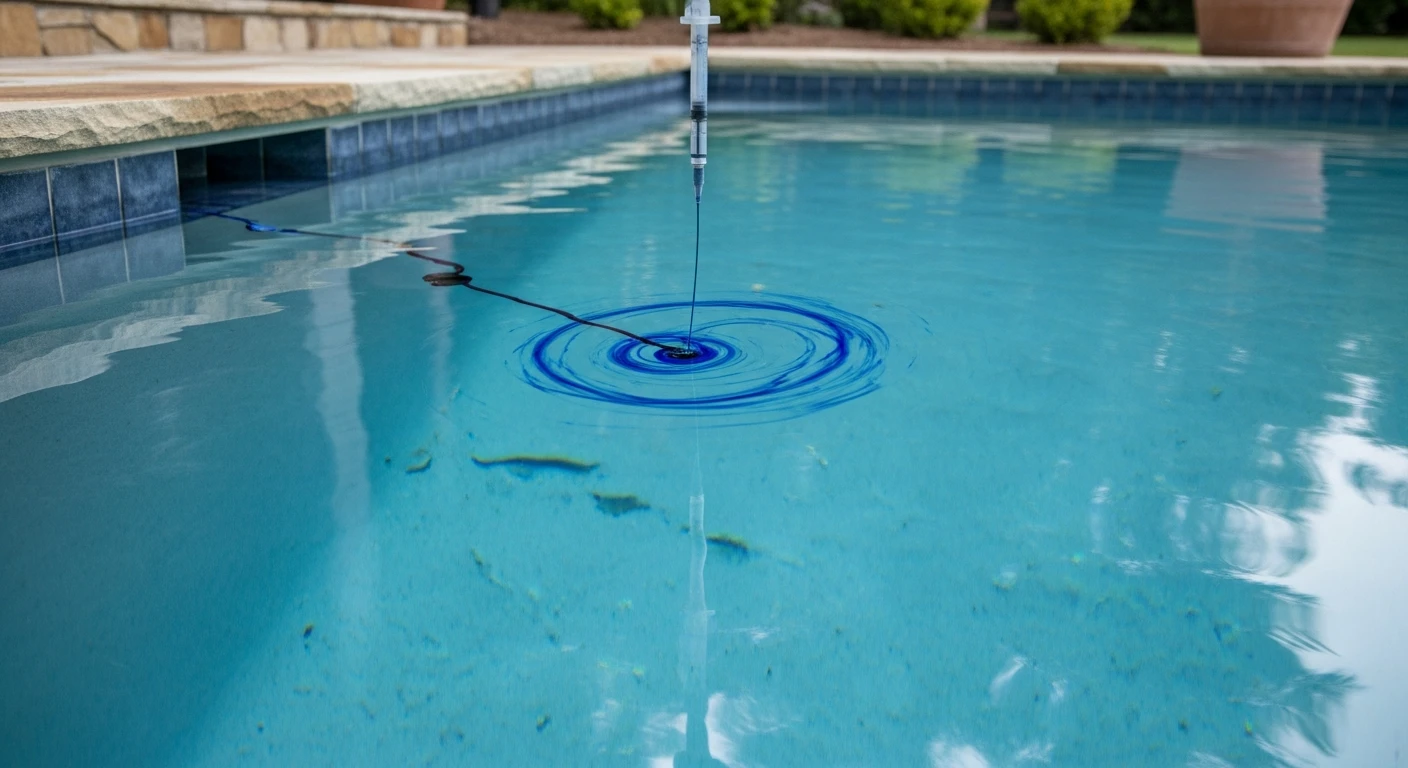
A standard test kit only tells you part of the story. My diagnostic process begins with a comprehensive water analysis that goes far beyond what most services offer. The intense UV exposure in our area rapidly degrades unstabilized chlorine, leading many to overcompensate with Cyanuric Acid. This is a critical error. Once your CYA levels exceed 80 ppm, you enter a state of "chlorine lock," where your chlorine is present but ineffective, forcing you to use ever-increasing amounts of chemicals to achieve sanitation. My framework focuses on establishing a baseline for the water's unique fingerprint. I analyze the source water, a crucial step often ignored. The water in parts of Lehigh Acres has a significantly different mineral profile than the municipal water on Sanibel Island. Ignoring this leads to a constant fight against the water's natural tendency. My goal is to work *with* the water's properties, not against them, creating a stable environment where small, precise chemical additions are all that's needed, rather than massive, weekly shocks.Beyond Chlorine: Mastering Calcium Hardness and Total Alkalinity
Here’s the technical detail that separates a pristine, low-maintenance pool from a chemical money pit. Calcium Hardness (CH) is a major factor in Lee County. While most techs simply note it, I manage it as a critical component of the LSI. In pools with salt chlorine generators, a common feature in newer Fort Myers homes, high CH combined with high pH will cause rapid scaling on the generator's plates, reducing chlorine output and eventually destroying the cell. I aim for a specific CH range of 250-350 ppm and use the TA as my primary pH buffer. By keeping Total Alkalinity between 80-100 ppm, I create a stable pH that drifts predictably, preventing the wild swings that follow our heavy summer downpours and protecting the plaster or pebble surface from etching.The 4-Phase Implementation for a Perfectly Balanced Pool
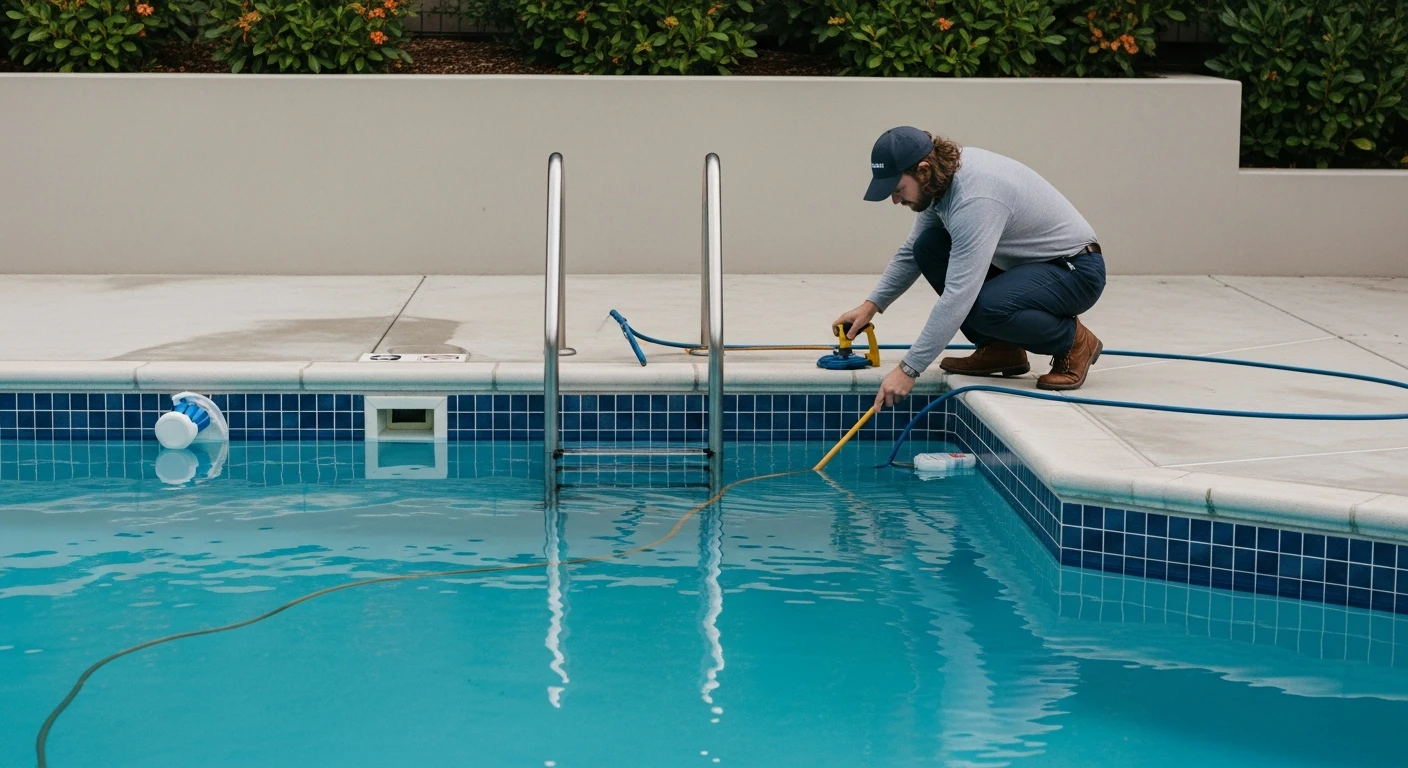
Achieving this level of stability isn't a one-visit job. It's a systematic process. My methodology follows a strict, four-phase implementation to guarantee results and long-term health for the pool.- Phase 1: Comprehensive Water Audit. I perform a full 10-point water test, including phosphates and TDS (Total Dissolved Solids), to establish a complete chemical profile. I also perform a physical inspection of all equipment, noting the current filter backwash pressure and the salt cell amperage draw as key performance indicators.
- Phase 2: Initial Corrective Balancing. This is the most intensive step. Based on the audit and my LSI calculation, I perform a single, major adjustment. This might involve carefully lowering a sky-high CYA level through partial draining or precisely raising calcium hardness to protect a new plaster finish. This is not a "shock"; it's a calculated chemical recalibration.
- Phase 3: System & Filtration Optimization. A balanced pool with a dirty or inefficient filter is useless. I chemically clean the filter (cartridge or DE grids) and calibrate the pump's run time to ensure at least one full water turnover per day. For variable-speed pumps, I optimize the RPMs for a balance of flow and energy efficiency improvement of up to 50%.
- Phase 4: Proactive Maintenance Lock-In. Once the water is stable, the weekly service becomes about making micro-adjustments. I add chemicals in small, precise doses to anticipate changes, not react to them. My service logs don't just say "added chlorine"; they specify "added 12 oz. liquid chlorine to raise FC by 1.5 ppm, targeting an LSI of +0.1."
Fine-Tuning for Seasonal Shifts and Lanai-Screened Pools
The job isn't done after the initial balancing. True expertise lies in anticipating environmental changes. During the rainy season, from June to September, I proactively lower the Total Alkalinity slightly to better absorb the acidic rainwater, preventing pH crashes. The biggest local variable, however, is the lanai. A pool under a screened lanai in a gated Cape Coral community receives significantly less direct sunlight than an unscreened pool. This means it requires a much lower level of Cyanuric Acid—I target 30-40 ppm for screened pools versus 50-70 ppm for pools with full sun exposure. Applying a full-sun chemical strategy to a screened-in pool is a common mistake that guarantees over-stabilization and poor sanitation. My quality standard is clear: a pool is only considered 'mastered' when its LSI remains within the tight window of -0.2 to +0.2 through all four seasons with minimal chemical intervention. Do you know your pool's current Langelier Saturation Index, and what it's costing your equipment not to?Written by

Tags
pool cleaning
swimming pool maintenance
swimming pool care
leak pool repair
Pool Maintenance Services in Lee FL FAQ
What is the importance of regular pool maintenance?
Regular pool maintenance is crucial to ensure the health and longevity of your pool. It helps to prevent the growth of algae, removes dirt and contaminants, and maintains the proper chemical balance, which is essential for a safe and enjoyable swimming experience.
What are the benefits of hiring a professional pool maintenance service?
Hiring a professional pool maintenance service offers several benefits, including peace of mind, reduced risk of accidents, and improved pool performance. Our experienced technicians will ensure that your pool is properly maintained, ensuring that it remains safe, clean, and enjoyable for years to come.
What services do you offer for pool maintenance?
Our pool maintenance services include regular pool cleaning, water testing and balancing, equipment maintenance and repair, and customized maintenance plans tailored to your specific pool needs. We also offer additional services such as pool opening and closing, winterization, and equipment upgrades.
How often should I have my pool serviced?
The frequency of pool servicing depends on various factors, including the size and type of your pool, usage, and weather conditions. As a general rule, we recommend that most pools are serviced every 1-2 weeks during peak season and every 4-6 weeks during off-peak season.
Can I perform pool maintenance myself?
While it is possible to perform basic pool maintenance tasks yourself, such as skimming the surface and cleaning the filter, it is recommended to hire a professional pool maintenance service to ensure that your pool is properly maintained. Our technicians have the necessary knowledge, experience, and equipment to perform complex tasks and ensure the health and safety of your pool.
What are the consequences of neglecting pool maintenance?
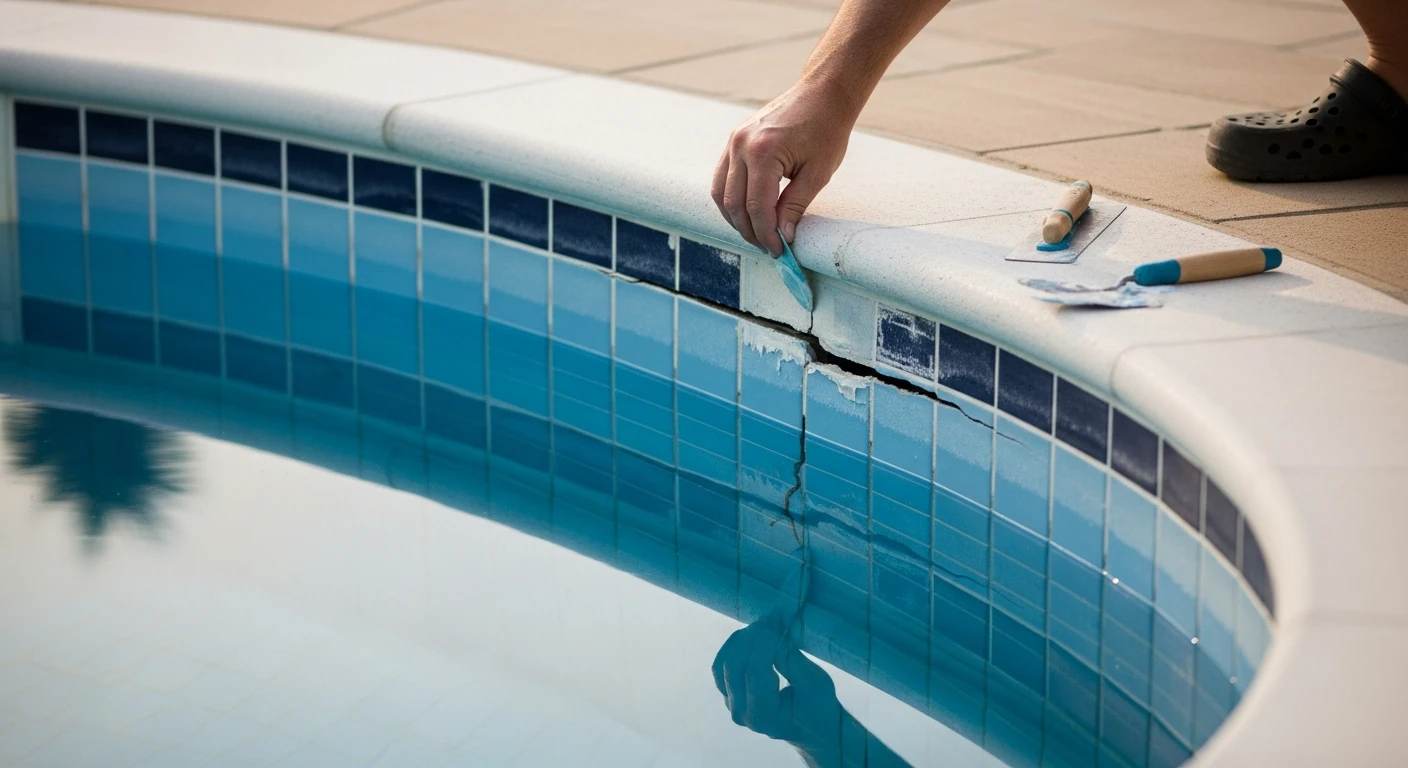
Neglecting pool maintenance can have serious consequences, including the growth of algae, formation of scale and stains, and damage to pool equipment. In extreme cases, neglecting pool maintenance can even lead to health risks, such as the spread of bacteria and other contaminants.
Do you offer emergency pool maintenance services?
Yes, we offer emergency pool maintenance services for unexpected problems, such as a sudden algae bloom or equipment failure. Our technicians are available 24/7 to respond to your emergency and get your pool back to its optimal condition quickly and efficiently.
How do I know if my pool needs professional maintenance?
If you notice any of the following signs, it may be time to consider hiring a professional pool maintenance service: cloudy or green water, unusual odors, algae growth, or equipment failure. Our technicians can assess your pool's condition and recommend the necessary maintenance to get your pool back to its optimal state.