Pool Water Clarifiers in Collier County: My Protocol to Bypass Chemical Overload and Cut Turbidity by 75%
That stubbornly hazy, milky water in your Naples pool isn't just an eyesore; it's a symptom. My years servicing pools from the coastal homes of Port Royal to the large residential lots in Golden Gate Estates have taught me one thing: the knee-jerk reaction to dump in more clarifier is often the worst possible move. I've seen it lead to clogged filters, wasted money, and a pool that looks even worse. Before you reach for another bottle, I'm going to share the diagnostic method I developed to pinpoint the true cause of cloudiness, a problem particularly prevalent under the intense Collier County sun. My approach sidesteps the guesswork that plagues most pool maintenance. Instead of treating the symptom, we diagnose the microscopic culprits. This isn't about just adding a chemical; it's about understanding the unique particulate load in our local water, which is heavily influenced by everything from construction dust in new developments to the fine yellow pollen that blankets our lanais every spring. By focusing on the root cause, we can achieve clarity that lasts, often using a fraction of the chemicals.My TPT Diagnostic: The End of Guesswork for Cloudy Pools
I call my proprietary methodology the TDS-Phosphate-Turbidity (TPT) Diagnostic. It’s a three-pronged analysis I perform before a single drop of clarifier is even considered. A clarifier is a specialized tool, a coagulant designed to bind tiny suspended particles together so your filter can catch them. But if the underlying water chemistry is hostile to this process, you are literally pouring money down the drain. I once took over a pool in a Pelican Bay high-rise that had been cloudy for a month despite weekly "clarifier" treatments. My TPT diagnostic revealed the true issue in minutes.Decoding Collier County's Unique Water Profile
The TPT method is so effective here because it addresses our specific environmental factors.- Total Dissolved Solids (TDS): In areas like Golden Gate Estates that often rely on well water, TDS levels can be exceptionally high. When TDS exceeds 2000 ppm, it significantly reduces the efficacy of all your chemicals, including clarifiers. The coagulant simply can't find and bind to the target particles effectively in such a "crowded" chemical environment.
- Phosphates: This is a massive issue in Collier County due to lawn fertilizers. A single heavy summer downpour can wash enough phosphates into your pool to feed an algae bloom. Even before algae is visible, high phosphate levels create a "haze" that clarifiers struggle to resolve because it's a nutrient problem, not a particle problem. I always test for phosphates first.
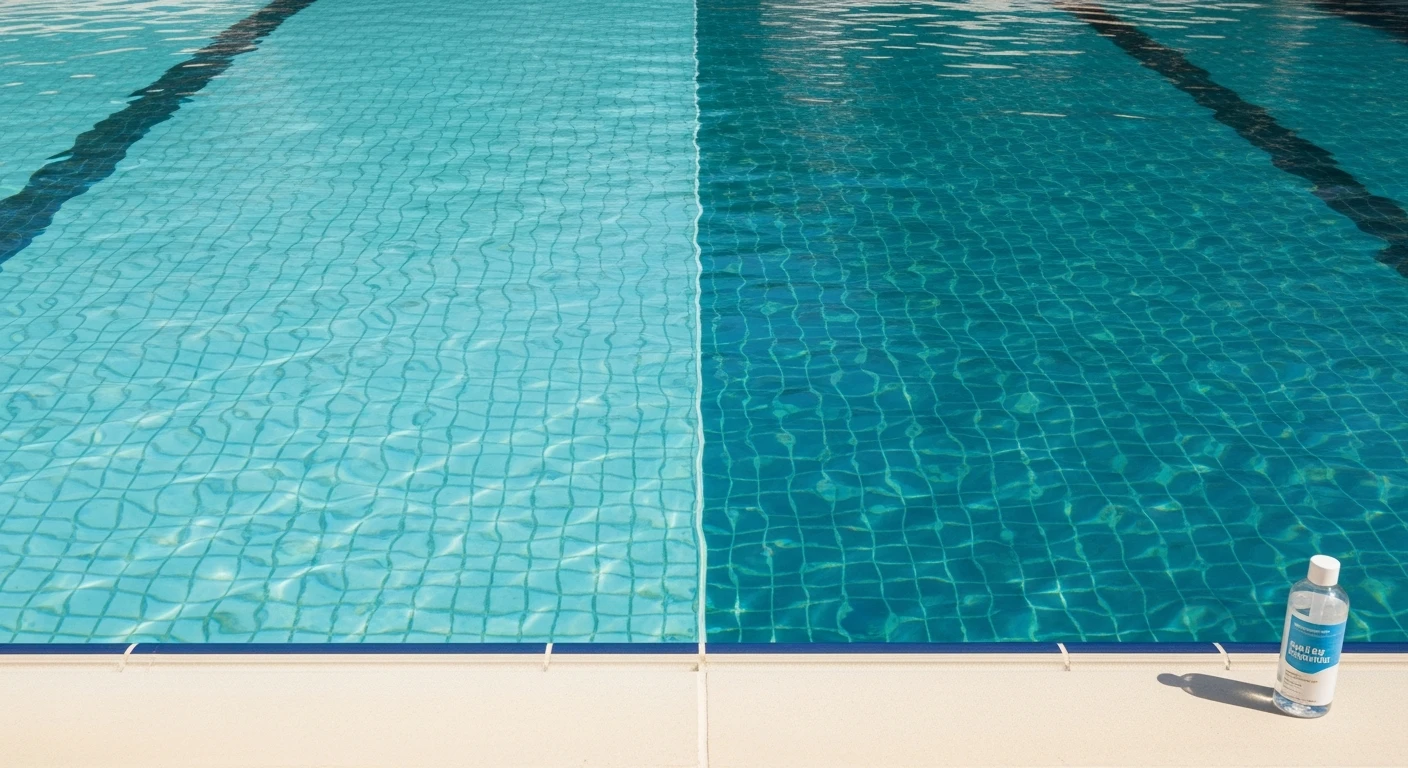
- Turbidity (Particle Type): Is the water hazy or truly cloudy? Haze is often from dead algae or pollen, which are extremely fine particles. A standard coagulant works well here. A true, milky cloudiness, however, might be from a clarifier overdose. I've had to fix pools where a homeowner used a flocculant (a heavy-duty chemical that sinks particles to the pool floor for vacuuming) thinking it was a regular clarifier, creating a gelatinous mess.
The Clarification Sequence: A Step-by-Step Execution
Once the TPT Diagnostic gives me a clear picture, I follow a strict operational sequence. Rushing this process is the most common failure point I encounter.- Balance Core Chemistry First: Before anything else, I ensure the pH is between 7.2 and 7.6 and alkalinity is between 80-120 ppm. A clarifier is virtually useless outside of these ranges. This is non-negotiable.
- Address the TPT Root Cause: If phosphates are high, I add a phosphate remover and let it circulate for 24 hours. If TDS is the culprit, a partial drain and refill may be the only solution. You must fix the foundational problem.
- Select the Correct Agent: Based on the diagnosis, I choose the right tool. For general haze, a high-quality coagulant clarifier is perfect. For a serious particulate problem, like after a construction project next door, I might opt for a flocculant, but I make sure the client understands it requires vacuuming directly to waste, a process that loses water.
- Administer the Dose Correctly: Always follow the label, but my professional tip is to dilute the clarifier in a bucket of pool water first. Then, pour it slowly around the edges of the pool. This ensures even distribution and prevents "hot spots" of concentrated chemical.
Fine-Tuning for Crystal Clarity: Dosage and Filter Management
The real expertise comes into play after the clarifier has been added. The job isn't done; it's just started. A critical error I see is chemical overdosing. More is not better. Too much clarifier will have the opposite effect, creating a gel-like substance that clogs your filter media. The particles become too large and slimy, choking the system. Your primary indicator that the process is working correctly is your filter pressure gauge (PSI). I instruct my clients to take a reading before the treatment. A 5-10 PSI increase within 24 hours is the sweet spot—it means the filter is successfully trapping the now-enlarged particles. Once that pressure rises, you must backwash your filter or clean the cartridge immediately to remove the captured debris. Failing to do this will just send the particles right back into the pool. Now that you can identify the difference between a phosphate haze and a high-TDS problem, how will you alter your approach the next time a week of summer humidity leaves your Marco Island pool stubbornly cloudy?Written by

Tags
best pool clarifier
pool clarifier near me
best clarifier for pool
best swimming pool clarifier
Pool Water Clarifiers in Collier FL FAQ
What is a pool water clarifier?
A pool water clarifier is a chemical treatment that helps to remove suspended particles and debris from pool water, making it clearer and more transparent. Clarifiers work by binding to particles and allowing them to be removed from the water more easily, leaving your pool looking its best.
Why do I need to use a pool water clarifier?
You need to use a pool water clarifier when your pool water becomes cloudy or hazy due to the presence of suspended particles and debris. Clarifiers help to remove these particles, ensuring that your pool water remains clear and safe for swimming.
How often should I use a pool water clarifier?
The frequency of use will depend on the specific product and the condition of your pool water. Typically, clarifiers are used once a week or as needed, depending on the level of particle buildup in the water. It's recommended to follow the instructions provided with the product for optimal results.
What are the benefits of using a pool water clarifier?
Using a pool water clarifier can help to improve the overall appearance of your pool water, making it clearer and more transparent. Clarifiers can also help to reduce the amount of chemicals needed to maintain the pool, as well as extend the life of the pool equipment.
Are pool water clarifiers safe for my pool and its equipment?
Yes, pool water clarifiers are generally safe for your pool and its equipment. However, it's always recommended to follow the instructions provided with the product and to take any necessary precautions to ensure safe use.
Can I use a pool water clarifier with other pool chemicals?
Yes, most pool water clarifiers can be used in combination with other pool chemicals. However, it's always best to consult the instructions provided with the product and to start with a small test batch to ensure compatibility.
How do I choose the right pool water clarifier for my pool?
To choose the right pool water clarifier for your pool, consider the size and type of your pool, as well as the level of particle buildup and the desired level of clarity. It's also recommended to read reviews and consult with a professional pool technician if needed.
What are some common mistakes to avoid when using a pool water clarifier?
Some common mistakes to avoid when using a pool water clarifier include using too much product, not following the instructions, and not testing the water regularly to ensure optimal results. Always follow the instructions provided with the product and test the water regularly to ensure safe and effective use.