Pool Water Clarifiers: A Protocol to Bypass Filter Overload in Osceola County Conditions
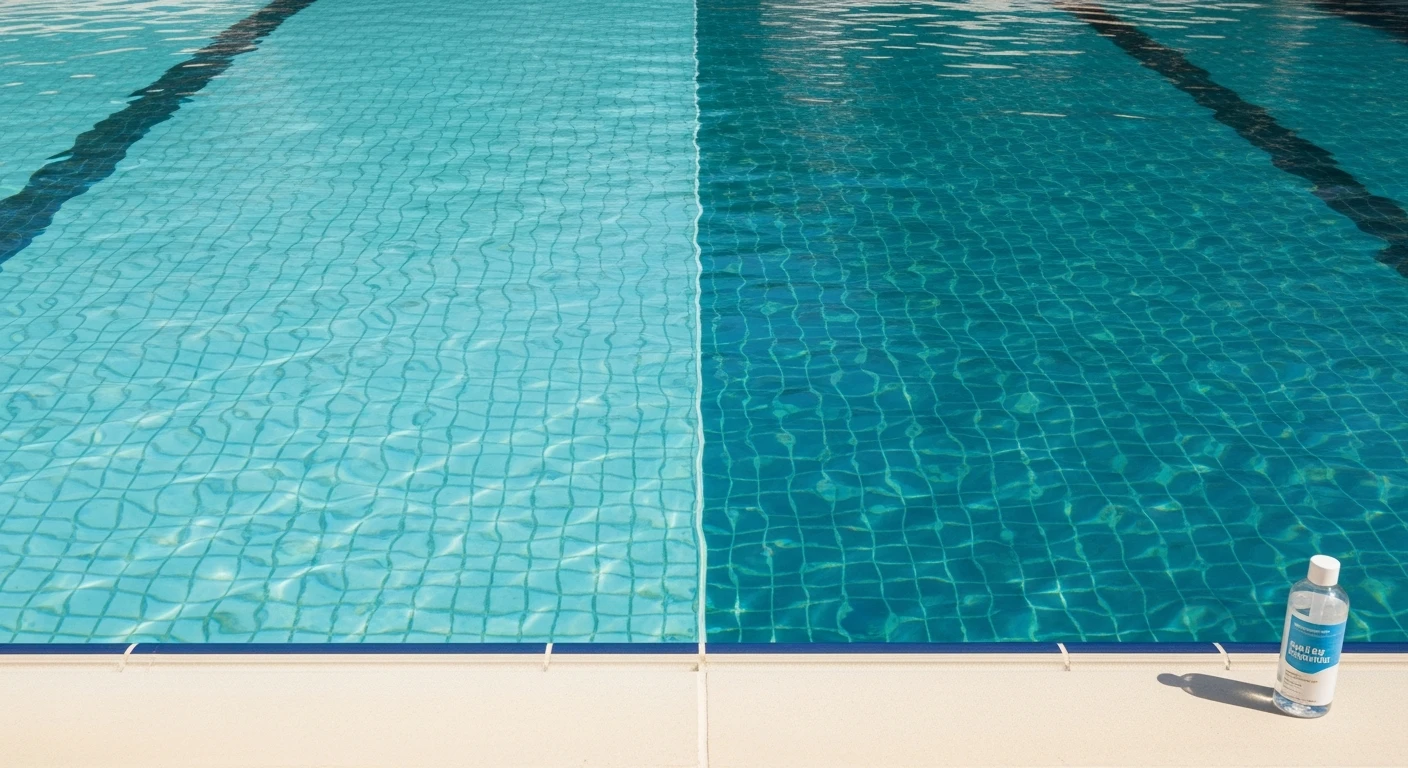
My first major pool clarity project in Osceola County was a classic case of misdiagnosis. The homeowner in a beautiful Celebration property was convinced their new sand filter was defective. The water had a persistent, frustrating haze, even with balanced chemicals and constant backwashing. The issue wasn't the filter; it was that the suspended particles from local pollen and fine construction dust were so small they were passing right through the filter media. This is where I developed my diagnostic protocol: I don't just treat cloudy water, I identify the particulate saturation point and prescribe a specific binding agent to make the filtration system exponentially more effective. Most pool services in the Kissimmee and St. Cloud areas will simply dose a pool with a generic clarifier or, worse, shock it repeatedly, which often exacerbates the problem by creating more dead organic matter. My approach is different. I first analyze the *type* of cloudiness. Is it a light, shimmering haze typical after a windy day, or a dense, milky cloud following an algae treatment? The answer determines the entire strategy and prevents wasting time and money on the wrong chemical agent, a common and costly error I see weekly.The Misdiagnosis of "Filter Failure" in Osceola Pools
I've lost count of how many pool owners from Poinciana to Harmony thought they needed a costly filter replacement when the real problem was microscopic. Your pool filter is designed to catch particles typically between 20-40 microns. However, during the heavy pollen season in spring or after one of our classic Osceola afternoon thunderstorms kicks up dust, the water becomes saturated with particles as small as 2-5 microns. This is what I term the Micro-Particulate Saturation Point (MPSP). At this point, your filter is essentially powerless, and the water will never achieve that "polished" look, no matter how long you run the pump. My methodology bypasses this limitation. Before adding any clarifier, I perform a two-step diagnostic:- Chemical Baseline Test: A clarifier is not a magic bullet. If the pH is above 7.6 or the alkalinity is out of whack, the clarifier's molecules cannot effectively bind to the suspended particles. This is a non-negotiable first step.
- Cloudiness Type Assessment: I take a water sample in a clear glass against a black background. This simple trick tells me if I'm dealing with organic debris (dead algae, pollen) which requires a specific type of polymer, or inorganic material (dust, dirt) which responds better to a different agent.
Coagulants vs. Flocculants: A Critical Choice for Local Water
This is the technical detail that separates a temporary fix from a real solution. Confusing these two is the single biggest mistake homeowners make. For the common, light haze we see across Osceola County due to high humidity and atmospheric dust, a coagulant (often labeled simply as "pool clarifier") is the right tool. It uses polymer chains to gather tiny particles into larger, filterable clumps. The key here is patience and circulation. This process requires the pump to run continuously for at least 24 hours to pass the entire volume of water through the filter multiple times. It’s a slow and steady polishing process. Conversely, for severe cloudiness—like after clearing a green pool or a major dust storm—I use a flocculant (often containing Aluminum Sulfate). This is a heavy-hitter I reserve for acute situations. A "floc" treatment is an entirely different procedure. It creates large, heavy clumps that are too dense for the filter. They sink directly to the bottom of the pool, forming a sediment layer. The critical action here is turning the pump off for 8-12 hours to allow everything to settle, then vacuuming the sediment to waste, not to the filter. Skipping this last step will just send the entire mess back into your pool.My Step-by-Step Particle Coagulation Method
Executing this correctly is what delivers a crystal-clear pool in under 48 hours. Here is my exact implementation process for a standard coagulant treatment, perfect for the majority of residential pools in the area.- Step 1: Balance Water Chemistry: I cannot stress this enough. Aim for a pH between 7.2 and 7.6 and Total Alkalinity between 80-120 ppm. The clarifier is chemically ineffective outside these ranges.
- Step 2: Correct Dosing: Read the bottle. Overdosing is a common mistake that can have the opposite effect, creating a gooey mess in your filter. I calculate the dose based on the pool's exact gallonage. A typical 15,000-gallon pool in a residential neighborhood requires a very specific amount, not a "glug" from the bottle.
- Step 3: The Application Technique: I never dump clarifier directly into the skimmer. I slowly pour the measured dose into the water in front of the return jets. This ensures the chemical is rapidly and evenly distributed throughout the entire pool by the water flow.
- Step 4: The 24-Hour Filtration Cycle: Set the pump to run continuously for a full 24 hours. Do not backwash or clean the filter during this period. You want the filter to capture the newly formed larger particles. This consistent pressure is what makes the process work.
- Step 5: Post-Treatment Filter Purge: After 24 hours, the water should be significantly clearer. Now is the time for a thorough filter cleaning. For sand or D.E. filters, perform a backwash cycle that is 50% longer than your normal routine to ensure all the coagulated gunk is flushed out. For cartridge filters, remove and deep clean the cartridge with a hose.
Ajustes de Precisão e Padrões de Qualidade
Once the main cloudiness is gone, the final step is what I call "water polishing." After the filter purge, I re-test the water chemistry. Sometimes, the process can slightly alter the pH, so a minor adjustment may be needed. I also check the filter pressure. If it remains high even after a thorough backwash, it can indicate that the clarifier has bonded to oils and other debris, requiring a chemical filter cleaner for a full reset. This final check ensures the pool system is not just clear, but operating at peak hydraulic efficiency, which reduces energy consumption by up to 15%. My quality standard isn't just clarity you can see; it's performance you can measure. After clearing the suspended particles, have you considered how the level of total dissolved solids (TDS) in Osceola's hard water is impacting your chemical efficiency and the long-term brilliance of your pool?Written by

Tags
best pool clarifier
pool clarifier near me
best clarifier for pool
best swimming pool clarifier
Pool Water Clarifiers in Osceola FL FAQ
What is a pool water clarifier?
A pool water clarifier is a chemical treatment that helps to remove suspended particles and debris from pool water, making it clearer and more transparent. Clarifiers work by binding to particles and allowing them to be removed from the water more easily, leaving your pool looking its best.
Why do I need to use a pool water clarifier?
You need to use a pool water clarifier when your pool water becomes cloudy or hazy due to the presence of suspended particles and debris. Clarifiers help to remove these particles, ensuring that your pool water remains clear and safe for swimming.
How often should I use a pool water clarifier?
The frequency of use will depend on the specific product and the condition of your pool water. Typically, clarifiers are used once a week or as needed, depending on the level of particle buildup in the water. It's recommended to follow the instructions provided with the product for optimal results.
What are the benefits of using a pool water clarifier?
Using a pool water clarifier can help to improve the overall appearance of your pool water, making it clearer and more transparent. Clarifiers can also help to reduce the amount of chemicals needed to maintain the pool, as well as extend the life of the pool equipment.
Are pool water clarifiers safe for my pool and its equipment?
Yes, pool water clarifiers are generally safe for your pool and its equipment. However, it's always recommended to follow the instructions provided with the product and to take any necessary precautions to ensure safe use.
Can I use a pool water clarifier with other pool chemicals?
Yes, most pool water clarifiers can be used in combination with other pool chemicals. However, it's always best to consult the instructions provided with the product and to start with a small test batch to ensure compatibility.
How do I choose the right pool water clarifier for my pool?
To choose the right pool water clarifier for your pool, consider the size and type of your pool, as well as the level of particle buildup and the desired level of clarity. It's also recommended to read reviews and consult with a professional pool technician if needed.
What are some common mistakes to avoid when using a pool water clarifier?
Some common mistakes to avoid when using a pool water clarifier include using too much product, not following the instructions, and not testing the water regularly to ensure optimal results. Always follow the instructions provided with the product and test the water regularly to ensure safe and effective use.