UV Pool Systems Osceola County: My Protocol for Slashing Chlorine Demand by 60%
I’ve seen countless pool owners in Osceola County, from Kissimmee to St. Cloud, get trapped in a frustrating cycle. They invest in a UV pool system expecting crystal-clear water and less chemical hassle, only to find themselves still battling algae and high chlorine costs. The core issue isn't the technology; it's the standard, one-size-fits-all installation approach that completely ignores the intense Florida sun and our year-round pool usage patterns. A system sized for a northern climate will fail here, every time. My methodology corrects this by focusing on a single, critical metric: the true UV-C dosage required to neutralize chlorine-resistant microorganisms specific to our humid, high-heat environment. This isn't about the advertised GPM (gallons per minute) on the box. It's about engineering a system that achieves a minimum dosage of 30 mJ/cm² at your pump's actual, measured flow rate, effectively destroying chloramines on a single pass and dramatically reducing the workload on your primary sanitizer.My Osceola-Specific UV Sizing Protocol
The biggest mistake I encounter is what I call "spec-sheet installation." A pool builder or technician looks at the pump's horsepower, matches it to a UV sanitizer's advertised capacity, and calls it a day. I identified this exact error in a large residential project in Celebration where the new pools were turning cloudy within weeks. The installed UV systems were technically "correct" for the pump size but woefully undersized for the bather load and the speed at which our sun degrades free chlorine. My proprietary audit begins with diagnostics, not a catalog. I measure the pool's actual flow rate using a flow meter, as pipe length, bends, and filter condition can reduce it by 20-30% from the pump's stated maximum. This real-world GPM is the foundation. I then factor in Osceola-specific variables: the average daily UV index, typical bather load for the property type (e.g., short-term rental near the theme parks versus a family home in Lake Nona), and whether the pool is screened. A screened lanai reduces direct sun but does little to lower the water temperature, which accelerates microorganism growth.Beyond Manufacturer Specs: Calculating True UV Dosage for Florida Pools
Achieving chloramine destruction requires precise engineering of three factors: flow rate, lamp intensity, and contact time. The manufacturer might claim their unit handles 100 GPM, but they rarely specify the UV-C dosage at that rate. For the aggressive pathogens we face in Central Florida, a low dosage just won't cut it. My calculation ensures the water is exposed to the UV-C light long enough and at a high enough intensity to eradicate organisms like Cryptosporidium and Giardia. I specifically aim for a high-output, low-pressure lamp system. The goal is to maximize the lamp's wattage relative to the chamber's diameter. A wider chamber might seem better, but it can allow water to pass through without getting close enough to the lamp for a lethal dose. I've found that for a typical 15,000-gallon pool in Osceola, a system rated for a much higher flow rate (often 25-40% higher than the measured GPM) is necessary to guarantee that 30 mJ/cm² minimum dosage and create a significant reduction in Combined Chlorine (chloramines).Step-by-Step Implementation for Maximum Chloramine Destruction
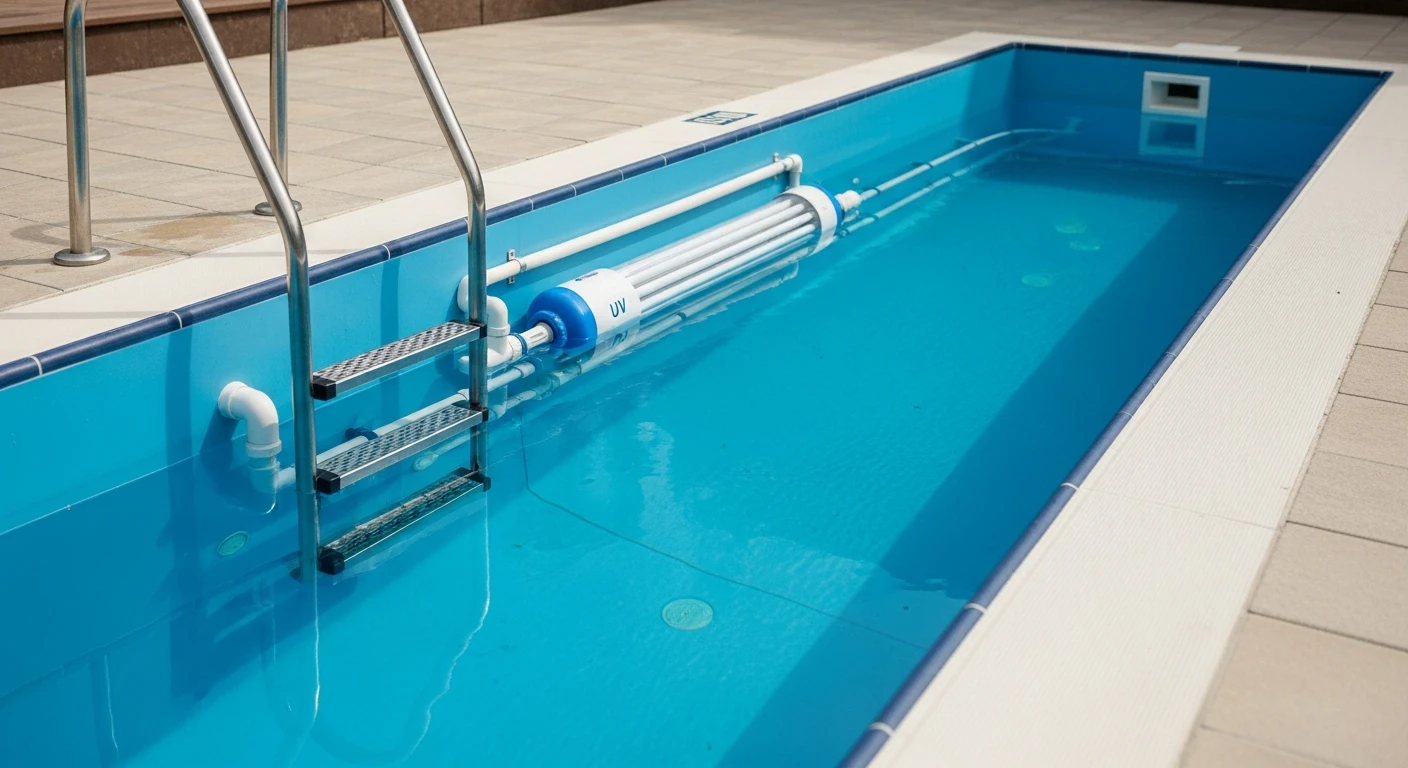
Once the correct unit is selected, its physical placement and integration are critical for performance. Simply plumbing it into the line is not enough. My process ensures the unit operates at peak efficiency from day one.- System Placement: The UV sanitizer must be installed after the filter and heater. Placing it before the filter is a catastrophic error; debris will coat the quartz sleeve, blocking the UV-C light and rendering the system useless. Placing it before a heater can subject the unit to excessive back pressure and heat.
- Vertical Installation: Whenever possible, I mount the unit vertically with the water inlet at the bottom. This forces any air in the system to be purged out the top, ensuring the chamber is 100% full of water for maximum contact time. A horizontally mounted unit can trap air, reducing its effectiveness by up to 50%.
- Bypass Loop Assembly: I always install a bypass loop with three ball valves. This allows for precise control over the flow rate through the UV chamber and enables the unit to be serviced (e.g., changing the lamp) without shutting down the entire pool circulation system. This is non-negotiable for system longevity and ease of maintenance.
- Electrical Safeguards: The unit must be wired to the pump's relay, so it only runs when the pump is active. This prevents overheating and drastically extends the lamp's operational lifespan, which is typically 9,000 to 12,000 hours.
Post-Installation Chemical Rebalancing and Performance Verification
A successful UV installation immediately changes your pool's chemistry. The game is no longer about shocking the pool with high levels of chlorine to burn off contaminants. The UV system handles the sanitation, allowing you to maintain a much lower, more comfortable level of chlorine. My final step is to rebalance the water chemistry and prove the system's ROI. The primary adjustment is to lower the target Free Chlorine level from the typical 2.0-4.0 ppm down to 1.0-1.5 ppm. We then test for Combined Chlorine. A properly functioning UV system should keep this value at or near zero. I provide the client with a water-testing protocol to verify this over the first few weeks. The reduction in chlorine purchases and the elimination of that harsh "chlorine smell" is the ultimate proof of a correctly executed project. Given that your pump's actual flow rate is almost certainly lower than its label suggests, how are you currently ensuring your sanitizer is delivering a lethal UV dose and not just giving contaminants a light tan?Written by

Tags
uv pool sanitizer
uv pool filter
uv pool
uv ozone pool system
UV Pool Systems in Osceola FL FAQ
What is a UV pool system?
A UV pool system is a type of water treatment system that uses ultraviolet (UV) light to kill bacteria, viruses, and other microorganisms in pool water. UV systems work by emitting a specific wavelength of UV light that damages the DNA of these microorganisms, rendering them harmless.
How does a UV pool system work?
A UV pool system works by circulating pool water through a UV reactor chamber, where it is exposed to the UV light. The UV light inactivates bacteria, viruses, and other microorganisms, killing them and ensuring the water is safe for swimming.
What are the benefits of using a UV pool system?
The benefits of using a UV pool system include improved water quality, reduced chlorine usage, and increased swimmer comfort. UV systems also eliminate the need for shock treatments and reduce the risk of algae growth.
Can UV pool systems replace traditional chlorine disinfection?
While UV pool systems are effective in killing bacteria and viruses, they cannot completely replace traditional chlorine disinfection. UV systems are best used in conjunction with chlorine or other disinfectants to provide comprehensive water treatment.
How often should I replace my UV lamp?
The frequency of replacing your UV lamp depends on the manufacturer's recommendations and usage patterns. Typically, UV lamps should be replaced every 6-12 months or when the lamp's intensity decreases by 20-30%.
Can I install a UV pool system myself?
While it is possible to install a UV pool system yourself, it is recommended to hire a professional installer to ensure proper installation and maintenance. Improper installation can lead to reduced effectiveness and potentially damage your pool equipment.
How do I maintain my UV pool system?
To maintain your UV pool system, regular cleaning and replacement of the UV lamp, as well as monitoring and adjusting the system's settings, are recommended. It is also essential to follow the manufacturer's maintenance instructions for your specific system.
Can UV pool systems be used with saltwater pools?
Yes, UV pool systems can be used with saltwater pools. However, it is essential to ensure the system is designed and installed specifically for saltwater pools to avoid corrosion and other issues.
Are UV pool systems energy-efficient?
Yes, UV pool systems are energy-efficient compared to traditional chlorine disinfection methods. They use significantly less energy to operate and can help reduce your overall pool energy costs.