Inground Pool Remodeling in Osceola County: A Framework for Preventing Premature Surface Failure and Increasing Usability by 30%
The relentless sun and high humidity here in Osceola County are not just a lifestyle feature; they are the primary adversaries of your inground pool's longevity. I’ve seen too many homeowners in communities like Celebration and Kissimmee pay for a beautiful remodel only to face chalking, staining, or delamination within five years. This failure is almost always traceable to a fundamental misunderstanding of how our specific climate impacts the pool shell and its finishes. The goal isn't just a cosmetic upgrade; it's a structural and chemical reinforcement against our environment. My entire approach is built on a diagnostic I call the Substrate Integrity First methodology. Before I even discuss tile choices or water features, I focus on the structural shell's condition. A new, expensive pebble finish applied to a compromised concrete shell is like building a house on a cracked foundation. This initial analysis prevents the most common and costly rework scenarios I'm called in to fix across the county, particularly in homes with heavy use, like the short-term rentals in the Reunion area.My Diagnostic Protocol Before a Single Tile is Removed
Most contractors will give your pool a visual inspection. I start with a technical audit. My process begins with a complete hydrostatic pressure assessment. The sandy, shifting soil common from St. Cloud to Harmony can create unseen stress on a pool's gunite or concrete shell, leading to micro-fractures. Ignoring this is a critical error. A new finish will crack right along with the shell as the ground settles or the water table shifts during our rainy season. I perform a core sample analysis if there are any signs of weeping or cracking. This tells me the compressive strength of the existing shell and reveals any latent water intrusion that could compromise the bond of the new materials. For me, a visual check is simply not enough data to guarantee a 15-year lifespan for a new surface, which is the standard I hold myself to.Material Selection for Osceola's High-UV, High-Humidity Climate
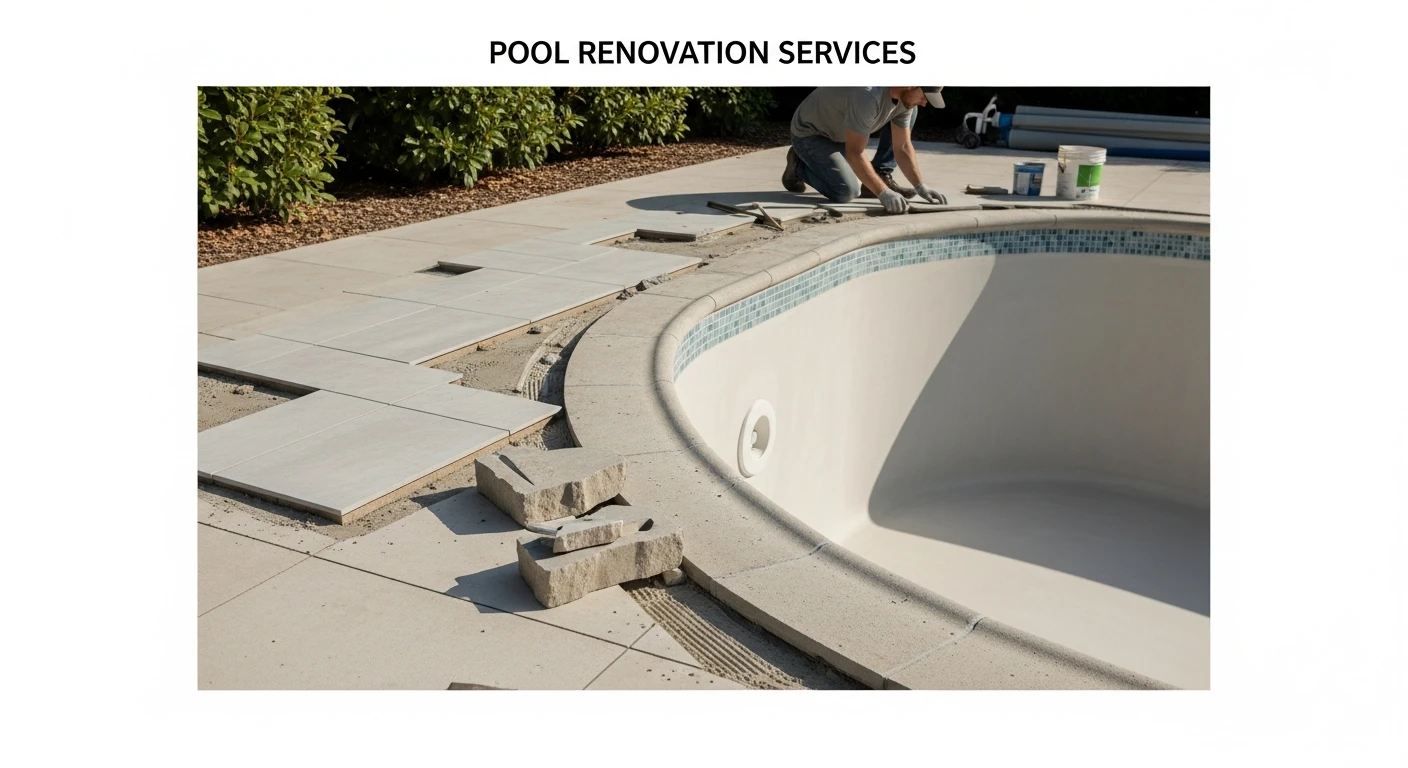
Material choice here is not about aesthetics alone; it's a technical decision. The intense UV exposure in Florida degrades standard marcite and quartz finishes at an accelerated rate. I've found that homeowners who opt for these often see a noticeable fade and roughness within 3-4 years. My material specification is based on durability metrics. I almost exclusively recommend a pozzolan-modified cement for all pebble and glass bead finishes. The pozzolan admixture significantly increases the density of the cement, making it far less permeable and highly resistant to the chemical degradation caused by our frequent, heavy rains that can drastically alter pool water chemistry. For decking, I analyze the Solar Reflectance Index (SRI) of materials. A high-SRI paver or acrylic overlay can reduce the surface temperature by up to 20%, a massive usability gain during our sweltering summer months.The Phased Execution: From Draining to Chemical Balancing
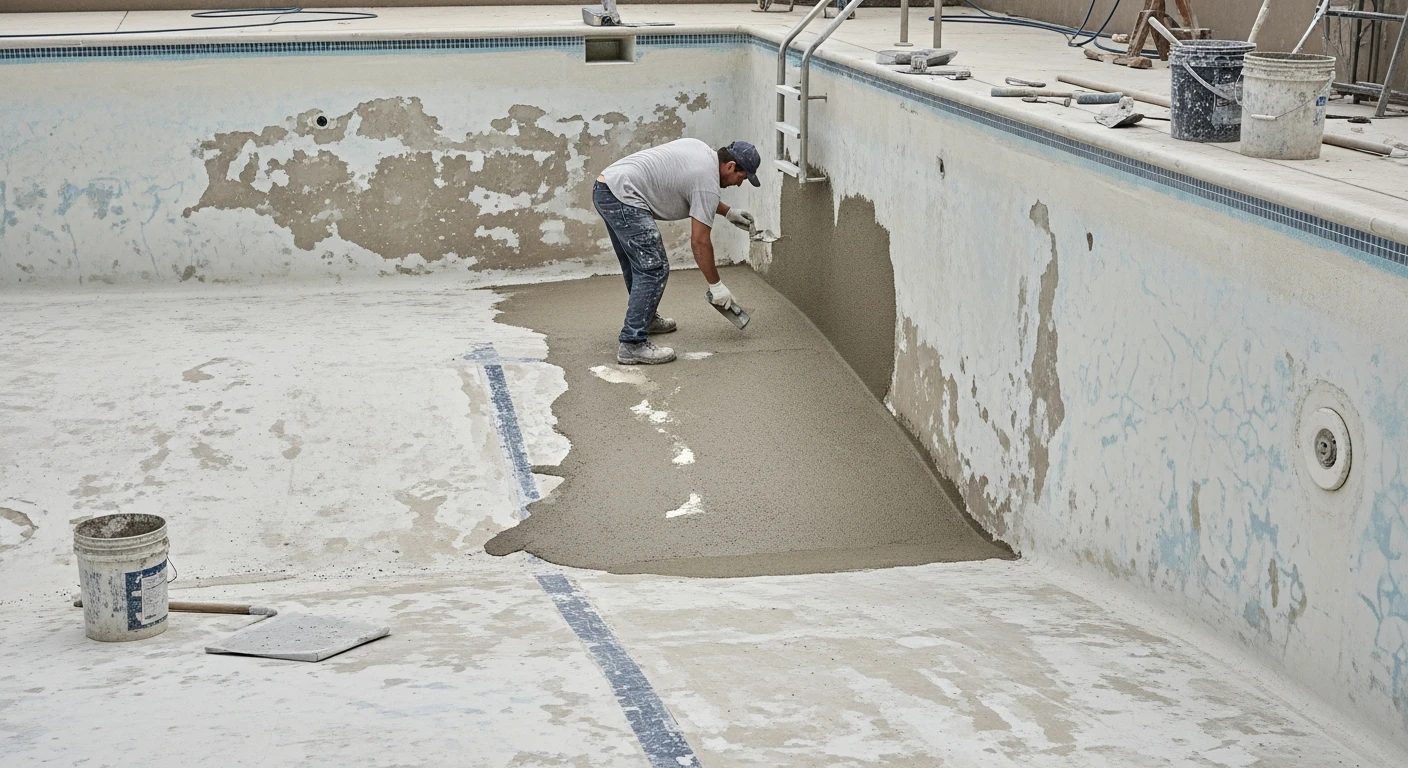
A successful remodel is a matter of process control. I've refined my implementation into a series of non-negotiable phases, each with its own quality gate. Rushing any of these steps is the fastest way to a failed finish.- Phase 1: Comprehensive Surface Preparation. After draining, the process must include a high-pressure water blasting (at a minimum of 3,500 PSI) to remove all loose material, followed by a meticulous acid wash and neutralization. I’ve seen projects fail because the previous contractor skipped the neutralization step, leaving residual acid to slowly eat away at the new bonding agent.
- Phase 2: Waterproofing & Bonding Agent. This is a step I never compromise on. I apply a two-part epoxy bonding agent to the prepared shell. This creates an impermeable barrier and a tenacious chemical grip for the new finish, practically eliminating the risk of delamination (hollow spots).
- Phase 3: Finish Application & Curing. The application of the new pebble or quartz aggregate finish must be done by a certified applicator. But the real secret is in the initial hydration. Controlled hydration during the first 72-hour curing phase is vital in our unpredictable humidity. We use techniques like misting to ensure the surface cures evenly, preventing shrinkage cracks.
- Phase 4: The Startup Protocol. Filling the pool is not the final step. I follow the strict National Plasterers Council (NPC) startup procedure, a 28-day process of brushing and chemical balancing to ensure the finish cures properly and achieves maximum hardness and stain resistance.
Post-Fill QA: My Non-Negotiable Quality Checkpoints
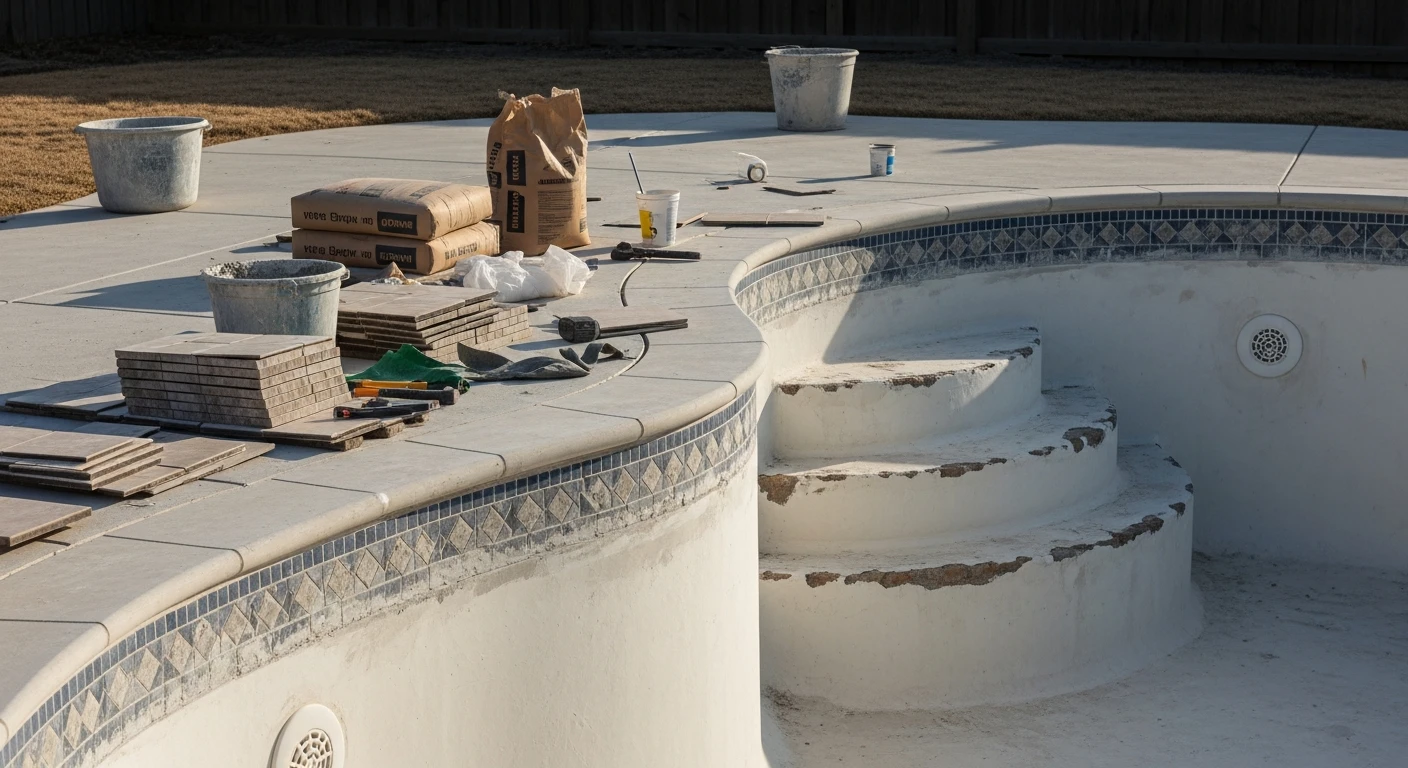
My job isn't finished when the pool is full of water. The final 10% of the project ensures the first 90% lasts. My final sign-off isn't complete until the water's Langelier Saturation Index (LSI) is balanced between 0.0 and +0.3. An LSI outside this precise range means the water is either corrosive (etching the new plaster) or scaling (depositing calcium), both of which are unacceptable on a new surface. For the high-traffic vacation homes near the theme parks, I also perform a final mastic joint inspection around the coping and deck. The extreme heat causes significant expansion and contraction. An improperly installed or degraded mastic joint will fail, allowing water to penetrate behind the pool shell, which is a primary cause of tile and beam failure. It’s a small detail that prevents a catastrophic problem. Has your current contractor discussed how they'll manage and document the Langelier Saturation Index during the first 30 days post-remodel to guarantee the integrity of your new investment?Written by

Tags
inground pool renovation ideas
in ground pool renovations
inground pool resurfacing near me
inground pool remodel cost
Inground Pool Remodeling in Osceola FL FAQ
What is inground pool remodeling?
Inground pool remodeling is the process of renovating and updating an existing inground pool to improve its appearance, functionality, and overall value. This can include updates to the pool's surface, walls, floor, and surrounding deck, as well as the installation of new equipment and features.
Why remodel my inground pool?
There are many reasons to consider remodeling your inground pool, including updating its appearance, improving its functionality, increasing its value, and enhancing your outdoor living space. Additionally, a well-designed and well-maintained pool can increase your home's resale value and provide a fun and relaxing space for you and your family to enjoy.
Can I remodel my inground pool myself?
While it may be possible to complete some minor updates to your inground pool on your own, major renovations typically require the expertise and experience of a professional pool remodeling contractor. Attempting to remodel your pool without proper training and equipment can lead to costly mistakes, safety hazards, and decreased pool performance.
What are some common inground pool remodeling projects?
Some common inground pool remodeling projects include updating the pool's surface with new plaster, tile, or fiberglass, replacing old equipment with new and energy-efficient alternatives, installing new lighting and water features, and renovating the surrounding deck and patio area. Depending on your specific needs and goals, your pool remodeling contractor can help you prioritize and plan your project.
How long does inground pool remodeling typically take?
The length of time required for an inground pool remodeling project can vary significantly depending on the scope and complexity of the project. On average, a simple pool renovation may take several weeks to complete, while more extensive projects may take several months or even longer. Your pool remodeling contractor can provide a more accurate estimate of the project timeline based on your specific needs and goals.
How much does inground pool remodeling typically cost?
The cost of inground pool remodeling can vary widely depending on the scope and complexity of the project, as well as the materials and equipment used. On average, a simple pool renovation may cost between $5,000 and $20,000, while more extensive projects may cost $50,000 or more. Your pool remodeling contractor can provide a more accurate estimate of the project cost based on your specific needs and goals.
What are some benefits of hiring a professional pool remodeling contractor?
Hiring a professional pool remodeling contractor can provide numerous benefits, including increased safety, improved pool performance, and a higher level of craftsmanship and attention to detail. A professional contractor will also be able to help you navigate the pool remodeling process, ensuring that your project is completed on time and within budget.
Can I still use my inground pool while it's being remodeled?
It is typically not recommended to use your inground pool during the remodeling process, as this can create safety hazards and compromise the integrity of the pool and its systems. A professional pool remodeling contractor will be able to provide guidance on how to minimize disruptions and ensure a smooth and efficient renovation process.
What kind of permits and inspections are required for inground pool remodeling?
The specific permits and inspections required for inground pool remodeling will depend on your location, the scope and complexity of the project, and local building codes and regulations. Your pool remodeling contractor will be able to help you navigate the permitting and inspection process, ensuring that your project is completed in compliance with all relevant laws and regulations.