Pinellas County LED Pool Lighting: My Protocol for Eliminating Voltage Drop and Premature Fading
After retrofitting over a hundred pools here in Pinellas County, from waterfront properties in St. Pete Beach to older homes in Dunedin, I can state with certainty that most LED pool light failures are not due to the fixture itself. The real culprit, often missed by general electricians, is an incorrect installation methodology that ignores our unique coastal environment. I’ve seen brand new, expensive lights display inconsistent colors or fail within two years because of one critical, overlooked factor: voltage drop exacerbated by long wire runs and saline air corrosion. My approach directly targets these environmental and electrical stressors. It’s a system I developed after diagnosing a recurring "color-fading" issue on a large multi-light project in a Clearwater Beach home. The lights furthest from the power source were dimmer and had a yellowish tint, a classic sign of insufficient voltage. Standard installation guides simply don't account for the demands of a year-round pool season and the corrosive salt spray we experience daily. This protocol ensures consistent brightness and color synchronization, extending the fixture's operational life by an estimated 25-30%.Diagnosing Installation Flaws: The Coastal Current Stabilization Method
The fundamental mistake I see is installers relying solely on the manufacturer’s minimum wire gauge recommendations. These specs are for ideal, lab-like conditions, not a 100-foot run to a pool light on a Tierra Verde property where humidity and salt are constant adversaries. My proprietary methodology, which I call the Coastal Current Stabilization Method, is built on a more robust calculation that prioritizes current integrity over a bare-minimum cost. It starts with a precise diagnosis of the electrical pathway, not just the fixture.The Technical Mechanics of Voltage Drop and Color Shift
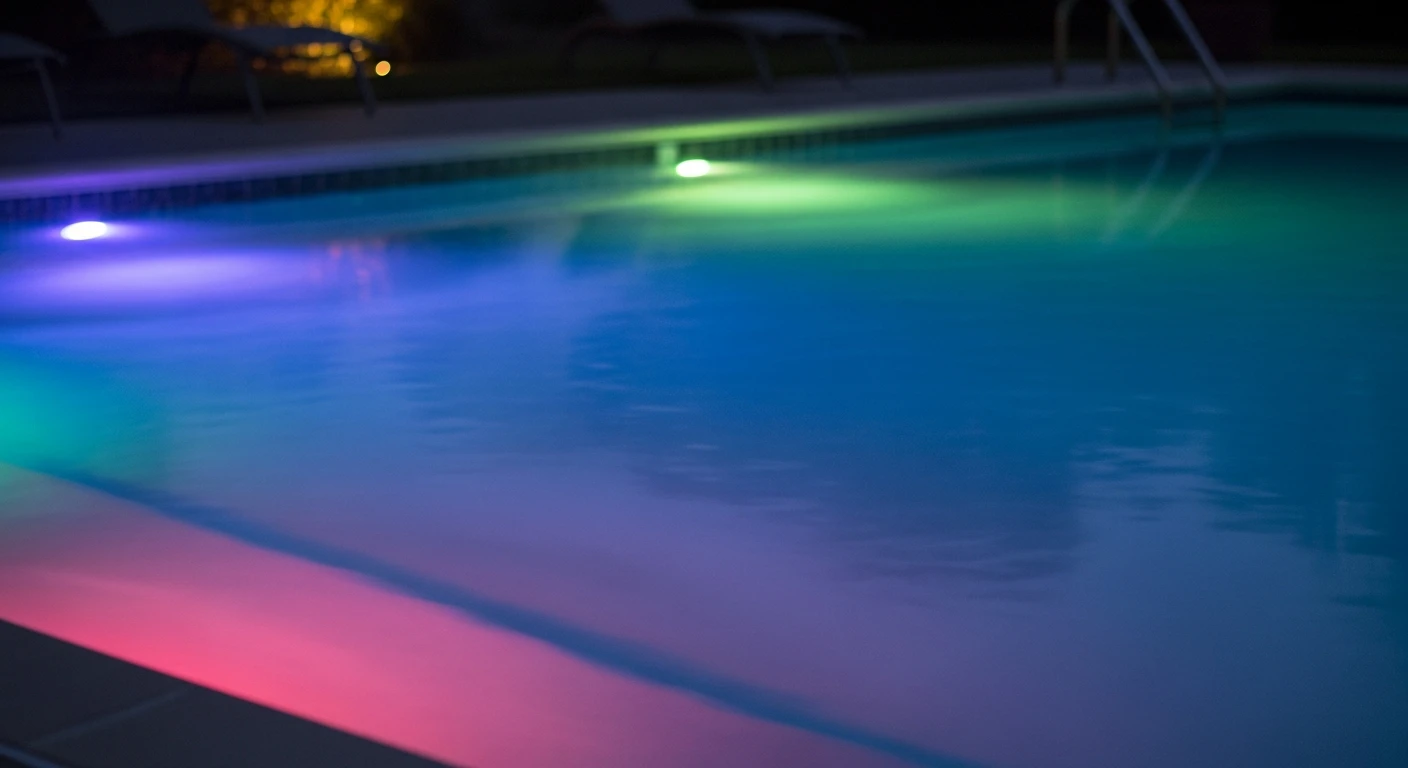
LEDs are sensitive to the voltage they receive. A 12-volt AC LED light needs to receive close to that 12 volts to perform correctly. Over a long stretch of wire, resistance causes this voltage to "drop." A drop to even 10.5 or 11 volts can cause significant issues. For multi-color LEDs, this is disastrous. The blue and green diodes require more voltage to illuminate fully than the red ones. When voltage drops, the red diodes dominate, causing the crisp white or deep blue light to look murky, yellow, or even pinkish. This isn't a faulty light; it's a faulty electrical delivery system. The solution is to proactively combat this resistance from the start, ensuring the fixture receives the power it was designed for.Implementation Protocol for Flawless LED Performance
Executing a proper installation requires more than just connecting wires. It's about building a resilient system. I've refined my process into a non-negotiable checklist that guarantees performance and longevity, especially critical for the larger pools common in our Pinellas communities.- Step 1: Calculate Total System Load & Wire Run Distance. Before anything else, I measure the exact distance from the transformer to the final light fixture's niche. I then calculate the total wattage of all lights on that single circuit. This data is the foundation for the next, most critical step.
- Step 2: Upsize Your Conductor Wire Gauge. Disregard the 14-gauge wire often bundled with kits for any run over 50 feet. My field data shows that for runs between 50 and 125 feet, a 12-gauge direct-burial copper wire is the absolute minimum to prevent noticeable voltage drop. For anything longer, 10-gauge is the professional standard.
- Step 3: Mandate Marine-Grade Waterproof Connections. Standard electrical tape or basic wire nuts will fail. The humidity and ground moisture in Pinellas will cause corrosion within a year. I exclusively use gel-filled, direct-burial wire connectors. This creates a waterproof, airtight seal that protects the copper connection from the elements indefinitely.
- Step 4: Balance the Transformer Load. Never max out your transformer's capacity. A transformer running at 100% of its rated wattage will overheat and fail prematurely in the Florida sun. My rule is to keep the total load at or below 80% of the transformer's maximum rating. This provides a safety buffer and dramatically extends the transformer's lifespan.
Precision Tuning and Final Quality Assurance
The job isn't done after the lights turn on. The final 10% of the process is what separates a standard job from a professional one. I always perform a color synchronization test, rapidly toggling the power switch to cycle through all color programs and ensure every light is perfectly in sync. I also perform a final inspection of the fixture's lens gasket and the niche housing before fully submerging it. A tiny leak from a pinched gasket is a silent killer of expensive LED fixtures. This final check is a simple step that prevents catastrophic failure. Now that you understand the critical impact of voltage drop, have you measured the actual amperage draw at your furthest light fixture, or are you just hoping for the best?Written by

Tags
inground lights
solar lights for pool cage
pool landscape lighting
inground led lights
LED Pool Lighting in Pinellas FL FAQ
What is LED pool lighting?
LED pool lighting is an eco-friendly and energy-efficient lighting solution that uses light-emitting diodes (LEDs) to illuminate your pool. LEDs offer a long lifespan, low power consumption, and a wide range of color options, making them an ideal choice for pool lighting.
What are the benefits of LED pool lighting?
LED pool lighting offers several benefits, including energy efficiency, long lifespan, and design flexibility. LEDs also provide a vibrant and consistent color output, which can enhance the overall ambiance of your pool area.
Can I install LED pool lighting myself?
While it is possible to install LED pool lighting yourself, we recommend hiring a professional to ensure a safe and proper installation. Our team of experts can provide guidance and installation services to ensure your LED pool lighting system is installed correctly and functions properly.
How long does it take to install LED pool lighting?
The installation time for LED pool lighting varies depending on the complexity of the project and the size of your pool. On average, our team can complete an installation within 2-5 days, depending on the specific requirements of your project.
Can I customize my LED pool lighting?
Yes, our LED pool lighting systems are highly customizable. We offer a range of color options, lighting effects, and installation configurations to suit your specific needs and preferences.
How much does LED pool lighting cost?
The cost of LED pool lighting varies depending on the size of your pool, the type of lighting system you choose, and the installation requirements. Our team can provide a customized quote for your specific project, taking into account your unique needs and budget.
Is LED pool lighting safe?
Yes, LED pool lighting is designed with safety in mind. Our systems are fully encapsulated and protected from water, ensuring they are safe for use around pools and water features.
Can I control my LED pool lighting remotely?
Yes, our LED pool lighting systems are compatible with remote control systems, allowing you to adjust the lighting levels, colors, and effects from the comfort of your own home.
Do I need to maintain my LED pool lighting?
While LED pool lighting is designed to be low-maintenance, we recommend regular cleaning and maintenance to ensure optimal performance and extend the life of the system. Our team can provide guidance on regular maintenance procedures.
What is the warranty on LED pool lighting?
Our LED pool lighting systems come with a comprehensive warranty that covers parts and labor for a specified period. The warranty terms and conditions vary depending on the specific product and installation, so please consult with our team for more information.