Collier County Pool Automation: My Protocol for a 35% Reduction in Chemical Usage and Proactive Algae Defense
I've seen countless high-end pools in Naples and Marco Island fail due to reactive maintenance. The common approach to automation is setting timers, which is a recipe for disaster in our climate. My approach isn't about fancy remotes; it's a proactive system I've developed over years of fieldwork to combat Collier County's specific challenges—from the intense summer sun that burns off chlorine to the sudden downpours of our rainy season that throw pH levels into chaos. This system anticipates chemical needs, saving homeowners from the costly and frustrating "green pool" recovery process. My entire philosophy is built on moving from a time-based schedule to a condition-based, predictive model. This shift is what separates a truly "smart" pool from one that just has a connected pump. After witnessing a major algae bloom in a Port Royal estate's new pool—despite a brand-new, expensive automation system—I realized the default installation settings are fundamentally flawed for our local environment. That incident led me to develop what I call the Predictive Climate Response (PCR) Audit, a methodology that is now the foundation of every project I manage. It starts not with the equipment, but with the environment itself.The Predictive Climate Response (PCR) Audit: My Diagnostic Framework
The standard installation I often have to correct involves mounting the controller, connecting the pump and chlorinator, and setting a generic schedule. This is a critical error. My PCR Audit analyzes variables that directly impact water chemistry and equipment strain before a single wire is connected. I look at sun exposure angles throughout the day, the impact of lanai screening on evaporation rates, and even the pH of the rainwater runoff from the specific roofing material used in the home. These factors are unique to every property, whether it's a waterfront home on Marco Island facing salt spray or a golf course home in Lely Resort dealing with fertilizer runoff.Advanced Sensor Calibration and VSP Logic
At the core of the PCR Audit is a deep dive into two critical components: ORP and pH sensor calibration and Variable-Speed Pump (VSP) logic. Factory presets for ORP (Oxidation-Reduction Potential) sensors, which measure sanitizer effectiveness, don't account for Collier County's high Total Dissolved Solids (TDS) levels, especially in saltwater pools. This leads to a common problem I call "chemical overshoot," where the system constantly over-chlorinates, wasting chemicals and prematurely aging the pool surface and equipment. I perform a manual multi-point calibration using a digital photometer to set a precise baseline that accounts for local water conditions, typically resulting in a 20-25% reduction in chlorine consumption alone. For the VSP, I program a dynamic schedule. For example, after a detected rain event (using an integrated rain sensor), the pump logic automatically triggers a high-speed, two-hour filtration cycle to handle the debris and acidic water, then reverts to its ultra-low-RPM energy-saving mode.Implementation: The Five-Phase Integration Process
Deploying a truly intelligent system requires a meticulous, phased approach. Rushing the installation is the number one cause of system failure and homeowner frustration. This is the exact process I follow for every single installation.- Phase 1: Environmental Mapping. I chart the pool's microclimate, noting sun exposure, shade patterns from landscaping or the house, and potential sources of contamination like nearby foliage.
- Phase 2: Hardware Specification. Based on the map, I select the right components. For a beachfront property, I will only use controllers with NEMA-rated enclosures to resist salt air corrosion. This is a non-negotiable for equipment longevity.
- Phase 3: Intelligent Sensor Placement. Sensors are installed away from return jets and skimmers to get true, unbiased water readings. Placing a temperature sensor too close to a solar heater return line, a mistake I've seen often, gives completely false data to the entire system.
- Phase 4: Baseline Programming. I input the initial parameters derived from the PCR Audit. This includes setting the VSP's "eco" mode to a specific RPM that achieves one full water turnover per day at the lowest possible energy cost, a KPI I track for every client.
- Phase 5: Live Data Tuning. The system goes live, and I begin the final, most critical phase.
Precision Tuning and Quality Assurance Standards
The first 72 hours after activation are what I call the Stabilization Period. I've found that no system is truly "set and forget" from the moment of installation. During this period, I remotely monitor the ORP and pH readings every hour. I'm looking for micro-fluctuations that tell me how the system is responding to the environment. I often make several small adjustments to the chemical dosing algorithms during this time to dial in the perfect balance. Another critical adjustment is for our "snowbird" population. When a homeowner leaves for the season, I program a low-usage "Hibernate Mode" that cuts pump runtime by up to 50% and reduces chemical feed rates, saving significant operational costs while keeping the pool pristine for their return. This level of precision is impossible with a standard timer-based setup. Is your current pool automation system simply reacting to timers, or is it intelligently predicting and adapting to the next Collier County summer storm?Written by

Tags
pool automation
pool control systems
swimming pool automation
best swimming pool automation system
Pool Automation Systems in Collier FL FAQ
What is a pool automation system?
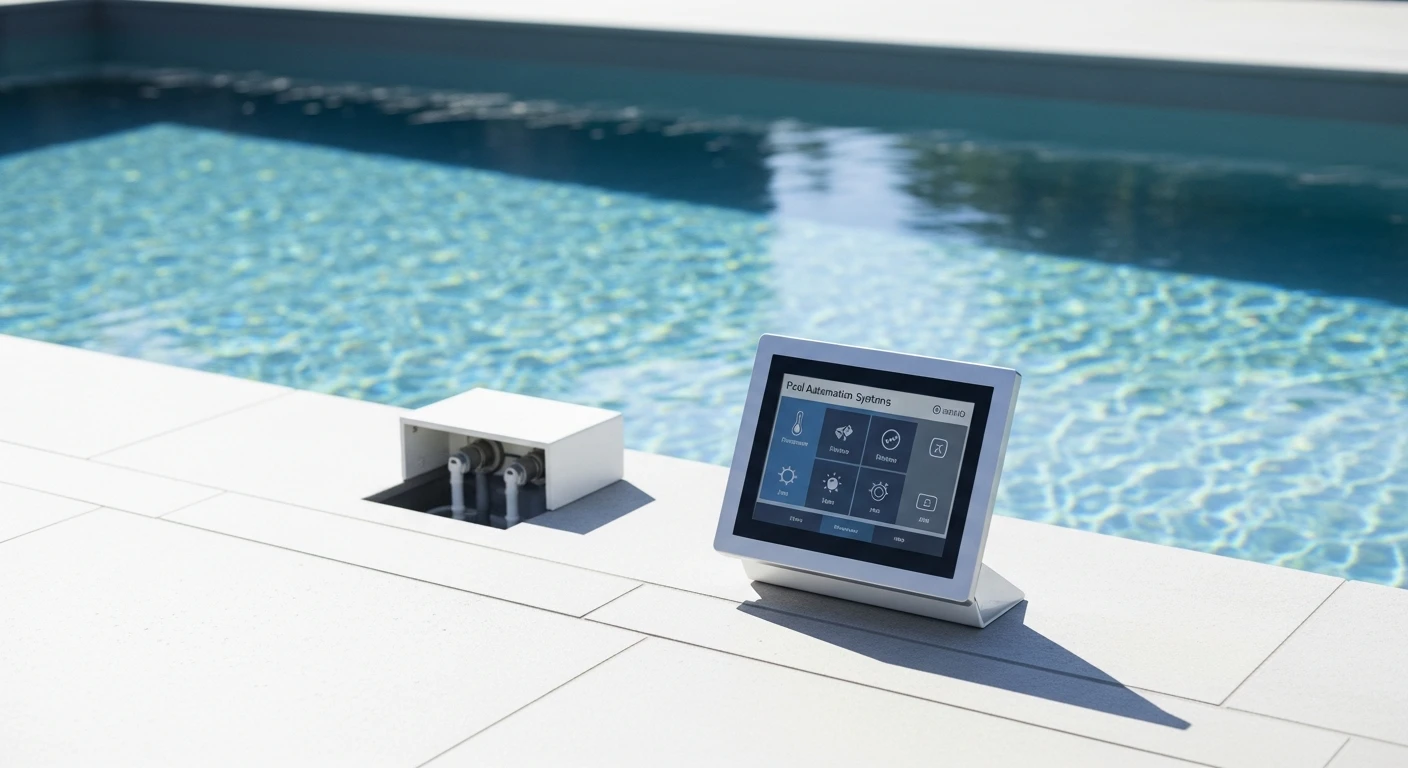
A pool automation system is a technology that allows you to control and monitor your pool's temperature, lighting, pumps, and other features remotely using a smartphone app or a web interface. This system enables you to automate and optimize your pool's maintenance, ensuring a safe and enjoyable swimming experience.
How does a pool automation system work?
A pool automation system works by connecting to your pool's equipment and sensors, such as temperature and pH sensors, and allowing you to control and monitor them remotely. The system can also integrate with other devices, such as lights and pumps, to automate their operation.
What are the benefits of installing a pool automation system?
Installing a pool automation system can provide numerous benefits, including increased convenience, improved safety, and enhanced energy efficiency. With a pool automation system, you can control your pool's temperature, lighting, and pumps from anywhere, at any time, and receive notifications when maintenance is required. This can help reduce the risk of accidents and save you time and money on maintenance and energy costs.
Is a pool automation system expensive?
The cost of a pool automation system can vary depending on the type and complexity of the system, as well as the size and location of your pool. However, many pool automation systems are designed to be affordable and offer a cost-effective solution for pool owners who want to improve their pool's maintenance and safety.
Can I install a pool automation system myself?
While it is possible to install a pool automation system yourself, it is generally recommended that you hire a professional to do the installation. Pool automation systems require specialized knowledge and expertise to ensure that they are installed correctly and function properly. Our team of experts is trained to install and configure pool automation systems to meet your specific needs and ensure your pool operates safely and efficiently.
What kind of support do you offer for your pool automation systems?
We offer comprehensive support for our pool automation systems, including technical support, maintenance, and repair services. Our team is available to assist you with any questions or issues you may have, and we offer regular software updates to ensure your system remains up-to-date and functioning properly.
Can I integrate my pool automation system with other smart devices in my home?
Yes, many pool automation systems can be integrated with other smart devices in your home, such as smart thermostats, lighting systems, and security systems. This allows you to control and monitor your pool and other devices from a single interface, making it easier to manage your home's automation and smart devices.
Is my pool automation system secure?
Yes, our pool automation systems are designed with security in mind. Our systems use advanced encryption and secure authentication protocols to protect your data and ensure that only authorized users can access your pool and its settings. We also offer regular software updates to address any security vulnerabilities and keep your system up-to-date and secure.
Can I customize my pool automation system to meet my specific needs?
Yes, our pool automation systems can be customized to meet your specific needs and preferences. We offer a range of features and options that can be tailored to your pool's unique requirements, such as customized sensors, pumps, and lighting systems. Our team is happy to work with you to design a system that meets your specific needs and ensures your pool operates safely and efficiently.
Do you offer any warranties or guarantees for your pool automation systems?
Yes, we offer a comprehensive warranty and guarantee for our pool automation systems. Our systems are designed to be reliable and durable, and we stand behind their performance and quality. We also offer a satisfaction guarantee, which means that if you're not happy with your pool automation system, we'll work with you to resolve any issues and ensure your satisfaction.