Pool Renovation Services Seminole County: A Framework for Extending Material Lifespan by 30% Against UV and Humidity
As a specialist who has personally overseen dozens of pool renovations, particularly in the unique climate of Seminole County, I’ve learned that a successful project is determined long before the first tile is set. The most common failure I encounter is a focus on aesthetics over substrate integrity. Homeowners from Lake Mary to Longwood are sold a beautiful new pebble finish, only to see it fail prematurely because the underlying gunite shell was never properly diagnosed. This oversight, driven by the intense Florida sun and high humidity, can turn a dream renovation into a recurring nightmare of delamination and staining. My approach fundamentally rejects this surface-level thinking. I’ve developed a methodology that prioritizes the structural and chemical health of the pool shell itself, ensuring any new surface applied is bonded to a stable foundation. This isn't just about making the pool look good for a season; it's about engineering a solution that withstands the specific environmental pressures of Central Florida, from the heavy summer rains in Sanford to the relentless heat across the county. The result is a finish that not only looks impeccable but also boasts a measurable increase in durability and chemical stability.My Proprietary Diagnostic: The Substrate Integrity Analysis
Before I even consider a color swatch, I perform what I call the Substrate Integrity Analysis. This is a non-negotiable first step. I once took over a project in a Heathrow community where the previous contractor had already started demolition. My analysis revealed significant hydrostatic pressure had caused micro-fractures throughout the shell, something a simple visual inspection missed entirely. Had they proceeded, the new $15,000 finish would have popped and blistered within 18 months. My process is designed to prevent exactly that kind of catastrophic and costly failure.Technical Deep-Dive into the Analysis Protocol
My analysis consists of three core evaluations. First is hydrostatic pressure mapping. Given Seminole County's high water table, I test for pressure points that can push against the pool shell from underneath, a primary cause of cracking and hollow spots. Second, I perform a meticulous bond-strength delamination test by systematically tapping the entire surface and listening for auditory voids that indicate the old plaster is no longer securely bonded to the gunite. Finally, for older pools common in areas like Casselberry, I may perform a core sample analysis to check for concrete porosity and rebar integrity. High porosity means the shell acts like a sponge, a death sentence for any new finish.The Implementation Blueprint: From Abrasion to Curing
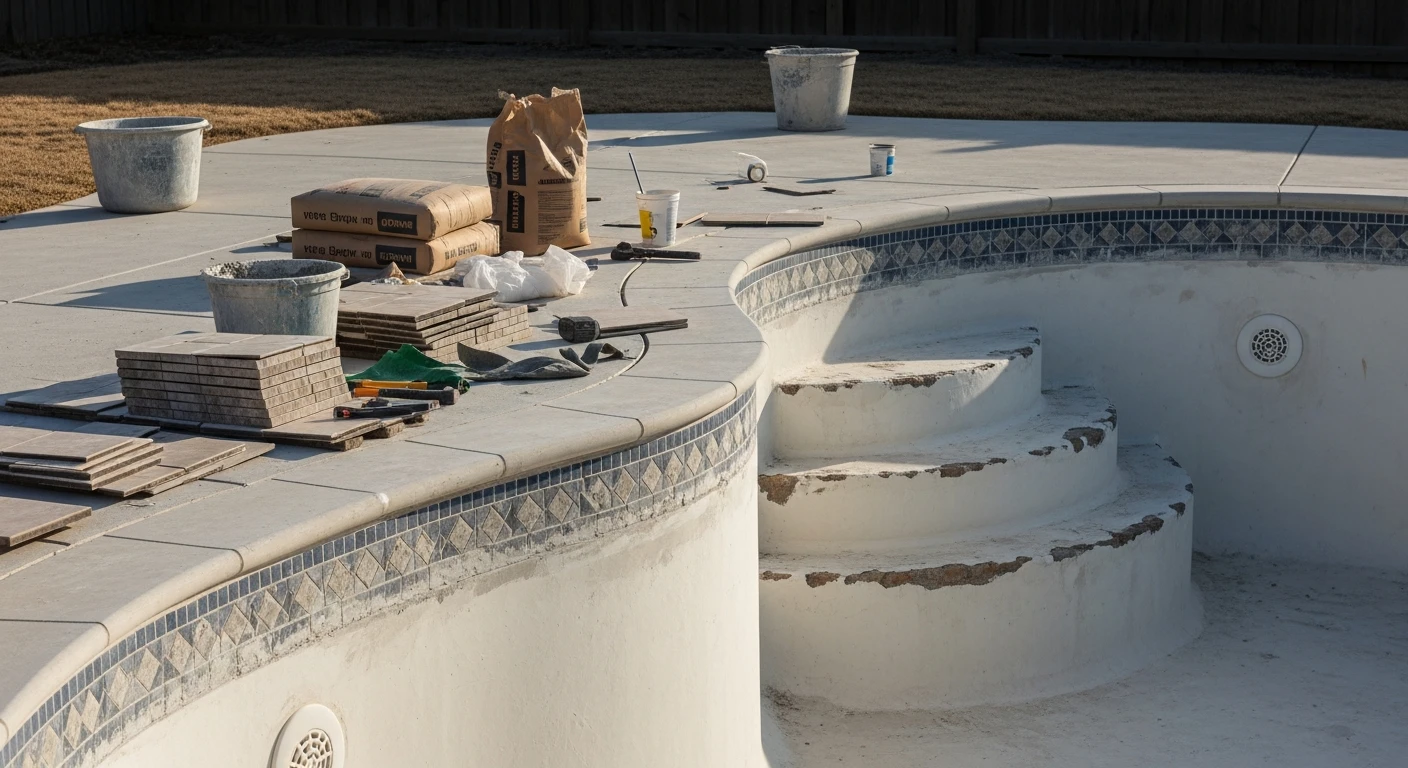
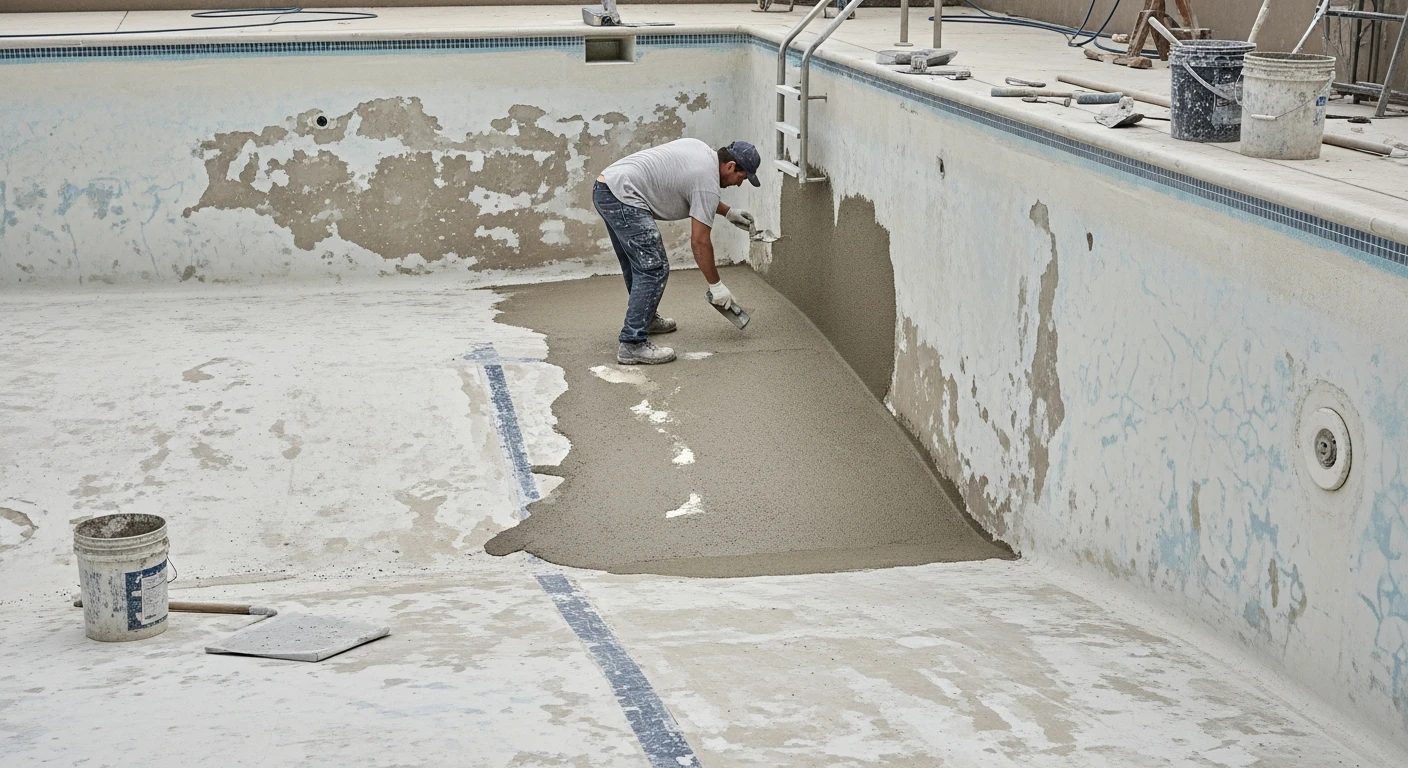
Executing the renovation correctly is about process discipline. I've seen crews in Winter Springs rush the surface preparation on a hot, humid day, trapping moisture behind the bond coat. That single error guarantees failure. My implementation is a rigid, step-by-step sequence designed to create the ideal bonding environment.- Phase 1: Aggressive Mechanical Abrasion. We don't just "sand" the pool. We use hydro-blasting or diamond grinding to strip the surface down to the raw, porous gunite, creating a deep profile for the new material to grip. The goal is a Concrete Surface Profile (CSP) of 4-5.
- Phase 2: Targeted Structural Repair. All identified cracks are cut open and filled with a high-strength, waterproof epoxy injection system, not a simple hydraulic cement patch.
- Phase 3: Bond Coat Application. I insist on a two-part, modified-polymer bond coat. This is the critical link. It must be applied within the manufacturer's specified temperature and humidity window, a major challenge during a Florida summer.
- Phase 4: Finish Application & Troweling. Whether it's a pebble or quartz aggregate, the material is applied with consistent technique to avoid mottling. The trowel pressure and angle are critical for compacting the material and achieving a uniform, non-porous surface.
- Phase 5: Controlled Hydration (Curing). The pool is not simply filled. We manage the initial water fill and chemical balance over a 7-day period to ensure the new surface cures properly from the inside out, maximizing its hardness and stain resistance.
Precision Adjustments and Quality Control Standards
The difference between a good job and an exceptional one lies in the final 5%. One such detail is my Mottling Control Technique during troweling. By using a very specific cross-hatch pattern in the final pass, I can virtually eliminate the shadowy discolorations that plague many new plaster jobs. Another critical standard is my Post-Fill Startup Chemistry Protocol. Most contractors just throw in chlorine and call it a day. I follow a meticulous 10-day process of brushing and balancing alkalinity, calcium hardness, and pH to prevent "plaster dust" and scale, which directly protects the investment and extends the finish's vibrant appearance by years. Is your current renovation plan based on a deep analysis of your pool's structural foundation, or is it merely a plan to cover up underlying problems with a pretty new surface?Written by

Tags
pool resurfacing near me
pool renovation near me
pool deck repair
pool plaster repair
Pool Renovation Services in Seminole FL FAQ
What is the process of pool renovation?
Pool renovation is a comprehensive process that involves inspecting, repairing, and upgrading the existing pool structure, equipment, and surrounding areas. Our team of experts will work with you to assess the condition of your pool, identify areas that need improvement, and create a customized plan to meet your needs and budget.
Why should I renovate my pool?
Renovating your pool can increase its value, functionality, and aesthetic appeal. It also provides an opportunity to upgrade outdated equipment, improve energy efficiency, and address any safety concerns. Furthermore, a well-maintained pool can provide years of enjoyment for you and your family.
What are the benefits of hiring a professional pool renovation company?
Hiring a professional pool renovation company ensures that your project is handled by experienced and licensed experts who have the necessary skills and knowledge to complete the job efficiently and effectively. We can help you avoid costly mistakes, ensure compliance with local building codes, and provide a warranty on our work.
Can I renovate my pool myself?
While it may be possible to perform some minor repairs and maintenance tasks on your pool yourself, major renovations require extensive knowledge, specialized equipment, and expertise. Attempting to renovate your pool without proper training and experience can lead to costly mistakes, safety hazards, and potential damage to your pool and surrounding areas.
How long does a pool renovation typically take?
The duration of a pool renovation can vary depending on the scope of the project, the size of the pool, and the complexity of the work involved. On average, a typical pool renovation can take anywhere from a few days to several weeks or even months. Our team will work with you to create a project timeline that meets your needs and schedule.
What are the costs associated with pool renovation?
The costs associated with pool renovation can vary widely depending on the scope of the project, the materials and equipment needed, and the location where the work is being performed. Our team will work with you to create a customized quote that outlines the costs and services included in your project.
Are there any warranties or guarantees offered for pool renovation services?
Yes, our company offers a comprehensive warranty and guarantee on our pool renovation services. We stand behind our work and are committed to ensuring that our customers are completely satisfied with their renovated pool. Our warranty and guarantee provide peace of mind and protection for your investment.
Can I finance my pool renovation?
Yes, we offer financing options for pool renovation projects. Our team can work with you to create a payment plan that fits your budget and financial situation. We also accept various forms of payment and offer special promotions and discounts from time to time.
How do I maintain my newly renovated pool?
Proper maintenance is essential to ensuring the longevity and functionality of your newly renovated pool. Our team will provide you with a comprehensive maintenance plan and training to help you keep your pool clean, safe, and well-maintained. We also offer ongoing maintenance and repair services to keep your pool in top condition.