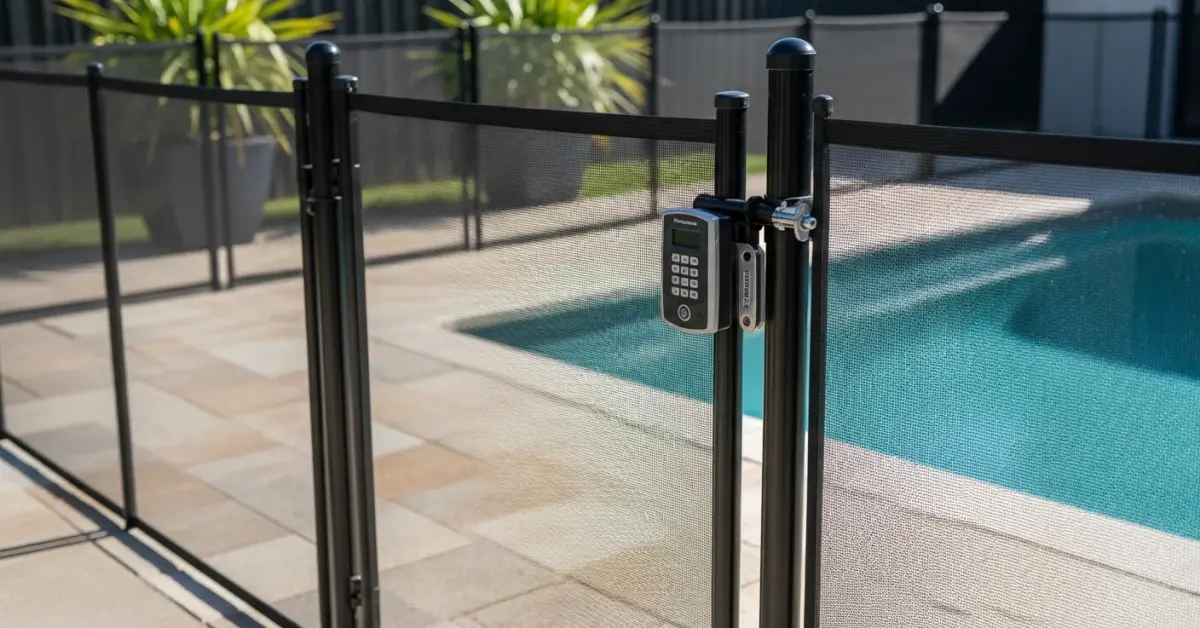
Fence and Alarm Installation: My Protocol for 30-Year Lifespan Against Hillsborough County’s Humidity and Salt Spray
I’ve lost count of the number of fence and alarm systems I’ve had to overhaul in Hillsborough County, from South Tampa to the newer developments in Brandon and Riverview. The primary failure point isn't workmanship; it's a fundamental misunderstanding of our unique environment. A standard installation that works in a dry climate will fail here in under five years, compromised by a combination of high humidity, intense UV radiation, and, for coastal homes, corrosive salt spray. My entire approach is built on preempting these failures before a single post is set. The most common mistake I see is treating the fence and the alarm as two separate projects. This is a critical error. The fence line dictates the security perimeter, creating new blind spots and potential vulnerabilities that a pre-existing alarm system is not configured to handle. My methodology integrates them from day one, ensuring the physical barrier and the electronic surveillance work as a single, cohesive system, engineered specifically for the challenges of living in the Tampa Bay area.My Hillsborough Resilience Framework: A Pre-Installation Diagnostic
Before any materials are ordered, I perform a three-part diagnostic that I developed after correcting a large-scale installation in a Carrollwood community where the vinyl fences started warping and yellowing within 18 months. This framework prevents costly rework and ensures longevity.The Technical Deep-Dive of the Resilience Framework
My diagnostic isn't a simple walkthrough. It's a data-driven analysis of the property's specific micro-environment.- Material Forensics: Standard big-box store vinyl fencing often has a low concentration of Titanium Dioxide (TiO2), the primary UV inhibitor. For Hillsborough County's relentless sun, I specify a minimum of 10 parts per hundred of TiO2. For properties east of I-75, like in Plant City, this is sufficient. But for homes in Davis Islands or Apollo Beach, I mandate AAMA 2604/2605 powder-coated aluminum. It is the only material I’ve found that reliably resists the airborne salinity without pitting or chalking.
- Soil and Hydrology Analysis: Our sandy soil requires a different approach to fence post footings. The standard 24-inch depth is inadequate. My protocol demands a minimum depth of 36 inches with a wider, bell-shaped base, using a 4,000 PSI concrete mix. This prevents the post-shifting and gate-sagging I so often see after just one rainy season.
- Threat Vector Mapping: I walk the property and map out how the new fence line will alter traffic flow and sightlines. A privacy fence that blocks a street view also creates a perfect hiding spot for an intruder. I identify these new "shadow zones" and specify the placement of dual-technology motion sensors, which use both microwave and passive infrared (PIR) triggers. This drastically reduces false alarms caused by heat signatures from sun-baked surfaces, a common problem with basic PIR-only sensors in our climate.
Implementation Protocol: A Pre-Construction Checklist
Executing the installation requires precision. A mistake in the early stages will compound over time. This is the checklist I personally use to guarantee the integrity of the integrated system.- Verify Property Survey Stakes: I insist on seeing the official survey markers. Relying on sprinkler heads or landscaping elements is the fastest way to a property line dispute with a neighbor.
- Pre-plan Sensor Cabling Routes: Before the first post hole is dug, we must plan the conduit runs for the alarm sensors. It is 100% more expensive and less secure to try and run wiring after the fence is built.
- Review HOA Covenants: I personally review the Homeowner Association documents for specific clauses on material, height, and setback. A Westchase HOA has vastly different rules than one in an historic Ybor City district.
- Confirm Gate Swing and Hardware Specs: We determine the swing direction and stress-test points for all gates. I mandate the use of 316 marine-grade stainless steel for all hinges and latches to prevent the rapid corrosion I see on standard galvanized hardware.
Post-Installation Tuning and Quality Assurance
The job isn't done when the last panel is up. The system requires precise calibration to function optimally within the local environment. I perform a series of checks to harden the installation against the elements and user error. This includes calibrating sensor sensitivity to ignore swaying palm fronds but detect a human-sized object, and stress-testing every gate to ensure there is less than a 1/4-inch sag after 50 open-and-close cycles. This level of detail is what separates a 5-year fence from a 30-year investment. Is your current security plan accounting for the accelerated degradation caused by Hillsborough County’s climate, or is it just a standard installation waiting to fail?Written by

Tags
pool alarm installation
pool safety alarm
pool gate alarm
pool security alarm
Fence and Alarm Installation in Hillsborough FL FAQ
Does my pool fence really need to be a specific height and have a self-closing gate?
Yes, most local building codes mandate a minimum fence height, typically between 48 and 60 inches, with a self-closing, self-latching gate to meet safety standards. These regulations are not suggestions; they are legal requirements designed to prevent unsupervised access by young children. The gate latch must be positioned high enough, usually around 54 inches from the ground, to be out of a small child's reach. A common failure point people overlook is the gate's swing direction; it must swing outward, away from the pool area, to prevent a child from easily pushing it open and gaining entry. Non-compliance can lead to significant fines and liability in case of an accident.
If I have a good fence, do I still need a pool alarm?
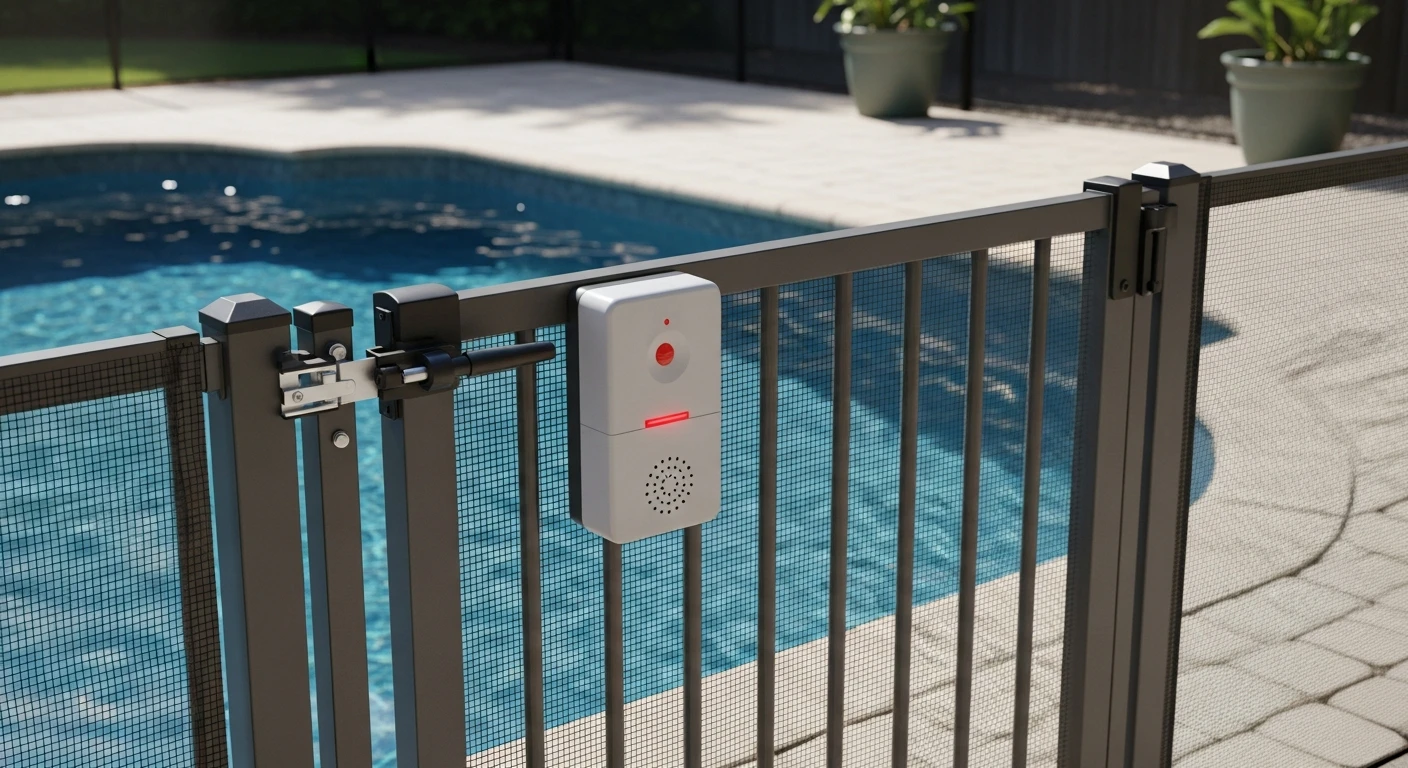
Many jurisdictions legally require multiple layers of protection, meaning a fence alone may not be sufficient to pass inspection. Even with a compliant fence, a pool alarm provides a critical secondary safety barrier that alerts you instantly if the perimeter is breached. There are several types, including gate alarms, subsurface wave detection alarms, and wristband immersion alarms for children. Relying solely on a fence ignores the risk of a gate being propped open or a child finding a way over or under it. The most robust safety plans always incorporate redundant systems because no single device is foolproof.
What's the difference between a mesh fence and a permanent aluminum or vinyl one?
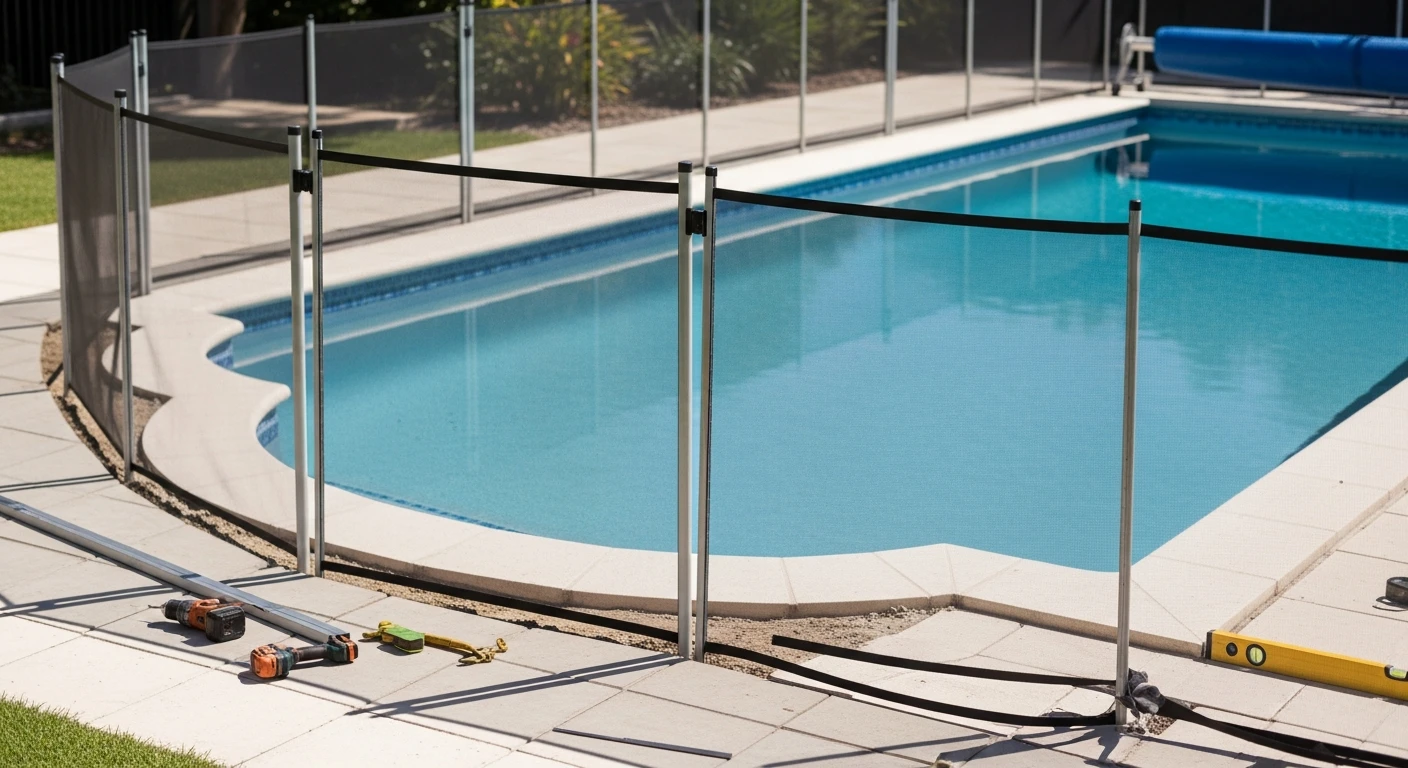
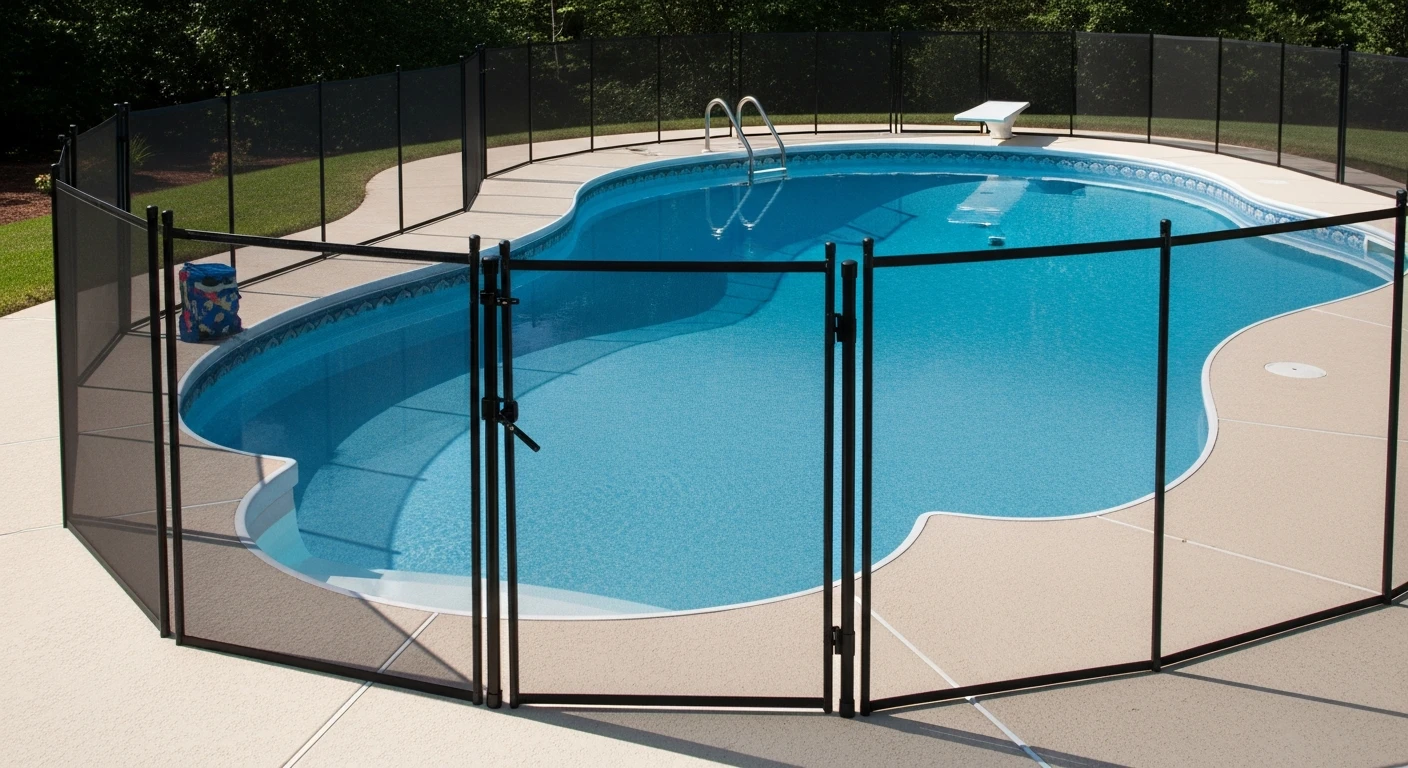
A removable mesh fence offers flexibility and transparency, while a permanent aluminum or vinyl fence provides more rigid, long-term security. Mesh fences are popular because they are difficult for children to climb and can be taken down for events, but they require tension to be effective and can be damaged more easily. Permanent fences offer greater durability and security but are a fixed landscape feature. A critical, often missed, trade-off with mesh is that improper re-installation by the homeowner can create gaps or reduce tension, creating a false sense of security that is more dangerous than having no fence at all.
Can I install a pool safety fence myself to save money?
While DIY installation is possible for some fence types, it is generally not recommended due to the precise requirements for post spacing, tension, and gate mechanics. Professional installation ensures the fence meets all local safety codes, which are often very strict regarding factors like the maximum gap between the fence bottom and the ground, which typically cannot exceed 4 inches. An improperly installed fence may fail a home inspection and, more importantly, fail to prevent an accident. The cost savings of a DIY project do not outweigh the potential liability and the risk to safety if the installation has even a minor flaw.
How do modern pool alarms work, and which type is most reliable?
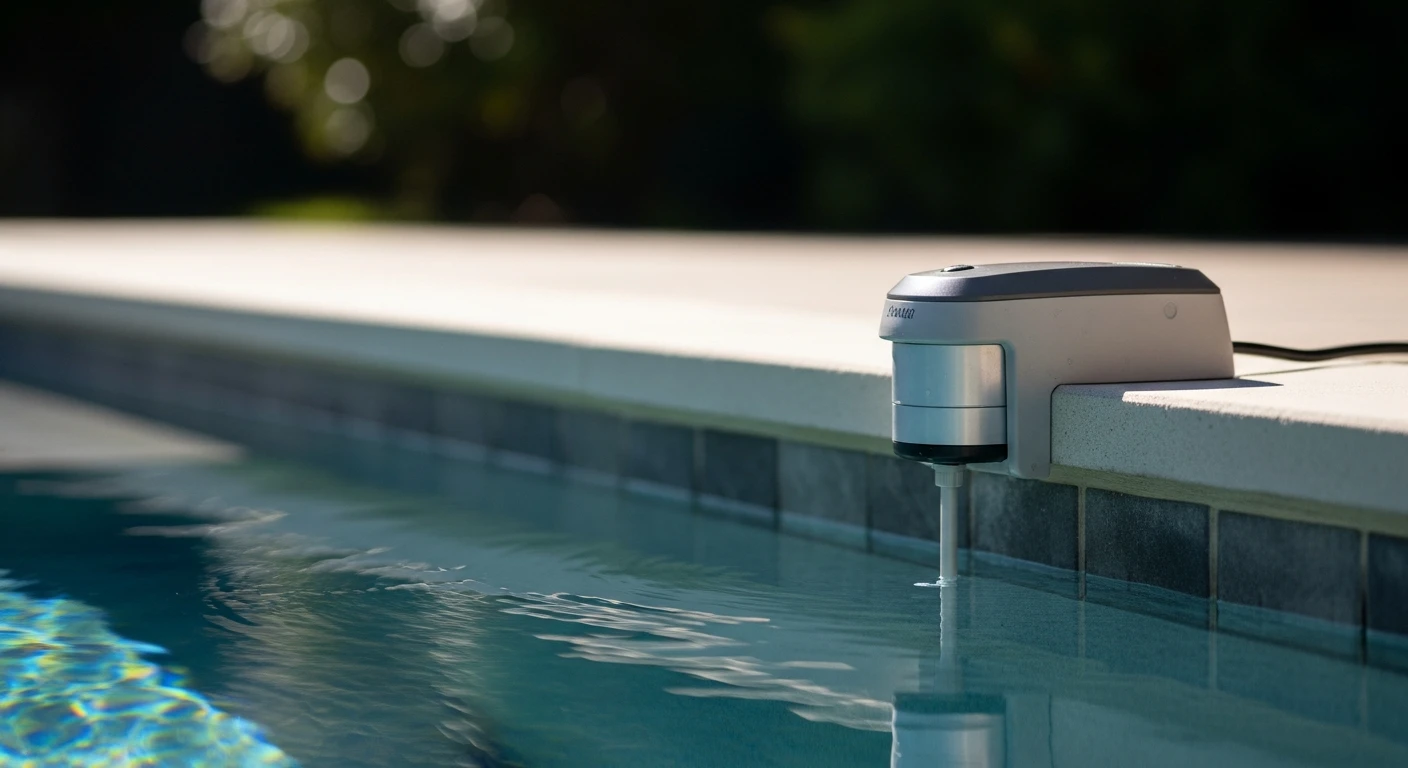
Modern pool alarms use different technologies, primarily subsurface wave detection or infrared perimeter beams, to detect unauthorized entry into the pool area. Subsurface alarms are installed in the pool and trigger when an object weighing more than a set amount, like 15 pounds, breaks the water's surface, creating waves. Infrared systems create an invisible 'fence' around the pool's edge. While subsurface alarms are highly effective at detecting actual water entry, their main drawback is a higher potential for false alarms from wind or pool cleaners. For this reason, many homeowners opt for a layered system, combining a gate alarm with a subsurface unit for maximum reliability.
Will drilling into my concrete deck for the fence posts cause cracks or leaks?
Drilling into a concrete deck will not cause structural problems or leaks if done correctly with the right equipment. Professionals use a diamond-core drill to create clean, precise holes for the fence posts, which minimizes stress on the surrounding concrete and prevents spider cracks from forming. After the posts are set, the holes are typically sealed with hydraulic cement or a similar waterproof grout. The biggest risk comes from inexperienced installers using improper tools, like a standard hammer drill, which can shatter the concrete's surface and compromise the integrity of the deck over time, especially through freeze-thaw cycles in colder climates.