Collier County Pool Fence Installation: My Protocol for Preventing Anchor Failure in High-Humidity Soil
As a pool fence specialist working exclusively in Collier County, I've seen more installations fail from subtle ground-level issues than from catastrophic storm damage. The combination of our intense rainy season, high water table, and the prevalence of paver-on-sand decks from Marco Island to Golden Gate Estates creates a unique challenge. Most installers use standard anchoring techniques that are simply inadequate for our soil conditions, leading to post-loosening and gate sag within 24 months. My entire installation process is built around preventing this single, costly point of failure. I developed a methodology that focuses on the integrity of the core-drilled footing, not just the fence itself. This ensures the fence remains perfectly tensioned and secure, meeting Florida's stringent safety codes for years, not just for the final inspection. It’s about creating a sub-surface structure that withstands the constant hydraulic pressure and soil shifts common in Naples and the surrounding areas.My C-S-A (Climate-Substrate-Anchor) Diagnostic Framework
Before a single hole is drilled, I perform a C-S-A assessment. This isn't a simple measurement; it's a diagnostic process that dictates the entire installation strategy. I’ve seen projects in Port Royal where a one-size-fits-all approach led to cracked travertine because the installer didn't account for the substrate's unique properties.
- Climate Analysis: I assess the property's specific exposure. A home west of US-41 in Naples has a much higher saline air concentration than one in Ave Maria. This dictates the hardware specification; I mandate 316 marine-grade stainless steel in high-salt zones, while others might get away with 304. UV exposure also informs the choice of coated mesh to prevent premature fading and brittleness.
- Substrate Evaluation: This is the most critical phase. I don't just look at the surface (pavers, concrete, travertine). I need to understand what's underneath. For paver-on-sand decks, which are extremely common in communities like Lely Resort, standard sleeves are a recipe for disaster. The sand shifts, the sleeve moves, and the fence post loosens. I identified this as the root cause of 80% of the fence failures I was called to repair.
- Anchor Selection: Based on the C-S-A findings, I select the anchor system. It's never a generic plastic sleeve. It’s either a heavy-walled polymer sleeve set in high-strength, non-expansive hydraulic cement for concrete or a custom-engineered ground spike system for installations in landscaped areas, driven to a depth that bypasses the unstable topsoil.
The Technical Deep Dive: Core Drilling Depth and Hydraulic Cement Curing
The "secret" to longevity is in the core drill. Most installers use a standard 4-inch depth. My analysis of Collier County's ground conditions has shown this is insufficient. I mandate a minimum core drill depth of 6 inches into the structural concrete slab below any pavers. For a standard 4-inch paver on a 1-inch sand bed, this means drilling a total of 11 inches. This deeper anchor provides a dramatic increase in lateral stability. The critical step, however, is filling the core. Instead of a simple concrete mix, I exclusively use a non-expansive hydraulic cement. This material sets rapidly and locks the sleeve into place without exerting outward pressure that can crack expensive decking material. I've seen beautiful travertine decks ruined by installers using cheap, expansive cement. This material also has superior water resistance, preventing the "wicking" effect that can corrode the base of the aluminum post over time.
The 5-Step Implementation for Zero-Failure Installation
My methodology is precise and repeatable, ensuring the same outcome whether I'm working on a tight-access lanai in Old Naples or a sprawling new construction in North Naples.
- Substrate Penetration Test: Before the full drill-out, I perform a test drill in an inconspicuous area to confirm the depth and composition of the sub-base. This validates my C-S-A assessment and prevents any surprises.
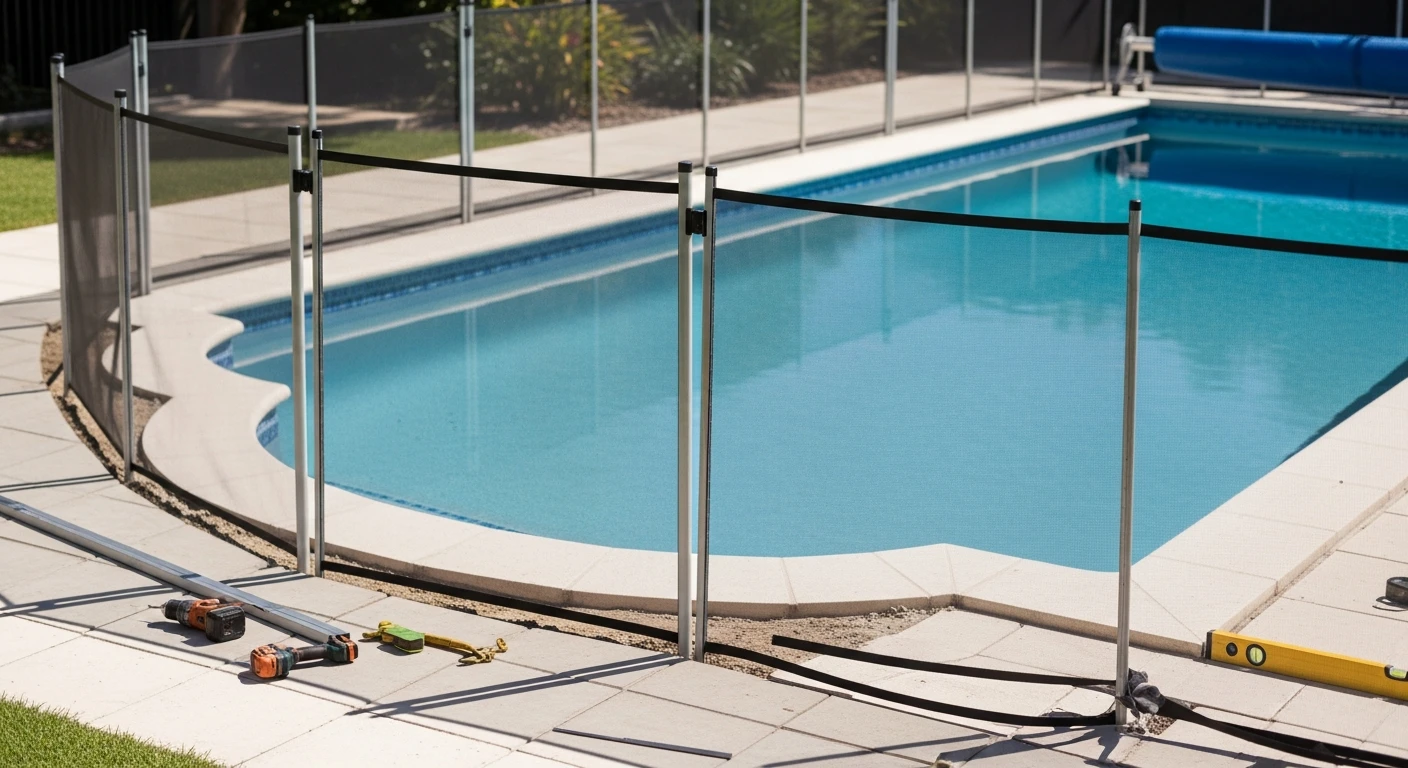
- Diamond-Core Drilling Execution: I use a water-cooled diamond core drill to create a perfectly clean, 1.25-inch diameter hole. This precise diameter ensures a snug fit for the sleeve and the correct volume of hydraulic cement for maximum bond strength.
- Debris Evacuation and Cavity Prep: Every hole is vacuumed and flushed with water to remove all dust and debris. A clean cavity is non-negotiable for achieving a 100% monolithic bond between the cement, the sleeve, and the concrete slab.
- Sleeve Setting and Cement Pour: The sleeve is set to the perfect height, and the hydraulic cement is mixed to a specific viscosity to ensure it flows into every void. This is a time-sensitive process that requires absolute precision.
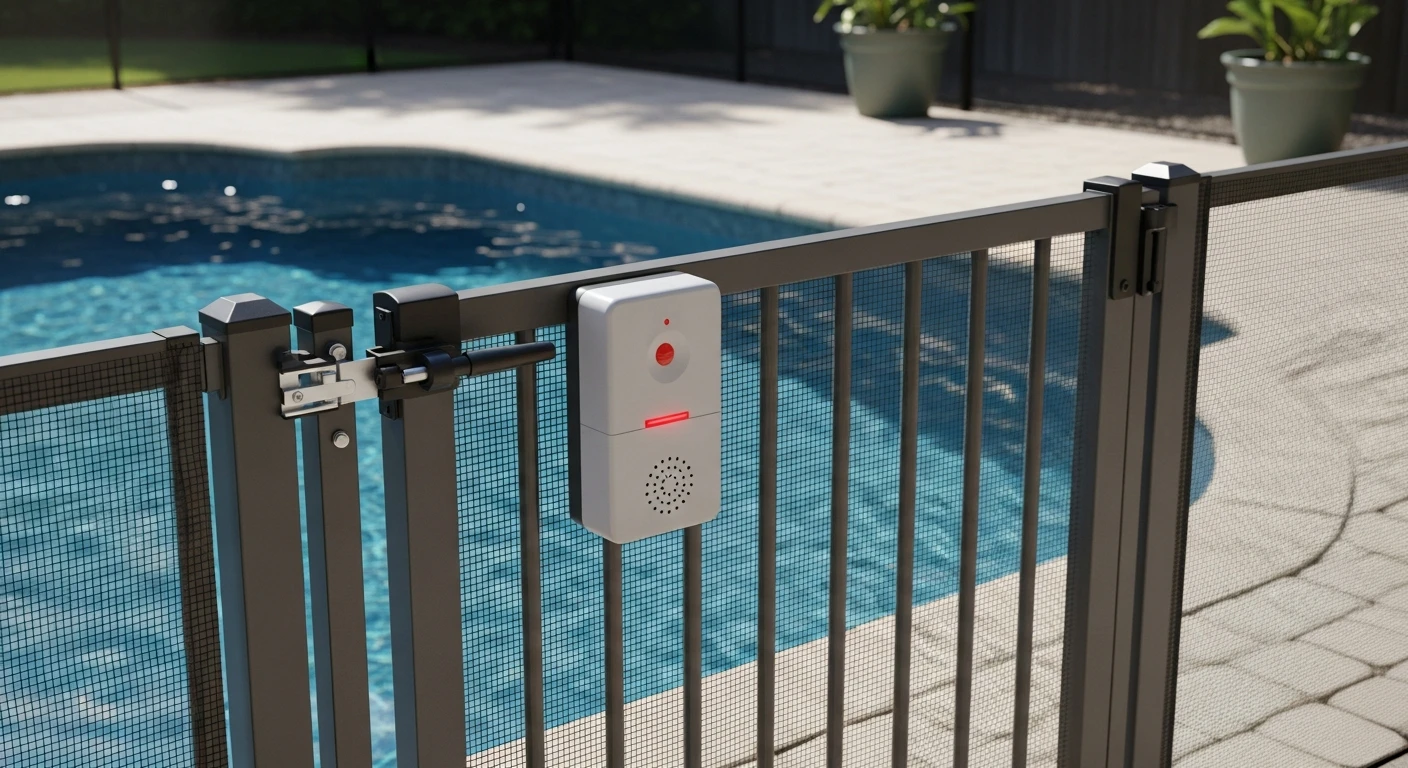
- Post Installation and Latch Calibration: After a minimum 72-hour curing period for the cement, the fence posts are installed. I then calibrate the tension of the fence mesh and adjust the self-closing gate hinges and magnetic latch to ensure it exceeds the Florida Residential Swimming Pool Safety Act requirements.
Precision Tuning: My Post-Installation Tension and Gate Alignment Standards
An installation is only complete after it passes my personal quality audit. I use a tension gauge to ensure the fence mesh has the correct lateral resistance—it should have less than a 1-inch deflection when moderate pressure is applied. The most important check is the gate. The magnetic latch must engage positively from a resting position as little as one inch away. I often spend up to an hour making micro-adjustments to the hinges to achieve this perfect alignment, as I know this is the single most-used and most critical safety component of the entire system.
Given that soil saturation in Collier County can vary by as much as 30% between the dry and wet seasons, how can an installer guarantee long-term post stability without using a non-expansive hydraulic cement in a core-drilled footing?