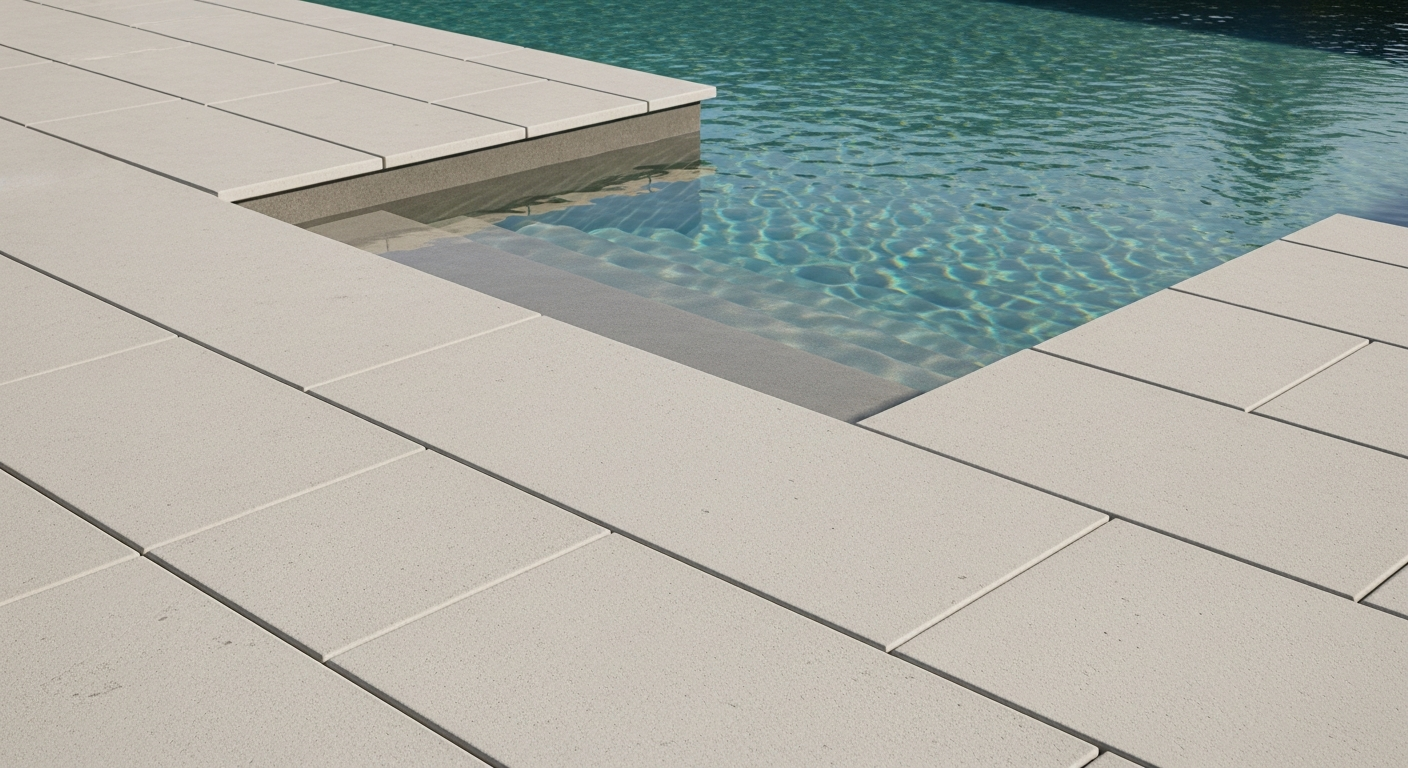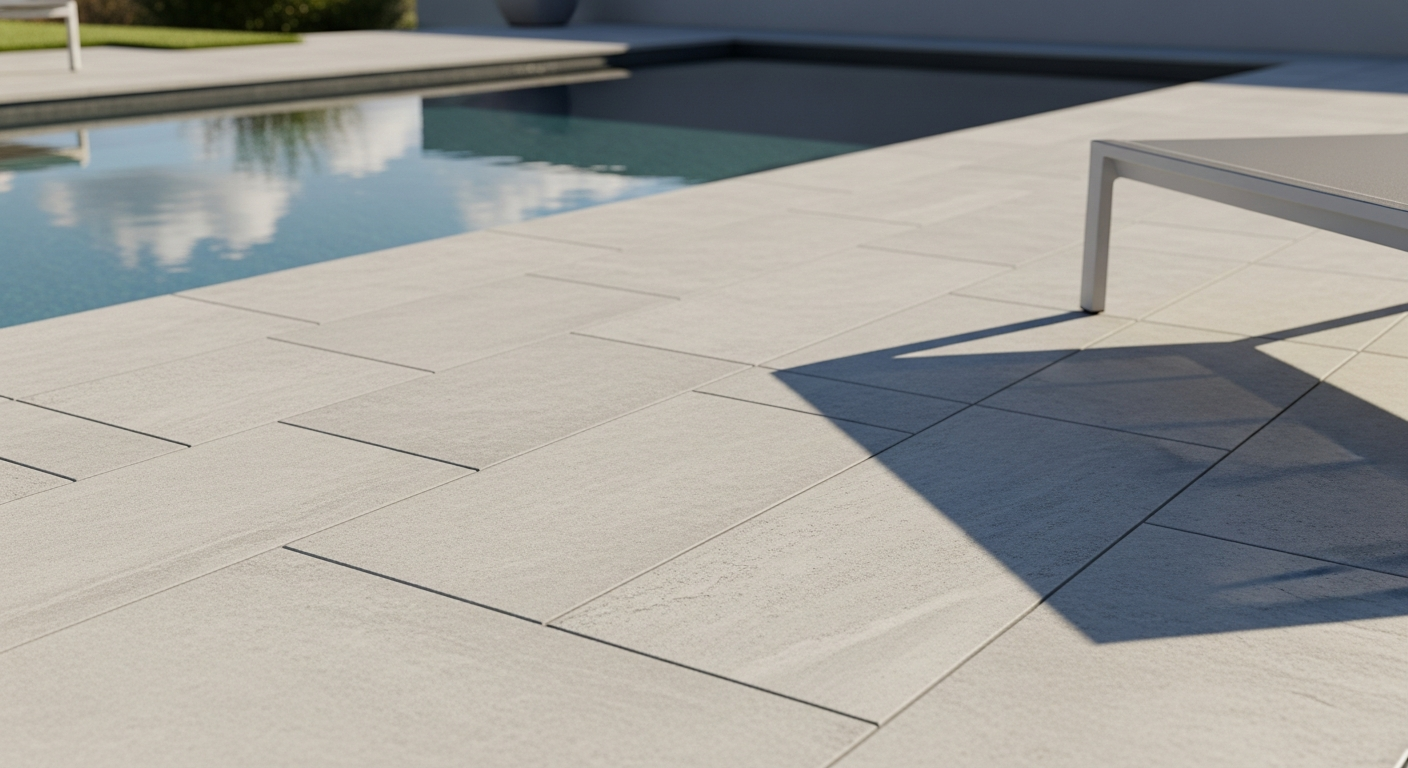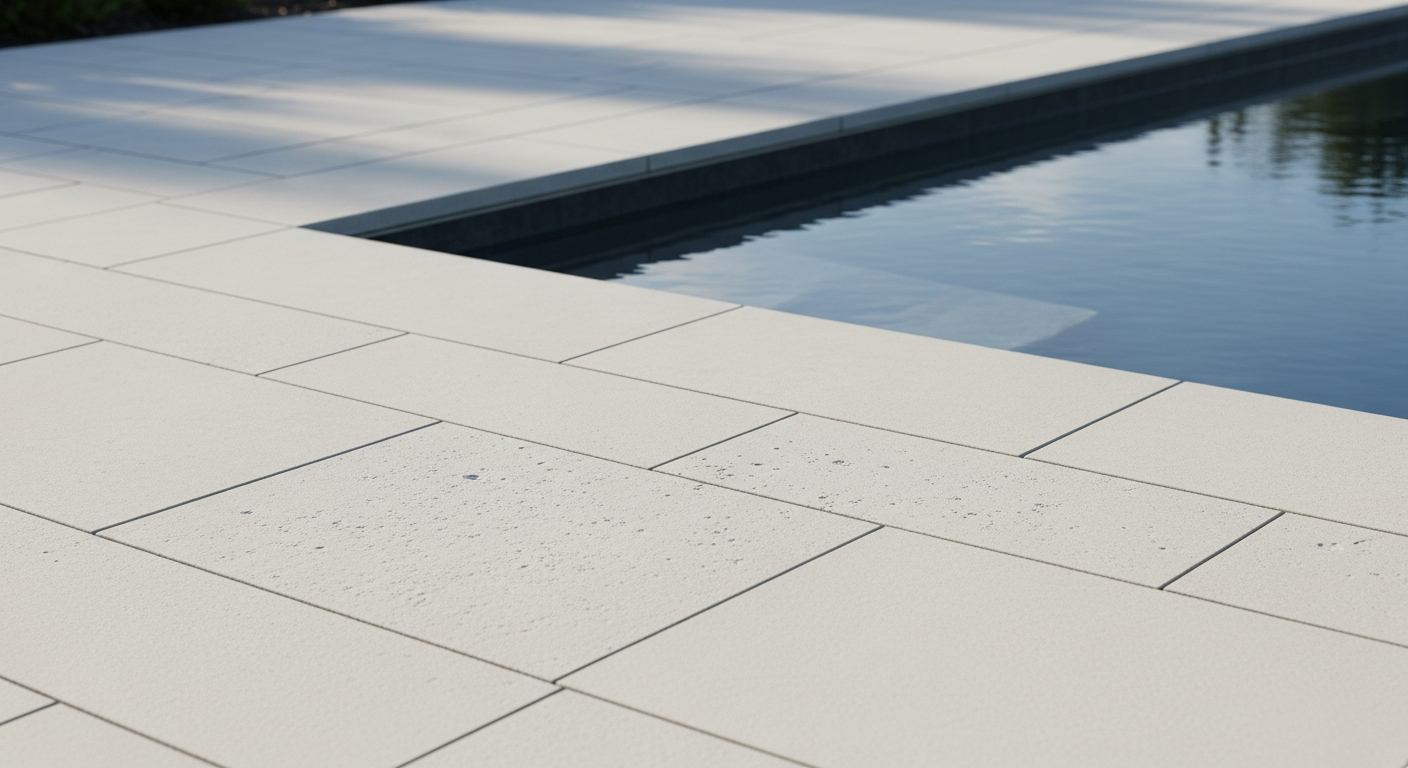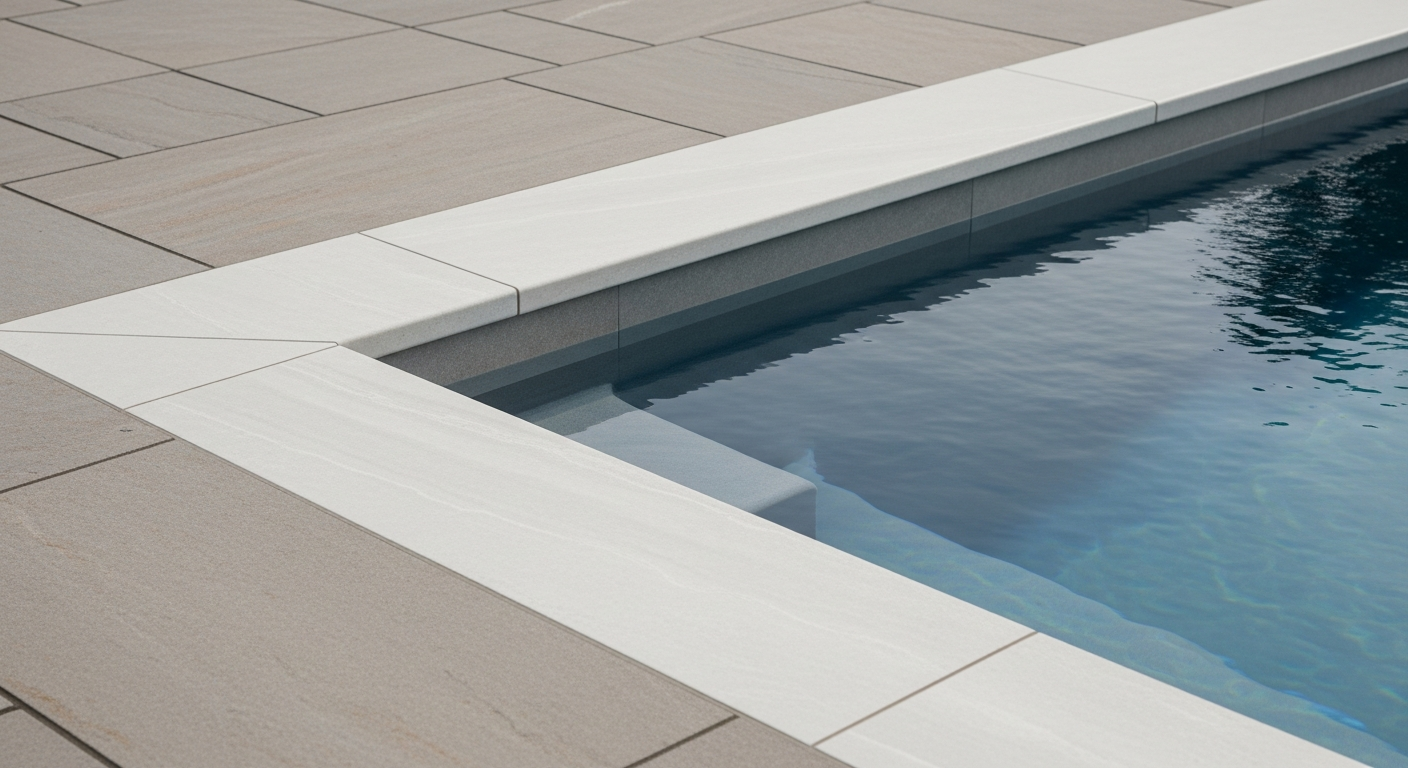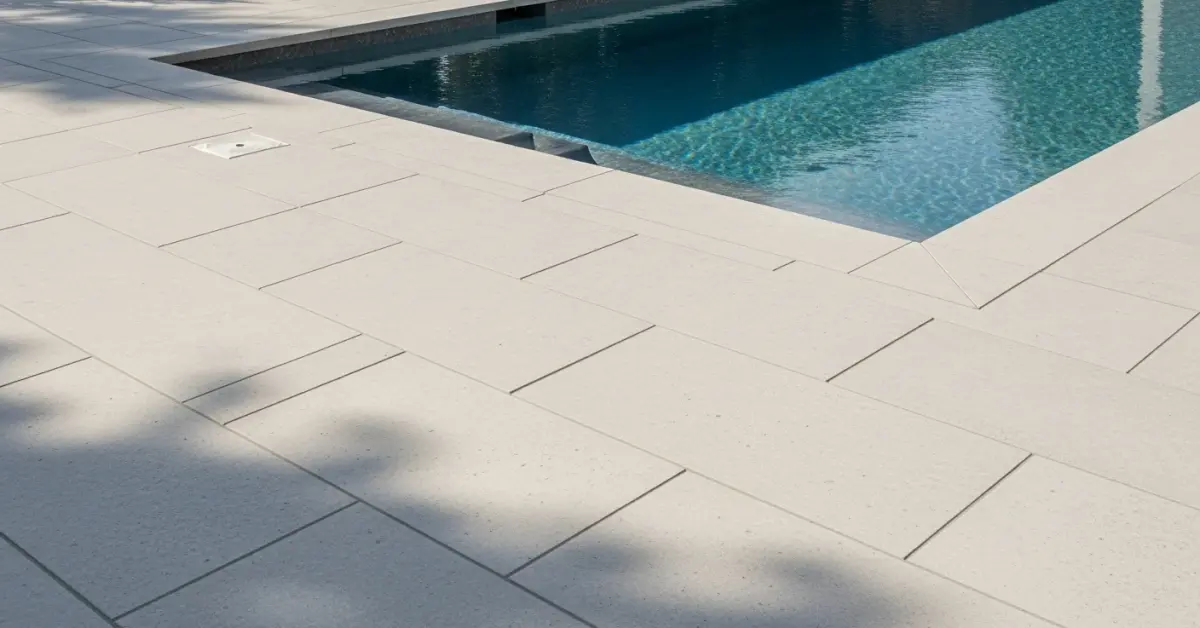
Porcelain Pavers Pool Deck: My Protocol for Achieving a 30-Year Lifespan in Pinellas County’s Saline Environment
Standard porcelain paver installations are failing prematurely across Pinellas County, and I've traced the issue back to a fundamental misunderstanding of our local environment. From the salt-laden air in Clearwater Beach to the shifting sandy soils in Largo, a generic approach simply doesn't work. The real problem isn't the porcelain itself; it's the system beneath it. My entire installation philosophy is built to counteract two critical, local failure points: sub-base degradation from our unique soil composition and grout erosion from the relentless combination of high humidity and airborne salinity. I’ve seen countless pool decks develop uneven surfaces and crumbling joints within 5 years because installers treated a St. Pete waterfront property the same as a project in a dry, stable climate. This is a costly mistake I've learned to engineer out of the equation from day one.My Diagnostic Framework for Pinellas County Pool Decks
Before a single paver is laid, I perform a site-specific analysis that dictates the entire project's engineering. I once took over a project in a Tierra Verde home where the previous installation failed because they ignored the high water table, causing the base to become saturated and unstable. This led me to develop my proprietary methodology, the "Hydro-Static Base Compensation," which forms the core of every installation I personally oversee. It begins with a soil compaction test and a salinity assessment, especially for properties within a mile of the Gulf or Intracoastal Waterway. The goal is to determine the precise thickness and material composition of the sub-base needed to guarantee zero vertical movement for decades.The Technical Core of a Salt-Resistant Installation
The secret to longevity here isn't just digging deep; it's about creating an impenetrable, layered system. My methodology rejects the common use of standard paver sand, which I've found retains moisture and encourages efflorescence (the white, chalky residue) in our humid climate. Instead, I mandate a specific multi-layer system. This includes a non-woven geotextile fabric to separate our native sandy soil from the base material, preventing long-term sinking. Above this, I use a specific grade of crushed granite aggregate, compacted to a 98% Proctor density, which provides a stable, non-shifting foundation that vastly outperforms the typical crushed limestone. For the joints, I specify a high-performance epoxy-based grout instead of polymeric sand for any project facing direct salt spray, as its non-porous nature provides a 100% barrier against salt and mildew infiltration—a common issue I see in Snell Isle and Pass-a-Grille.Step-by-Step Implementation for Flawless Execution
Executing this correctly requires precision. A deviation of even a half-inch in the base layer can compromise the entire deck over time. Here is the exact sequence I follow to ensure a lifetime of performance:- Excavation and Grading: I start by excavating to the precise depth calculated during my initial diagnostic. The site is then graded with a minimum 1.5% slope away from the pool and any structures to ensure rapid water runoff during our heavy summer downpours.
- Sub-Base Installation: The geotextile fabric is laid, followed by the aggregate base in 2-inch lifts. Each lift is individually watered and compacted with a plate compactor until that 98% Proctor density is achieved. This is a non-negotiable quality control point.
- Bedding Course Application: A 1-inch layer of washed concrete sand is screeded perfectly level. This is the only place I use sand, and its purpose is purely for minute adjustments, not structural support.
- Paver Placement: I use 1/8-inch tile spacers to ensure uniform joint width, which is critical for the integrity of the epoxy grout. This meticulous spacing prevents stress fractures and ensures a perfect aesthetic.
- Grouting and Curing: The epoxy grout is applied and tooled carefully. This is the most critical phase. The curing process must be shielded from direct Pinellas sun for at least 24 hours to prevent it from setting too quickly and becoming brittle.
Precision Calibration and Quality Standards
The final 5% of the work is what separates a good job from a permanent one. I personally inspect every project for two key metrics after installation. First, I conduct a "flood test" by sheeting water across the deck to identify any low spots where water might pool; these are unacceptable. Second, I look at heat mitigation. For homes in sunny areas like Palm Harbor or Tarpon Springs, I strongly advise clients to select porcelain pavers with a high Solar Reflectance Index (SRI) of 60 or more. This simple choice can reduce the surface temperature by up to 20°F, a massive quality-of-life improvement for bare feet. This isn't an upsell; it's a functional necessity for enjoying a pool deck in the Florida heat. My commitment is to a finished product that is not only stable but also comfortable and safe. Have you considered how the specific porosity of your chosen porcelain paver will interact with the type of grout selected, especially after five years of UV exposure?Written by

Tags
pool coping pavers
pool pavers near me
pool deck pavers
pavers pool
porcelain pool deck
Porcelain Pavers Pool Deck in Pinellas FL FAQ
Are porcelain pavers too hot for bare feet around a pool?
Lighter-colored porcelain pavers stay significantly cooler than natural stone or concrete, but they are not cool to the touch. Their low porosity means they don't retain as much heat as denser materials, making them a superior choice for pool decks in direct sun. The critical factor is color; a dark grey porcelain paver will still become uncomfortably hot. A non-obvious issue is the substrate: a paver set on a concrete slab will feel hotter than one set on a sand or gravel bed because the concrete base acts as a heat sink, storing and radiating warmth upwards.
Will my saltwater pool corrode or stain my new porcelain pavers?
No, porcelain pavers are virtually impervious to salt and common pool chemicals like chlorine, making them ideal for saltwater pool surrounds. Unlike porous natural stone which can suffer from spalling and salt efflorescence, porcelain has an extremely low water absorption rate, preventing chemicals from penetrating and causing damage. However, be aware that metal furniture or tools left on the deck can rust and leave stubborn stains. These are surface deposits, not a failure of the paver, and typically require a specialized acid-based cleaner to remove without damaging the paver's finish.
One of my porcelain pavers is wobbly. How do I fix it without redoing the whole deck?
A single wobbly paver almost always indicates a failure in the base material beneath it, not a fault in the paver itself. This is often caused by water washing away the jointing and bedding sand, creating a void. To fix this, the paver must be carefully lifted using a paver extractor tool. The bedding layer is then screeded level again with fresh sand, and the paver is re-set and compacted. The critical step most people miss is re-installing and activating the polymeric sand in the joints around the repaired paver to lock it in place and prevent future water intrusion.
Are porcelain pavers slippery when wet? They look so smooth.
Reputable porcelain pavers manufactured for outdoor use have a textured, anti-slip finish and are rated to meet safety standards. Look for a product with a high Dynamic Coefficient of Friction (DCOF) rating, typically above 0.42, which certifies its suitability for wet areas like pool decks. The non-obvious danger isn't the paver itself, but the buildup of organic material. A film of algae or biofilm can grow on any surface, making it extremely slick. Regular cleaning, not just the paver's inherent texture, is the key to maintaining a safe, slip-resistant surface year-round.
Can I pressure wash my porcelain paver deck to clean it?
Yes, you can pressure wash porcelain pavers, but the technique is critical to avoid damaging the joints. Use a fan-tip nozzle, never a pinpoint jet, and keep the pressure below 1,500 PSI. The biggest mistake is directing the spray at a sharp angle into the joints, as this will blast out the polymeric sand that locks the pavers together and prevents weeds. This sand is the structural glue of the system. Always spray at a shallow, sweeping angle across the surface to clean the paver face without compromising the integrity of the joints.
What's that white, chalky film on some of my darker porcelain pavers?
That white film is likely efflorescence, which is the migration of natural salts from the setting bed or concrete slab beneath the pavers. While porcelain itself is non-porous and does not produce efflorescence, moisture can travel up through the joints, evaporate, and leave these salt deposits on the paver surface. It is a cosmetic issue, not a structural one. A key insight is that this problem is often worse with a mortar-set installation over a concrete slab. It can usually be cleaned with specialized efflorescence removers, but addressing the underlying moisture source is the only permanent solution.