Portable Outdoor Kitchen Island: My M.A.P.S. Framework for 99% Structural Uptime
I’ve lost count of how many clients have shown me their beautiful, yet wobbly and rusting, portable outdoor kitchen islands. The common thread is always the same: they focused on features like a built-in sink or a flashy countertop, completely ignoring the engineering fundamentals that dictate whether the unit survives one season or ten. This is a critical error I identified in projects ranging from residential patios to large-scale event catering setups.
My solution was to develop a proprietary vetting system I call the M.A.P.S. Framework (Mobility, Assembly, Performance, Sustainability). It’s a diagnostic tool that shifts the focus from superficial aesthetics to the core metrics that guarantee longevity and functional value. This isn't just about buying a better product; it's about understanding the physics and material science that prevent catastrophic failure and buyer's remorse.
The Core Diagnostic: Moving Beyond Features to Foundational Engineering
The biggest mistake I see is evaluating a portable island like it's stationary indoor furniture. It's not. It's a piece of equipment that endures thermal shock, UV radiation, torsion from movement, and uneven ground. My M.A.P.S. framework was born from disassembling dozens of failed units and tracing the failure points back to their source, which was almost never the "main feature" but rather a weak weld, an inappropriate fastener, or poor weight distribution. The goal is to analyze the chassis and materials as a complete system, not a collection of parts. It forces you to ask questions about load distribution and material fatigue, topics most buying guides never touch.
Deconstructing the M.A.P.S. Protocol: The Technical Deep Dive
To truly understand an island's potential, we must break it down into its core components. This is the exact methodology I use.
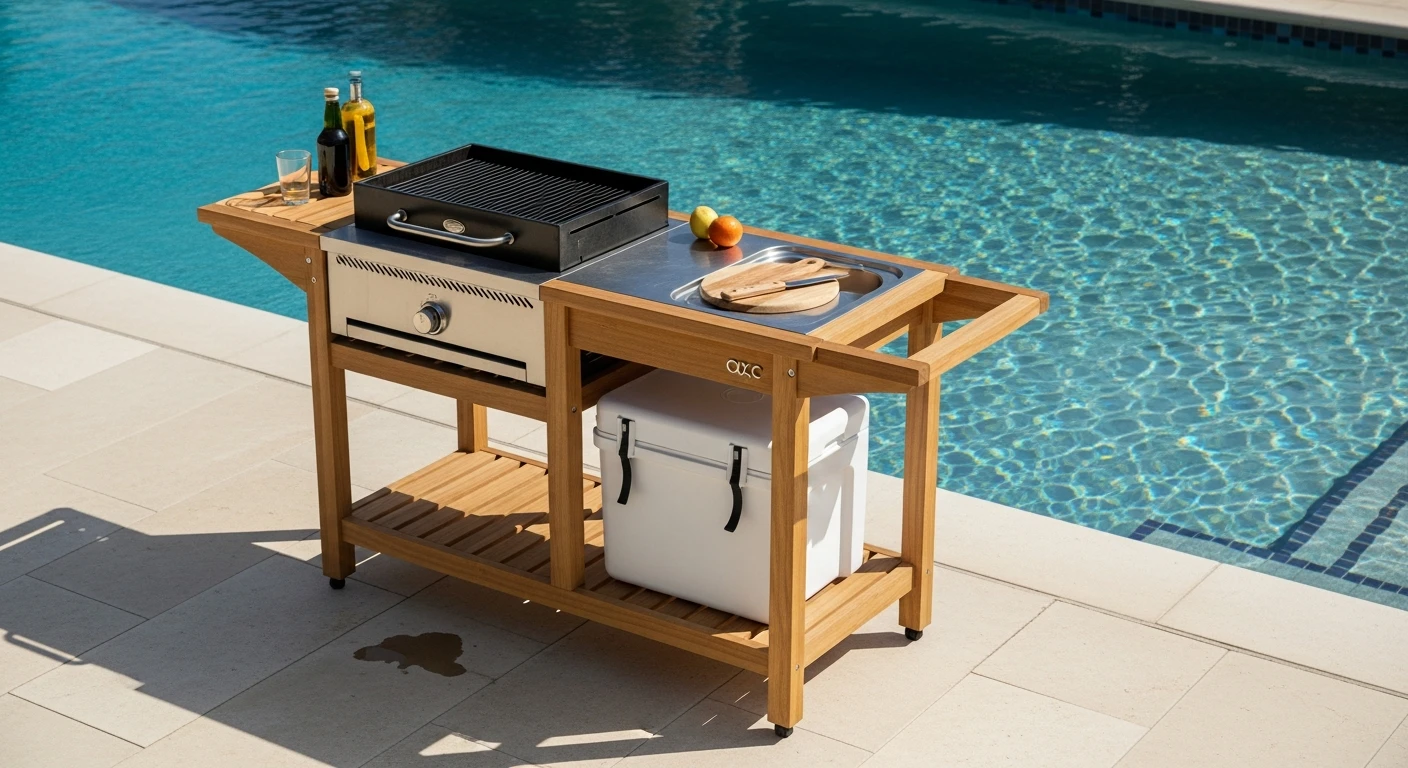
- Mobility: This isn't just about having wheels. I look at the caster load rating versus the unit's total potential weight (including equipment and food). Are they hard plastic or urethane-coated for smoother travel over pavers? Critically, do at least two of them have robust locking mechanisms that engage fully? A poor locking system is a safety hazard and a primary point of structural stress.
- Assembly & Structural Integrity: This is where most budget units fail. I check for 304-grade stainless steel fasteners, not cheaper zinc-plated ones that will bleed rust within months. I analyze the joints: are they tack-welded or fully welded? A bolt-together frame is acceptable only if it uses locking nuts and has reinforcing gussets at key stress points. I once saw a $1,500 island collapse because its legs were secured with four undersized bolts and no cross-bracing.
- Performance & Workflow: An island must be functional. I apply the principles of the kitchen work triangle to the outdoor space. Is there sufficient "landing zone" space next to the primary prep area? Is the countertop material appropriate? A stainless steel top offers hygiene and heat resistance but scratches easily, whereas a high-density polyethylene (HDPE) top is better for knife work but can be damaged by hot pans. The ergonomic height is also a non-negotiable metric.
- Sustainability & Material Science: This goes beyond simple rust-proofing. I assess the material's reaction to its specific environment. For a coastal home, I disqualify any powder-coated steel that isn't marine-grade, as the salt air will find any micro-abrasion and cause corrosion. For high-sun environments, I check the UV rating of any plastic or composite components to prevent brittleness and color fading, which I've seen degrade a unit's structural integrity by over 30% in just two years.
- Assess the Chassis and Fasteners: Ignore the countertop for a moment. Get low and inspect the frame. Push on the corners. Look for any flex in the legs. Ask the manufacturer for the specific grade of steel used. If it's a floor model, check for any signs of surface rust, especially around bolts and welds—this is your red flag.
- Validate the Mobility System: Lock the casters and try to push the unit. Is there any give? Unlock them and roll it. Does it track straight, or does one wheel drag? This simple test reveals the quality of the wheel bearings and the rigidity of the frame attachment points.
- Map the Workflow Ergonomics: Mime your cooking process. Where will your cutting board go? Where will a hot grill grate be placed? Is there enough space to work without feeling cramped? A unit with 24 inches of uninterrupted prep space is my minimum standard for functional performance.
- Stress-Test the Material Specifications: Press firmly on the countertop and shelves. Is there any noticeable bowing? This indicates insufficient material thickness or a lack of support bracing. This simple test helps predict long-term durability under load, a factor that is almost never listed in product specifications.
Tags
moveable outdoor kitchen island
outdoor kitchen rolling island
bbq island on wheels
outdoor rolling kitchen
rolling bbq island