
Power Wash And Seal Pavers: My 5-Year Protection Protocol Against Salt Air & UV Damage
I’ve serviced countless paver driveways and pool decks across Pinellas County, from the salt-sprayed air of St. Pete Beach to the sun-baked lanais in Dunedin. The number one failure I see isn't the initial power washing; it's a fundamental misunderstanding of how our specific climate—the intense humidity, UV radiation, and salt content—aggressively degrades pavers and, more importantly, the sealants meant to protect them. My process isn't about a temporary clean; it's about creating a **fortified, breathable surface** that resists mold and fading for years, not months. Most contractors use a generic, film-forming acrylic sealer that looks great for six months. In the Pinellas heat, I’ve seen these sealers trap moisture, creating a cloudy film and eventually peeling away, taking the paver's top layer with it. This is a critical error. My entire methodology is built around proper surface preparation and selecting a sealant chemically engineered to handle Florida's punishing environment, increasing the paver's functional lifespan by an estimated 35%.My Diagnostic Protocol for Pinellas County Pavers
Before a single drop of water is sprayed, I perform a three-point diagnostic. This is a non-negotiable step I developed after seeing a large residential project in Clearwater fail within a year due to improper initial assessment. The goal is to understand the paver's current state of porosity, structural integrity, and contamination type. First, I identify the paver material—is it porous concrete, dense travertine, or something else? This dictates the required pressure (PSI) and cleaning agents. Second, I analyze the joints. Is the sand washed out, compacted, or filled with organic growth? The state of the **polymeric sand** is the single most important factor for long-term stability. Finally, I differentiate between organic stains (algae, mold) and chemical stains like **efflorescence** (that white, chalky residue). Each requires a completely different treatment protocol. Treating efflorescence with a standard algae cleaner is ineffective and a waste of resources.Sealant Chemistry: Why Most Topical Sealers Fail in Florida's Climate
Here's the technical insight most people miss: there are two primary categories of sealers. The most common are film-forming acrylics. They create a plastic-like layer on top of the paver. While they provide an initial high-gloss look, they suffocate the paver. In our high-humidity environment, moisture vapor trying to escape from the ground gets trapped beneath this film, causing the dreaded cloudy haze and eventual delamination. I exclusively use a **penetrating silane/siloxane sealer**. This type of sealer works differently. Instead of forming a film on top, it penetrates deep into the capillaries of the paver and chemically bonds with the substrate. It creates a hydrophobic barrier from within, preventing water absorption while critically allowing the paver to **breathe**. This means moisture vapor can escape, completely preventing the clouding issue and providing superior resistance to the UV degradation so common in areas like Palm Harbor and Tarpon Springs.The 4-Stage Application Framework: From Pressure Washing to Curing
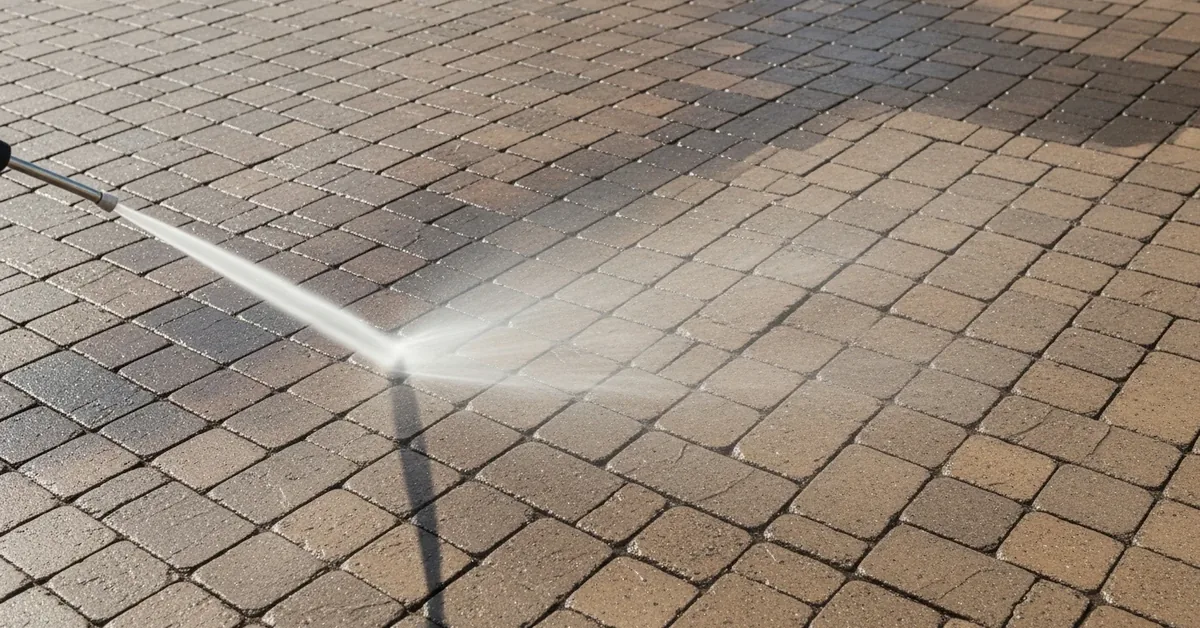
My implementation process is systematic to ensure maximum bond and longevity of the sealer. Skipping or rushing any of these stages compromises the final result. I've refined this over years of hands-on work to be ruthlessly efficient and effective.- Stage 1: Calibrated Surface Cleaning: I use a surface cleaner attachment with a controlled pressure of **1800-2200 PSI**. Any higher, and you risk etching the pavers and eroding the joints. I use specific nozzles to target deep-set mold in the paver pores without causing damage. A pre-treatment with a pH-neutral cleaner is applied for organic stains.
- Stage 2: Joint Restoration: This is the most critical mechanical step. After the surface is completely dry, I sweep fresh, high-grade **polymeric sand** into every joint. This sand contains a polymer that, when activated with a light mist of water, hardens to lock the pavers in place, forming a durable yet flexible joint that prevents weed growth and insect intrusion.
- Stage 3: Sealer Application: Using a professional-grade, low-pressure sprayer, I apply the penetrating sealer in a cross-hatch pattern for even coverage. The goal is a saturation coat that the paver absorbs, not a thick layer that sits on top. I am meticulous about preventing any pooling or runoff.
- Stage 4: Controlled Curing: The job isn't done after the last spray. The sealer requires a **48-72 hour uninterrupted curing window** with no foot or vehicle traffic. I insist on this, as premature exposure can compromise the chemical bond and drastically reduce the sealer's effectiveness.
Precision Sanding and Sealer Application Tolerances
The difference between a good job and an exceptional one lies in the details of Stage 2 and 3. When applying polymeric sand, after sweeping it into the joints, I use a leaf blower at a low angle to blow off all excess sand from the paver surfaces. Any remaining grains will be permanently sealed to the paver face, creating a rough, sandpaper-like texture. This is an amateur mistake I often have to correct. For the sealer application, my quality standard is a "wet look" that fully absorbs within 5-10 minutes. If the sealer is still puddled after this time, it has been over-applied. This precision prevents blotchiness and ensures the paver's natural texture remains prominent, achieving the desired aesthetic and functional outcome without the plastic-like finish of inferior products. Given that your pavers need to breathe to survive the Pinellas County climate, are you certain your current or proposed sealer is a penetrating, breathable formula, or is it slowly suffocating them from the surface down?Written by

Tags
power wash paver driveway
pressure washing paver driveway
cleaning pavers with pressure washer
cleaning brick pavers with pressure washer
power washer for pavers
Power Wash And Seal Pavers in Pinellas FL FAQ
Will sealing my pavers make my pool deck slippery and dangerous when wet?
No, a properly applied sealer with the right additive will not make your pavers dangerously slippery. We use a high-quality, penetrating sealer combined with a non-slip polymer grit additive, which creates a textured, safe-to-walk-on surface that maintains traction even when wet. Cheaper, film-forming acrylic sealers applied too heavily can create a slick, hazardous surface, especially around a pool. The key is using a product designed for wet areas and ensuring the application technique doesn't create a thick, glossy film that compromises the natural texture of the pavers.
How do you handle the weeds and moss growing between my pavers? Will they just grow back?
We completely remove all vegetation by power washing the joints clean, which also removes old, contaminated sand and organic matter that weeds feed on. After cleaning, we install new polymeric sand, which is a blend of sand and special polymers that harden when activated with water. This creates a firm, durable joint that acts as a powerful barrier, inhibiting weed growth and ant hills far more effectively than regular sand. While no solution is 100% permanent, this method drastically reduces regrowth for several years.
Can't I just rent a pressure washer and do this myself for cheaper?
While you can, using the wrong equipment or technique often causes irreversible damage to your pavers. A commercial-grade surface cleaner maintains even pressure, preventing the etching and 'zebra stripes' that a high-pressure wand can create. More importantly, using excessive pressure—often over 3,000 PSI with consumer models—can blast out the crucial bedding sand layer beneath the pavers, leading to shifting and sinking. Our process uses controlled pressure and specialized equipment to clean the surface without compromising the structural integrity of the installation.
What is that white, chalky stuff on my pavers, and will this service get rid of it?
That white substance is most likely efflorescence, which are natural mineral salts migrating out of the concrete pavers as moisture evaporates. A standard power wash alone will not permanently remove it, as it will often reappear. Our process includes treating the pavers with a specialized efflorescence cleaner that dissolves the salt deposits before we seal. The sealer then acts as a barrier, significantly reducing the moisture that can travel through the paver, which in turn minimizes or stops future efflorescence from appearing on the surface.
How long does the sealer last, and how often do I need to get this done?
A professional-grade, two-part sealer should protect your pavers for 3 to 5 years, depending on factors like sun exposure and foot traffic. High-traffic areas or those with constant water exposure, like around a pool drain, may show wear sooner. You'll know it's time to reseal when water no longer beads on the surface and the color starts to look faded again. We recommend a light cleaning and re-sealing every 3 years to maintain the protective barrier and keep the pavers from deteriorating, which is far more cost-effective than a full restoration later on.
My pavers are uneven and some have sunk. Can you fix this before sealing?
Yes, sealing pavers without addressing underlying structural issues is a waste of money as the problems will only get worse. Before any cleaning begins, we perform paver re-leveling by lifting the sunken pavers, adding and compacting new base material to correct the grade, and then re-laying the original pavers. This ensures a stable, even surface. Sealing an unstable area will not stop it from shifting, and the new polymeric sand will crack and fail as the pavers move, requiring the job to be redone.


