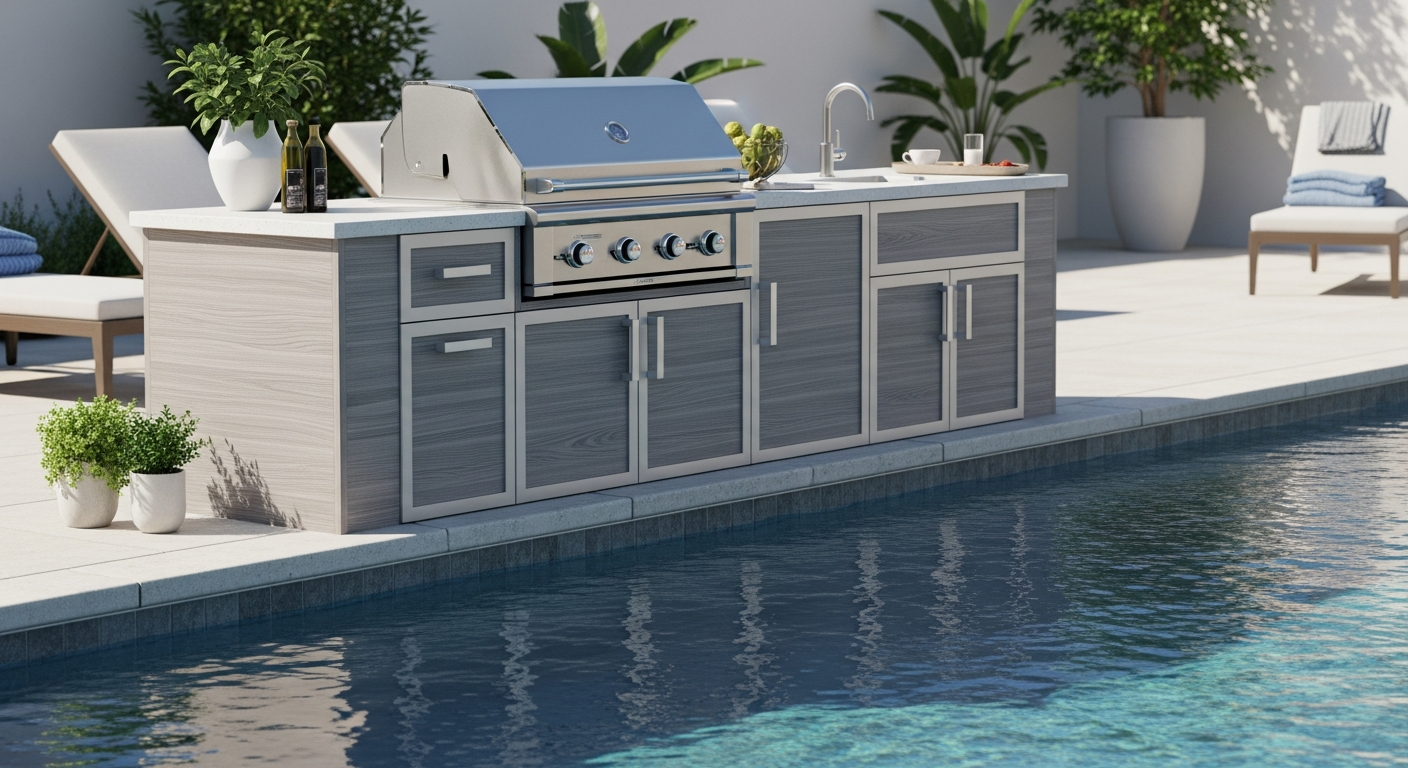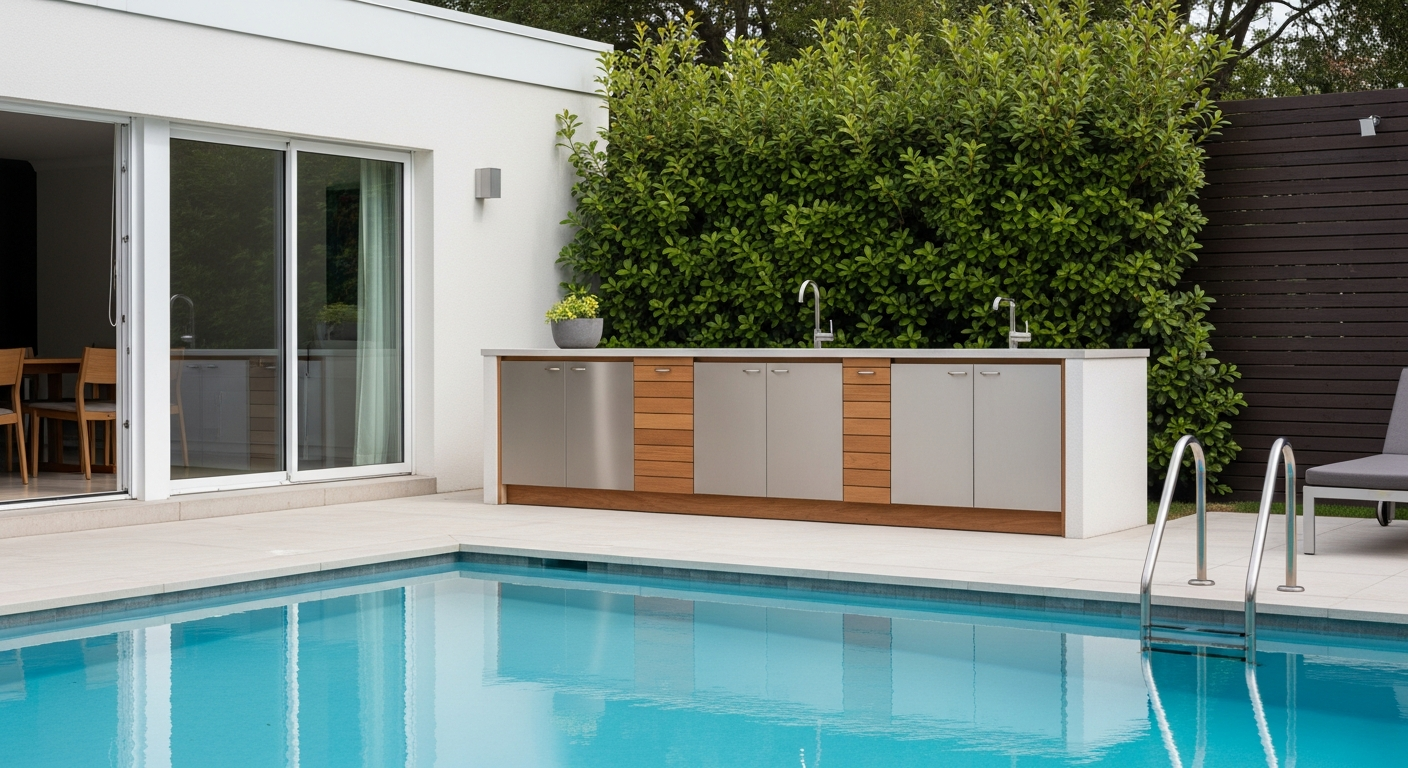
Pre Made Outdoor Cabinets: My Material Selection Framework for a 30-Year Lifespan in Charlotte County's Climate
I’ve seen too many beautiful outdoor kitchens in Punta Gorda Gorda Isles fail in under five years. The culprit is almost never the installation quality; it's a fundamental misunderstanding of how our coastal environment attacks building materials. Homeowners select cabinets that look great in a catalog but are engineered for a dry, inland climate, not the high-salinity, high-humidity reality of living near Charlotte Harbor. They invest thousands, only to see rust streaks, warped doors, and delaminated finishes. My entire approach is built on preventing this specific, costly mistake. It’s not about finding the most expensive option, but the *correct* one. I developed a methodology, the Coastal Degradation Matrix, that cross-references a property's specific location within Charlotte County against material science. This ensures the pre made cabinets you choose are an asset that lasts for decades, not a recurring maintenance headache.Diagnosing Premature Failure: My Coastal Degradation Matrix
The single biggest error I correct on consultations in Port Charlotte and Englewood is the "one-size-fits-all" material choice. A cabinet that performs well in a sheltered, inland lanai will catastrophically fail on an exposed, canal-front property. My matrix quantifies this risk by assigning a score based on three critical local variables. I created this after a large-scale project where the client’s powder-coated steel cabinets, installed just 18 months prior, were already showing significant corrosion at the welds due to constant salt spray.Technical Breakdown of the Matrix Variables
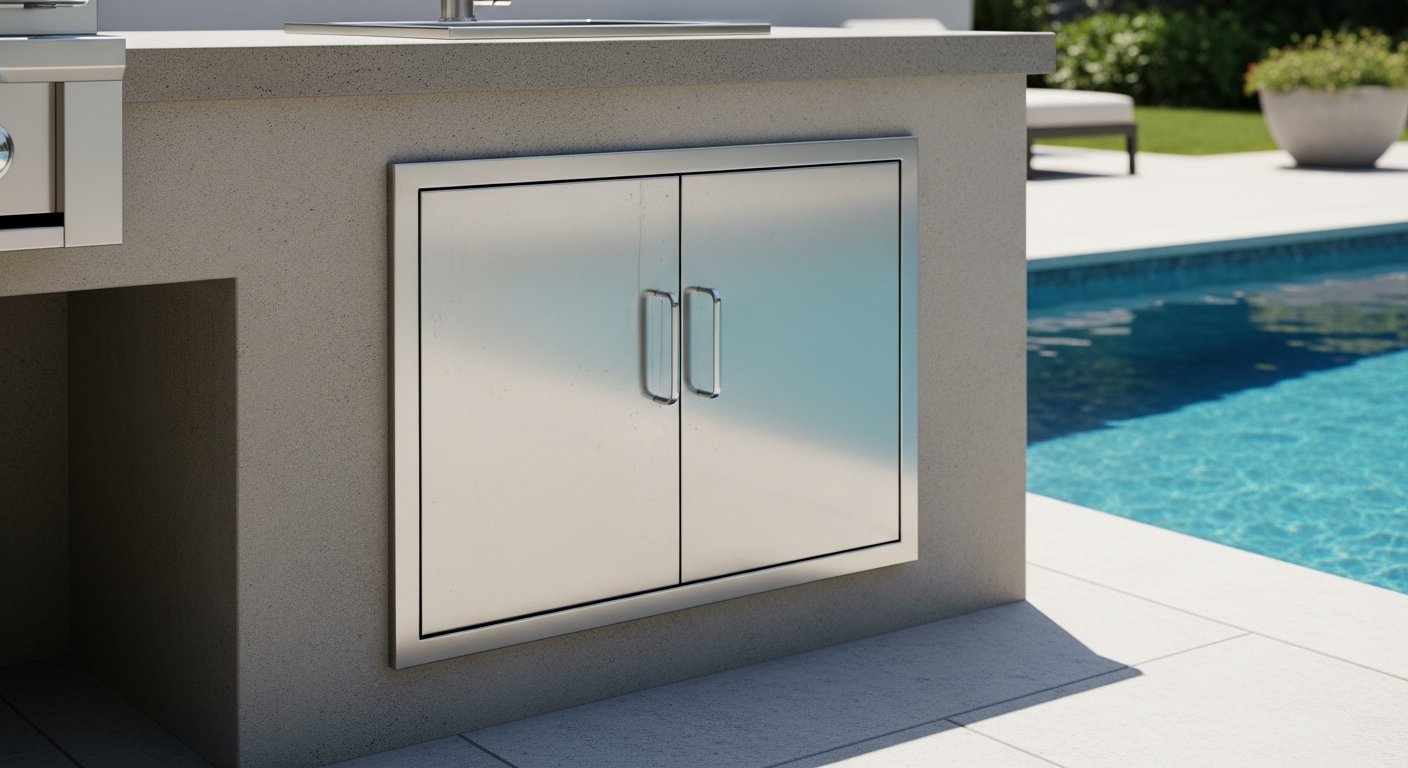
My matrix isn't just a checklist; it's a diagnostic tool. It forces a data-driven decision instead of an aesthetic one.- Salinity Exposure Rating (SER): This is a measure of proximity to saltwater bodies like Charlotte Harbor or the Gulf. A property directly on the water has a high SER, making 304-grade stainless steel a poor choice. I mandate 316L marine-grade stainless steel or polymer-based materials like HDPE (High-Density Polyethylene) in these zones to prevent pitting and corrosion.
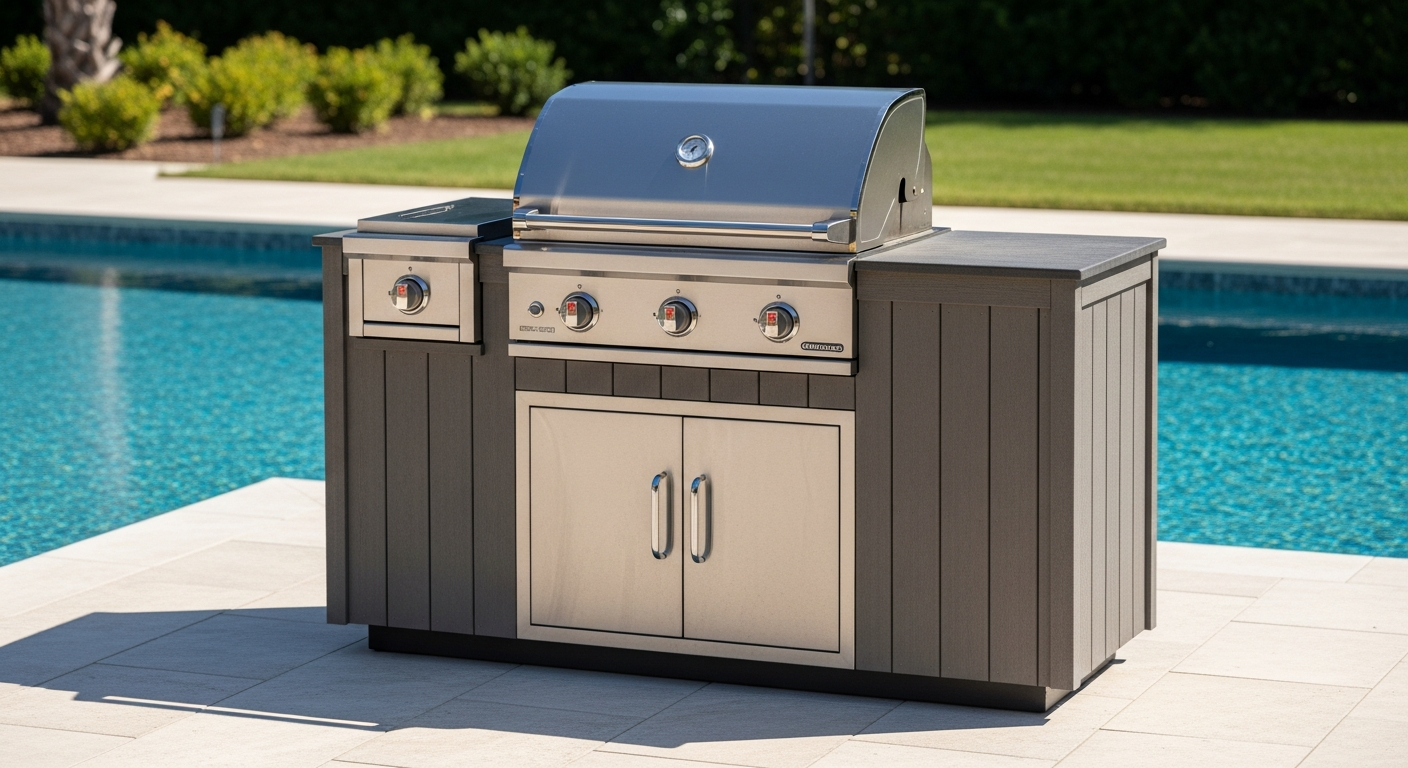
- UV Degradation Index (UVDI): I map the sun's path across the client's property. An area with more than 6 hours of direct afternoon sun has a high UVDI. For these scenarios, I steer clients away from certain wood composites that can fade and delaminate. Instead, I specify HDPE cabinets with integrated UV inhibitors, which can increase colorfastness by up to 40% over a 10-year period.
- Humidity Warp Factor (HWF): This addresses the relentless Florida humidity. Many pre made cabinets use a core material like medium-density fiberboard (MDF) with a veneer. In our climate, moisture ingress is inevitable. I’ve seen these doors swell and refuse to close properly. My standard is to require cabinets with zero wood-based components, eliminating this failure point entirely.
Site Assessment and Material Specification Protocol
Applying the matrix is a systematic process. Rushing this stage is what leads to the costly replacements I see so often. My protocol is non-negotiable for ensuring longevity and performance.- Conduct a Microclimate Analysis: I personally assess the installation site. I measure the distance to the nearest saltwater source, evaluate overhangs and sun exposure, and check for prevailing wind direction, which carries salt aerosol inland. This data feeds directly into the matrix.
- Material Shortlisting via the Matrix Score: Based on the SER, UVDI, and HWF scores, I generate a shortlist of suitable materials. For a high-SER/high-UVDI property in a neighborhood like Rotonda West, the recommendation will almost always be a high-density polymer or 316L stainless. A more sheltered location might allow for other engineered composites.
- Verify Foundation Integrity: Pre made cabinets are only as stable as the surface they sit on. I insist on verifying that the concrete slab or paver patio is perfectly level. An uneven base puts constant stress on the cabinet frames, leading to door misalignment and joint failure. A variance of more than 1/8th of an inch over 10 feet is a red flag that must be corrected.
- Mandate Specific Hardware Grades: This is a critical detail. The cabinet bodies can be perfect, but if the installer uses standard zinc-plated or 304-grade stainless steel hinges and drawer slides, they will be the first point of failure. I specify that all fasteners, hinges, and pulls must be 316-grade stainless steel. It’s a small cost increase that prevents rust streaks and ensures smooth operation for years.
Hardware and Fastener Integrity: The Most Common Failure Point
I can't stress this enough: hardware choice is not a minor detail. On one project, I was called to inspect an outdoor kitchen where every single cabinet door was stained with rust running down from the hinges. The cabinets themselves were a high-quality polymer, but the builder cut costs by using inferior hardware. The fix required replacing every hinge and meticulously cleaning the stains, an expense that could have been avoided by spending an extra 15% on the correct hardware upfront. Beyond rust, proper cabinet ventilation is key. I ensure there are subtle ventilation channels or louvered doors designed into the system to prevent our high humidity from creating a stagnant, mold-prone environment inside the cabinets. Have you considered the galvanic corrosion potential between your chosen cabinet fasteners and the frame material itself?Written by

Tags
bbq kitchen cabinets
outdoor grill cabinets for sale
outdoor bbq kitchen units
outdoor cooking cabinet
outdoor kitchen grill cabinets