Saltwater Pool Conversion Collier County: Averting Galvanic Corrosion with Anode-Specific Protocols
I've personally rectified dozens of saltwater pool conversions across Collier County, from waterfront homes on Marco Island to sprawling lanai-enclosed pools in Naples, where the initial installation completely overlooked a critical variable: our local environment. Many homeowners invest in a salt system for the silky water and reduced chemical handling, only to find their expensive heater or handrails failing within 24 months. The issue isn't the salt system; it's a failure to account for the accelerated galvanic corrosion caused by the combination of saline water and Collier County's high humidity and salt-laden air. My approach centers on a pre-emptive strike against this equipment degradation. Before a single pipe is cut, I perform a full equipment and bonding audit. This isn't just about choosing the right size Salt Chlorine Generator (SCG); it's about mapping the entire electrical and metallic ecosystem of your pool to prevent it from essentially eating itself from the inside out. This diagnostic step is the single biggest factor in extending the life of your pool equipment by a projected 30-40%.The Pre-Conversion Audit: My Non-Negotiable Diagnostic Protocol
The most common mistake I see in DIY or budget conversions, especially in areas like Golden Gate Estates with varying water sources, is focusing solely on the salt cell and control panel. The reality is that introducing salt turns your pool water into an electrolyte, not unlike a giant battery. If you have dissimilar metals in contact with that water (e.g., a stainless steel ladder and a bronze heat exchanger), you create a circuit. The less noble metal—almost always your expensive heater components—begins to corrode at an alarming rate. My proprietary methodology insists on a pre-conversion audit that includes a continuity test of the existing bonding wire. I've found that on homes built pre-2000 in the Naples Park area, this wire is often degraded or disconnected, rendering any new equipment vulnerable. Without a solid bond, any stray voltage or galvanic current has nowhere to go but into your equipment. This audit determines the precise type and placement of a sacrificial anode needed to protect the specific equipment you own.Galvanic Corrosion vs. Standard Salinity: The Collier County Variable
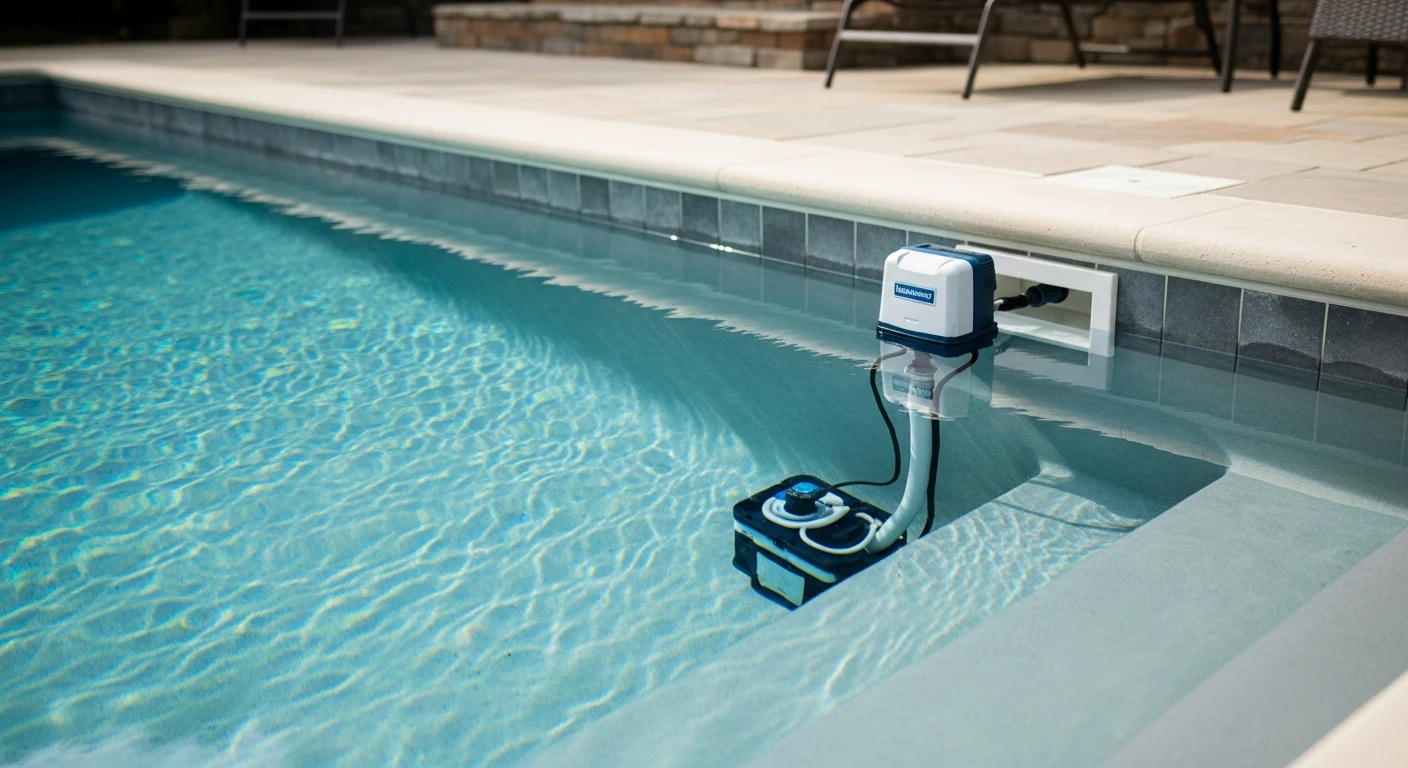
A standard saltwater pool operates at a salinity of around 3,200 parts per million (PPM), roughly the same as a human tear. However, the corrosive effect isn't just about the salt in the water; it's amplified by our coastal environment. The air itself carries saline moisture that settles on your pump, filter, and external plumbing. This creates a constant, low-level corrosive attack that a standard installation simply doesn't account for. This is why a simple "drop-in" zinc anode in the skimmer basket is insufficient. It's a passive, ineffective solution. My protocol involves installing an in-line sacrificial anode directly into the plumbing, typically after the heater. This anode, usually made of zinc, is specifically designed to be the "less noble" metal in the system. It corrodes instead of your heater core, pump seals, or light fixtures. It's a simple component that acts as a designated failure point, saving thousands in premature equipment replacement costs.The Conversion Blueprint: From Chlorine to Silk-Smooth Saltwater
Once the audit is complete and the protective measures are mapped out, the physical conversion is methodical. I follow a strict sequence to ensure perfect chemical balance and system integration from day one.- Step 1: Water Chemistry Pre-Balancing. Before adding any salt, I adjust the pool's existing water. I zero out the chlorine and ensure Total Alkalinity is between 80-120 PPM and Calcium Hardness is appropriate for your pool finish. Starting with a balanced pool prevents the new system from working overtime.
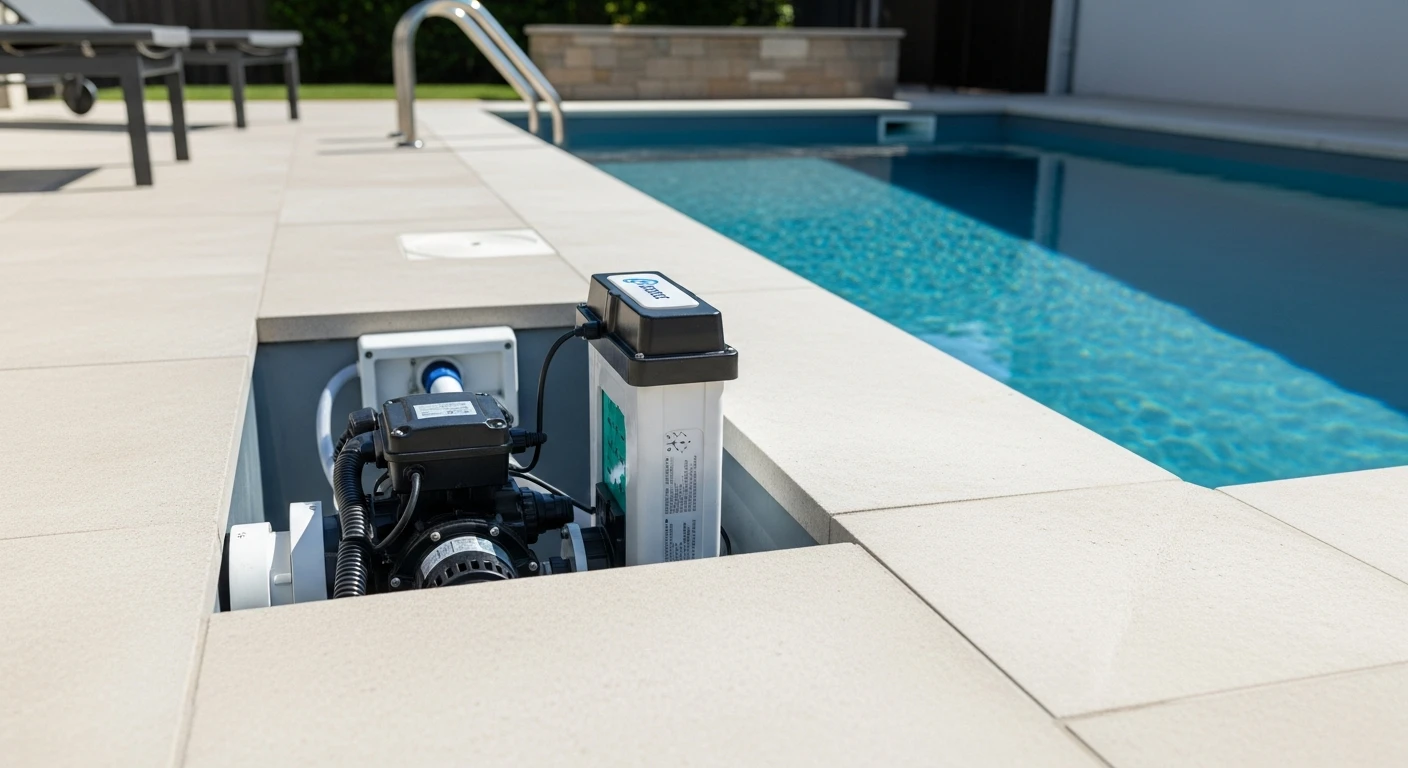
- Step 2: SCG and Anode Installation. The Salt Chlorine Generator (SCG) cell is plumbed in last on the equipment pad, after the filter and heater, to ensure it receives clean, heated water. Crucially, the in-line sacrificial anode is installed just before it. The SCG's control panel is wired, and the flow switch is confirmed to be operational to prevent chlorine generation when the pump is off.
- Step 3: Salt Introduction and Dissolution. I use only high-purity, NSF-certified pool salt. I calculate the exact dosage based on your pool's gallonage to hit a target of 3,200-3,400 PPM. The salt is added to the pool and brushed until fully dissolved, a process that can take up to 24 hours with the pump running continuously. I never turn the SCG on until all salt is dissolved to avoid damaging the cell's coating.
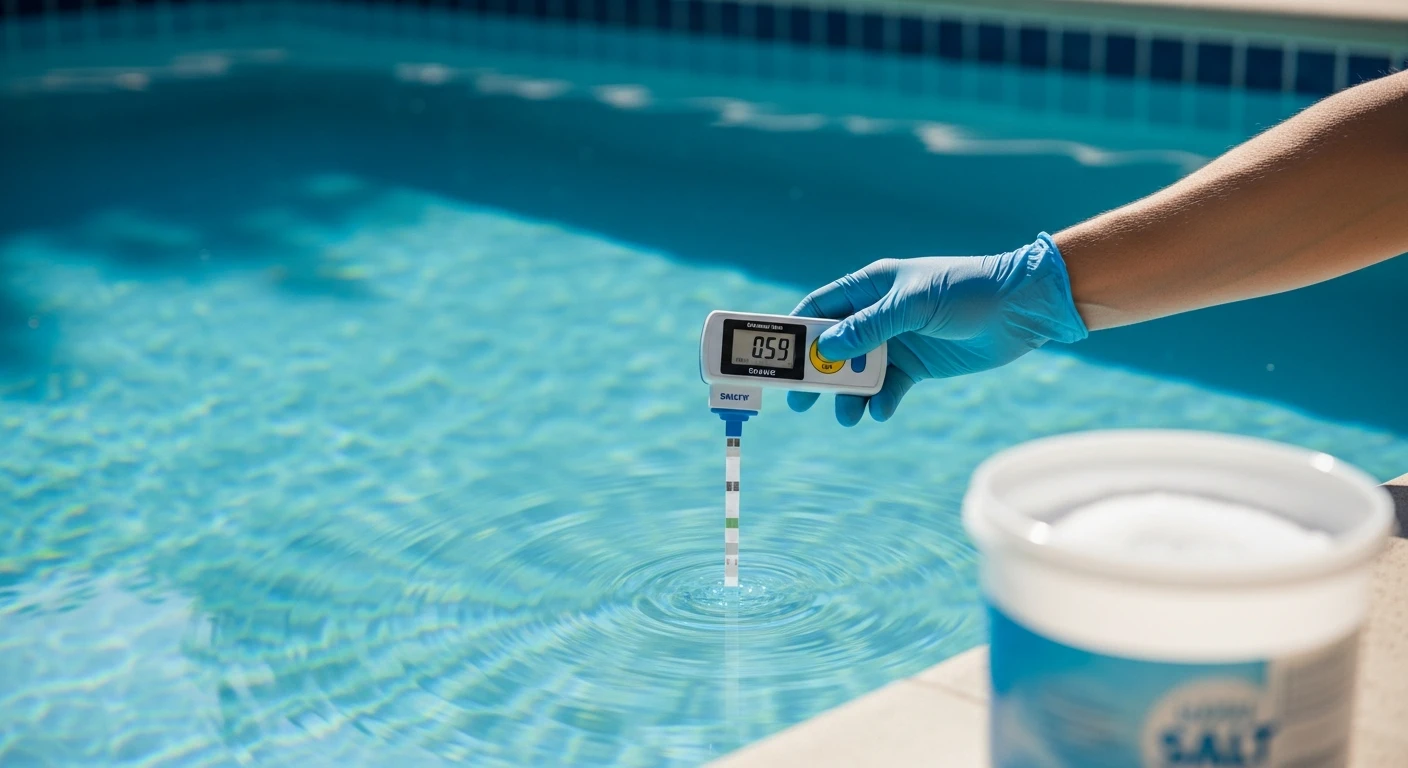
- Step 4: System Activation and Calibration. Only after confirming the target salinity with a digital tester do I power on the SCG. I set the chlorine output percentage and run it through a "Super Chlorinate" or "Boost" cycle to establish an initial free chlorine residual of 2.0-4.0 PPM.
Post-Conversion Stabilization: The First 30-Day Protocol
The first month is critical. Your pool is adapting to a new sanitization method, and fine-tuning is expected. I advise clients to test their water twice weekly during this period. The most important metric to watch is the pH, as the process of generating chlorine naturally causes it to rise. A small, regular dose of muriatic acid is often necessary to keep it within the ideal 7.4-7.6 range. Furthermore, I inspect the cell for any initial calcium scaling, a common issue with Collier County's harder water, after the first two weeks. A clean cell is an efficient cell. Establishing this monitoring routine in the first 30 days ensures the long-term, low-maintenance experience that homeowners were seeking in the first place. Now that your water chemistry is stabilized and your equipment is protected, have you considered how the new, higher Total Dissolved Solids (TDS) level might affect the hydraulic efficiency calculations for your variable-speed pump's programming?Written by

Tags
salt water conversion for pool
converting swimming pool to saltwater
convert to a salt water pool
salt water pool conversion near me
Saltwater Pool Conversion in Collier FL FAQ
What is a saltwater pool conversion, and how does it work?
A saltwater pool conversion involves replacing the chlorine-based system in your existing pool with a saltwater system. Saltwater pools use natural salt to sanitize the water, rather than harsh chemicals. The process involves installing a saltwater chlorine generator, which converts the salt into chlorine, sanitizing the water. This results in a healthier and more enjoyable swimming experience.
Why switch to a saltwater pool conversion?
Saltwater pool conversions offer numerous benefits, including gentler skin and hair, reduced eye irritation, and a more natural swimming experience. Saltwater pools also require less maintenance and are more environmentally friendly than traditional chlorine-based pools. Additionally, saltwater pools can help reduce the risk of algae growth and the need for frequent chemical additions.
Is a saltwater pool conversion expensive?
The cost of a saltwater pool conversion varies depending on the size and type of pool, as well as the complexity of the conversion. However, many pool owners find that the long-term benefits and cost savings of a saltwater pool conversion make it a worthwhile investment. Our team can provide a personalized quote for your specific pool conversion needs.
How long does a saltwater pool conversion take?
The conversion process typically takes several days to a week, depending on the complexity of the installation and the size of the pool. Our experienced technicians will work with you to schedule the conversion at a time that works best for you and your family.
Will a saltwater pool conversion affect my pool's warranty?
In most cases, a saltwater pool conversion will not affect your pool's warranty. However, it's essential to check with your pool manufacturer to confirm their warranty policies. Our team can also help you navigate any warranty concerns or questions you may have.
Can I still use my pool during the conversion process?
In most cases, it's possible to continue using your pool during the conversion process, although this may depend on the specific requirements of the conversion. Our team will work with you to minimize downtime and ensure that your pool is safe and accessible during the conversion process.
Do I need to maintain my saltwater pool differently than a traditional pool?
Yes, saltwater pools require slightly different maintenance than traditional pools. Our team will provide you with detailed instructions on how to properly maintain your saltwater pool, including regular testing and adjustments to the saltwater system.
What if I have concerns or questions about my saltwater pool conversion?
We're here to help! Our experienced team is available to answer any questions or concerns you may have throughout the conversion process and beyond. We're committed to ensuring that you're completely satisfied with your saltwater pool conversion.