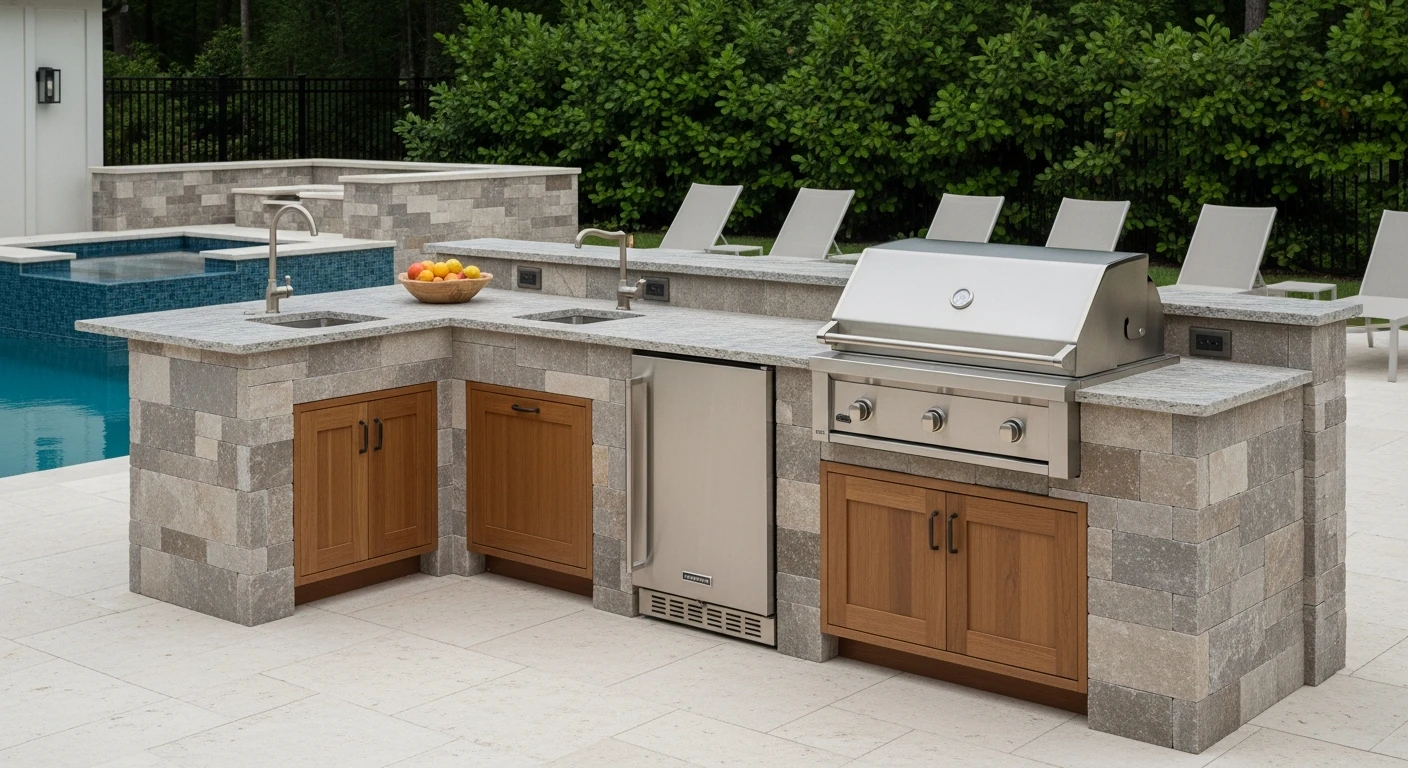
Simple Outdoor Kitchen Ideas in Lee County: My Framework for a 20-Year, Low-Maintenance Build
Building a simple outdoor kitchen in Lee County isn't about picking a fancy grill; it's a battle against the elements. I've seen countless projects in Cape Coral and Fort Myers, built with standard materials, start to degrade in under three years due to the intense humidity and salt air. The common mistake is underestimating the combined effect of UV radiation and moisture, leading to corroded metals, warped cabinets, and stained countertops. My approach sidesteps this common failure point entirely. It’s a material-first framework I developed after replacing a high-end, but poorly specified, outdoor kitchen on a Sanibel Island property that had failed prematurely. The secret isn’t spending more money; it's about making precise material choices from the foundation up, ensuring your investment withstands our unique subtropical climate without constant upkeep.The Lee County Climate Corrosion Test: Why 90% of DIY Outdoor Kitchens Fail
The biggest challenge isn't the occasional storm; it's the daily, relentless atmospheric conditions. The high dew point in areas from Bonita Springs to Lehigh Acres means condensation is a constant threat, even inside cabinetry. This moisture, often combined with salt spray near the coast, creates a highly corrosive environment that standard "outdoor-rated" products simply aren't designed for. I identified a critical flaw in a large project where the builder used 304-grade stainless steel for all appliances and doors. While fine for drier climates, here in Lee County, it showed significant surface rust within 18 months. My methodology, the Material Selection Matrix, was born from this exact problem. It forces a cross-analysis of a material's resistance to three specific local threats: moisture absorption, UV degradation, and salinity corrosion. Most builders only consider one or two of these, which is a recipe for failure.My Material Selection Matrix: Marine-Grade vs. Standard
This isn't just theory; it's about specific product grades that make all the difference. When clients in Fort Myers ask for a "simple" kitchen, I guide them toward materials that offer simplicity in long-term maintenance, not just initial appearance.- Cabinetry: Forget wood or wood composites. I exclusively specify High-Density Polyethylene (HDPE), a marine-grade polymer. It’s what boat builders use. It has 0% water absorption, is impervious to rot, and the color is integrated throughout, so scratches don't show. This is a non-negotiable upgrade over powder-coated metal, which can chip and allow rust to creep in.
- Countertops: Granite is a popular but problematic choice here. It's porous and requires annual sealing to prevent mold and staining from our frequent rain. I push for Dekton or other sintered stone surfaces. They are completely non-porous and have exceptional UV stability, meaning the color won't fade under the intense Florida sun.
- Hardware and Appliances: This is a critical detail. I insist on 316-grade stainless steel for any metal component, from screws and hinges to the grill body itself. The added molybdenum in 316 steel provides a significant increase in corrosion resistance, essential for homes on the canals in Cape Coral or anywhere near the Gulf. This small spec change alone can double the lifespan of your metal components.
Blueprint for a Compact, High-Function Lanai Kitchen
Many Lee County homes feature a lanai, which is the perfect footprint for a simple, highly effective outdoor kitchen. My blueprint prioritizes workflow and durability in these compact spaces. Here's the build process I've refined over dozens of installations.- Establish the Foundation: Always start with a poured concrete slab. Never build on existing pavers, as they can shift and compromise the structure. I make sure the slab is pitched slightly away from the house for proper drainage.
- Utility Rough-In: Before any framing, run your utilities. This includes a dedicated GFCI-protected electrical circuit and, if using natural gas, a properly buried and certified gas line. Planning this first prevents costly retrofitting.
- Assemble the Frame: Use a lightweight, welded aluminum frame. It's vastly superior to steel studs, which can rust from the inside out, or wood, which will inevitably rot. The aluminum frame provides lifetime structural integrity.
- Install Cladding and Cabinets: Attach your backer board and the HDPE cabinet boxes directly to the aluminum frame. Ensure all fasteners are 316 stainless steel. This is where most contractors cut corners and cause a future failure point.
- Integrate Appliances and Countertop: Set your grill, side burners, and refrigerator. I perform a 24-hour leak test on all gas connections before the countertop is installed. The countertop is the final major piece, templated on-site for a perfect fit.
The Final 5%: Grout Sealing, Ventilation, and Cover Strategies
The details that separate a professional job from an amateur one are in the final touches. These are my non-negotiable quality control checks that I've seen prevent major issues down the line. First, if any tile or stone cladding is used, I specify an epoxy-based grout instead of a standard cementitious one. It's waterproof and stain-proof, preventing mold growth in the grout lines—a very common sight in our humid climate. Second, for kitchens under a lanai roof, a ventilation hood is not optional. It’s essential for drawing out heat, smoke, and grease, preventing buildup and discoloration on the ceiling. Finally, I stress to every client that a high-quality, custom-fit appliance cover will increase the cosmetic life of their grill by at least 40% by protecting it from daily sun and rain. Given that airborne salt can travel several miles inland from the coast, have you calculated the specific material tolerances needed for your property's distance from the Gulf to prevent galvanic corrosion between different metal components in your design?Written by

Tags
outdoor kitchen exterior ideas
bbq island countertop ideas
kitchen outside ideas
pergola outdoor kitchen designs
outdoor cook area designs