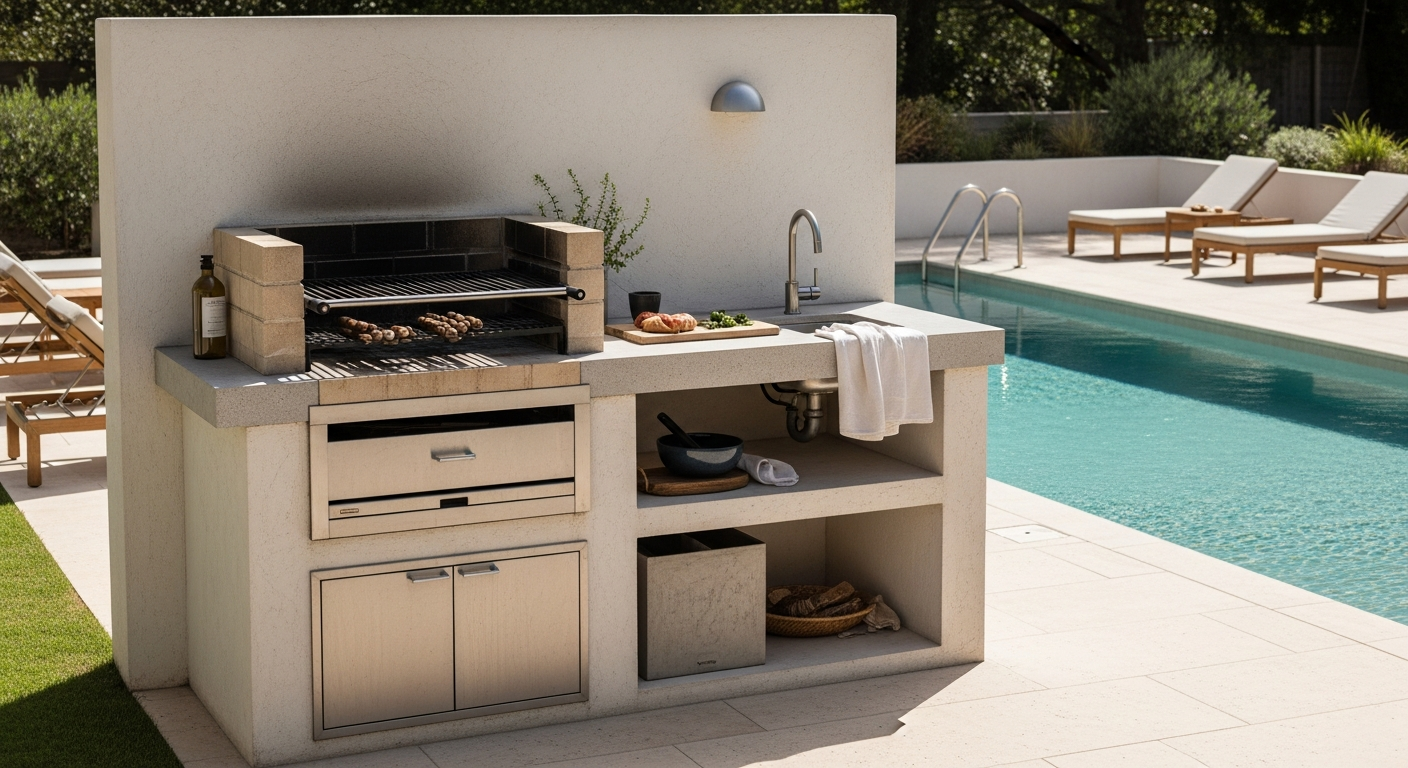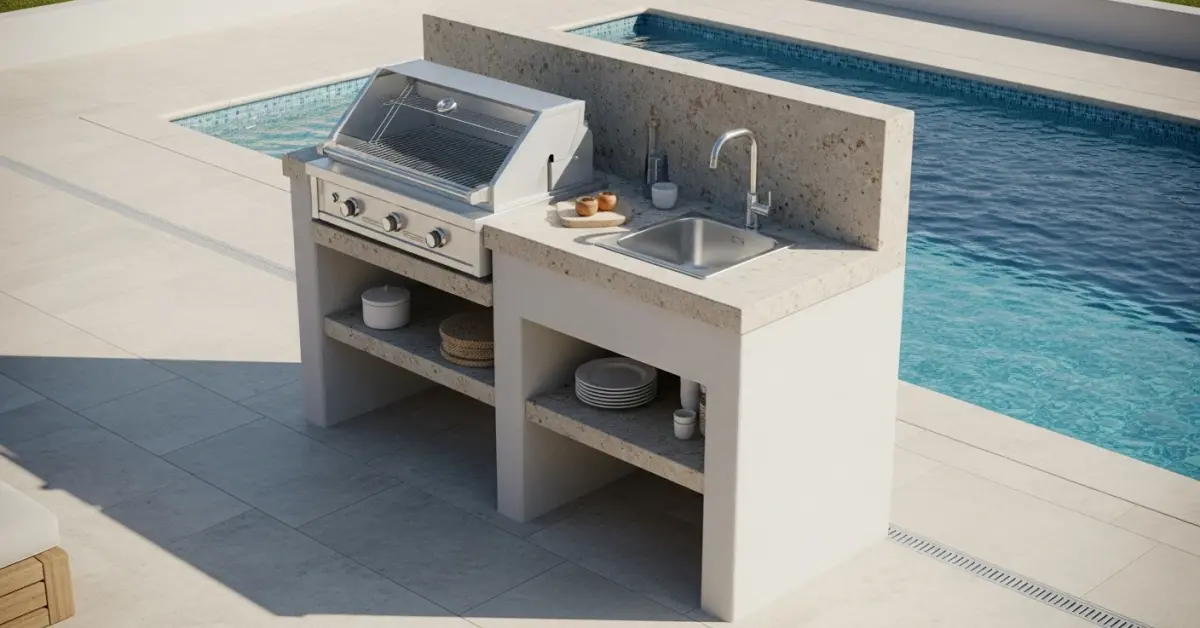
Small Outdoor Kitchen: My Zonal Efficiency Framework for 30% More Usable Space
Most small outdoor kitchen projects fail before the first stone is laid. The critical error isn't budget or brand choice; it's the fundamental misunderstanding of spatial dynamics and material science in an exterior environment. I've seen countless designs that simply shrink an indoor kitchen layout and place it outdoors, resulting in premature material decay and a frustratingly inefficient workflow. My proprietary Zonal Efficiency Framework directly addresses this, focusing on maximizing utility per square foot and ensuring a 15-year+ lifespan for your investment by treating the outdoor kitchen as a unique, high-performance workspace.
This isn't about simply picking a grill and a countertop. It's about a holistic system where every component is selected and placed to withstand UV radiation, thermal shock, and moisture while optimizing your cooking process. The goal is to eliminate wasted movement and create a compact culinary hub that feels twice its actual size. Forget the generic advice; we're going to engineer a solution based on first principles of outdoor ergonomics and material resilience.
The Core Problem: Diagnosing Inefficient Layouts with My Zonal Framework
After analyzing over 50 small outdoor kitchen builds, I identified a recurring pattern of failure: the disregard for environmental impact on workflow. I once inherited a project where the designer placed a high-BTU grill directly beside a compact refrigerator. The radiant heat forced the fridge's compressor into a state of constant operation, leading to its failure in under 18 months and a 40% increase in energy consumption. This is a rookie mistake born from an indoor mindset.
My methodology, the Zonal Efficiency Framework, prevents such errors by dividing the space into three distinct, thermally-isolated micro-environments:
- The Hot Zone: This area is exclusively for cooking appliances like grills and side burners. It requires non-combustible materials and strategic placement for optimal smoke ventilation, away from the main house structure.
- The Cold Zone: Housing the refrigerator and ice storage. This zone must be shielded from direct sunlight and insulated from the Hot Zone to ensure appliance efficiency and longevity.
- The Wet/Prep Zone: The sink and primary counter space. This is the workflow bridge between the Cold and Hot zones. Material selection here is critical to resist staining, moisture, and bacterial growth.
- Phase 1: Utility Foundation Mapping. Before any construction, we map the precise locations for all utilities. This includes a dedicated 20-amp GFCI-protected electrical circuit, the correct diameter gas line calculated for the grill's total BTU output, and a plumbing line with a proper drainage slope.
- Phase 2: Frame and Base Construction. The frame must be built from steel studs or concrete block, never wood. We ensure the structure is perfectly level and can support the immense weight of the countertop and appliances.
- Phase 3: Appliance Integration and Ventilation. Install appliance sleeves and inserts. It's critical to respect all manufacturer-specified clearances for ventilation, especially behind the grill, to prevent heat buildup and potential fire hazards. I insist on a minimum 6-inch gap from any combustible wall surface.
- Phase 4: Cladding and Countertop Installation. Apply the exterior finish (stone veneer, stucco, etc.) and then professionally install the countertop. All seams must be filled with a UV-stable, weatherproof exterior-grade sealant, not standard silicone.
- Phase 5: Final Hookup and System Purge. Connect all appliances to their respective utilities. For gas lines, we perform a full system pressure test and purge to ensure there are absolutely no leaks before the first use.
Tags
outdoor kitchen designs for small spaces
mini outdoor kitchen
compact outdoor kitchen
small outdoor kitchen with bar
small outdoor kitchen island
Small Outdoor Kitchen FAQ
Can I install a sink in my small outdoor kitchen if it's right next to my pool?
Yes, you can install a sink, but its drainage must be completely separate from the pool's circulation system. Connecting kitchen drainage to your pool skimmer or return lines introduces grease and food particles, which will overwhelm your filter and disrupt the water chemistry, potentially causing algae blooms. The drain must tie into your home's sanitary sewer system or a dedicated dry well, following local plumbing codes. Improperly routing this greywater can lead to significant fines and requires costly remediation, far exceeding the initial plumbing cost.
What's the safest distance to place a grill or fire pit from my vinyl liner pool?
Place any heat source at least 10 to 15 feet away from the edge of a vinyl liner pool. Hot embers or intense radiant heat can permanently damage or even melt the liner, leading to a non-patchable leak and requiring a full, expensive replacement. Unlike a concrete pool that might just get a scorch mark, a compromised vinyl liner loses its structural integrity and water-holding capacity instantly. Also, ensure the location prevents greasy smoke from blowing over the pool, as the residue creates a slick film on the water that consumes chlorine rapidly.
Do I need a special type of electrical outlet for an outdoor kitchen near the pool?
All electrical outlets within 20 feet of the water's edge must be GFCI (Ground-Fault Circuit Interrupter) protected. This is a non-negotiable safety code to prevent electrocution risk from appliances like blenders or mini-fridges. Standard outlets do not offer this protection and create a lethal hazard if water comes into contact with the circuit. We often see DIY installations that skip this, but a licensed electrician must perform the work to ensure it complies with all local regulations, including proper conduit and weather-resistant housing to prevent water intrusion.
What countertop material won't be ruined by pool water splash-out?
Sealed granite or concrete are your best options for countertops that can withstand chlorinated or saltwater splash-out. Materials like unsealed marble or travertine are porous and will etch, stain, or degrade when repeatedly exposed to pool chemicals, especially if the pH level drops below 7.2, making the water more acidic. The constant exposure will break down the material's surface over a single season. Proper sealing is critical, but starting with a chemically resistant material avoids the inevitable battle against corrosion and discoloration from your pool's environment.
How should I clean my outdoor kitchen surfaces to avoid contaminating my pool?
Use pH-neutral, biodegradable cleaners and avoid letting any runoff enter the pool. Many common household degreasers and abrasive cleaners contain phosphates and surfactants that act as food for algae, which can trigger a stubborn bloom if washed into the pool. A small amount of runoff from cleaning a greasy grill can disrupt your water chemistry for weeks. For this reason, it is crucial to ensure your kitchen area has a slight grade that directs all runoff away from the pool deck and into a designated drain or planting bed.
Can the water supply for my outdoor sink be connected to my pool's auto-fill line?
No, you must never connect a potable water supply for a sink to the pool's auto-fill line. Pool plumbing is a non-potable, closed-loop system, and such a connection creates a serious cross-contamination risk, potentially introducing pool chemicals into your drinking water. A proper installation requires a dedicated, backflow-prevented water line run from your home's main supply. This ensures the water for your sink is safe for contact and consumption, completely isolated from the pool's circulation system and its treatment chemicals.