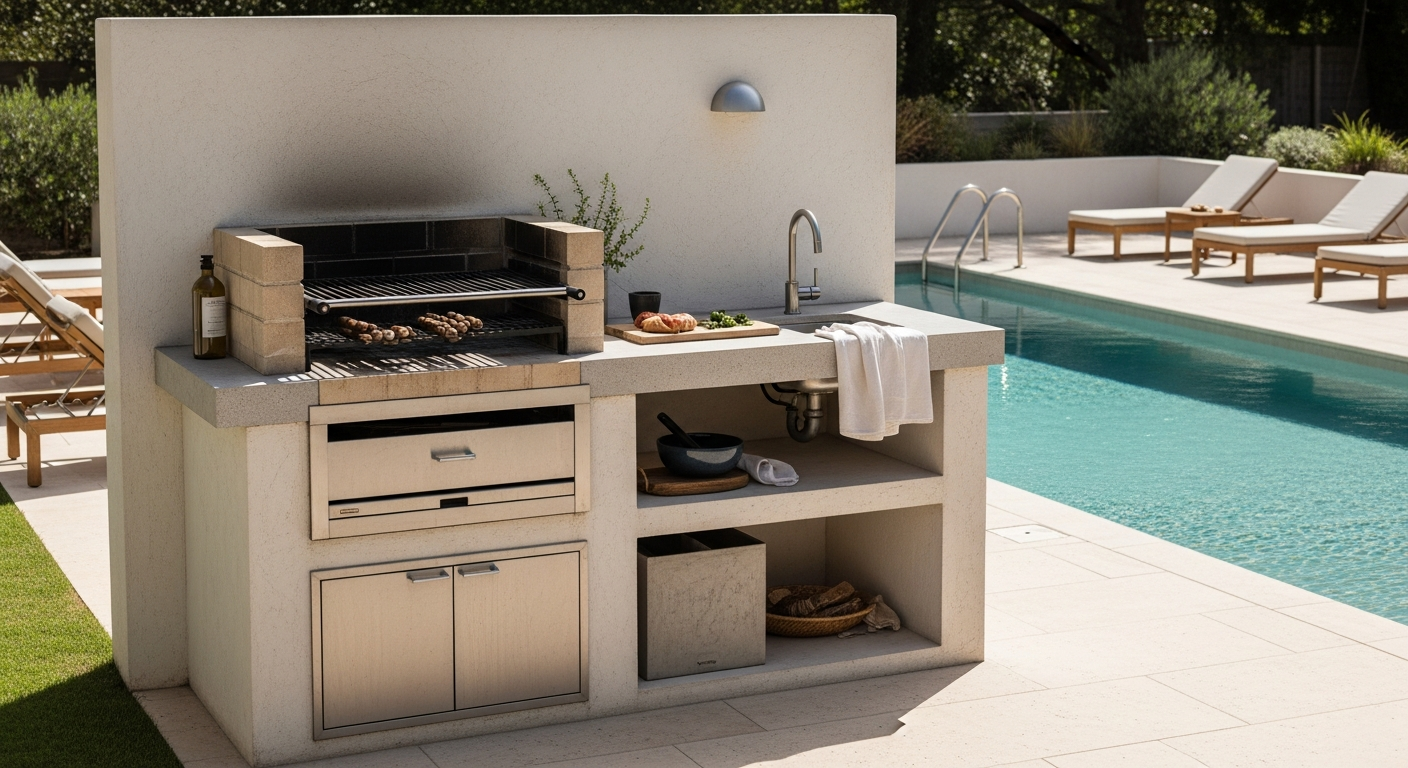
Small Outdoor Kitchen with Bar Lee County: Maximizing Lanai ROI with a 30-Year Corrosion-Proof Design
As a designer who has built dozens of outdoor living spaces from Cape Coral to Sanibel Island, I’ve seen one catastrophic mistake repeated constantly: underestimating the brutal trifecta of Lee County’s salt air, intense UV radiation, and high humidity. A beautiful outdoor kitchen can look rusted and degraded in just two years if the material science is ignored. The key isn't just aesthetics; it's a specific engineering approach to achieve longevity and function in our coastal environment. My entire process is built around a single goal: creating a compact, high-utility outdoor kitchen and bar that will perform without structural or cosmetic failure for decades, not just a few seasons. This involves a specific material selection protocol and a layout strategy that maximizes every square inch of a typical lanai or backyard patio, a common constraint in many of the planned communities around Fort Myers.My Coastal Resilience Framework for Compact Spaces
I developed what I call the "Coastal Resilience Framework" after a project in a waterfront home in Cape Coral where the client's previous outdoor kitchen, less than three years old, had failing grill burners and warped cabinet doors due to corrosion and moisture. My methodology isn't about picking a brand; it’s about a non-negotiable hierarchy of materials and a spatial audit before a single drawing is made. It focuses on preemptively solving the three primary failure points: material degradation, inefficient workflow in tight spaces, and improper utility placement.Material Selection Beyond the Obvious
The most common error I fix is the use of 304-grade stainless steel. While marketed as "outdoor grade," it simply lacks the molybdenum content to resist the pitting and crevice corrosion from our salt-laden air. My spec is absolute: all metallic components, from the grill housing to the cabinet pulls and especially the fasteners, must be 316L marine-grade stainless steel. This single decision increases the upfront material cost by about 15-20%, but it prevents catastrophic failure and effectively doubles the functional lifespan of the kitchen. For countertops, I steer clients away from porous stones like granite which require constant sealing against our sun and rain. Instead, I specify sintered stone (like Dekton), which is completely non-porous and has near-zero UV fade, a critical factor under the intense Florida sun.Step-by-Step Implementation for Lanai and Backyard Layouts
For the small-footprint kitchens common in communities like Whiskey Creek or Gateway, functionality is paramount. A cramped, poorly planned layout won't get used, no matter how durable it is. I follow a strict, four-step process.- 1. The Ergonomic Triangle Audit: Before anything else, I map the core workflow between the three key zones: the hot zone (grill), the wet zone (sink), and the cold zone (refrigerator). In a small linear or L-shaped kitchen, the distance between these points must be minimized to avoid frustrating, wasted steps. A key metric is ensuring there's a dedicated 18-24 inch "appliance landing zone" of free counter space directly next to the grill.
- 2. Defining the Bar Function: A "bar" can mean different things. Is it for serving drinks or for dining? For actual seating, a minimum counter overhang of 10-12 inches is required for comfortable knee space. Anything less renders the seating useless. This measurement dictates the entire depth of the structure and is a crucial first decision.
- 3. Appliance and Utility Mapping: I physically map out the location of every utility line *before* the frame is built. All outdoor electrical outlets must be GFCI-protected with weatherproof-in-use covers. For grills placed under a covered lanai roof, a proper ventilation hood isn't a luxury; it's a safety requirement to manage heat and smoke. I've seen far too many melted vinyl soffits from improperly ventilated grills.
- 4. The Final Footprint Test: I use painter's tape to mark the full outline of the proposed kitchen and bar on the lanai floor. I have the client walk the space, mimicking cooking and serving actions. This simple, no-cost test has saved countless projects from critical layout flaws that looked good on paper but failed in practice.
Precision Tuning for Lee County's Climate
The final layer of quality control is in the details that prevent long-term, slow-moving failures. It’s not just about the big items. I mandate that all cabinet boxes be built from marine-grade polymers or powder-coated aluminum, never wood or wood composites that will inevitably swell and rot in our humidity. Fasteners are a huge point of failure; using anything other than 316 stainless steel screws and bolts will result in rust streaks and structural weakness. Finally, for lighting, I integrate low-voltage LED systems under the countertop lip. This provides beautiful ambient light and, more importantly, enhances safety without the risk of high-voltage wiring in a potentially wet environment. Now that you understand the material science and spatial planning, how will you calculate the required CFM for your grill's ventilation hood to ensure safety within a screened lanai, considering typical summer cross-breeze patterns in Bonita Springs?Written by

Tags
outdoor kitchen designs for small spaces
mini outdoor kitchen
compact outdoor kitchen
outdoor mini grill
small outdoor kitchen island