Chemical-free Pool Treatment in Osceola County: A Protocol for Stabilizing Water Chemistry Against Intense UV and Rain
As a pool system specialist, the most common and costly mistake I see in Osceola County is the over-reliance on chlorine to combat the unique challenges of our environment. The intense Florida sun degrades unstabilized chlorine in a matter of hours, and the daily summer downpours dilute the water, throwing pH and alkalinity into chaos. This constant battle leads to algae blooms, high chemical costs, and frustration, especially for owners of vacation rental properties in areas like Celebration and Kissimmee who need rock-solid reliability. My approach isn't about simply replacing chlorine; it's about creating a resilient aquatic ecosystem that works with, not against, our local climate. The solution is a multi-layered sanitization system, centered on an Advanced Oxidation Process (AOP), which I've found can reduce daily maintenance intervention by up to 90% compared to traditional salt or chlorine pools. I developed this protocol after a particularly challenging project on a large, high-bather-load pool near East Lake Tohopekaliga that was constantly failing health inspections due to algae and low sanitizer levels. The property manager was spending a fortune on shock treatments with diminishing returns. By shifting the focus from a chemical residual to a powerful, on-demand oxidation process, we achieved crystal-clear water that remained stable even through the peak rainy season.My Diagnostic Framework for Osceola's Unique Pool Environment
Before I even touch a piece of equipment, I perform a Pool Environmental Load Assessment. This isn't a standard water test; it's a methodology I created to quantify the specific stressors an Osceola County pool endures. The primary failure I observe is installing a system based solely on gallonage, completely ignoring the environmental context. A 15,000-gallon pool in a screened lanai in St. Cloud has a vastly different sanitization demand than an unscreened one of the same size in a Four Corners vacation home, which sees constant, high bather loads and direct sun exposure. My assessment analyzes three core metrics:- UV Degradation Index: I measure the hours of direct, unfiltered sunlight the pool surface receives. This directly correlates to the rate of sanitizer breakdown.
- Contaminant Ingress Rate: This evaluates runoff from unscreened decks, surrounding foliage (especially our high pollen count), and the impact of rainwater dilution on water balance.
- Bather Load Volatility: For short-term rentals, I use a multiplier to account for unpredictable, high concentrations of swimmers, which introduce significant organic waste.
AOP System Sizing: The Technical Core of a Resilient Pool
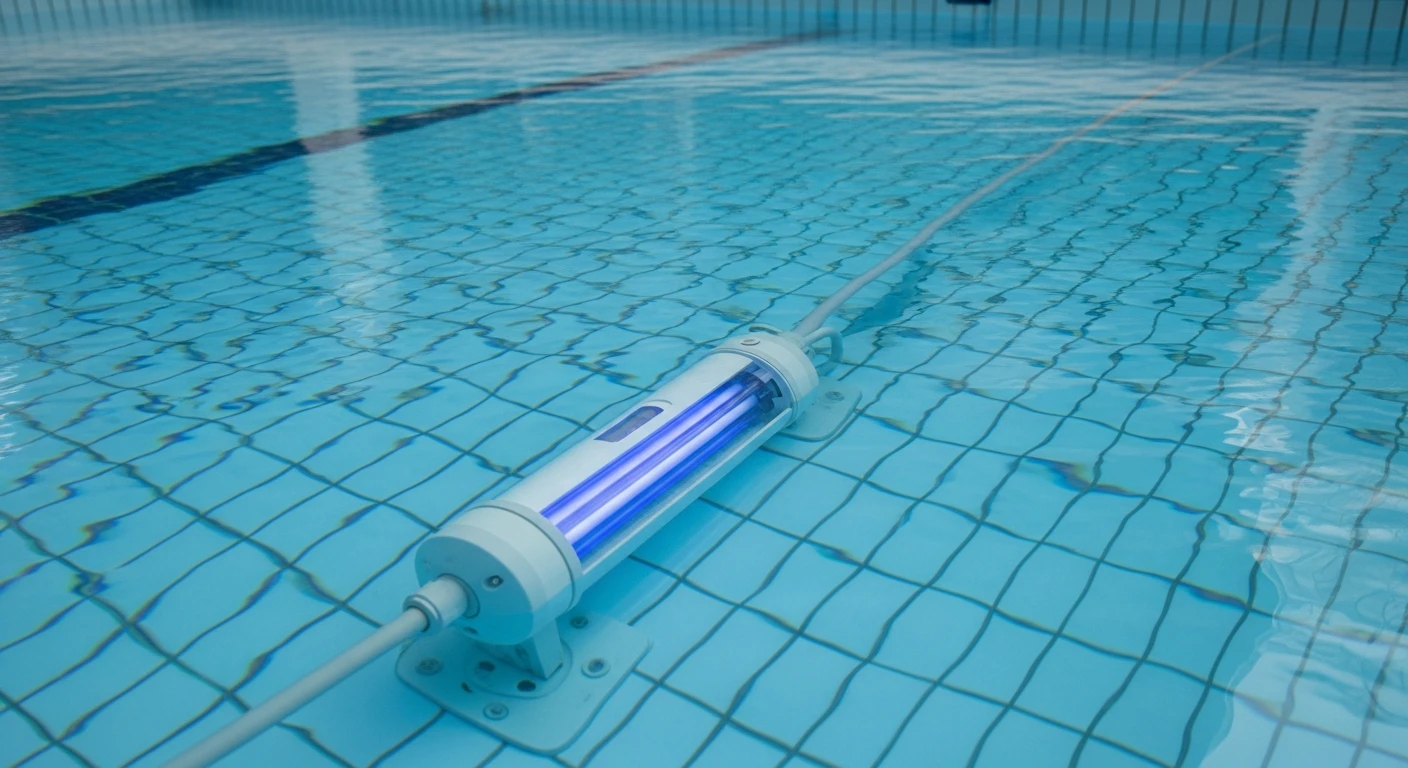
The heart of my chemical-free protocol is a correctly sized AOP unit, which combines two processes: Ozone (O3) injection and a high-intensity UV-C sterilizer. Getting this wrong is the number one technical error. Many off-the-shelf systems are undersized for Florida's conditions. My proprietary sizing formula insists on an ozone generator that produces at least 1 gram per hour per 10,000 gallons for residential pools, and I increase that to 1.5 grams for high-load vacation properties. The second part of the AOP equation is the UV-C sterilizer's dosage, measured in millijoules per square centimeter (mJ/cm²). The goal isn't just to sanitize; it's to achieve a dosage high enough to destroy chloramines and chlorine-resistant protozoa like Cryptosporidium. I never install a UV unit that delivers less than 40 mJ/cm² at the system's maximum flow rate. The ozone acts as a powerful flocculant, clumping microscopic particles together, while the UV-C light provides instant, lethal sterilization as water passes through the chamber. This synergy creates an oxidation potential far greater than either technology alone and provides a level of clarity that chlorine struggles to match.Step-by-Step AOP Implementation for Maximum Efficacy
Once the system is properly sized, the installation and calibration are critical. A sloppy installation can cut the system's effectiveness by over 50%. I follow a strict, phased implementation plan.- Phase 1: Water Chemistry Foundation: Before installation, I balance the water to specific parameters that are optimal for AOP, not chlorine. This means setting Total Alkalinity between 80-120 ppm, pH at a tight 7.4-7.6, and ensuring Calcium Hardness is between 200-400 ppm to prevent scaling on the UV quartz sleeve.
- Phase 2: Hydraulic Integration: The AOP unit must be installed last in the plumbing line, after the filter and heater. The ozone is injected via a Venturi injector, which uses water flow to create a vacuum and draw the ozone gas in, ensuring maximum dissolution into the water. Incorrect placement is a frequent installation error I'm called to fix.
- Phase 3: System Synchronization: The AOP unit's operation must be synchronized with the main pump's run cycle. I calculate the pool's turnover rate and set the pump to run long enough to pass the entire volume of pool water through the AOP system at least twice a day. For most Osceola pools, this means a 10-12 hour run time in the summer.
- Phase 4: Initial Oxidizer Purge: To start with a completely clean slate, I use a non-chlorine shock (potassium monopersulfate or MPS). This oxidizes any existing contaminants without adding cyanuric acid or creating harmful byproducts, allowing the AOP system to take over the primary sanitation role immediately.
Precision Tuning and Long-Term Quality Control
With an AOP system, the goal shifts from measuring a chemical residual (Free Chlorine) to measuring the water's actual state of sanitation, which I do by tracking its Oxidation-Reduction Potential (ORP). A healthy, AOP-treated pool should maintain an ORP reading of 650-750 millivolts (mV). This provides a real-time, accurate measure of the water's ability to destroy contaminants. I also educate my clients on managing Total Dissolved Solids (TDS). While AOP doesn't add solids like a salt system does, evaporation and bather waste will still cause TDS to creep up. In Osceola's high-evaporation climate, I recommend a partial drain and refill when TDS levels approach 2,000 ppm above the source water's reading to maintain water clarity and comfort. Finally, filter cleaning schedules become more important. Because AOP is so effective at clumping particles, the filter will capture more debris, requiring more frequent backwashing or cartridge cleaning to maintain proper flow—a small price to pay for pristine, chemical-free water. So, are you continuing to treat the symptoms of an unstable pool with more chemicals, or are you ready to address the core environmental factors that are keeping your water from being truly self-sufficient?Written by

Tags
pool shock treatment
above ground swimming pool maintenance
pool treatment
green pool treatment
Chemical-free Pool Treatment in Osceola FL FAQ
What is chemical-free pool treatment?
Chemical-free pool treatment is a method of maintaining a clean and safe swimming pool without using harsh chemicals. Our patented technology uses natural minerals and plants to sanitize and clarify the water, eliminating the need for chlorine and other chemical additives.
How does chemical-free pool treatment work?
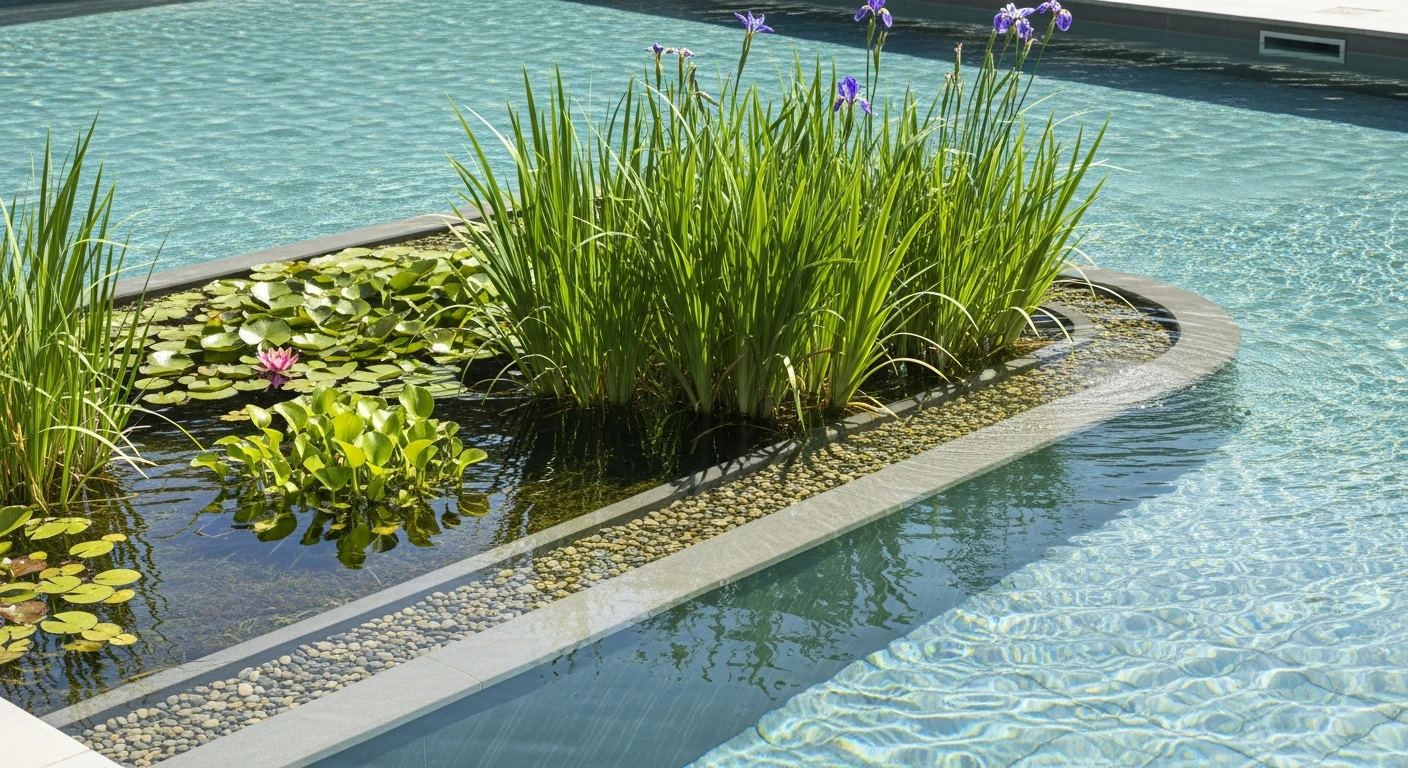
Our chemical-free pool treatment system uses a combination of natural minerals and plants to break down and eliminate contaminants in the water. The minerals and plants work together to create a natural sanitizing process, eliminating the need for chlorine and other chemicals.
Is chemical-free pool treatment safe for my family and pets?
Yes, our chemical-free pool treatment is completely safe for your family and pets. Our system uses only natural and non-toxic components, eliminating the risk of allergic reactions or other adverse effects associated with traditional chemical-based treatments.
Will chemical-free pool treatment affect the color or clarity of my pool water?
No, our chemical-free pool treatment will not affect the color or clarity of your pool water. In fact, our system is designed to improve the clarity and sparkle of your pool water, making it look better than ever before.
How often do I need to maintain my pool with chemical-free treatment?
Our chemical-free pool treatment requires minimal maintenance. Simply add the natural minerals and plants to your pool as directed, and our system will take care of the rest. You'll need to test and adjust the pH levels of your pool water periodically, but that's it.
Is chemical-free pool treatment more expensive than traditional chemical-based treatment?
Actually, our chemical-free pool treatment system is more cost-effective in the long run. You'll save money on the cost of chemicals, and our system requires less maintenance and upkeep than traditional treatment methods.
Can I use my pool during the chemical-free treatment process?
Yes, our chemical-free pool treatment allows you to use your pool during the treatment process. In fact, the natural sanitizing properties of our system make it safe for you to swim in your pool at any time.
How long does it take to see results from chemical-free pool treatment?
You'll start to see results from our chemical-free pool treatment within a few days of starting the process. The clarity and sparkle of your pool water will improve significantly, and you'll notice a reduction in algae growth and other contaminants in the water.
Is chemical-free pool treatment available for commercial pools?
Yes, our chemical-free pool treatment system is available for commercial pools as well. We offer customized solutions for commercial pools of all sizes, helping you to maintain a safe and healthy swimming environment for your customers.
What if I have a pool with existing algae or contaminants?
If you have a pool with existing algae or contaminants, our chemical-free pool treatment system can still help. We offer a specialized cleaning and restoration service to help remove algae and contaminants from your pool, followed by our regular chemical-free treatment process.
Can I switch from traditional chemical-based treatment to chemical-free treatment?
Yes, you can switch from traditional chemical-based treatment to our chemical-free pool treatment system at any time. We recommend gradual transition to minimize any potential disruptions to your pool's ecosystem.