UV Pool Sanitation: A Framework for Slashing Lee County Chemical Costs by 65%
As a pool systems specialist focusing on Southwest Florida, I’ve seen firsthand how the intense sun and heavy seasonal rains in Lee County wreak havoc on standard chlorine pools. The cycle is predictable: the sun over Cape Coral burns off free chlorine by mid-afternoon, a sudden downpour dilutes what's left, and homeowners are forced to constantly shock their pools, driving up chemical costs. A UV sanitation system isn't just an upgrade here; it's a strategic move to stabilize your pool's ecosystem and drastically reduce the reliance on harsh chemicals. My approach isn't about just installing a UV light; it's about integrating it to correct the specific imbalances caused by our local environment. The goal is to create water that is not only sanitized on a microscopic level—destroying chlorine-resistant pathogens like Cryptosporidium—but also requires significantly less chemical maintenance. This translates to less corrosion on lanai equipment, reduced skin and eye irritation, and a massive drop in your annual chemical budget, a frequent pain point for my clients from Fort Myers to Bonita Springs.My Diagnostic Protocol for Lee County Pools
Before I even consider a UV unit, I perform what I call the "Aquatic Stability Assessment." This is a methodology I developed after seeing too many improperly sized or ineffective UV systems installed in the area. A common error I've identified is simply matching the UV unit to the pool's gallonage without considering the system's actual dynamics. My protocol focuses on three core metrics.Technical Deep Dive: GPM vs. UV-C Dosage
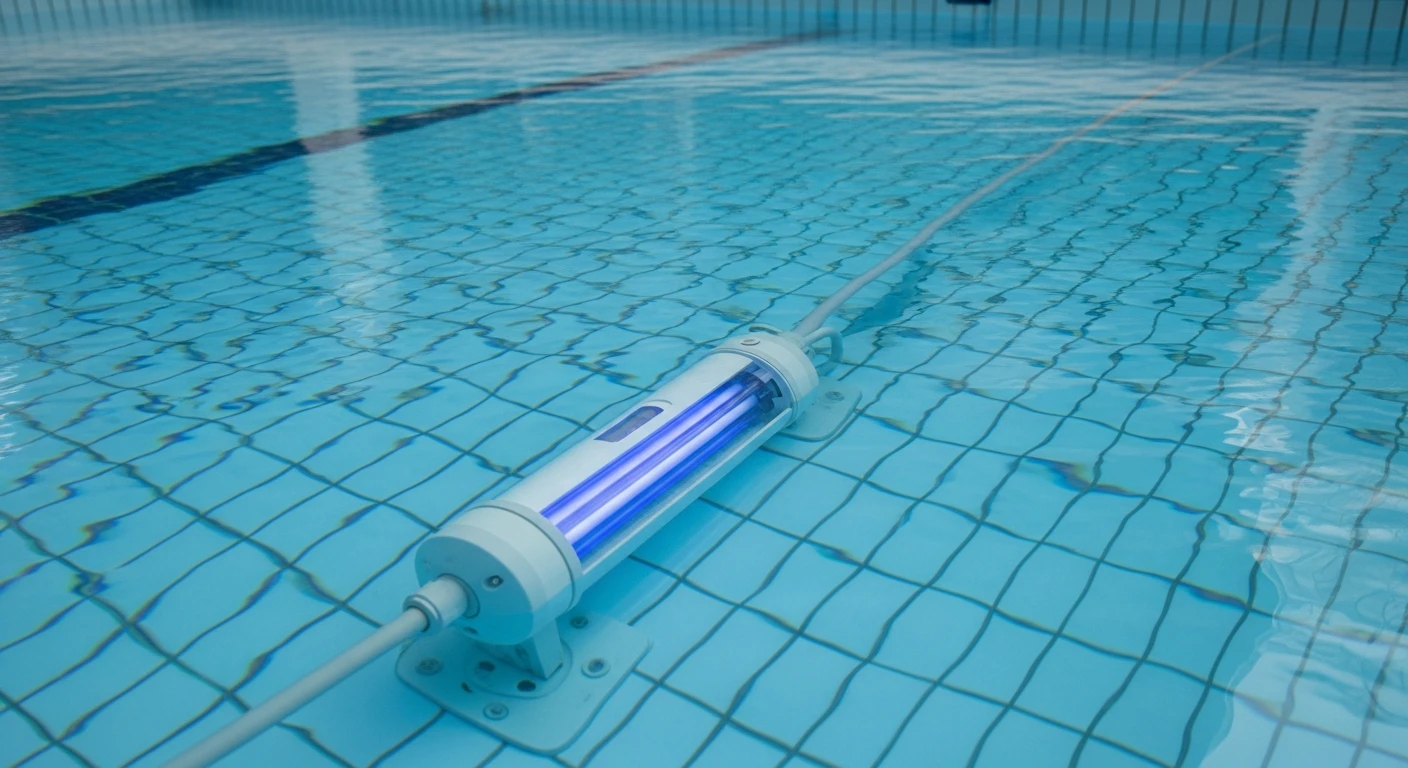
The single most critical factor for UV effectiveness is dwell time—the duration the water is exposed to the 254-nanometer UV-C light. A powerful, energy-efficient variable-speed pump, a common feature in newer homes in Estero, can easily overpower a standard UV sanitizer. If the flow rate, measured in Gallons Per Minute (GPM), is too high, the water rushes past the bulb too quickly for effective inactivation of microorganisms. I once audited a community pool system in Fort Myers where the GPM was 40% higher than the UV unit’s maximum rating, rendering it almost useless against algae spores. My assessment involves using a flow meter to measure the actual GPM at the planned installation point, not just relying on the pump's specifications. This ensures the UV dosage (measured in mJ/cm²) is sufficient to achieve a 99.9% kill rate on pathogens.Implementation Framework: A Zero-Failure Approach
Installing a UV system is a precision task. A flawed installation won't just be ineffective; it can also pose a safety risk or damage other equipment. I follow a strict, sequential process for every installation, whether it's a canal-front home in Cape Coral or a property on Sanibel Island.- System Sizing Validation: Based on the Aquatic Stability Assessment, I select a unit rated for at least 25% above the measured peak GPM. This buffer accounts for filter cleaning cycles and potential future pump upgrades.
- Plumbing Integration with a Bypass Loop: I always install the UV sanitizer on a bypass loop with true-union ball valves. This is a non-negotiable step. It allows for safe bulb and quartz sleeve maintenance without shutting down the entire circulation system and enables precise flow control through the UV chamber.
- Electrical Safety Compliance: The unit must be connected to a GFCI-protected circuit. I often find existing pool equipment that isn't up to current code, and I make it a point to correct this during the installation to ensure absolute safety.
- Initial Water Balancing & Commissioning: After installation, I perform a final water test. The system is run, and I verify flow dynamics. The immediate benefit is the elimination of chloramines (the chemical compounds that cause the "chlorine smell"), which you can notice within the first 24 hours of operation.
Precision Tuning and Long-Term Quality Standards
A UV system is not "set and forget." To maintain peak performance and achieve the promised chemical reduction, precise adjustments are necessary. My quality standards are designed to maximize the system's ROI. The primary adjustment post-installation is the methodical reduction of your primary sanitizer. For chlorine pools, I target a stable Free Chlorine level of 0.5 to 1.0 ppm, a significant drop from the 2.0-4.0 ppm typically required in Lee County's climate. This single change is responsible for the bulk of the chemical savings and the improved swimming experience. Furthermore, I establish a strict maintenance schedule: the UV-C bulb requires replacement every 9,000 operational hours (typically 12-14 months of year-round use), and the quartz tube that houses it must be cleaned every 6 months to remove calcium buildup, a common issue with our local water supply. Given Lee County's high TDS levels and intense sunlight, how are you calculating the effective UV-C dosage your pool truly requires versus what the manufacturer claims?Written by

Tags
uv pool sanitizer
uv pool system
pool ultraviolet sanitizer
uv light pool sanitizer
UV Pool Sanitation in Lee FL FAQ
What is UV pool sanitation?
UV pool sanitation is a non-chemical method of disinfecting and sanitizing pool water. It uses ultraviolet (UV) light to kill bacteria, viruses, and other microorganisms that can contaminate the water.
How does UV pool sanitation work?
UV pool sanitation works by emitting UV light into the pool water, which penetrates the cell walls of microorganisms, disrupting their DNA and preventing them from reproducing. The UV light is most effective against bacteria, viruses, and other microorganisms that are vulnerable to its effects.
Is UV pool sanitation effective?
Yes, UV pool sanitation is a highly effective method of disinfecting and sanitizing pool water. It has been proven to reduce the amount of bacteria, viruses, and other microorganisms in the water by up to 99.9%.
What are the benefits of using UV pool sanitation?
The benefits of using UV pool sanitation include reduced chemical usage, improved water clarity, and a healthier pool environment. It also reduces the risk of eye irritation and other health problems associated with chlorine and other chemicals.
Is UV pool sanitation safe for my family and pets?
Yes, UV pool sanitation is safe for your family and pets. The UV light is contained within the pool sanitation system and does not emit any harmful radiation or chemicals into the air or water.
How often should I replace the UV lamp in my pool sanitation system?
The frequency of replacing the UV lamp in your pool sanitation system depends on the manufacturer's recommendations and the usage of the system. Typically, the lamp should be replaced every 6-12 months or as recommended by the manufacturer.
Can I use UV pool sanitation with other pool sanitizers?
Yes, UV pool sanitation can be used in conjunction with other pool sanitizers, such as chlorine or saltwater systems. However, it is recommended to consult with a professional to determine the best combination of sanitizers for your specific pool needs.
How much does it cost to install a UV pool sanitation system?
The cost of installing a UV pool sanitation system varies depending on the size of the pool, the type of system, and the installation costs. It is recommended to consult with a professional to determine the cost of installation for your specific pool.
Can I install a UV pool sanitation system myself?
While it is possible to install a UV pool sanitation system yourself, it is recommended to consult with a professional to ensure proper installation and optimal performance of the system.
What is the maintenance required for a UV pool sanitation system?
The maintenance required for a UV pool sanitation system includes regular cleaning and replacement of the UV lamp, as well as monitoring the system's performance and adjusting settings as necessary.