Weekly Pool Maintenance: My Seminole County Protocol for Preventing 90% of Algae Blooms
For over a decade, I've serviced pools across Seminole County, from the older, oak-lined neighborhoods of Longwood to the newer developments in Lake Mary. The single biggest mistake I see homeowners make is treating pool care as a simple checklist. They dump in chlorine and hope for the best. My approach is different. I’ve developed a protocol that focuses on proactive water stability, specifically designed to combat the unique challenges of our hot, humid climate and intense summer rain. This isn't about just keeping a pool blue; it's about creating a chemically stable environment where problems like algae and cloudy water simply can't gain a foothold. The truth is, most pool issues are just symptoms of a single, core problem: unstable alkalinity. When the afternoon thunderstorms roll through Oviedo and Casselberry, they don't just add water; they add acidic rainwater that devastates your pool's pH balance. Without a proper **Total Alkalinity** buffer, your chlorine effectiveness plummets, no matter how much you add. My entire weekly maintenance philosophy is built on establishing this buffer first, making every other chemical treatment exponentially more effective and reducing chemical costs by an average of 30%.The Seminole Stability Protocol: Beyond Basic Chlorine Checks
I call my methodology the "Seminole Stability Protocol." It was born from a frustrating project in Altamonte Springs where a client's pool, surrounded by heavy foliage, was in a constant state of early-stage green algae despite having "normal" chlorine levels. The pool store tests showed everything was "fine." It wasn't. The problem was an extremely high level of **phosphates**—algae's primary food source—washing in from lawn fertilizers, combined with a barely-in-range alkalinity that crashed after every rainstorm. This experience taught me to look beyond the surface-level numbers. My protocol prioritizes the foundational chemistry that dictates the health of the entire system.Mastering the Alkalinity-pH-Chlorine Cascade
The order of operations is everything. Treating chemicals in the wrong sequence is the most common and costly error I see. You are literally throwing money away. The relationship between these three core metrics is a cascade; get the first one right, and the others fall into place with minimal effort. My process mandates a specific sequence for chemical adjustment. First, I test and adjust the Total Alkalinity, aiming for a stable range of 80-120 ppm. This acts as a shield for your pH. Only once alkalinity is locked in do I address the pH, targeting a tight window of 7.4-7.6. With a stable pH, your chlorine can do its job. Finally, I adjust the Free Chlorine to its optimal level of 2.0-4.0 ppm. This cascade approach prevents the wild chemical swings that plague so many pools in our area, especially during the rainy season from May to September.My 7-Point Weekly Service Checklist for a Flawless Pool
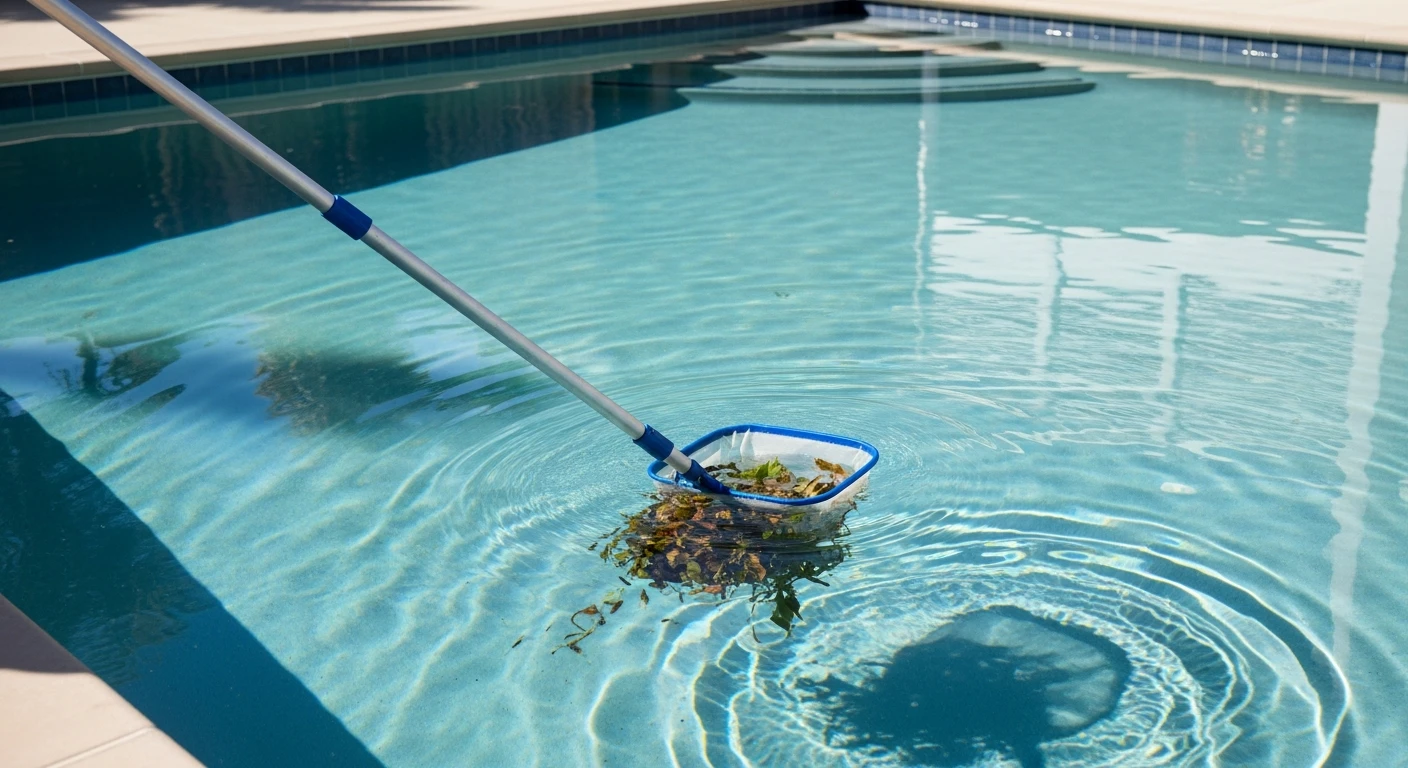
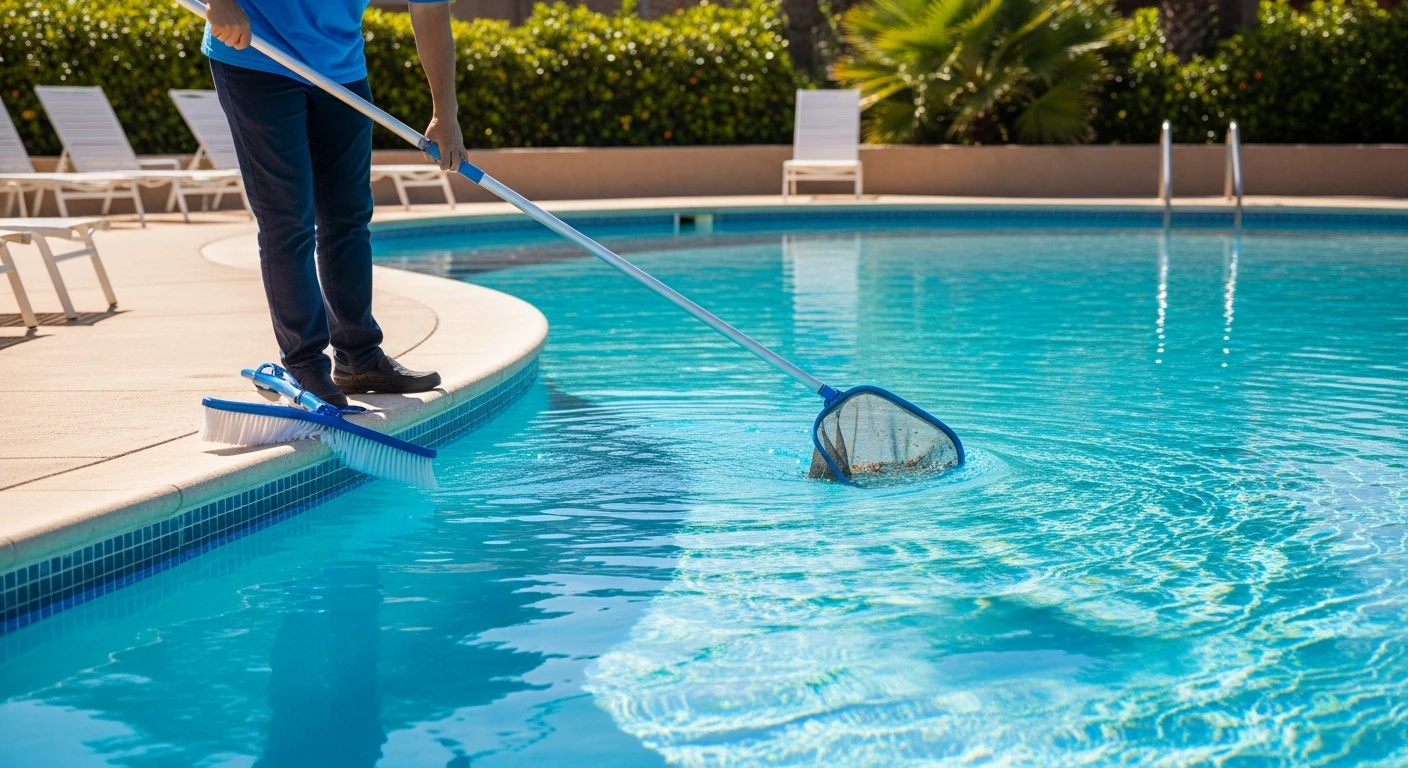
Executing the protocol requires a systematic, physical approach. A "splash and dash" service is not enough. Each step provides critical diagnostic information about the pool's health. This is the exact checklist I follow on every property, every week.- Skim Surface and Floor: I remove all visible debris. The amount of pollen and leaves from the oaks tells me how much organic load the chlorine will have to fight this week.
- Brush Walls and Steps: I vigorously brush all surfaces, especially in corners and crevices. This physically dislodges any invisible, budding algae spores before they can bloom. This step is non-negotiable.
- Vacuum as Needed: I vacuum to remove settled debris that brushing has dislodged. A clean floor prevents staining and reduces the overall organic load.
- Empty Skimmer and Pump Baskets: A clogged basket restricts water flow, which is the lifeblood of your pool. Reduced flow strains the pump motor and dramatically cuts filtration efficiency, leading to a 25% reduction in equipment lifespan if ignored.
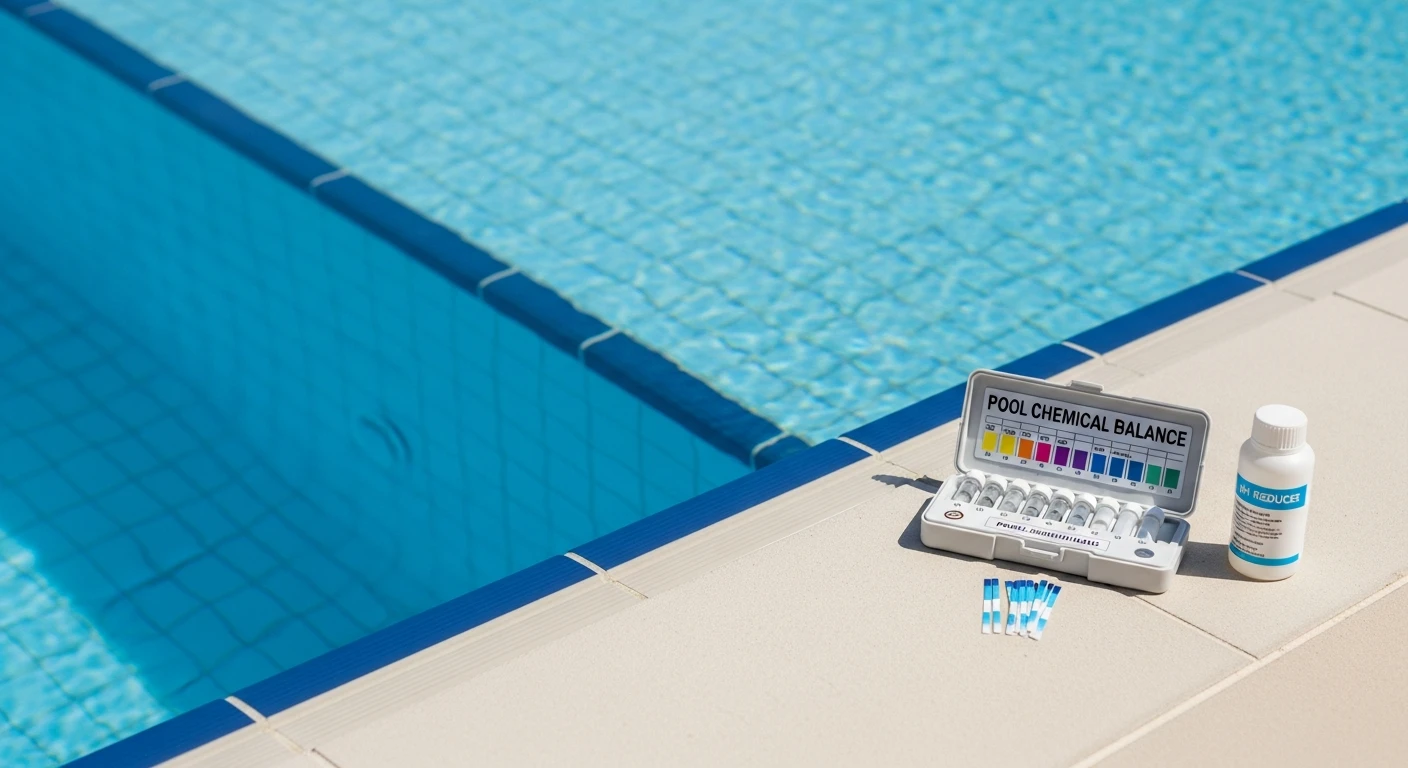
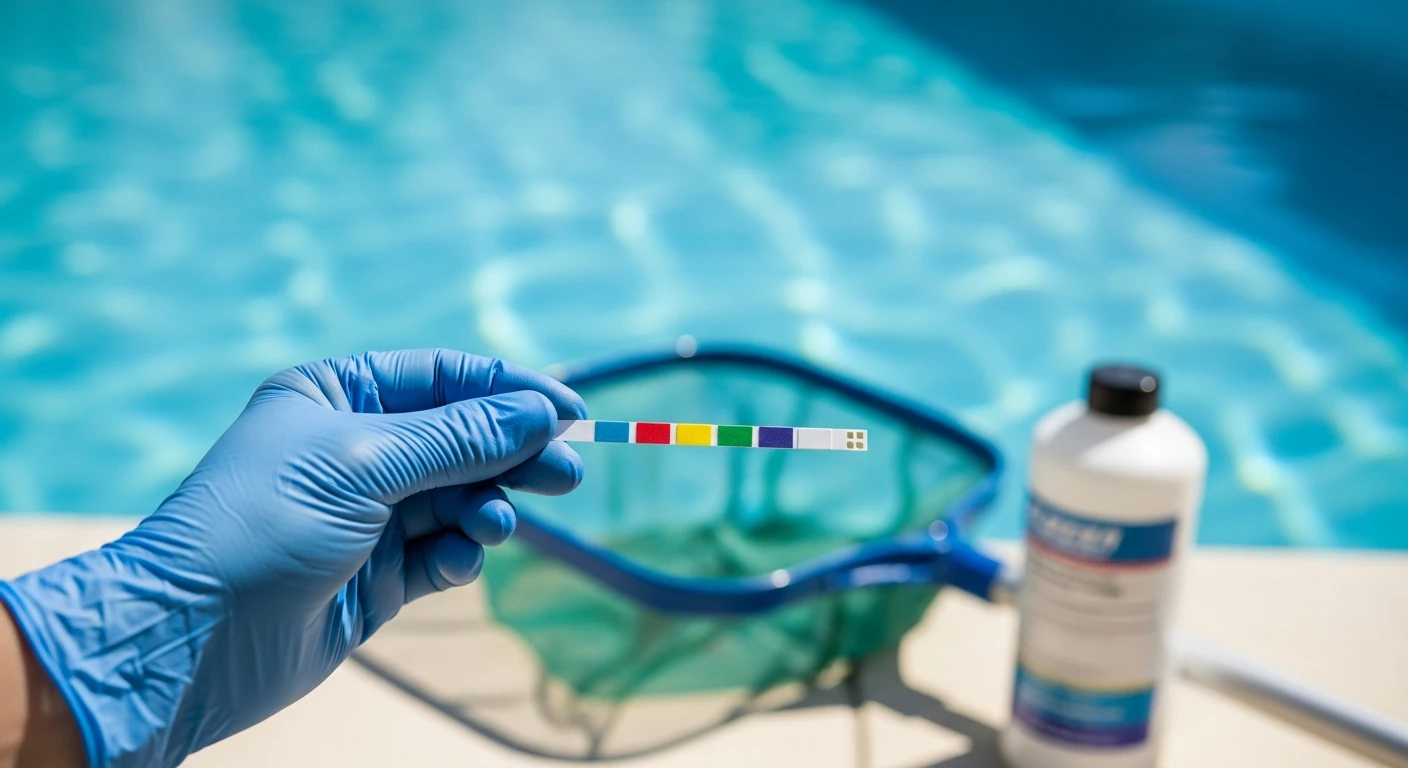
- Perform Full Water Chemistry Test: This is where I apply the Alkalinity-pH-Chlorine Cascade, using a professional-grade test kit, not simple strips.
- Inspect All Equipment: I listen to the pump motor for unusual sounds, check the filter pressure gauge, and look for any leaks around the equipment pad. Early detection of a problem saves thousands in repairs.
- Add Chemicals Methodically: Based on the test, I add chemicals one at a time, allowing for proper circulation between applications, starting with the alkalinity buffer.
Fine-Tuning for Seminole County’s Unique Challenges
A perfect pool requires more than just the weekly basics. Precision adjustments are what separate a clean pool from a truly healthy and cost-effective one. In Seminole County, I always monitor two additional factors. First is the filter's **pressure differential**. I note the PSI reading after a filter cleaning. When the operating pressure rises 8-10 PSI above that clean baseline, it's time for a backwash or cartridge cleaning. Running it any higher is just circulating dirty water. Second, especially for saltwater pools, I check the **salt cell** for calcium buildup. Our hard water can quickly scale the cell's plates, drastically reducing chlorine production. A mild acid wash every 3 months is a preventative measure I build into my service plans. Are you just chasing chlorine levels and reacting to problems, or are you proactively managing your pool’s Langelier Saturation Index (LSI) to prevent scaling and corrosion before they even begin?Written by

Tags
weekly pool service near me
weekly pool cleaning service near me
weekly pool service
swimming pool weekly service
Weekly Pool Maintenance in Seminole FL FAQ
What is the importance of regular pool maintenance?
Regular pool maintenance is crucial to ensure the health and safety of swimmers. It helps to prevent the growth of algae, bacteria, and other contaminants that can cause eye irritation, skin rashes, and other health issues. Additionally, regular maintenance can extend the lifespan of your pool and its equipment, reducing the need for costly repairs and replacements.
How often should I clean my pool?
It is recommended to clean your pool at least once a week, or more often depending on usage and weather conditions. This can include skimming the surface, vacuuming the floor and walls, and testing the water chemistry.
What is the best way to clean my pool?
The best way to clean your pool depends on its size, type, and condition. Our team of professionals can assess your pool and recommend the most effective cleaning methods and products for your specific needs.
What should I check when testing my pool water?
When testing your pool water, it is important to check the levels of pH, alkalinity, calcium hardness, and chlorine. Our experts can help you understand what these levels mean and how to adjust them to ensure safe and healthy swimming conditions.
How can I prevent algae growth in my pool?
To prevent algae growth, it is important to maintain proper water chemistry, ensure adequate filtration, and reduce the amount of nutrients that can fuel algae growth. Our team can provide guidance on how to implement these measures and prevent algae blooms in your pool.
What is the best way to store pool chemicals?
It is important to store pool chemicals in a well-ventilated area, away from heat sources and children. Our experts can provide guidance on the proper storage and handling of pool chemicals to ensure safe and effective use.
Can I perform pool maintenance myself, or do I need a professional?
While it is possible to perform some pool maintenance tasks yourself, it is generally recommended to hire a professional for regular maintenance and repairs. Our team has the training, expertise, and equipment to ensure your pool is properly maintained and safe for swimmers.
What are the benefits of hiring a professional pool maintenance service?
Hiring a professional pool maintenance service can provide peace of mind, ensure safe and healthy swimming conditions, and extend the lifespan of your pool and its equipment. Our team can provide regular maintenance, repairs, and upgrades to keep your pool in top condition.