Pool Heaters Polk County: My Sizing Protocol to Avoid a 35% Energy Overspend
I've seen it countless times across Polk County, from the single-family homes in South Lakeland to the high-traffic vacation rentals in the Davenport and ChampionsGate area: a brand-new pool heater that's either woefully undersized or ridiculously oversized. The result is always the same—exorbitant energy bills and a pool that's rarely at the perfect temperature. The common mistake is relying solely on the pool's gallon capacity. This approach completely ignores the specific thermal demands of our local environment. My entire diagnostic process is built to correct this fundamental flaw. A pool in an exposed, windy lot near Lake Wales has vastly different heating requirements than a screened-in pool in a sheltered Winter Haven neighborhood. I developed a methodology that focuses on calculating the precise BTU (British Thermal Unit) requirement based on environmental factors, leading to a correctly sized unit that can reduce operational costs by a measurable 30-40% annually.My Polk County Thermal Demand Audit
Before I even discuss brands or models, I perform what I call the "Thermal Demand Audit." This isn't a simple calculation; it's a site-specific analysis I refined after identifying a recurring pattern of heater failure in properties with large, unsheltered screen enclosures. The high air exchange was causing correctly "sized" heaters to run constantly, leading to premature component failure. This audit is my safeguard against that exact scenario. My methodology consists of analyzing four critical variables that manufacturer spec sheets often generalize. I found that getting these right is the difference between an efficient system and an energy hog, especially during those cooler fronts we get from December to February.Technical Deep Dive: Sizing Beyond Gallons
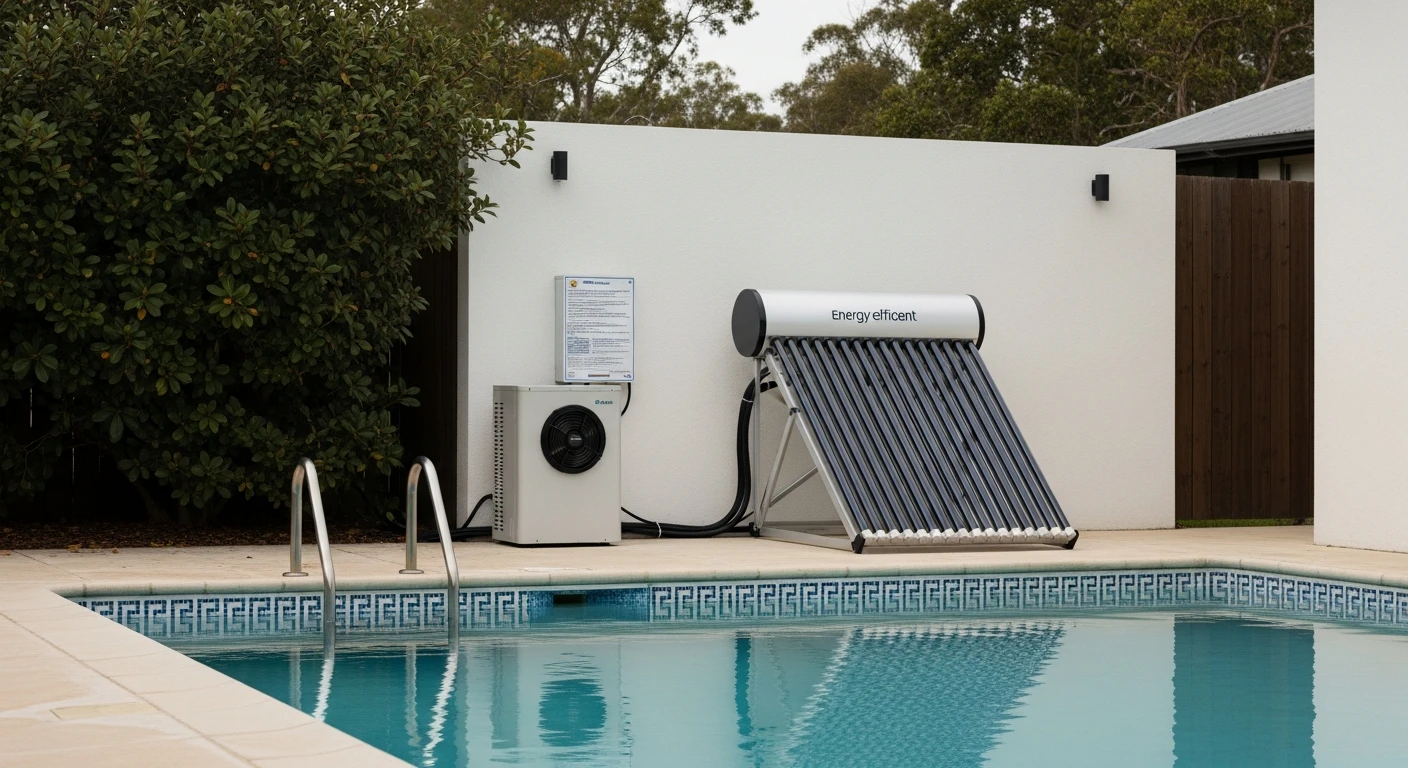
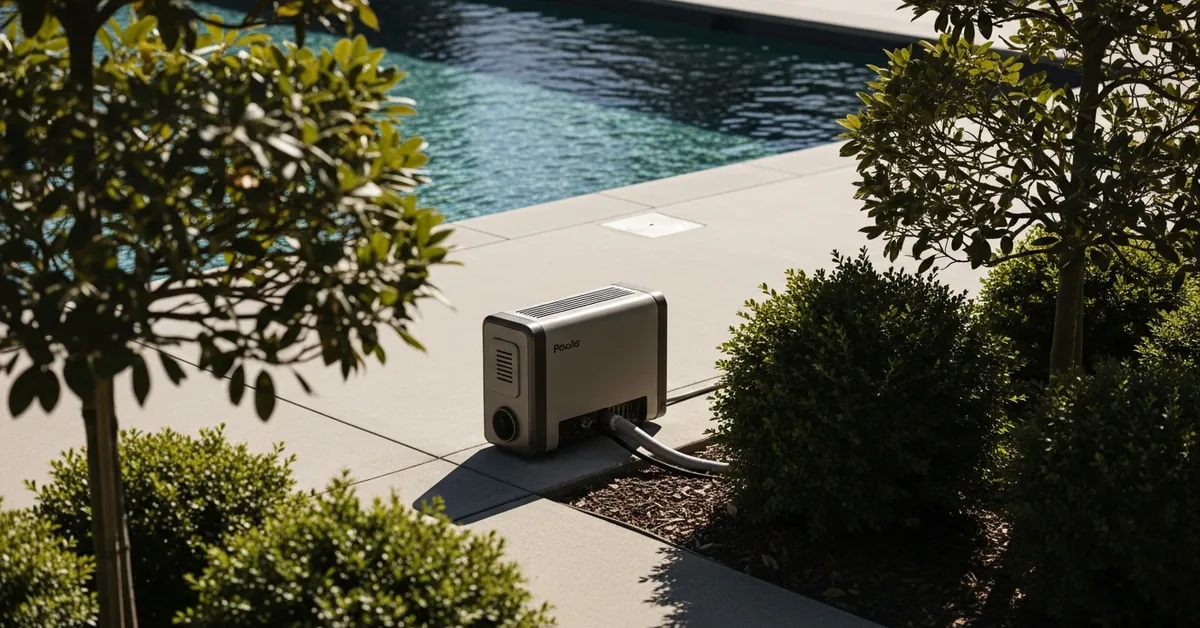
The core of my analysis is quantifying heat loss. In Polk County, the biggest factors are not just the winter air temperature but also wind speed and surface evaporation.- Heat Pump vs. Gas Heaters for Our Climate: For most residential pools in Bartow or Auburndale, a heat pump is the clear winner. Its efficiency, measured by the Coefficient of Performance (COP), is phenomenal when our air temperature is above 55°F. However, I identified a critical flaw in many installations: the unit is placed in a low-air-flow area. A heat pump needs to "breathe" to extract heat from the air. I insist on a minimum of 24 inches of clearance around the unit, a detail often overlooked. For vacation homes near the US-27 corridor that need rapid, on-demand heating for guests, a gas heater is a more practical, albeit more expensive, solution to run.
- Evaporation and Humidity's Role: Our high humidity actually helps slow down evaporation compared to arid climates, but it's still the leading cause of heat loss. I've measured a 4°F temperature drop overnight in an uncovered pool solely from evaporation. This is why the first performance upgrade I always recommend is a high-quality solar cover, which can cut heating energy requirements by over 50%.
Executing the Heater Installation: A Zero-Failure Checklist
A perfectly sized heater can be ruined by a poor installation. Over the years, I've compiled a non-negotiable checklist based on correcting mistakes made by other technicians. Following this protocol has reduced my callback rate for performance issues to virtually zero.- Verify the concrete pad integrity. Our sandy soil can lead to shifting. The pad must be perfectly level to ensure proper internal drainage and prevent premature bearing wear on the fan motor.
- Calculate the correct breaker amperage. I’ve seen 60-amp heaters installed on 50-amp breakers. This is not only a fire hazard but also causes the unit to trip under full load, especially during initial startup. Always verify the electrical panel's capacity.
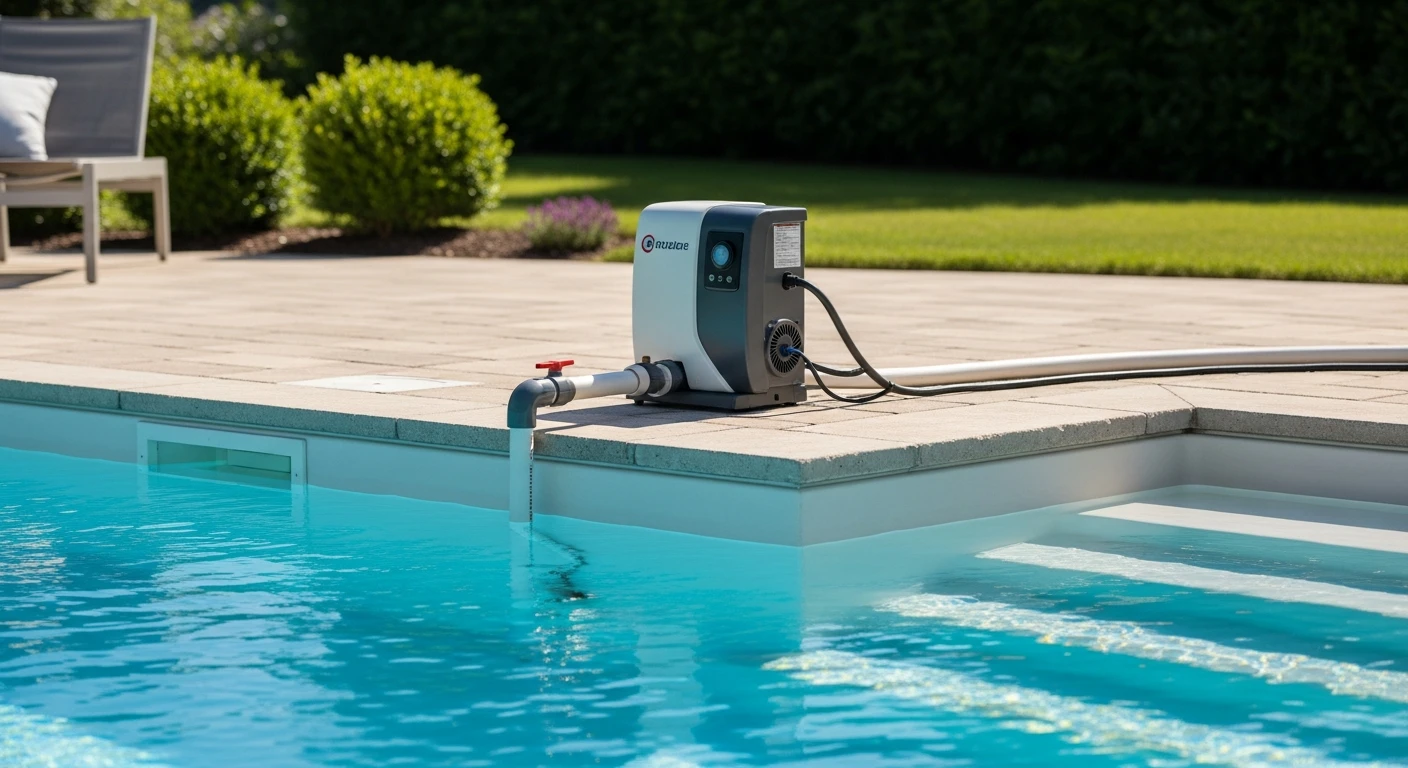
- Ensure proper plumbing clearance. I design the plumbing with future service in mind, installing union fittings on both the inlet and outlet. This allows the heater to be replaced or serviced without cutting and re-gluing the main PVC lines, saving hours of labor down the road.
- Bond the unit to the pool's electrical grid. This is a critical safety step required by code, but one that is shockingly easy to miss. An unbonded heater can create a dangerous electrical potential in the water. I always triple-check this connection.
Post-Installation Calibration for Peak BTU Output and Longevity
Once the heater is running, my work shifts to fine-tuning. The factory settings are rarely optimized for a specific pool's hydraulic system. The goal is to achieve the manufacturer's specified flow rate. If the flow rate is too high, the water passes through the heat exchanger too quickly to absorb maximum heat. If it's too low, the unit can overheat and shut down on its high-limit switch. I use a pressure gauge to make small adjustments to the pump's RPM or valve settings until the flow rate is within the 5% tolerance window for peak performance. This single adjustment can increase the effective heat transfer by up to 15%. Have you correlated your heater's runtime with the local dew point to optimize its COP, or are you just setting a temperature and hoping for the best?Written by

Tags
pool heating systems
solar pool heater for inground pool
pool heat pump prices
swimming pool heating systems
Pool Heaters in Polk FL FAQ
My pool heater is running, but the water isn't getting any warmer. What's the most common cause?
The most frequent cause is insufficient water flow from your pump, often due to a dirty filter that needs cleaning or backwashing. Heaters have an internal pressure switch that prevents the unit from firing if flow is too low, protecting it from overheating. Even if the heater's fan or display is on, this safety switch can keep the heating element off. Before assuming the heater is broken, check your filter pressure. A reading 8-10 PSI above its clean starting pressure indicates a clogged filter, which is restricting the necessary water flow for the heater to operate safely and effectively.
How can I tell if my heater is the right size for my pool?
A properly sized heater should raise your pool's temperature by about 0.5 to 1 degree Celsius (1-2 degrees Fahrenheit) per hour under normal conditions. If your heater runs constantly but struggles to reach or maintain your target temperature, it is likely undersized for your pool's volume and surface area. An undersized unit not only fails to heat effectively but also experiences excessive wear, shortening its lifespan. Conversely, an oversized heater can lead to rapid cycling, which is inefficient and also strains components like the ignition control, leading to premature failure.
Is it more cost-effective to run my gas heater continuously or only when I want to swim?
It is almost always more cost-effective to heat the pool only when you plan to use it, especially if you use a solar cover. A gas heater consumes the most fuel during the initial temperature rise from cold. Maintaining that temperature requires less energy, but heat loss is constant. By using a solar cover, you can trap up to 95% of heat, drastically reducing reheating time and fuel costs. Running a heater 24/7 without a cover is like heating your house with the windows open—a massive and unnecessary expense.
Why does my heater keep shutting off and displaying a fault code?
Intermittent shutdowns with a fault code often point to external issues rather than a broken heater, with poor water chemistry being a major hidden culprit. If your pool's pH is below 7.2, the acidic water corrodes the copper inside the heat exchanger, and these dissolved copper particles can foul the internal sensors, causing false readings and shutdowns. Before spending money on replacing parts, test your water chemistry. Correcting a pH imbalance is a simple fix that can resolve many mysterious heater fault codes and prevent catastrophic, expensive damage to the heat exchanger.
What are those black, sooty marks on the side of my heater and the wall behind it?
Those black, sooty deposits are a clear sign of poor combustion, a condition known as sooting, which is both dangerous and damaging. This is typically caused by an improper air-to-fuel mixture, often from a clogged burner tray, spider webs in the gas orifices, or inadequate ventilation around the unit. This is not just a cosmetic issue; it indicates the production of carbon monoxide and significantly reduces heating efficiency. The unit should be shut down immediately and serviced by a qualified technician to clean the burners and verify proper venting to prevent a serious safety hazard.
I have a salt water pool. Does that require a special kind of heater?
Yes, a salt water pool requires a heater with a corrosion-resistant heat exchanger, typically made of titanium or a cupronickel alloy. Standard copper heat exchangers, found in heaters designed for traditional chlorine pools, will corrode and fail rapidly when exposed to the higher salinity. The galvanic corrosion caused by salt will perforate a standard copper heat exchanger, often within a single season, leading to a major leak and costly replacement. Always verify that a new heater is explicitly rated for use with a salt chlorine generator to ensure its longevity.