Backyard Kitchen Island: A Framework to Eliminate 90% of Weather-Related Maintenance in Hillsborough County
Having designed and rectified dozens of outdoor kitchens from South Tampa to the sprawling yards in Brandon, I can tell you that the primary point of failure isn't the grill or the appliances; it's the island structure itself. Most contractors apply indoor construction logic to an environment that faces relentless humidity, torrential summer rains, and intense UV exposure. This approach is fundamentally flawed and leads to structural decay, countertop delamination, and electrical failures within 3-5 years. My entire methodology is built around a single principle: treating the backyard kitchen island not as furniture, but as a marine-grade installation. This shift in perspective is what separates a project that looks good for a season from an investment that performs for over two decades. I’ve seen projects in FishHawk Ranch with beautiful granite countertops crack because the base underneath swelled and shifted from moisture saturation—a completely avoidable error.My Climate-Resilience Diagnosis Protocol
Before a single sketch is drawn, I perform what I call a Microclimate Site Assessment. This isn't just about measuring space. It's about analyzing the specific environmental stressors of a Hillsborough County backyard. I assess factors like the proximity to Tampa Bay (which dictates the level of salt in the air), the amount of direct sun exposure between 12 PM and 4 PM, and the existing drainage patterns of the patio or lanai. A common mistake I see is building an island that inadvertently traps water against the home's foundation. My protocol focuses on three core pillars: Material Integrity, Structural Load Path, and Utility Isolation.Material Science vs. Hillsborough Humidity: The Technical Breakdown
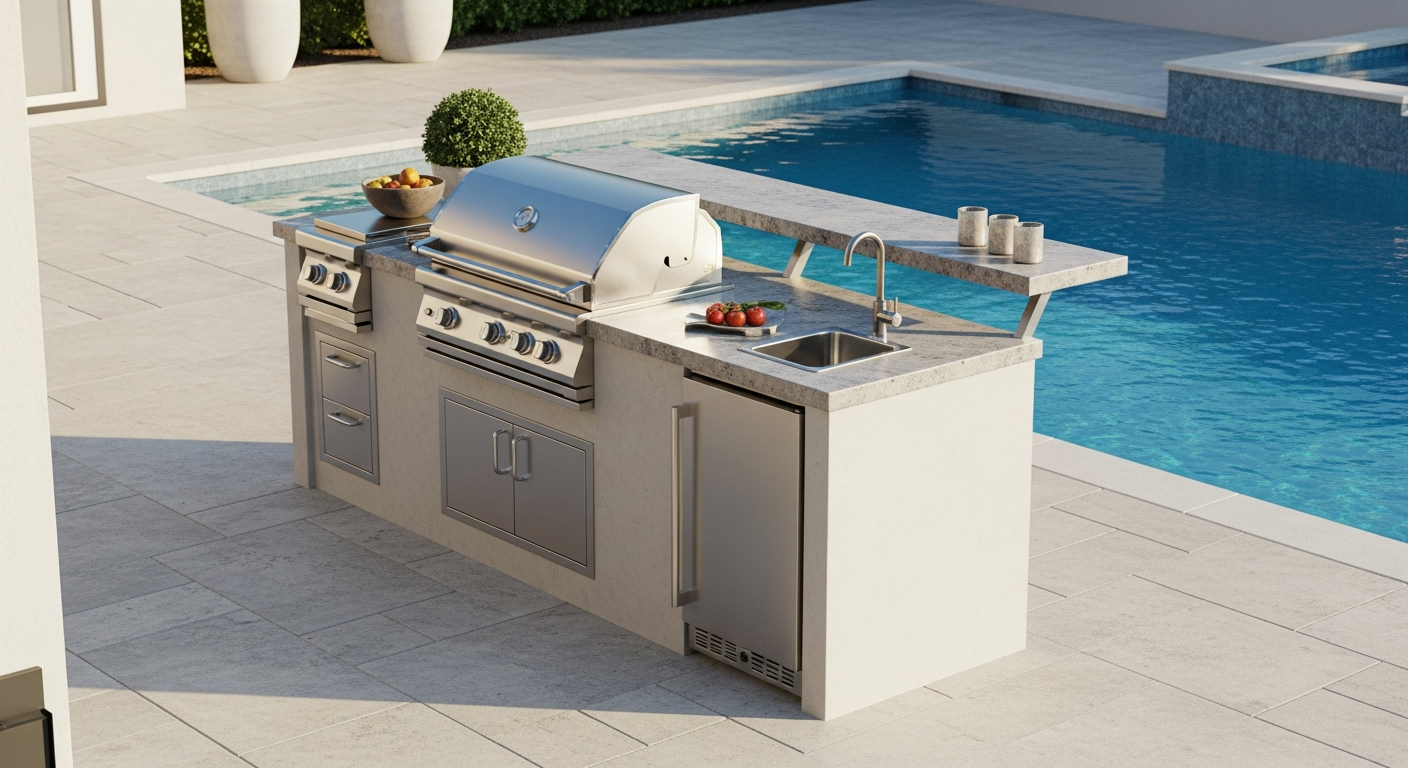
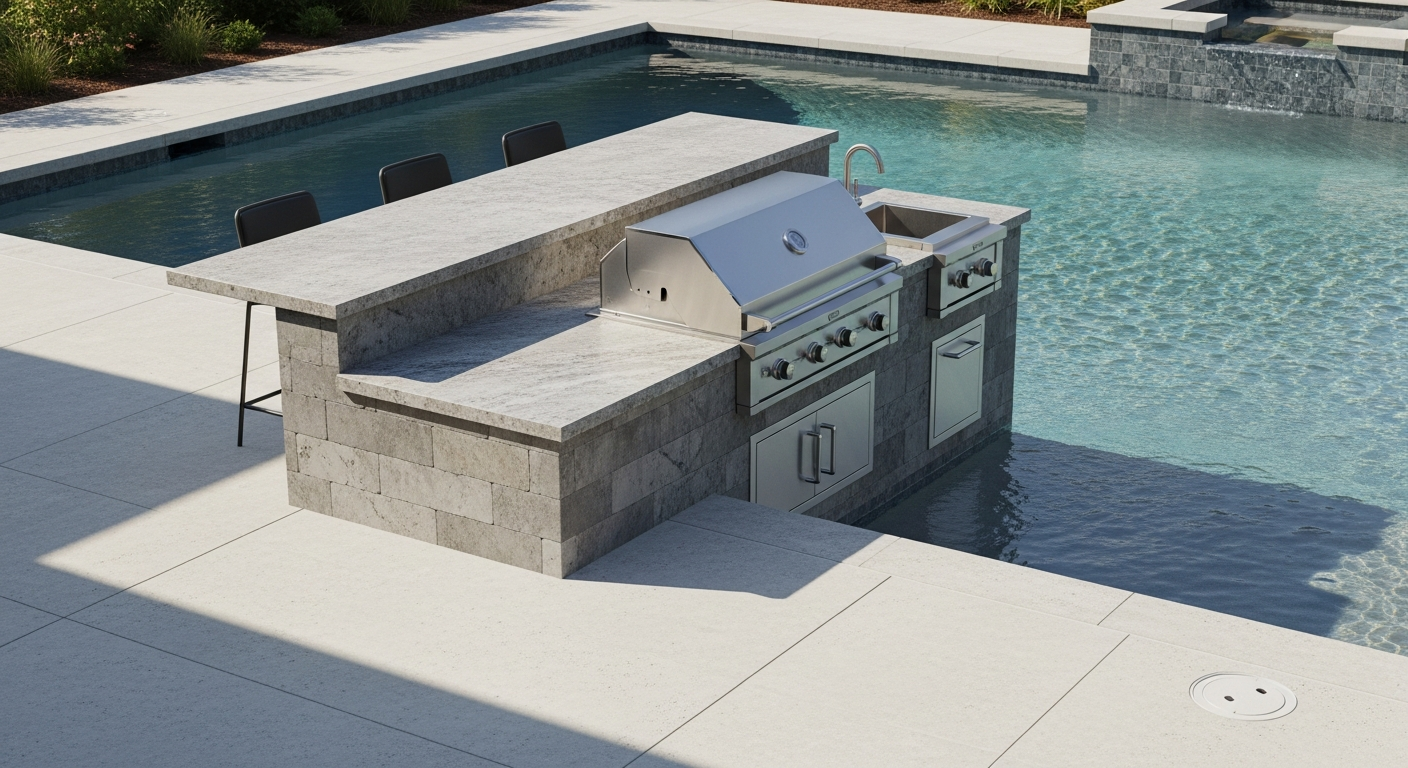
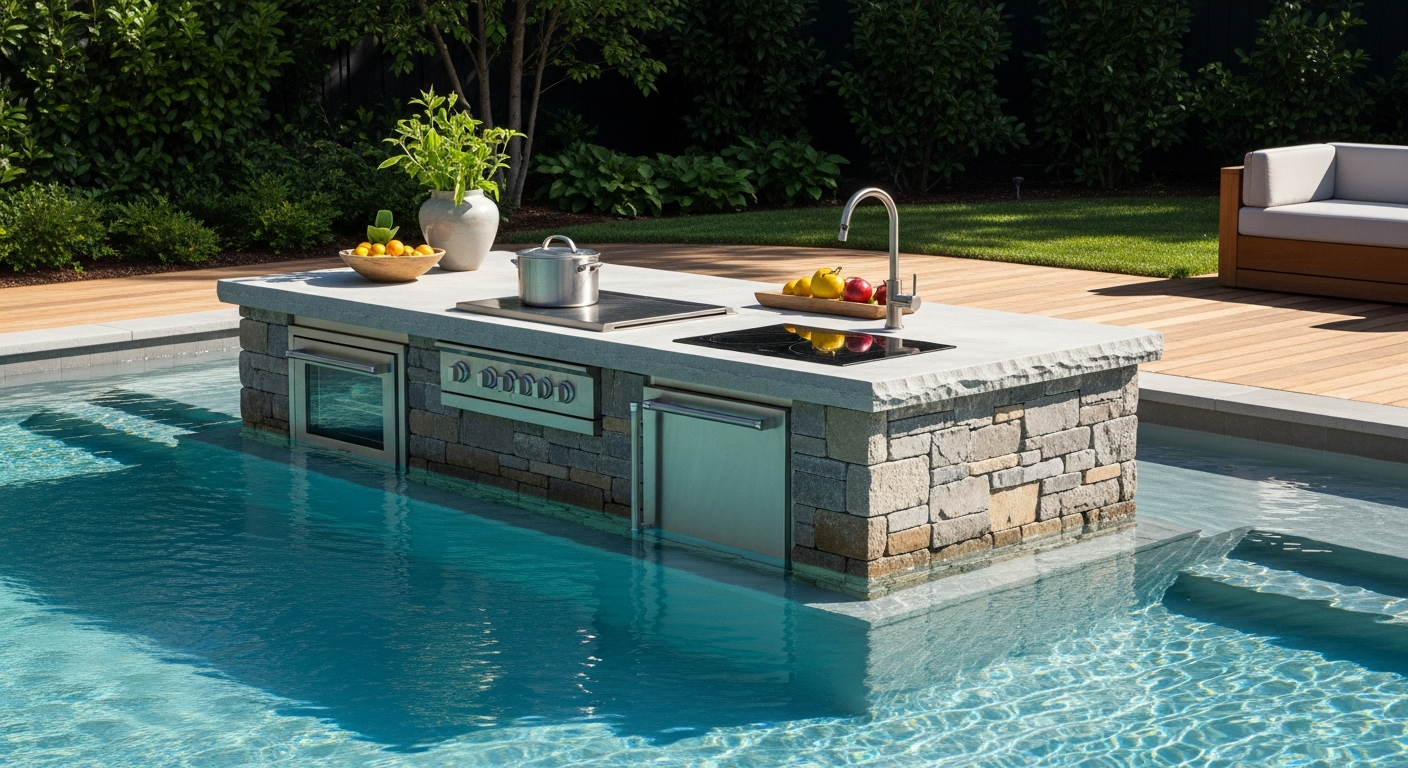
The material selection is where most projects are won or lost. Standard pressure-treated wood frames will fail. Steel studs, unless they are hot-dip galvanized, will rust from the inside out due to condensation. My non-negotiable standard is a welded 6061-T6 aluminum frame. It's lightweight, incredibly strong, and impervious to the corrosion that plagues steel in our climate. For countertops, I advise clients against porous stones like granite unless they are willing to commit to a rigorous biannual sealing schedule. My preferred materials are sintered stone (like Dekton) or high-density porcelain. These are non-porous, meaning they won't stain from leaf tannins or spilled wine, and their coefficient of thermal expansion is minimal, preventing cracking under the intense Florida sun. For cabinetry, I avoid wood entirely and specify marine-grade high-density polyethylene (HDPE), the same material used in boat manufacturing.Step-by-Step Implementation for a Zero-Failure Island
Once the diagnosis and material selection are locked in, the build process is meticulous. Every step is designed to preempt a potential failure point. My process is a direct counter-response to the shortcuts I've seen cause catastrophic failures in other projects.- Utility Stub-Out & Isolation: All electrical wiring is run through waterproof conduit with vapor-sealed junction boxes. I mandate the use of GFCI outlets with "in-use" weatherproof covers. Gas lines are pressure-tested at 1.5x the operating pressure for 24 hours before any cladding is installed.
- Frame Assembly & Anchoring: The aluminum frame is welded, not screwed, to ensure rigidity. It's anchored to the concrete slab using 316-grade stainless steel wedge anchors, not the cheaper 304-grade that will show surface rust near saltwater environments.
- Cement Board & Waterproofing: The frame is sheathed in a cement backer board. Here's a critical step most miss: I apply a liquid-applied waterproofing membrane with integrated fabric over all seams and surfaces, creating a monolithic waterproof shell before the final cladding.
- Ventilation & Appliance Integration: Any island with a gas appliance, especially a grill, must have proper ventilation. I install a minimum of two stainless steel vent panels, positioned for cross-flow to prevent gas buildup—a major safety oversight I've seen in DIY and even some professional jobs.
Precision Tuning for the South Tampa to Plant City Climate Spectrum
The final adjustments are hyper-local. For a Bayshore Beautiful home, I'll specify a clear marine-grade sealant on all hardware to combat salt spray. In a more inland area like Plant City, where direct sun is the bigger enemy, I ensure the island's orientation provides afternoon shade for the refrigerator unit, increasing its efficiency and lifespan by an estimated 25%. For planned communities with strict HOAs, like Westchase or FishHawk, I get all material and finish specifications pre-approved to avoid costly rework, a lesson I learned early in my career. The island's feet are always adjustable, allowing me to create a 2% slope on the countertop, imperceptible to the eye but critical for ensuring water sheets off instead of pooling. Have you calculated the vapor permeability of your island's wall assembly to ensure moisture doesn't get trapped and condense within the structure during our humid summers?Written by

Tags
kitchen outdoor grill
outdoor kitchen propane grill
prefabricated outdoor grill islands
prefab grill island
outdoor grill with sink