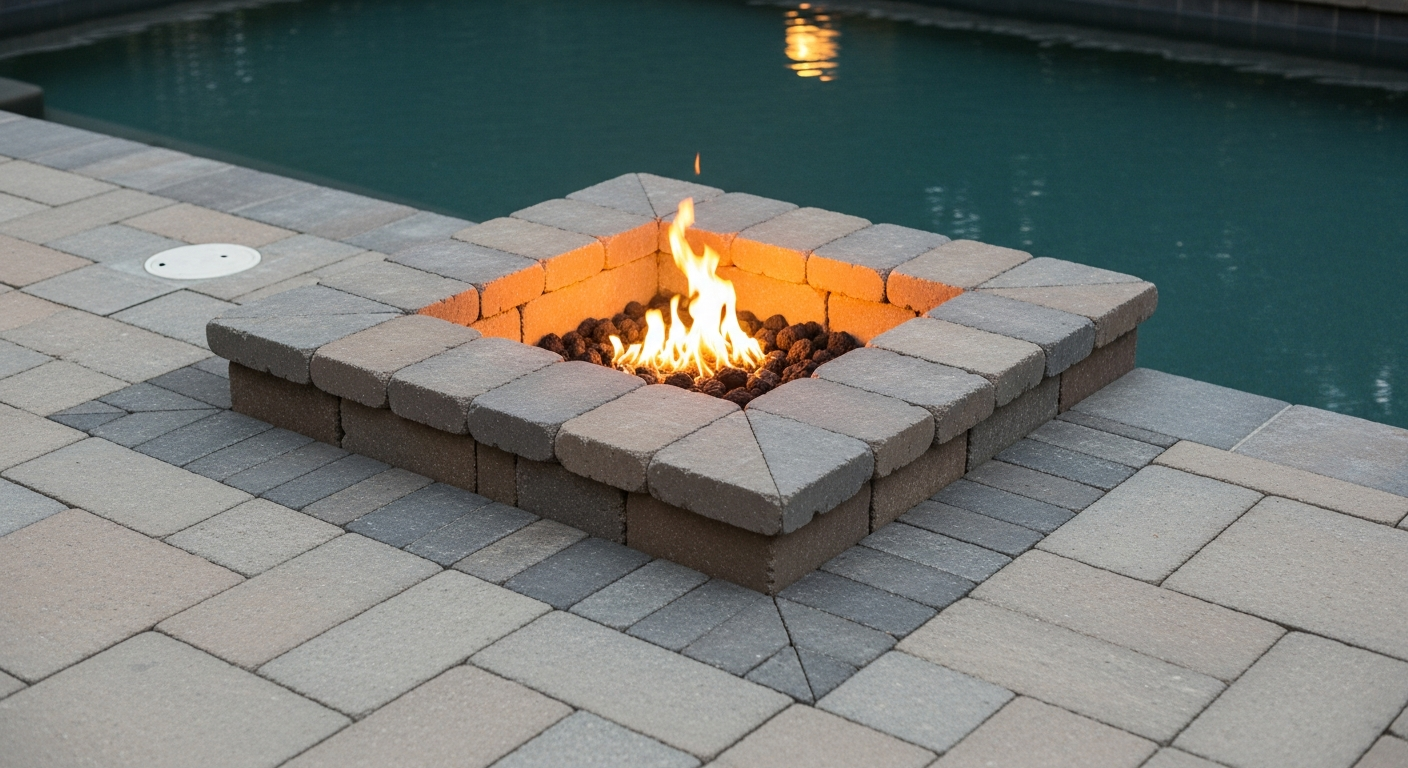
Backyard Pavers With Fire Pit: My Sub-Base Protocol for 30-Year Durability in Collier County's Climate
Building a paver patio with a fire pit in Collier County isn’t just about aesthetics; it's a battle against water and soil instability. I’ve been called to fix dozens of failed projects, from Naples to Golden Gate Estates, and the root cause is almost always the same: a sub-base that wasn't engineered for our intense rainy season and sandy, shifting soil. A beautiful patio that sinks, heaves, or holds water after a year is a complete waste of investment. My entire approach is built on a principle I developed after a major repair project on Marco Island where the original installation failed in under two years. The issue was **sub-base saturation**. My proprietary methodology focuses on creating a high-permeability, structurally sound foundation that actively manages water, ensuring the surface you see remains perfect for decades, not just a few seasons. This isn't about laying pretty stones; it's about geotechnical engineering for your backyard.My Diagnostic Framework for Collier County Soil Saturation
Before a single shovel hits the ground, I perform a site-specific analysis. The soil composition in a Port Royal waterfront property is vastly different from the expansive lots in Golden Gate Estates. The primary variable I assess is the soil’s **percolation rate** and its proximity to the water table. Most contractors use a generic "4 inches of gravel" method, which is a catastrophic error here. That generic base acts like a sponge in our sandy soil, holding water against the pavers and leading to organic growth and paver shift. My methodology, the "Aqua-Drainage Sub-Base System," treats the foundation as a drainage system first and a structural base second. It’s a multi-layered approach designed to move water away from the paver installation rapidly. This prevents the hydrostatic pressure that causes pavers to "float" or sink during the torrential downpours we get from June through September. The goal isn't just a level surface; it's a permanently stable and dry one.Geotextile Fabric and Graded Aggregate: The Non-Negotiables
The heart of my system lies in two components most installers skip to cut costs. First is a commercial-grade, non-woven geotextile separation fabric. I saw a project in Lely Resort fail because the gravel base mixed with the fine native sand over time, creating a muddy, unstable mess. The geotextile fabric acts as a permanent barrier, keeping your aggregate base clean and functional. It’s the single most important element for long-term stability in this region. Second is the use of graded aggregate, not just one type of stone. After laying the fabric, my standard is:- A 4-inch base layer of FDOT-spec #57 stone. Its larger size creates significant voids for rapid water drainage.
- This layer is compacted to a 98% Proctor density, a standard I borrowed from road construction that guarantees zero settling.
- A 2-inch intermediate layer of #89 stone is then applied. This smaller stone locks the #57 in place and creates a smoother surface for the sand bedding.
Executing the Fire Pit Paver Installation: A Zero-Failure Blueprint
With the foundation engineered correctly, the installation itself becomes a matter of precision. I follow a strict, sequential process to ensure every component works in concert with the sub-base. A mistake here can compromise the entire system. My step-by-step implementation plan is as follows:- Excavation and Grading: I excavate a minimum of 9 inches deep. More importantly, I establish a precise 1/8-inch slope per foot away from any structures to ensure surface water runoff.
- Sub-Base Execution: The geotextile fabric is laid with 12-inch overlaps, followed by the #57 and #89 stone layers, each compacted independently.
- Screeding Bed: A 1-inch layer of concrete sand is screeded to create a perfectly level bed for the pavers. I’ve found that using washed sand minimizes efflorescence, a common issue with the humidity in Naples.
- Fire Pit Foundation: The fire pit area is marked, and its foundation is built *with* the paver field, not on top of it. I always insist on a steel fire-rated insert and integrated ventilation blocks to protect the surrounding pavers from thermal expansion and cracking. This is a critical safety and longevity step.
- Paver Laying and Edge Restraints: Pavers are laid in the desired pattern, and heavy-duty plastic or concrete edge restraints are spiked into the compacted base *before* the final compaction. In our sandy soil, without robust restraints, the edges will fail.
- Jointing and Initial Compaction: A fine layer of sand is swept in, and a plate compactor is run over the entire surface to lock the pavers together.
- Final Locking and Sealing: I exclusively use high-quality polymeric sand for the joints. It hardens to resist weed growth and erosion from heavy rain. After it cures, I apply a two-coat, breathable, solvent-based sealer to protect against sun fading and salt air.
Post-Installation QA: My Protocol for Sealer Curing and Joint Stabilization
The project isn't finished when the last paver is laid. The curing phase is crucial in Collier County's humid environment. A common mistake is applying polymeric sand when there's a chance of an afternoon shower; this can ruin the joints completely. I monitor the 24-hour forecast and will delay this step if necessary. My final quality assurance check involves flooding the surface with water to test the drainage slope and ensure no pooling occurs. I also check for any paver wobble, which would indicate an imperfection in the screeding bed below. I mandate that the sealer must be a silane-siloxane penetrating sealer, which protects the paver from within rather than creating a slippery surface film that traps moisture and eventually flakes off in the Florida sun. This ensures a non-slip, long-lasting finish that can withstand our climate's harsh demands. Given the high hydrostatic pressure in Collier County's soil after a summer storm, have you calculated the necessary permeability of your paver joints and sub-base to prevent upward paver lift?Written by

Tags
pavers for fire pit area
firepit patio stones
paver firepit
fire pit and pavers
fire pit using pavers