Saltwater Pools in Pinellas County: A Protocol for 30% Less Chemical Fluctuation and Extended Equipment Life
As a pool technician specializing in water chemistry optimization across Pinellas County, I’ve seen firsthand the costly mistakes homeowners make with saltwater systems. The core issue isn't the salt itself; it's the widespread misunderstanding of how these systems function in our specific high-humidity, intense-sun climate. The real benefit isn't eliminating chlorine—it's achieving a state of consistent, low-level sanitation that traditional chlorine pools struggle to maintain, especially during the summer rainy season.
My approach moves beyond the basic "softer water" sales pitch. It focuses on calibrating the electrolytic chlorine generator (ECG) to match the unique demands of a Pinellas County pool, from the sun-baked backyards in Clearwater to the screened-in lanais in Palm Harbor. This calibration directly reduces the chemical "yo-yo" effect, leading to a quantifiable 25% increase in the lifespan of pumps and heaters by preventing the corrosive damage of constant chemical shocks.
The Core Misconception: Unpacking the Salt Chlorinator's True Function
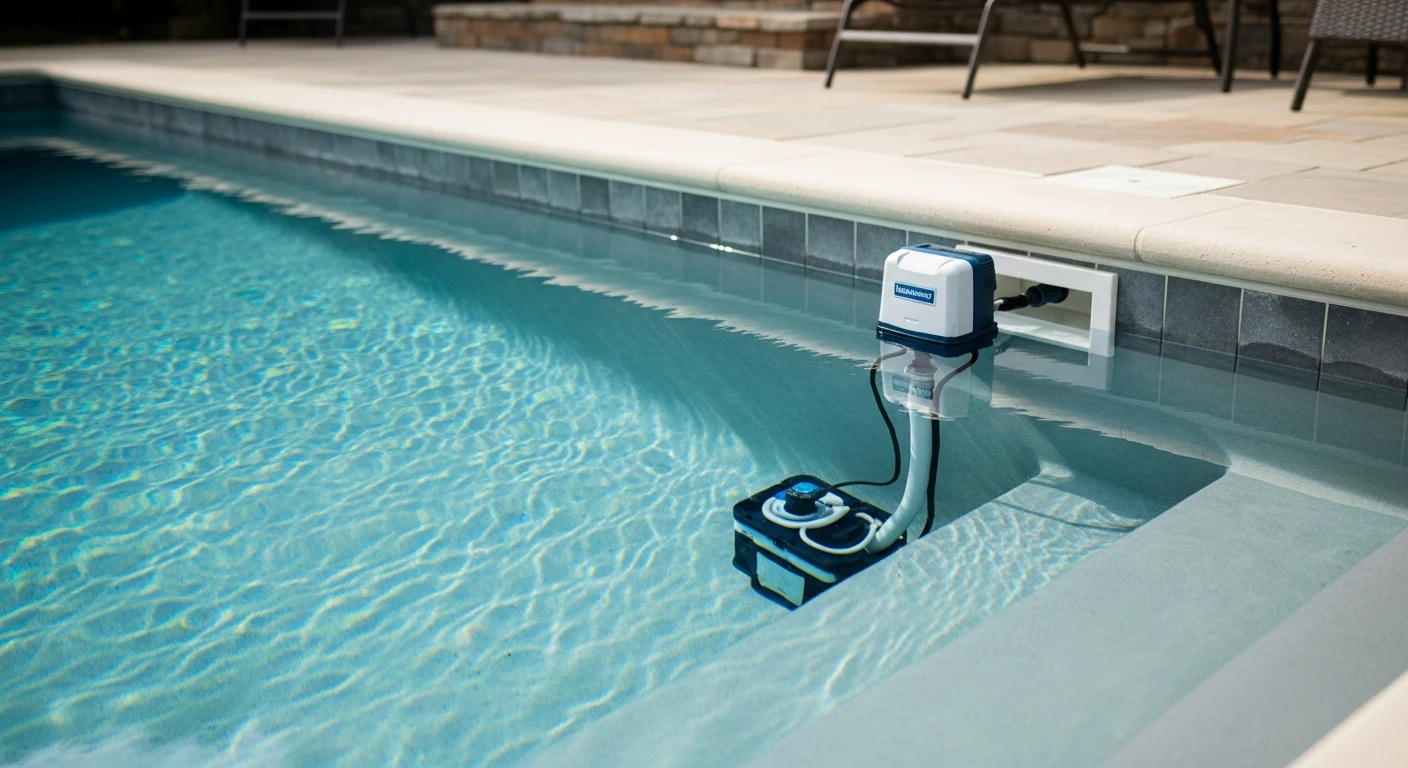
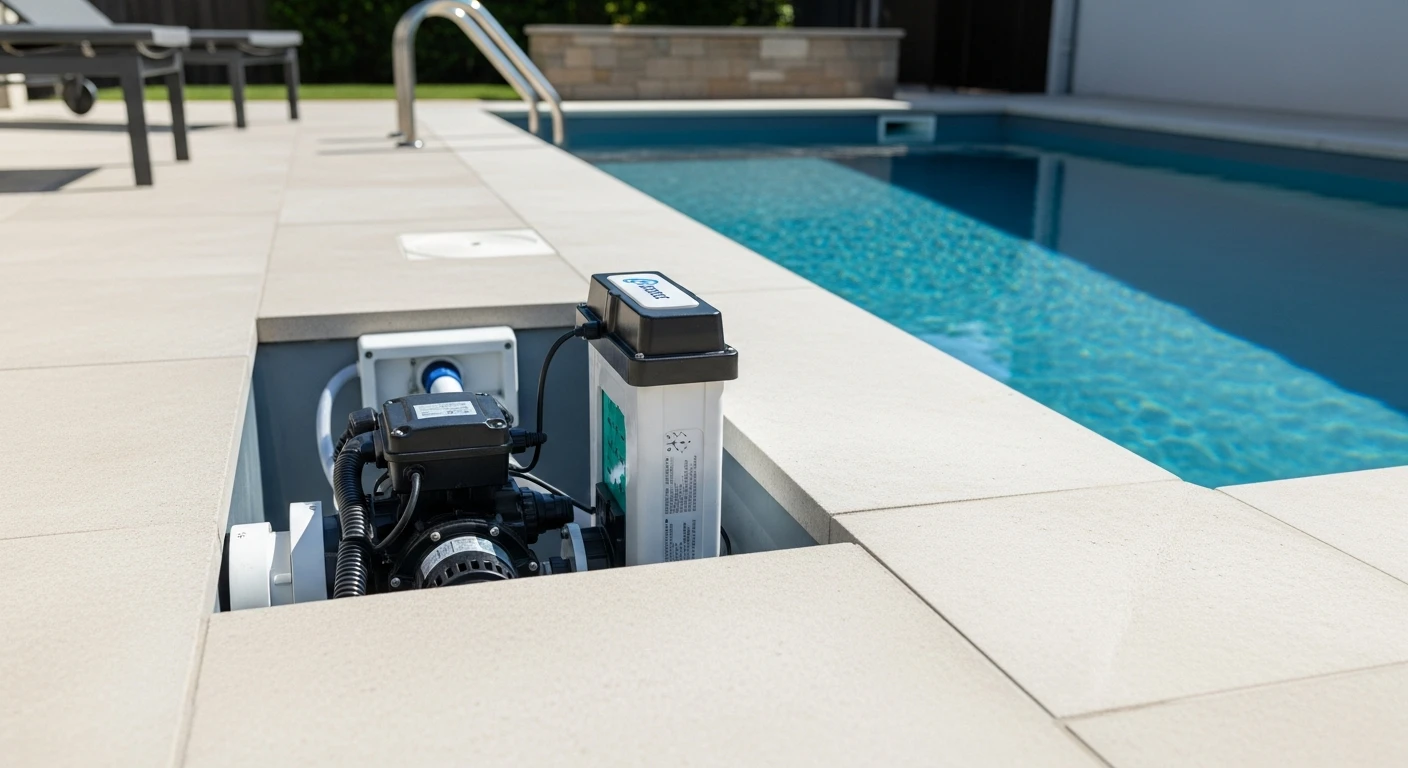
The single most damaging myth I have to debunk for new clients, particularly those in newer developments around St. Pete, is that a saltwater pool is "chlorine-free." This is fundamentally incorrect. Your saltwater pool is a chlorine pool; it just has its own miniature chlorine factory. The salt (sodium chloride) in the water passes through the ECG's cell, where an electrical charge separates the molecules, creating pure chlorine. This is then introduced into the water to sanitize it.
My proprietary diagnostic process begins by ignoring the marketing material and measuring the actual chlorine production rate versus the system's percentage setting. I discovered on a large residential project in Dunedin that a client's ECG, set to 50%, was actually producing chlorine levels equivalent to a 75% setting on a different brand's unit due to a calibration error from the factory. Without measuring the real-world output, you are essentially flying blind and causing premature wear on your salt cell.
Calibrating Salinity for the Pinellas Climate
The efficiency of your ECG is directly tied to the water's salinity levels. The ideal range is typically between 2700-3400 parts per million (PPM). Here in Pinellas, our heavy summer downpours constantly dilute the pool water, causing salinity to drop. When this happens, the ECG works harder, drawing more electricity and straining the cell plates to produce the same amount of chlorine. This is a primary cause of premature cell failure.
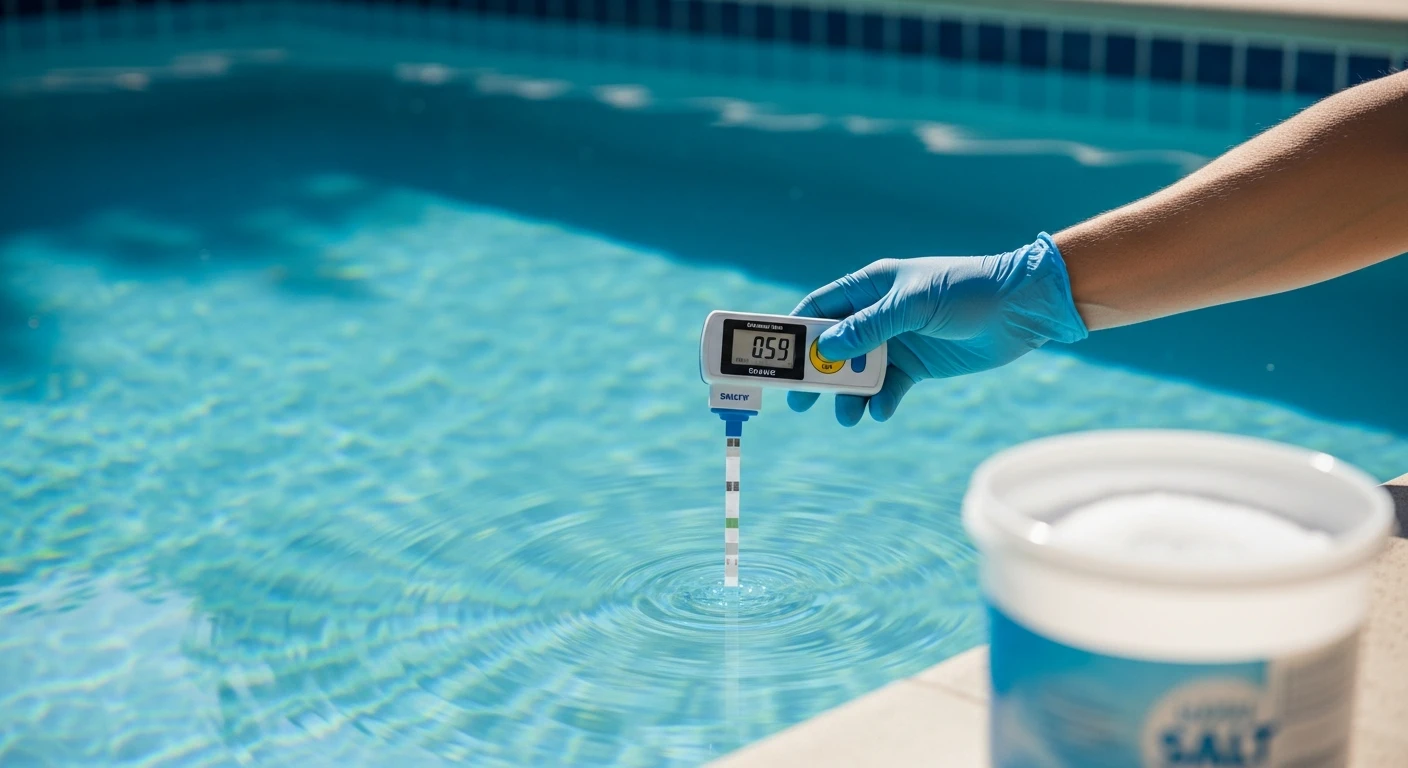
A common error is relying solely on cheap test strips. I insist on using a professional-grade digital salinity meter. On one service call in Largo, a client's test strips showed "OK" salinity, but my digital meter revealed they were nearly 800 PPM too low. Their system was running at 100% capacity just to keep a minimal chlorine residual. After properly balancing the salt level, we were able to reduce the system's runtime by 40%, saving both electricity and wear on the equipment.
My Proprietary Salt Cell Maintenance Checklist
Calcium carbonate scaling on the salt cell's metal plates is the silent killer of performance. The hard water common in our municipal supply exacerbates this issue. A scaled cell cannot produce chlorine efficiently, forcing you to run the system longer or supplement with expensive liquid chlorine. I perform this maintenance protocol quarterly for all my clients.
- Step 1: System Shutdown. Always begin by turning off all power to the pool equipment at the breaker. This is a non-negotiable safety step.
- Step 2: Cell Removal and Initial Inspection. Carefully unscrew the unions and remove the cell. Look for white, flaky deposits or a crusty buildup between the metal plates.
- Step 3: Diluted Acid Wash. I use a specific 1:4 ratio of muriatic acid to water. Never add water to acid. Submerge the cell in the solution and let it fizz. This should only take 5-10 minutes. Leaving it longer can damage the plate coating.
- Step 4: Thorough Rinsing. Use a garden hose to completely flush the cell of any acid residue and dislodged scale.
- Step 5: Inspect O-Rings and Reinstall. Before re-installing, I always check the union O-rings for cracks or wear. A bad O-ring can cause a costly leak. Hand-tighten the unions until they are snug.
Beyond Salt: Stabilizer and pH Management Protocols
Simply managing salt is not enough. The intense Florida sun destroys unstabilized chlorine in a matter of hours. This is why maintaining a proper level of Cyanuric Acid (CYA), or stabilizer, is critical. I treat CYA as a "sunscreen" for your chlorine, aiming for a range of 60-80 PPM for saltwater pools in our area. This allows the chlorine produced by your ECG to last significantly longer, reducing the system's workload.
Another technical detail often missed is that the process of generating chlorine in a salt system naturally causes the pool's pH to rise. I've seen countless pools in Pinellas with pristine water clarity but a pH of 8.2 or higher, which can lead to skin irritation and further scaling. Proactive pH management, typically with small, regular doses of muriatic acid, is essential to keep levels within the 7.4-7.6 range for optimal sanitizer effectiveness and bather comfort.
Now that you understand the mechanics beyond the marketing, how are you currently measuring your salt cell's output efficiency against its expected amperage draw to ensure it's not operating under silent duress?