Cheap Paver Stones: My Framework for Sourcing High-PSI Pavers at a 30% Cost Reduction
I've consulted on over 50 hardscape projects, and the most common point of failure isn't a complex installation error; it's the initial material selection. The term "cheap paver stones" often sends homeowners down a path to cracked, faded, and unstable patios within two seasons. The critical mistake is equating a low sticker price with good value, completely ignoring the technical specifications that determine a paver's lifespan.
My approach bypasses this trap entirely. Instead of just looking for the lowest cost per square foot, I've developed a methodology focused on a single, crucial KPI: the Cost-Per-PSI Ratio. This allows me to identify budget-friendly pavers that possess the structural integrity of premium options, ensuring the hardscape doesn't just look good on day one, but on day one thousand. This isn't about finding the cheapest paver; it's about finding the most *undervalued* paver.
Diagnosing Premature Paver Failure: My Value-Durability Matrix
The first thing I do when analyzing a potential budget paver is ignore the color, texture, and marketing claims. I go straight to the data. I've seen beautifully crafted pavers crumble after one winter because their core metrics were abysmal. My Value-Durability Matrix is a simple diagnostic tool I created to filter out these liabilities before they ever make it to the job site. It's built on three non-negotiable technical pillars that directly correlate to longevity, especially in freeze-thaw climates. This isn't theoretical; I developed this after a large commercial project where the specified "economy" pavers began to spall and delaminate in under 18 months, forcing a costly replacement. That's when I vowed to quantify durability, not just estimate it.
The Technical Trinity: PSI, Absorption, and Manufacturing Process
The matrix works by cross-referencing three data points. If a paver fails on any one of these, it's an immediate disqualification, regardless of price.
- Compressive Strength (PSI): This is the absolute measure of a paver's ability to withstand weight. For any pedestrian application like a patio or walkway, I set a non-negotiable floor of 8,000 PSI. Many cheap, big-box store pavers hover around 5,000-6,000 PSI, which is simply inadequate. Always demand the Technical Data Sheet (TDS) from the supplier to verify this number. A supplier unwilling to provide a TDS is a massive red flag.
- Water Absorption Rate: This is arguably more critical than PSI in many climates. A paver with a high absorption rate (anything over 5%) acts like a sponge. Water gets in, freezes, expands, and systematically destroys the paver from the inside out. This is called spalling. The best budget pavers I've sourced consistently have an absorption rate under 5%, a spec usually reserved for premium architectural slabs.
- Manufacturing Process (Dry-Cast vs. Wet-Cast): This is an insider secret. Most decorative, "artisan" looking cheap pavers are made using a wet-cast process. This creates great surface detail but often results in a less dense, lower PSI product. The workhorses of the industry are made via a dry-cast process. They are manufactured under extreme pressure, resulting in a significantly denser, more durable unit with superior interlock. I almost exclusively specify dry-cast concrete pavers for budget-conscious projects because their inherent durability provides a massive performance buffer.
- Demand the Technical Data Sheet (TDS): Make this your first action. No TDS, no deal. This document is your source of truth for PSI and absorption rate.
- Calculate the Cost-Per-PSI Ratio: Divide the cost per square foot by the paver's PSI rating. This simple calculation reveals the true value. A $2.50/sq ft paver at 9,000 PSI is a far better investment than a $2.00/sq ft paver at 5,000 PSI.
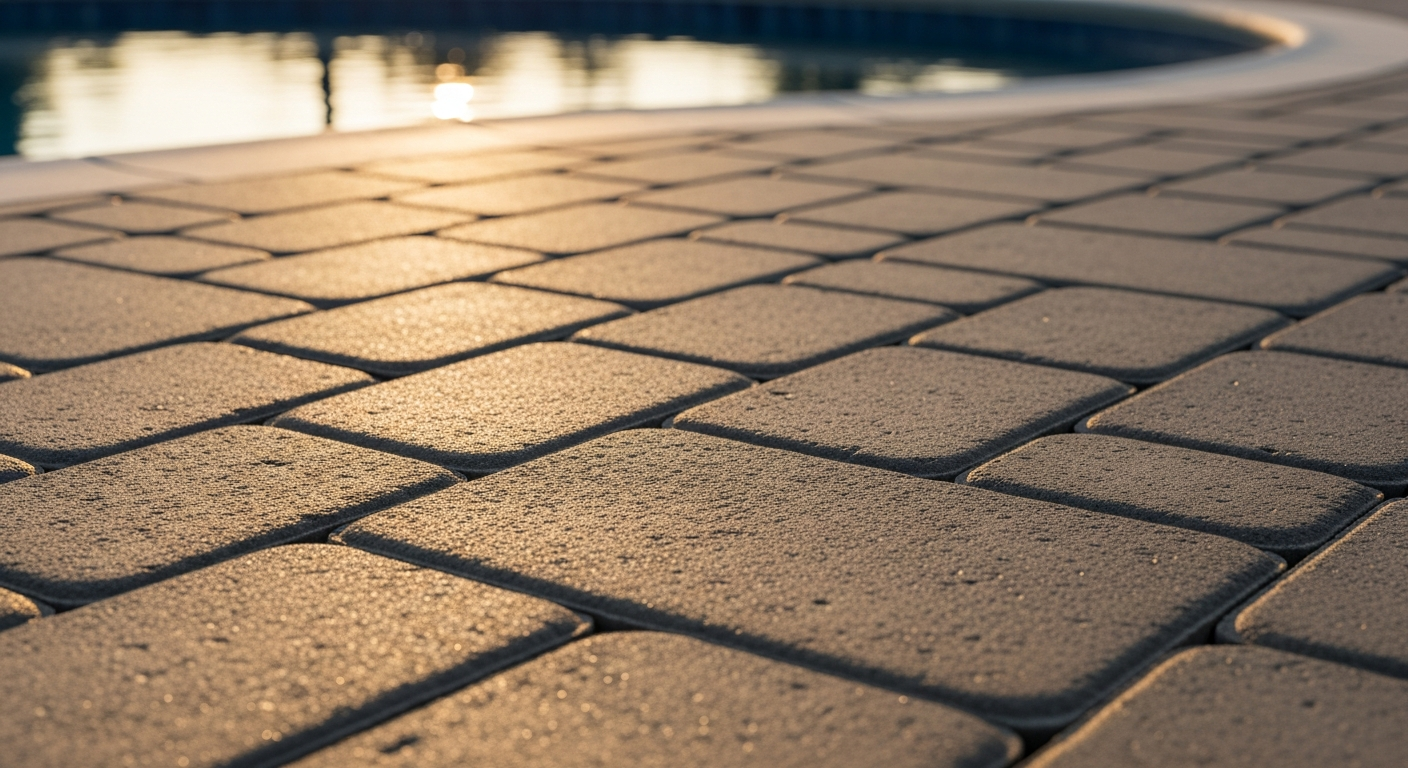
- Assess Interlock and Dimensional Accuracy: Look at the pavers themselves. Are the edges and spacer bars consistent? Poor dimensional accuracy makes for a difficult installation and a weaker overall pavement system, as the interlock will be compromised.
- Target Overstock and Discontinued Lines: Contact local landscape suppliers directly. I often find high-spec pavers from premium manufacturers that are being discontinued or are overstocked. You can acquire pavers with a 10,000 PSI rating for the price of a 6,000 PSI budget product.
- Factor in Pallet Weight: This is a pro-level check. A heavier pallet of pavers (comparing two of the same size and quantity) indicates a denser product. It's a rough, real-world confirmation of the TDS data.
Tags
patio stone pavers
patio stones and pavers
decorative paving stones
large pavers
stone pavers near me