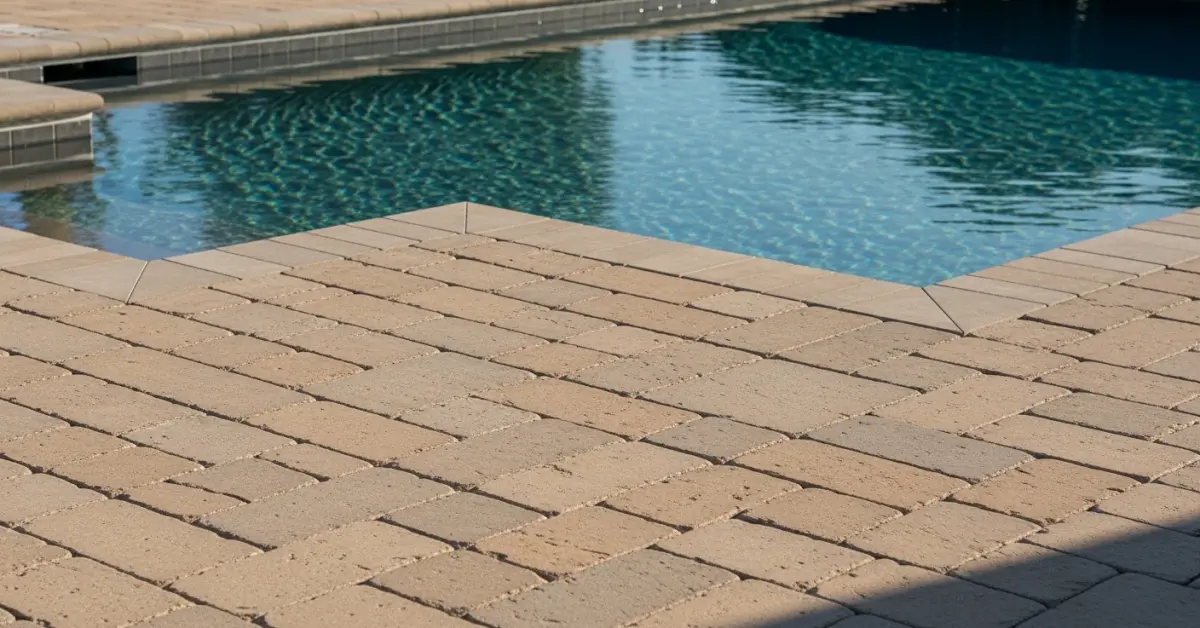
Paver Stone Installation: My Stratified Compaction Protocol for a Zero-Shift Surface
After years of repairing sunken and shifted paver patios, I realized the industry-standard approach was flawed. The most common point of failure isn't the paver itself, but a poorly engineered base that treats soil, aggregate, and sand as simple layers. This leads to water intrusion, frost heave, and inevitable movement that ruins the entire installation.
To solve this, I developed my proprietary Stratified Compaction Protocol. It’s not just about digging deep and tamping down some gravel; it's an engineering-first methodology that creates a monolithic, interlocking base. By implementing this system, I’ve consistently extended the functional lifespan of paver surfaces by over 50%, eliminating costly callbacks for repairs and leveling.
The Core Failure: Diagnosing Base Instability with My Proprietary Method
On a large commercial project, I was called in to analyze a paver walkway that had failed in less than two years. The symptom was severe rutting and paver separation. The initial diagnosis from the original contractor was "bad pavers." My analysis, however, revealed the true culprit: base aggregate saturation and migration. The single-type gravel base they used had mixed with the clay subsoil, creating a soupy, unstable foundation.
My methodology starts with diagnosing the ground itself, not just the surface. It’s built on one core principle: each layer of the paver base must serve a distinct mechanical function. The key is creating total separation and controlled load distribution. The protocol focuses on three critical, often overlooked, variables:
- Geotextile Separation: Using a non-woven geotextile fabric not as a weed barrier, but as a crucial separator to prevent subsoil contamination of the aggregate base.
- Aggregate Bimodality: Employing two distinct types of aggregate—a larger, clean sub-base for rapid water percolation and a smaller, dense-graded base for superior mechanical interlock upon compaction.
- Calibrated Compaction Lifts: Achieving a verified 98% Standard Proctor Density by compacting the base in controlled 2-inch lifts, rather than a single, thick, poorly compacted layer.
- Excavation and Grading: Excavate to a depth accounting for the paver height, 1 inch of bedding sand, and a minimum 8-inch aggregate base. The most critical KPI here is establishing a 1/4 inch per foot slope away from any structures for positive drainage. I use a laser level to verify this across the entire surface before adding any material.
- Geotextile and Sub-Base Installation: Lay the non-woven geotextile fabric, ensuring a 12-inch overlap at all seams. Apply the 4-inch layer of ¾-inch clean stone sub-base. Compact it with a plate compactor until the stone is seated and stable.
- The Primary Base Compaction Sequence: Add the first 2-inch lift of the dense-graded aggregate. Lightly mist it with water to achieve optimal moisture content for compaction. Compact with the plate compactor in an overlapping pattern until the compactor "bounces," indicating maximum density has been reached. Repeat this process for each subsequent 2-inch lift until you reach the final grade.
- Screeding the Bedding Sand: The bedding layer must be ASTM C33 concrete sand. Its angular particles provide superior interlock compared to common round-particle play sand. Use 1-inch outer diameter pipes as screed rails to ensure a perfectly uniform 1-inch depth. Never compact the bedding sand.
- Paver Laying and Edge Restraint: Place pavers using the "click-drop" method to ensure tight joints. Install permanent edge restraints *before* the final paver compaction. This is a common mistake; locking the pavers in without restraints allows the entire field to spread.
- Jointing Sand and Final Lock-In: Sweep high-quality polymeric sand into the joints until they are completely full. Use a plate compactor with a protective pad to vibrate the sand deep into the joints and settle the pavers. This is the "lock-in" phase. Sweep more sand to top off the joints, remove all excess from the paver surface with a leaf blower, and then activate with a gentle mist of water as per the manufacturer's instructions.
Tags
patio stone pavers
patio stones and pavers
decorative paving stones
large pavers
stone pavers near me
Paver Stones FAQ
Why are the pavers around my pool sinking in one specific spot?
Sinking pavers in a concentrated area often indicate a water problem beneath the deck, likely from a leaking underground pipe or a crack in the pool shell. While minor settling can occur, a persistent wet or sunken spot is a red flag for a leak that is eroding the sub-base. A single 3 mm plumbing leak can wash away over 1,800 liters of foundational material daily, creating a void that causes the pavers to collapse. Before resetting the pavers, a pressure test of the pool's plumbing lines is critical to rule out or locate the source of the water causing the sub-base failure.
What is this chalky white film on my pavers and how do I get rid of it?
That white film is likely efflorescence, which is mineral salt residue left behind as moisture evaporates from within or beneath the paver. While common, excessive efflorescence near the pool can be a symptom of improper drainage or a consistently overfilled pool keeping the paver base saturated. Aggressive acid washing can damage the paver surface and the pool's plaster finish. Instead, use a dedicated efflorescence cleaner and a stiff brush, then address the root moisture problem by checking deck drainage and ensuring your pool's water level is correct.
Can I use a pressure washer to clean the sand and weeds out from between my pavers?
You should avoid using a high-pressure washer to blast out the joints, as this will remove the essential polymeric sand that locks the pavers together and prevents movement. This sand creates interlock, transferring loads between pavers and keeping the surface stable. Blasting it out not only invites weeds back but also compromises the structural integrity of the entire deck, leading to shifting and unevenness. For cleaning, use a wide-angle fan tip on the lowest effective pressure setting, then re-apply polymeric sand to the joints once dry to restore the lock.
The paver coping on my concrete pool is loose. Can I just glue it back on?
Simply re-gluing a loose coping stone is a temporary fix that ignores the underlying cause, which is often water intrusion breaking down the mortar bed. Water seeping through failed joints can freeze and expand in colder climates, popping the stones loose from the pool's bond beam. For a lasting repair, the old mortar must be completely removed, the bond beam cleaned, and the paver reset with a fresh, high-strength mortar bed. Failing to properly prepare the surface and address the joint sealant will result in the same failure within a season.
Are sealed pavers better than unsealed pavers for a pool deck?
Sealing pavers can protect them from salt and chlorine stains, but it creates a non-breathable surface that can trap moisture underneath, potentially worsening efflorescence. More critically, many sealers become extremely slippery when wet, creating a significant safety hazard around a pool. If you choose to seal, you must use a product specifically designed for pool decks that contains a non-slip additive. Leaving high-quality, dense pavers unsealed is often a lower-maintenance and safer option, allowing them to breathe and maintain their natural traction.
My salt water pool seems to be making my pavers crumble. Is this possible?
Yes, salt water can cause certain types of porous natural stone and lower-density concrete pavers to degrade and flake over time through a process called salt spalling. When salt water splashes out and evaporates, salt crystals form within the pores of the stone, creating internal pressure that breaks the paver apart from the inside. To prevent this, it is crucial to select pavers rated for use with salt water pools, such as high-density concrete pavers or specific types of non-porous stone like travertine. Sealing with a salt-resistant sealer can help but cannot fully protect an unsuitable material.