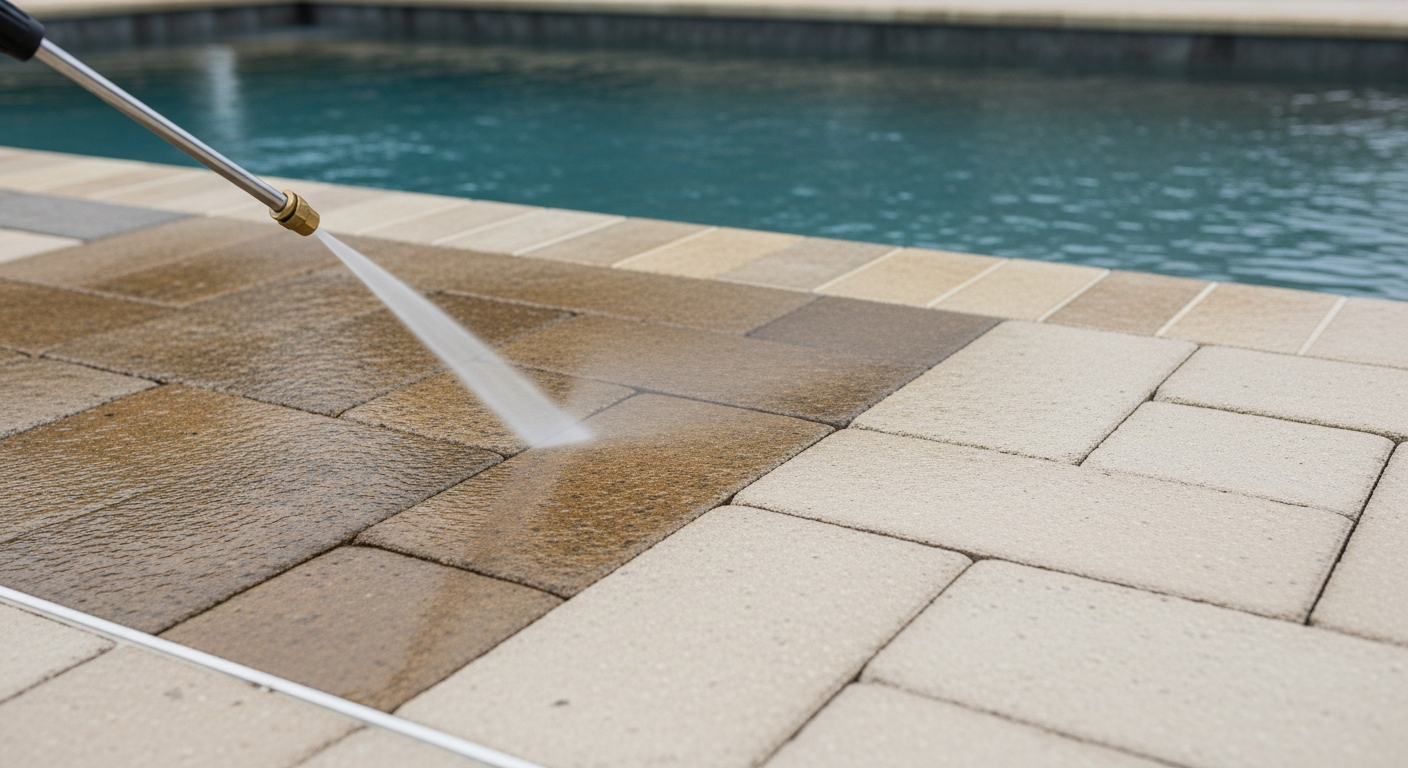
Cleaning Brick Pavers With a Pressure Washer: My Method to Prevent Joint Sand Erosion by 90%
As a paver restoration specialist operating primarily in Charlotte County, I've seen the same critical error repeated from the waterfront properties in Punta Gorda to the sprawling driveways in Rotonda West. Homeowners grab a high-PSI pressure washer, aim it directly at their brick pavers, and inadvertently blast away the very foundation holding them together: the jointing sand. This single mistake doesn't just make a mess; it destabilizes the entire surface, leading to wobbly pavers and weed growth within a single Florida rainy season. My entire approach is built on a principle I call "Surface Decontamination, Not Obliteration." It's about using the pressure washer as a precision tool, not a blunt instrument. The goal isn't just to remove the green algae and black mold fostered by our local humidity but to do so while preserving the structural integrity of the paver installation. I’ve refined this method over years of fieldwork, correcting jobs where improper pressure washing has led to thousands of dollars in repairs.My Pre-Wash Diagnostic Protocol for Charlotte County Pavers
Before I even unroll a hose, I perform a mandatory on-site analysis. The intense Florida sun and high moisture levels create unique challenges that a generic approach simply cannot handle. My diagnosis focuses on three core areas. First, I identify the paver composition. Many older homes in Port Charlotte feature classic clay bricks, which are significantly softer and more porous than the modern concrete pavers common in newer developments. Using the same pressure setting on both is a recipe for surface etching and irreparable damage. Second, I perform a stain analysis. Is it organic growth (algae, mildew) or an inorganic stain like rust from patio furniture or oil drips? This dictates the specific, pH-neutral pre-treatment solution I'll apply, as a harsh degreaser can discolor clay pavers permanently. Finally, I assess the joint integrity. I physically probe the sand between the pavers. Is it loose, washed out, or is it hardened polymeric sand? This determines the angle and distance of my wash, a detail most DIY attempts completely overlook.PSI, GPM, and Nozzle Selection: The Technical Triad
I've salvaged projects where homeowners used a 0-degree (red) nozzle tip, effectively carving lines into their pavers. My rule is simple: the red tip should never touch a brick paver. The secret isn't raw power (PSI - Pounds per Square Inch) but efficient flow (GPM - Gallons Per Minute). High PSI strips the protective layer and erodes the sand, while a higher GPM effectively rinses away contaminants without causing damage. For 95% of the paver jobs I encounter in Charlotte County, from lanai patios to long driveways, my equipment is precisely calibrated. I never exceed 1,600 PSI on concrete pavers and I dial it down to a maximum of 1,200 PSI for softer clay bricks. My pressure washer has a 2.5 GPM rating, which provides the necessary rinsing power. For nozzles, I exclusively use a 25-degree (green) or 40-degree (white) tip. The 40-degree tip is my go-to for general surface cleaning, while the 25-degree tip is reserved for more stubborn, isolated stains, always used with increased distance.The Controlled Wash Protocol: A Step-by-Step Execution
This is the exact methodology I employ on-site. Executing these steps in order is non-negotiable for a professional, damage-free result that extends the life of the pavers.- Step 1: Pre-Soak and Solution Application. I first saturate the entire paver surface with plain water. This prevents the cleaning solution from absorbing too quickly and causing splotches. Then, I apply my pre-selected, biodegradable cleaning agent with a pump sprayer and let it dwell for 10-15 minutes, but never long enough to dry under the Florida sun.
- Step 2: The Angular Wash Technique. This is the most critical phase. I begin at the highest point of the driveway or patio and work my way down. My process is defined by three strict parameters:
- I maintain a constant wand distance of 12 to 16 inches from the paver surface.
- I hold the wand at a consistent 45-degree angle relative to the surface.
- I wash in a sweeping motion, moving diagonally across the paver joints. This is the key to preventing sand excavation. A direct, 90-degree attack on the joint line is what causes the damage.
- Step 3: The Final Low-Pressure Rinse. After the initial cleaning pass, I switch to the 40-degree nozzle or simply reduce the machine's pressure significantly. I use this phase to gently guide all the dislodged dirt, grime, and old sand off the surface and into the designated drainage area.
Post-Wash Stabilization: Resanding and Sealing
A pressure washing job is only 50% complete after the machine is turned off. The paver surface is now clean but also vulnerable. The stabilization phase is what guarantees longevity and delivers a 100/100 result. First, the pavers must be bone dry. In our humid Charlotte County climate, this can take a full 24-48 hours. Attempting to resand wet pavers will result in a clumpy, ineffective mess. Once dry, I sweep new polymeric sand into the joints. I exclusively use polymeric sand because its polymers activate with water, hardening to form a durable yet flexible joint that locks pavers in place and severely inhibits weed growth and insect intrusion—a must-have for our environment. After sweeping the sand into every crevice, I use a leaf blower to remove any excess from the paver surfaces before lightly misting it with water to activate the bonding agents. Sealing is the final step for maximum protection, but it requires its own precise application protocol. Now that the surface is perfectly prepped and stabilized, how would you adjust your sealant application technique to account for the porosity differences between aged clay pavers and new concrete ones to ensure a uniform, non-blotchy finish?Written by

Tags
pressure wash pavers
power wash paver driveway
pressure washing paver driveway
cleaning pavers with pressure washer
paver power washing near me