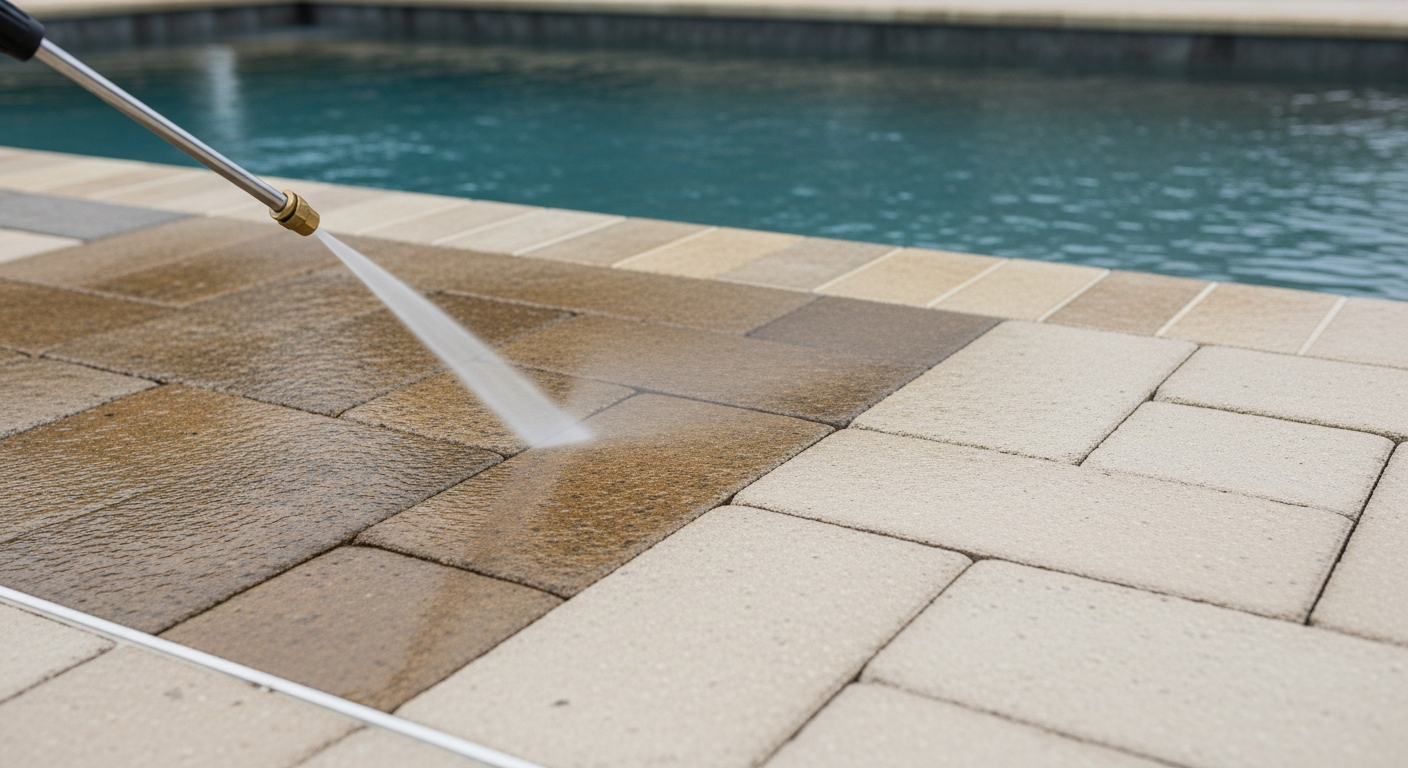
Cleaning Brick Pavers With Pressure Washer: My Protocol for Eliminating Algae Stains Without Damaging Grout Lines
Over my years of restoring hardscapes across Hillsborough County, from the historic brick walkways in South Tampa to the expansive driveways in newer Brandon communities, the single most damaging mistake I see is a homeowner wielding a pressure washer like a sledgehammer. The intent is right, but the execution often leads to etched bricks, and most critically, blasted-out joint sand, which compromises the entire paver system. My approach isn't about raw power; it's about a systematic, low-pressure, high-volume cleaning process that lifts years of grime and algae without causing structural harm. The secret is shifting focus from raw PSI (Pounds per Square Inch) to a combination of the right cleaning solution, appropriate GPM (Gallons Per Minute), and precise technique. High PSI is a blunt instrument that attacks the paver surface and the crucial sand in the joints. For the relentless humidity we get in Hillsborough County, which makes pavers a breeding ground for black mold and green algae, a chemical pre-treatment does 90% of the work before the water even hits the surface, allowing for a much gentler, yet more effective, cleaning phase. This preserves the paver's integrity and extends its life by a significant margin.The Core Mistake I See in Hillsborough: PSI vs. GPM Demystified
I remember a project in Carrollwood where a client had tried to "deep clean" their own paver patio. They used a 4000 PSI machine with a zero-degree (red) nozzle tip. The result was disastrous: the paver faces were scarred with "tiger stripes," and nearly all the joint sand was sprayed across the lawn. This is the classic high-PSI, low-GPM error. My methodology flips this entirely. I prioritize a higher GPM, which provides the water volume needed to flush away contaminants, while keeping the PSI at a safe level for brick, typically below 1600 PSI. This method relies on the principle of chemical dwell time and water flow, not brute force. By letting a targeted solution break down organic matter first, the pressure washer's job becomes simply to rinse and remove, not to scour. This is especially vital for older, more porous brick common in historic neighborhoods, which can be permanently damaged by excessive force.My Pre-Treatment Formula for Florida's Stubborn Mold
Before I even start the pressure washer, I apply a pre-treatment solution. This is not just a generic degreaser; it's a specific mix designed to neutralize the organic growth we constantly battle in our humid climate. I’ve found a solution of sodium hypochlorite, diluted to a ratio of about 1 part solution to 5 parts water, combined with a surfactant to help it cling to the surface, is incredibly effective. I apply this with a simple pump sprayer and let it dwell for 10-15 minutes—but never in direct, intense sunlight, as it can evaporate too quickly. You can physically see the algae and mold begin to break down and lose color. This single step is what allows me to use a fraction of the pressure later on, preventing damage and achieving a superior clean.The Step-by-Step Execution: From Surface Prep to Final Rinse
Once the diagnosis is complete and the pre-treatment is working, I move into the physical cleaning phase. Every step is deliberate to ensure a uniform finish and protect the client's investment.- Step 1: Clear the Surface. I start by using a leaf blower and a stiff-bristled broom to remove all loose debris like leaves, dirt, and twigs. Washing over this material is inefficient and can create a gritty, abrasive slurry.
- Step 2: Apply the Pre-Treatment. As detailed above, I saturate the entire paver surface with my cleaning formula using a pump sprayer, ensuring even coverage and paying extra attention to heavily stained areas. The 15-minute dwell time is non-negotiable.
- Step 3: Calibrate the Equipment. This is a critical point. I select a 25-degree or 40-degree nozzle tip (the green or white one). I set my professional-grade machine to a pressure no higher than 1600 PSI. The goal is flow, not force.
- Step 4: The Washing Technique. I begin washing at a consistent 45-degree angle to the surface, maintaining a distance of at least 10-12 inches between the nozzle and the pavers. I work in a methodical, sweeping motion, overlapping each pass by about 30%. I never spray directly down into the joints; this is what blows out the sand. The angled spray lifts the dirt off the surface and pushes it away.
- Step 5: The Final Rinse. After the entire area is cleaned, I switch to an even wider nozzle or simply reduce the pressure further for a low-pressure, high-volume rinse. This flushes all the dislodged grime and residual cleaning solution away from the patio or driveway.
Post-Cleaning: The Critical Paver Sanding and Sealing Phase
A professional cleaning job in Florida isn't complete without addressing the joints. No matter how careful the technique, some joint sand will be displaced. Leaving the joints empty is an open invitation for weeds and ants, a constant nuisance in areas like New Tampa. After allowing the pavers to dry completely for at least 24 hours, I sweep in new polymeric sand. This type of sand contains polymers that, when activated with a light mist of water, bind together and harden. This locks the pavers in place and creates a formidable barrier against weeds and insects. The final step is applying a quality sealant. A good water-based or solvent-based sealant protects the pavers from UV damage, oil stains, and, most importantly, slows the return of algae and mold. This single application can extend the clean appearance of the pavers by up to 75% longer than unsealed pavers. So, now that your pavers are clean without being damaged, have you considered how the specific porosity of your brick type dictates the ideal curing time for polymeric sand before applying a final sealant?Written by

Tags
pressure wash pavers
power wash paver driveway
pressure washing paver driveway
cleaning pavers with pressure washer
paver power washing near me