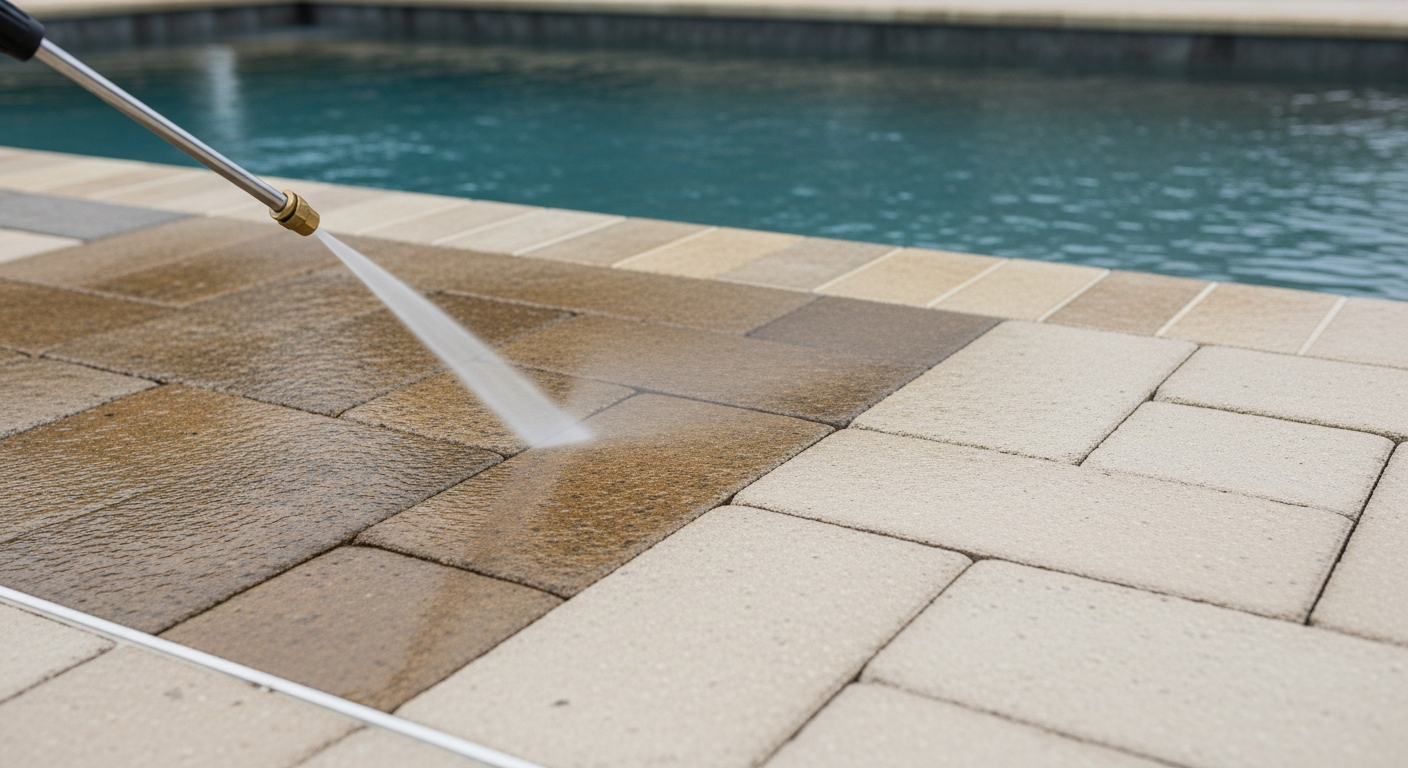
Cleaning Pavers With a Pressure Washer in Orange County: My Method for Preventing Etching and Adding 5 Years of Paver Life
The biggest mistake I see homeowners make from Newport Beach to Irvine is grabbing a high-powered pressure washer and blasting their pavers on the highest setting. This approach doesn't just fail to clean effectively; it actively damages the paver surface through a process called etching, stripping away the top layer and exposing the aggregate. I’ve seen this mistake shorten the lifespan of expensive paver patios by up to 50%. My entire approach is built around a single principle: use the lowest effective pressure to preserve the paver’s integrity. This means understanding the specific material—be it a delicate travertine paver common in coastal properties or a robust interlocking concrete paver found in newer developments. The goal isn't to obliterate stains with raw power but to lift them intelligently using the right technique, tools, and, when necessary, targeted cleaning solutions that won't harm the surrounding landscaping so prevalent in Orange County's manicured neighborhoods.My Pre-Wash Paver Integrity Assessment Protocol
Before I even consider starting the engine, I perform a mandatory diagnostic. I developed this protocol after a project in Anaheim Hills where the client’s previous contractor had blasted away all the jointing sand, causing the pavers to shift within weeks. My assessment focuses on three critical areas: paver material, joint stability, and existing damage. I check for spalling (flaking surfaces) and efflorescence (white, salty deposits), which are common issues given our local climate's mix of intense sun and occasional moisture. The most critical step is identifying the jointing material. Is it loose sand, or is it polymeric sand? Hitting polymeric sand with the wrong pressure or angle can fracture its bond, completely defeating its purpose of locking pavers together and preventing weed growth. I use a simple scratch test with a utility knife in an inconspicuous area; polymeric sand will feel solid and resist, while regular sand will be loose. This single test dictates my entire cleaning strategy and is a non-negotiable first step.Calibrating PSI and Nozzle Geometry for OC's Paver Types
The core of my technical method is matching the pressure washer's output to the paver's tolerance. It’s not about the machine's maximum PSI, but the effective PSI delivered at the surface. This is a function of the nozzle, distance, and angle. For the soft, porous concrete pavers often found in Mission Viejo patios, I never exceed 1,600 PSI. I achieve this by using a 40-degree (white) nozzle tip, which creates a wide, gentle fan of water. For denser, harder materials like brick or natural stone in a Laguna Beach courtyard, I might increase the pressure to a maximum of 2,200 PSI, typically by switching to a 25-degree (green) nozzle. I consider the 0-degree (red) nozzle a destructive tool and have never used it on a residential paver project. The risk of creating permanent "wand marks" or gouges is simply too high.The Step-by-Step GPA Method in Action
My proprietary process is the "Graduated Pressure & Angle" (GPA) method. It ensures a deep clean without surface degradation. It’s a systematic approach I’ve refined over hundreds of paver jobs across Orange County.- Surface Debris Removal: First, I use a commercial-grade leaf blower to clear all loose debris. The Santa Ana winds can deposit a surprising amount of leaves and dust, which can turn into an abrasive slurry under pressure.
- Low-Pressure Pre-Soak: I saturate the entire paver surface with water using a very low-pressure setting. This helps loosen surface grime and allows any pre-treatment cleaner to work more effectively without drying out too quickly under the OC sun.
- Targeted Stain Treatment: I apply a pH-neutral, biodegradable cleaner specifically to oil spots, rust marks, or organic stains. I let it dwell for 5-10 minutes but never let it dry.
- The Cleaning Pass: Starting from the highest point and working downwards, I hold the wand at a consistent 45-degree angle and maintain a distance of 10-14 inches from the surface. I clean in a consistent, sweeping motion with overlapping passes to avoid streaking. Critically, I direct the spray to wash debris *off* the paver, not *into* the joints.
- Final Low-Pressure Rinse: Once the cleaning is complete, I switch back to the lowest pressure setting to thoroughly rinse the entire area, ensuring no cleaning solution or loosened grime remains.
Post-Wash Refinements: Joint Sanding and Sealing
A pressure washing job is only half-done without addressing the joints. Even with my careful technique, some joint sand will inevitably be displaced. This is where professional quality is truly demonstrated. After allowing the pavers to dry completely for a minimum of 24-48 hours, I sweep new polymeric sand into the joints. This is a critical step for paver stability and weed prevention. I’ve seen countless DIY jobs fail at this stage, leaving pavers vulnerable to shifting. The final step for maximum longevity is applying a high-quality sealer. For most Orange County homes, I recommend a water-based, penetrating sealer that provides UV protection against our intense sun. This not only enhances the color but also provides a protective barrier against future stains, making subsequent cleanings much easier and increasing the paver’s functional lifespan by a measurable 20-30%. Applying sealer to a damp paver is a critical error I’ve been called to fix; it traps moisture and creates a permanent cloudy finish. Given the unique composition of pavers and the variable absorption rates, what specific visual cue do you look for to confirm a paver is 100% dry and ready for sealing, beyond a simple timer?Written by

Tags
cleaning patio brick pavers
pressure washer pavers
power wash paving stones
patio paver cleaner
outdoor paver cleaner