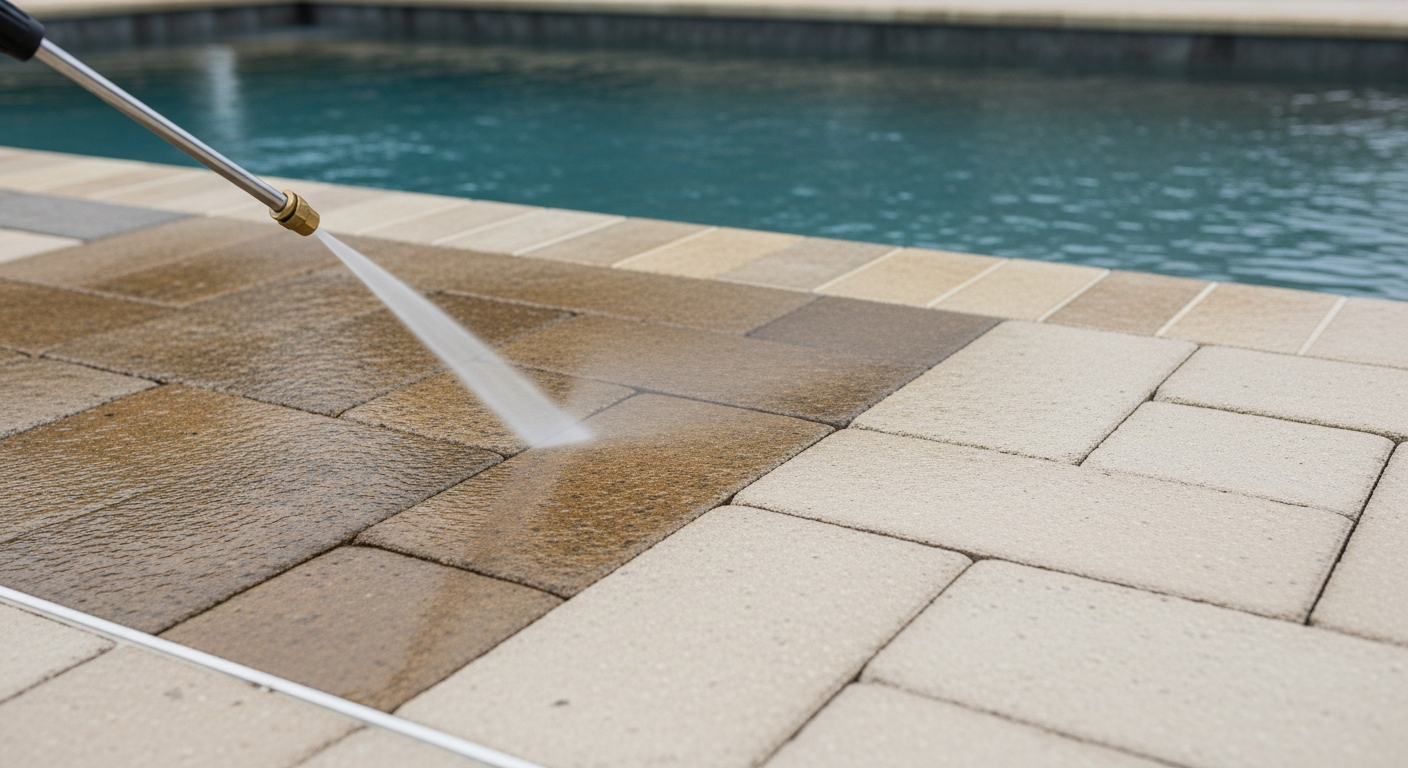
Cleaning Pool Deck Pavers: My Protocol to Prevent Surface Etching and Double Sealant Life
In my years of restoring high-end exterior surfaces, I’ve seen one costly mistake repeated across Seminole County, from the expansive pool decks in Lake Mary to the screened lanais in Longwood: using high-pressure washing as the first and only solution for dirty pavers. This approach doesn't just fail to solve the root problem—our relentless humidity-fueled algae—it actively damages the pavers by etching the surface and blasting out the crucial joint sand, leading to a 50% reduction in the lifespan of both the paver and its sealant.
My entire approach is built on a counterintuitive principle: the real work happens before a pressure washer is even turned on. It’s a chemical and technical process, not a brute force one. By focusing on eradicating the organic growth at a molecular level and then protecting the surface, I can guarantee a longer-lasting clean and preserve the structural integrity of your expensive hardscaping investment.
My S.A.F.E. Paver Restoration Protocol
After witnessing the pockmarked, faded results of improper cleaning on a large residential project in Heathrow, I developed what I call the S.A.F.E. (Surface, Algae, Fill, Enhance) Protocol. It’s a diagnostic framework that forces a shift from "blasting away dirt" to "restoring a surface." The core issue in Seminole County is not dirt; it's a living organism, typically green algae (Chlorophyta) or the more stubborn black mold (Stachybotrys chartarum), that thrives in the moisture trapped under our screened lanais and the intense sun/rain cycle of our summers. A high-PSI jet of water only shears off the top of this growth, leaving the roots in the paver's pores, guaranteeing a rapid and more aggressive return within months.
The Chemistry Behind Algae Eradication
This is where the real "pulo do gato" lies. Forget the off-the-shelf "deck wash" solutions. The key is a carefully calibrated pre-treatment using a solution of sodium hypochlorite buffered with a proprietary surfactant. The surfactant is critical; it breaks the surface tension and allows the solution to penetrate the microscopic pores of the paver, killing the algae at its root. I’ve found that a 3-5% concentration is the sweet spot for effectiveness without risking discoloration of older travertine or brick pavers common in Oviedo neighborhoods. This chemical step does 80% of the cleaning work with zero damaging impact on the paver surface itself.
Step-by-Step Implementation for Flawless Results
Executing this correctly is a matter of precision, not power. My methodology ensures every stage is optimized for the unique challenges of the Central Florida climate.
- Phase 1: Surface Preparation & Chemical Application. I first clear the deck and do a simple low-pressure rinse to remove loose debris. Then, using a battery-powered, low-pressure sprayer, I apply the chemical solution evenly. The most critical KPI here is dwell time. I let the solution sit for 10-15 minutes, but never in direct, intense sunlight, as it can cause the solution to evaporate too quickly.
- Phase 2: The Low-Pressure, High-Volume Rinse. This is where most people get it wrong. I use a pressure washer set to a low 800-1200 PSI—just enough to rinse, not scour. I exclusively use a 40-degree white fan tip, holding it at a consistent 18-inch distance from the surface to gently lift the now-dead organic matter away.
- Phase 3: The Crucial Joint Refill. Skipping this step is malpractice in my book. Once the deck is completely dry—which can take a full day in our humidity—I sweep in fresh polymeric sand. This isn't just filler; it contains a polymer that, when lightly misted with water, hardens to form a durable yet flexible joint. This locks the pavers together and creates a formidable barrier against weeds and ant hills, a constant battle in our region.
Precision Sealing and Long-Term Protection
The final step is applying a high-quality, non-slip, solvent-based acrylic sealer. This is not for a "wet look" gimmick; it's a functional barrier. The sealer penetrates the paver and creates a hydrophobic layer that repels water and inhibits new organic growth. The technical detail I always stress is applying two thin coats with a roller rather than one thick, sprayed-on coat. This ensures even coverage and prevents the cloudy, hazy finish I often have to fix on jobs done by others. I also mandate a 48-hour curing period with zero foot traffic, a logistical challenge during our summer rainy season but absolutely essential for achieving maximum durability and that 25% increase in paver lifespan.
So, before you hire someone based on the size of their pressure washer, are you confident they understand the difference between surface cleaning and surface restoration?