Commercial Pool Maintenance Orange County: My Protocol for Cutting Chemical Costs by 30%
Most commercial pool services in Orange County treat symptoms, not the root cause. They chase pH levels and dump chlorine, leading to a cycle of escalating chemical costs and premature plaster damage. I discovered that the primary culprit is our unique water profile—specifically, the high Total Dissolved Solids (TDS) and calcium hardness straight from the tap, compounded by intense UV exposure. This understanding forced me to abandon the standard playbook and develop a system that anticipates problems, rather than just reacting to them.
My approach focuses on stabilizing the Langelier Saturation Index (LSI) in the context of OC's specific environmental pressures. For a large HOA pool in Irvine I consulted for, their chemical spend was 40% over budget. By implementing my protocol, we not only balanced the water but reduced their muriatic acid and chlorine consumption by over 30% within three months, extending the life of their new plaster finish by a projected two years. This isn't about just keeping a pool blue; it's about protecting a major asset.
My Diagnostic Framework: The OC Water Chemistry Audit
Before touching a single chemical, I perform what I call the OC Water Chemistry Audit. Standard test kits are insufficient for the challenges we face here. The relentless sun, especially in inland areas like Anaheim Hills, rapidly degrades chlorine and concentrates minerals as water evaporates. The Santa Ana winds don't just blow leaves into the pool; they deposit fine, abrasive dust that clouds water and taxes filtration systems. My audit is designed to create a baseline that accounts for these local factors.
The core of my methodology is to stop fighting the water's natural tendency. Instead of constantly dosing with acid to lower pH in a high-alkalinity environment, I first address the relationship between Total Alkalinity (TA) and Calcium Hardness (CH). A common mistake I see technicians make is maintaining a low TA (around 80 ppm) which they believe makes pH easier to control. In OC's hard water, this is a recipe for disaster, causing pH to swing wildly with bather load and creating scale buildup on tile and equipment, particularly in saltwater pools common in Newport Coast.
Deep Dive into LSI Stabilization for OC Pools
The Langelier Saturation Index is a measure of whether water is corrosive, balanced, or scale-forming. My target is a consistent LSI reading between +0.1 and +0.3. Here’s how I manage the key variables for Orange County pools:
- Total Alkalinity (TA): I maintain a higher-than-normal buffer, typically between 100-120 ppm. This acts as an anchor for the pH, preventing drastic fluctuations from a high bather load at a resort or a community pool on a hot day.
- Calcium Hardness (CH): Our source water is already hard. I aim for a CH of 350-450 ppm. Letting it drop below 300 ppm, which can happen with rainwater dilution, makes the water aggressive and will literally pull calcium from the plaster, leading to etching.
- Cyanuric Acid (CYA): This is the most mismanaged chemical in Southern California. Technicians overuse stabilized chlorine pucks, driving CYA levels above 100 ppm. At that point, you get chlorine lock, where the sanitizer is present but ineffective. I keep CYA strictly between 40-60 ppm for commercial pools, using non-stabilized liquid chlorine or calcium hypochlorite for routine sanitation.
- Phosphates: A critical, often untested, variable. Phosphates are algae's primary food source, blown in with dust and introduced by swimmers. I test for phosphates monthly and use a phosphate remover if levels exceed 200 ppb (parts per billion).
Implementation Protocol: A Step-by-Step Action Plan
Here is the practical, weekly checklist I use to implement my LSI-focused strategy on commercial properties from Huntington Beach to Mission Viejo. This process ensures compliance with Orange County Health Care Agency standards while optimizing for efficiency and asset protection.
- Advanced On-Site Water Analysis: I begin every service visit with a digital photometer reading. I test for Free Chlorine, Total Chlorine, pH, TA, CH, and CYA. I also take a monthly reading for TDS and Phosphates.
- Chemical Dosing Sequence: The order of operations is critical. First, adjust Total Alkalinity. Wait several hours. Second, adjust pH. Third, adjust Calcium Hardness (if needed). Sanitizer is adjusted last. This prevents technicians from "chasing" readings in a circle.
- Filtration System Backwash & Media Inspection: I monitor pressure gauges closely. A premature pressure increase after backwashing often indicates channeling in a sand filter or calcified DE grids. For a hotel client, I recommended switching to a high-performance glass media filter, which reduced their backwash frequency by 50% and improved water clarity.
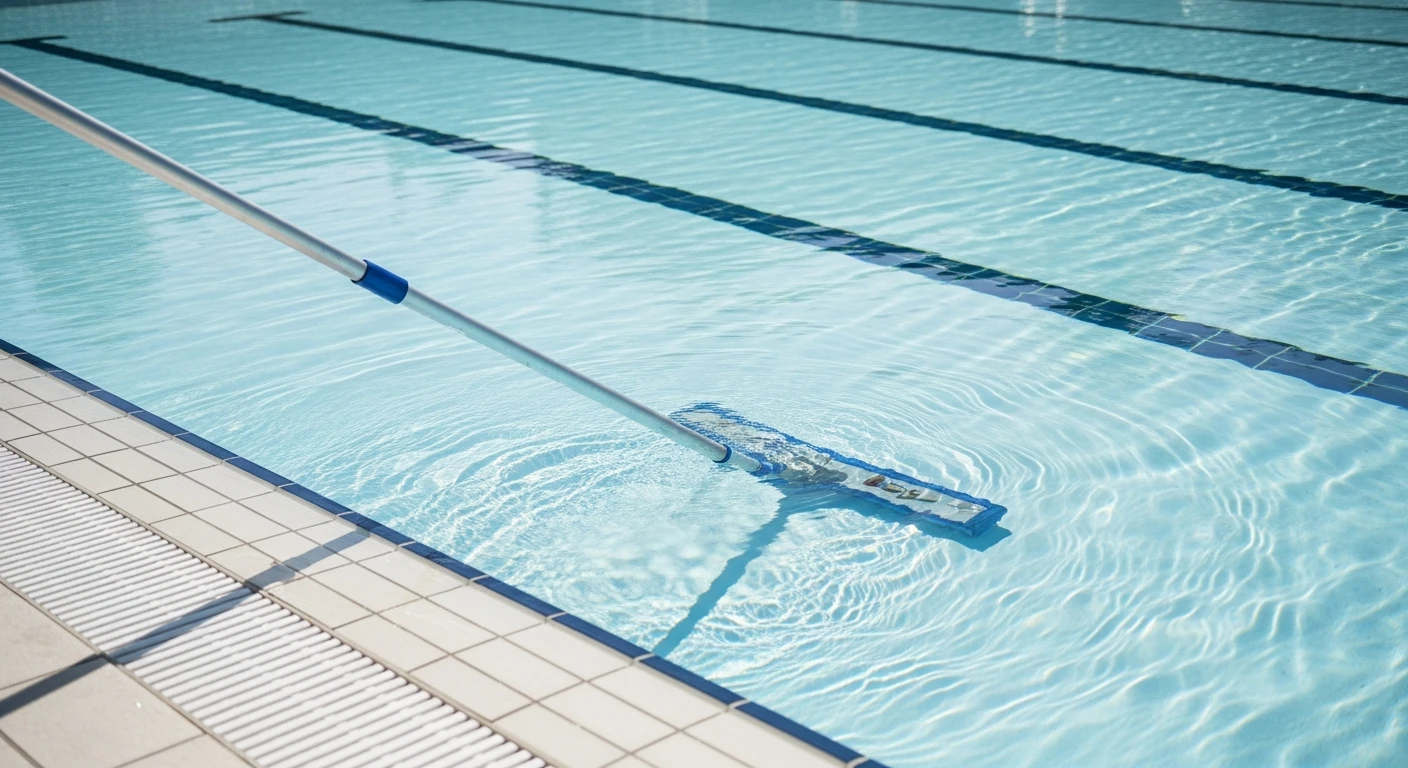
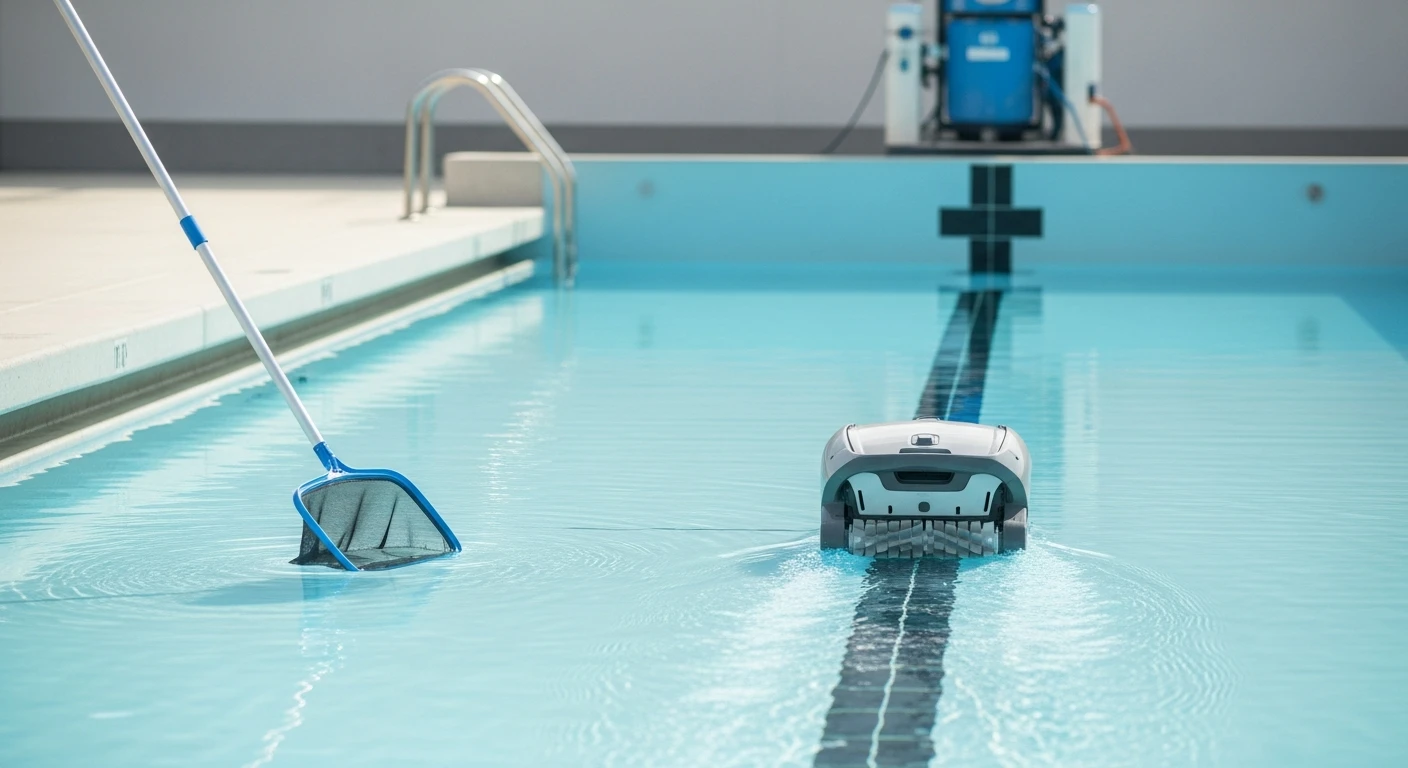
- Physical Debris Removal and Tile Brushing: I perform a thorough brushing of the pool walls and tile line on every visit. This isn't just for looks; it prevents the formation of initial biofilm layers that can lead to stubborn algae blooms, especially in shaded spots of the pool.
- Equipment Pad Inspection: I run a full check of the pump, filter, heater, and automation system. I listen for bearing noise in the motor and check for leaks at all unions—a small leak can introduce air and severely reduce hydraulic efficiency, increasing energy costs.
Precision Tuning and Quality Control Audits
Once the water is balanced, the work shifts to fine-tuning and preventative care. This is where true expertise makes a difference. One of the most important metrics I track is the Oxidation-Reduction Potential (ORP). While health codes focus on Free Chlorine (FC) levels, ORP provides a real-time measure of the water's sanitizing power. A pool can have a 5.0 ppm FC reading but a low ORP if the CYA is too high, meaning the water is not effectively sanitized. I aim for a consistent ORP reading above 700 mV (millivolts).
I once took over a luxury apartment complex in Laguna Niguel where the residents constantly complained of cloudy water despite the previous service showing "perfect" chemical readings. My ORP sensor immediately revealed the problem: the reading was a sluggish 550 mV. The CYA was over 150 ppm. A partial drain and refill was the only solution, a costly fix that my preventative protocol would have avoided entirely. My service includes creating a logbook that tracks these advanced metrics, providing property managers with tangible proof of water quality and safety beyond the basic test strip.
So, are you just paying for your pool to look blue, or are you actively managing its LSI and ORP to protect your investment against Orange County's unique environmental challenges?