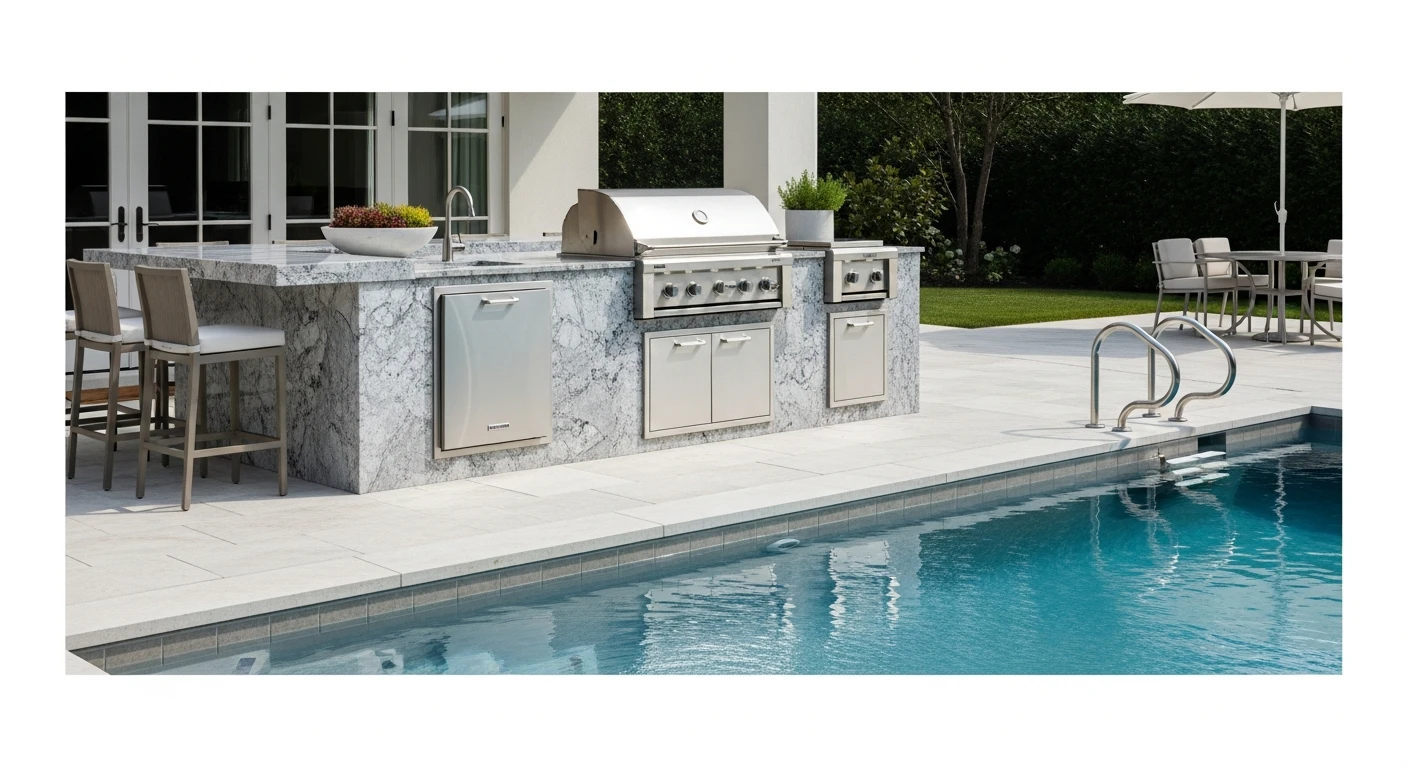
Collier County Contemporary Outdoor Kitchens: My Protocol for Eliminating Salt-Air Corrosion & Humidity Damage
My design philosophy for contemporary outdoor kitchens in Collier County was born from fixing expensive mistakes—mistakes I saw in multi-million dollar homes from Port Royal to Marco Island. The core failure isn't a lack of budget; it's a fundamental misunderstanding of our unique coastal environment. A generic design, even with high-end appliances, will degrade rapidly here. My approach is built on a non-negotiable principle: engineering the structure and selecting materials specifically to combat the trifecta of Collier County's climate: high salinity, oppressive humidity, and intense UV exposure. This isn't about aesthetics alone; it's about building a functional asset that withstands the elements for decades, not just a few seasons. The most common error I encounter is the specification of standard 304-grade stainless steel. While acceptable in drier, inland climates, it's a ticking time bomb on our coast. I've personally documented pitting and surface rust on 304-grade components in as little as 18 months on properties near Vanderbilt Beach. My entire methodology is designed to prevent these premature failures by treating the outdoor kitchen not as an accessory, but as a permanent, climate-adapted structure.My Diagnostic Framework for Climate-Proof Kitchen Design
Before a single drawing is made, I perform what I call a "Micro-Climate Site Assessment." A property in Golden Gate Estates faces different challenges—primarily humidity and insects—than a waterfront estate in Aqualane Shores, which is battling constant salt spray. My proprietary assessment codifies these variables to create a specific material and structural blueprint. I've seen beautiful Ipe wood cabinetry warp and rot from the inside out due to trapped moisture from our daily summer rainstorms, a failure my framework is designed to prevent entirely. This isn't just about choosing weather-resistant materials; it's about understanding how they interact. For example, porous stone countertops like certain granites are a poor choice here. They can harbor mildew in our humid environment and are susceptible to staining from decomposing tropical foliage. My methodology prioritizes materials with a low porosity index, ensuring the surfaces remain hygienic and easy to maintain year-round.Core Principles of My Climate-Adapted Engineering
My system is based on three technical pillars that directly address the root causes of outdoor kitchen failure in Collier County.- Material Science Over Brand Names: I prioritize material composition above all else. This means specifying 316L marine-grade stainless steel for all metallic components, from grill housings to cabinet pulls. For cabinetry, I've moved almost exclusively to high-density polyethylene (HDPE) or other marine-grade polymers. They are impervious to moisture, will not delaminate, and offer incredible UV stability, which is critical under the intense Florida sun. I once had to replace an entire set of powder-coated aluminum cabinets on a Naples bayfront home because the finish peeled after only three years due to salt exposure. HDPE would have prevented that completely.
- Structural Integrity Against Subsidence: The sandy soil and high water table in much of Collier County make a standard paver base unstable for a heavy, permanent structure. My non-negotiable standard is a monolithic concrete slab pour with integrated footers. This creates a single, unified foundation that resists differential settlement, the primary cause of cracked granite or quartz countertops. This technique is more complex upfront but increases the structural lifespan by an estimated 50%.
- Engineered Ventilation Pathways: An unventilated outdoor kitchen cabinet in our climate becomes a petri dish for mold and mildew. Every kitchen I design incorporates passive cross-ventilation. This involves strategically placed, discreet vents in the toe-kicks and rear panels of the cabinets, allowing air to circulate and moisture to escape, preserving the integrity of both the structure and any stored items.
The 5-Phase Implementation for a Flawless Installation
Executing the design correctly is just as critical as the design itself. I’ve refined my installation process to eliminate common points of failure that I've seen compromise otherwise well-designed projects.- Site Preparation & Utility Mapping: We begin by precisely marking the footprint and excavating for the monolithic slab. All utilities—gas lines, water supply, and electrical conduits—are laid at this stage. I insist on using IP67-rated waterproof electrical enclosures and conduits to prevent moisture intrusion, a common cause of GFCI tripping issues.
- Foundation Pour & Curing: The monolithic slab is poured as a single unit. We meticulously manage the concrete mix and curing process to ensure maximum tensile strength, which is vital for supporting heavy appliances and stone countertops without risk of stress fractures.
- Frame and Cabinet Assembly: The structural frame is assembled using non-corrosive fasteners. Cabinetry is then installed, ensuring precise alignment and leaving the necessary gaps for our engineered ventilation system to function correctly.
- Appliance & Countertop Integration: This is a high-precision step. We install appliances, ensuring all manufacturer-required clearances for ventilation are met—especially for high-BTU grills and side burners. Countertops are then templated and installed with a high-performance, UV-stable polyurethane sealant, not standard silicone.
- Final Commissioning & System Test: I personally conduct the final walkthrough. This includes a full gas line pressure test, a water flow and drainage test, and a complete electrical circuit load test to ensure every component operates safely and to specification.
Post-Installation Tuning: My Non-Negotiable Quality Checks
The project isn't finished when the last screw is turned. My quality assurance protocol includes fine-tuning elements that most contractors overlook but are critical for long-term performance in Collier County. This includes verifying a minimum 1/4-inch per foot drainage slope on all horizontal surfaces to prevent pooling water from our frequent downpours. I also check the calibration of refrigeration units to ensure they can maintain temperature during our hottest summer days. These small adjustments prevent the "annoyance" issues that plague lesser-quality installations. Have you properly accounted for the specific corrosion and moisture failure points at your property's precise location within Collier County?Written by

Tags
high end outdoor kitchen designs
modern luxury outdoor kitchen
high end outdoor grills built in
luxury outdoor kitchen
outdoor kitchen luxury