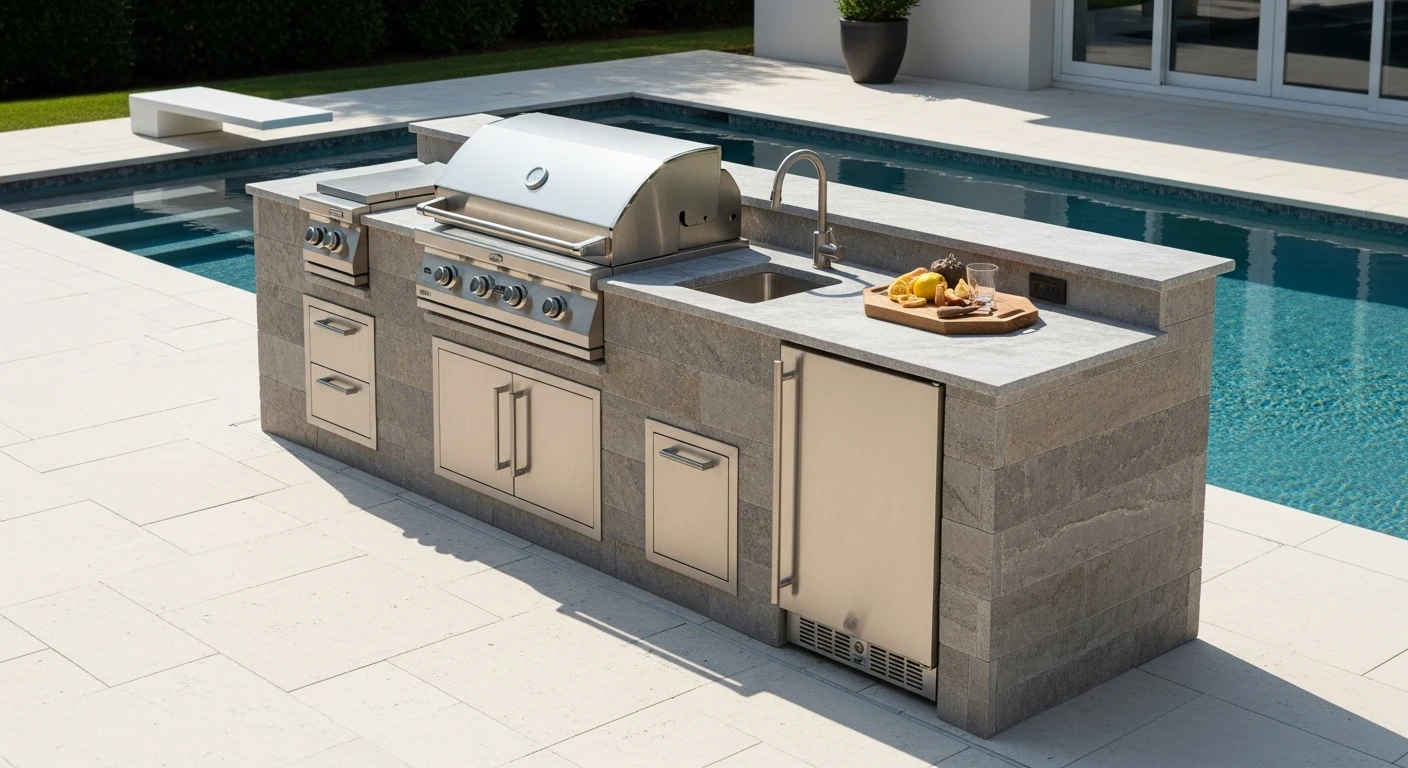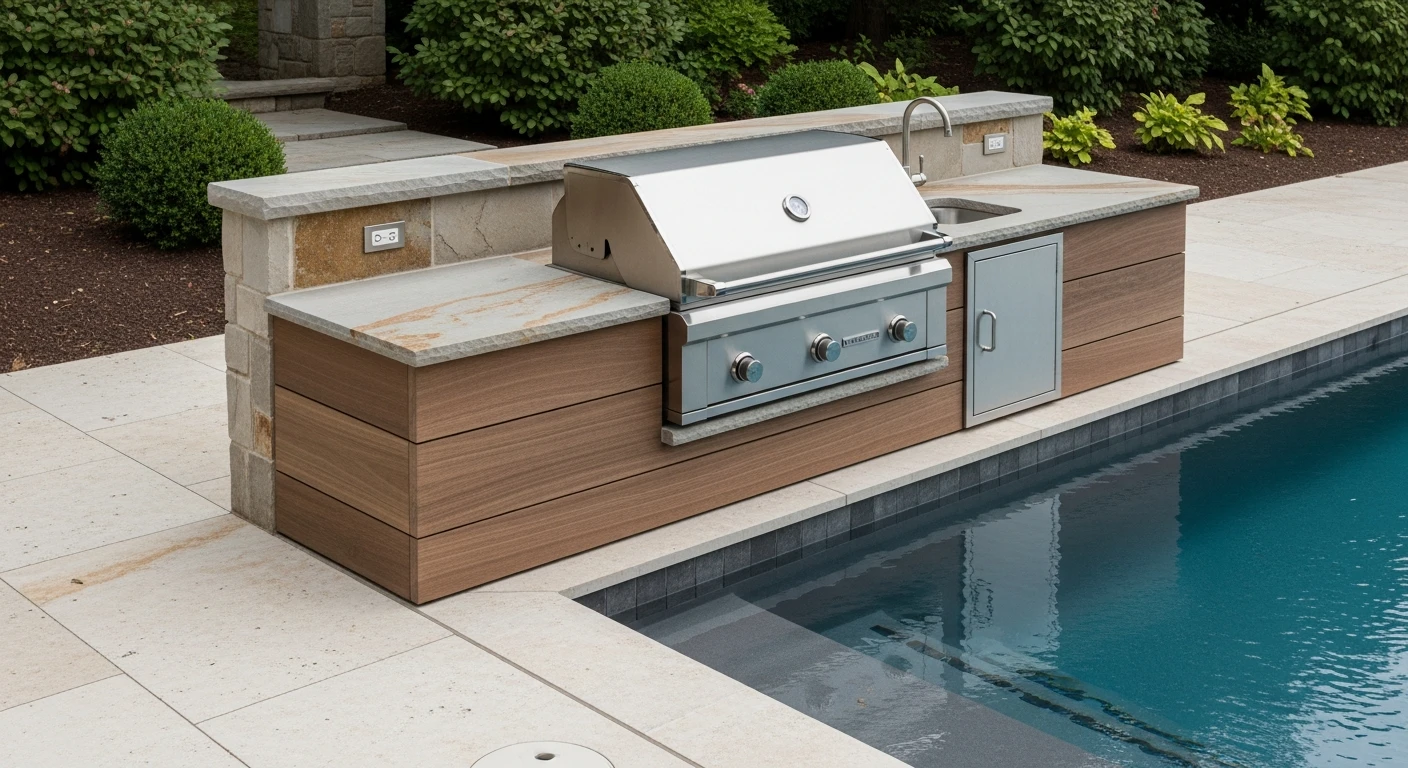
Custom Built Outdoor Kitchen in Lee County: My Framework for 30-Year Material Longevity
I’ve seen countless outdoor kitchens in Lee County fail in under five years. The primary reason isn't poor craftsmanship; it's a fundamental misunderstanding of our coastal environment. Most builders apply inland construction principles to waterfront properties in Cape Coral or Sanibel, resulting in rusted appliances, rotted frames, and warped countertops from the relentless humidity and salt spray. My entire design philosophy is built to counteract this, focusing on a Marine-Grade Monolithic Structure that treats your outdoor kitchen less like a patio accessory and more like the hull of a yacht. This isn't about simply choosing "outdoor-rated" materials. It's about a system where every component, from the frame's alloy to the grout between the stones, is selected for its specific resistance to chloride corrosion and UV degradation. I've spent over a decade refining this process, often correcting expensive mistakes made by others. The goal is to build a structure that not only looks pristine on day one but also withstands a decade of Fort Myers summers and hurricane seasons with only minimal maintenance, effectively tripling the usable lifespan compared to standard construction.The Climate-First Diagnosis: My Material Selection Protocol
Before I even sketch a design, I perform a site-specific environmental analysis. The material specs for a home on a Gulf-access canal in Bonita Springs are drastically different from a more sheltered property in Lehigh Acres. My proprietary methodology, the Climate-First Material Selection Protocol, is the foundation of a project's longevity. It's a non-negotiable first step. I’ve seen projects use expensive 304-grade stainless steel, only for it to show pitting and rust within 18 months due to direct salt air exposure. That’s a costly error that my protocol prevents.Technical Deep Dive: Frame, Appliances, and Surfaces
The structural integrity and material science are where most projects go wrong. My approach is uncompromising on these three core areas:- Structural Frame: I categorically reject wood or steel stud framing. Wood inevitably absorbs moisture and rots, and galvanized steel will rust at every screw point. My standard is a frame constructed from either welded 1.5-inch 6061-T6 aluminum tubing or concrete masonry units (CMU). The aluminum frame provides incredible strength-to-weight and is virtually immune to corrosion, which is critical for elevated decks common in Fort Myers Beach.
- Appliance and Component Specification: This is a major point of failure. I mandate 316L grade stainless steel for all appliances, doors, and drawers. The "L" indicates low carbon content, and the inclusion of molybdenum in the alloy provides superior resistance to chlorides (salt). For a client in Captiva, this choice is the difference between a 3-year and a 20-year lifespan for their grill. Standard 304 stainless is simply not sufficient for our coastal reality.
- Countertop and Cladding Surfaces: Granite is popular but porous; it requires constant sealing to prevent mildew and staining in our humid climate. I guide clients toward sintered stone (like Dekton) or specific non-porous quartzites. These materials are completely UV stable, meaning the intense Florida sun won't fade them, and their near-zero porosity means spills and moisture are non-issues. For the structure's cladding, I use a cement board with a liquid-applied waterproof membrane before any stone or stucco finish is applied.
My Implementation Blueprint: From Bare Patio to Functional Hub
Building the kitchen is a game of precision and sequencing. Having a robust plan prevents the most common installation errors, like improper ventilation which can be a serious safety hazard. I follow a strict four-stage process.- Foundation and Utility Placement: I begin by precisely marking out the footprint and confirming the location of all utilities. Gas lines are pressure-tested, and electrical runs are housed in waterproof conduits. Critically, I ensure the concrete pad has a slope of 1/4 inch per foot to guarantee proper water runoff away from the home's foundation.
- Frame Assembly and Appliance Cutouts: The aluminum or CMU frame is constructed. This is where my detailed planning pays off. Every appliance cutout is made to the manufacturer's exact specifications, plus an extra 1/8 inch for thermal expansion. For any grill installed in the structure, an insulated jacket is mandatory to prevent heat transfer, even with a non-combustible frame.
- Cladding and Surface Installation: The waterproofed cement board is installed, followed by the chosen exterior finish (stone veneer, stucco, etc.). I then work with my fabricator to laser-template the countertops on-site. This ensures a perfect fit around sinks and side burners, with minimal seams.
- Appliance Setting and Final Connections: Appliances are carefully set, leveled, and connected. I personally oversee the final gas and electrical connections and perform a full functional test on every component, from the grill igniters to the refrigerator's thermostat.
Precision Tuning and Quality Assurance Standards
The final 5% of the work is what defines a truly professional installation. Once the kitchen is assembled, I run through a final quality control checklist that I developed after seeing competitors cut corners. This includes checking for proper cross-ventilation within the cabinet cavities to prevent gas buildup—a detail that is shockingly overlooked. I also use epoxy-based grout for any stone work, as its non-porous nature prevents mildew growth, a constant battle in Lee County. My final step is a "water-immersion test," where I simulate a heavy downpour to verify that all drainage pathways are clear and there is no pooling on or behind the structure. This simple test has saved my clients from major water-related issues down the road. Your contractor specified "outdoor-grade" stainless steel, but did they confirm the specific alloy grade for your proximity to the Gulf?Written by

Tags
custom outdoor grill station
custom made outdoor kitchen
custom outdoor grill
custom outdoor kitchen design
custom outdoor kitchen islands