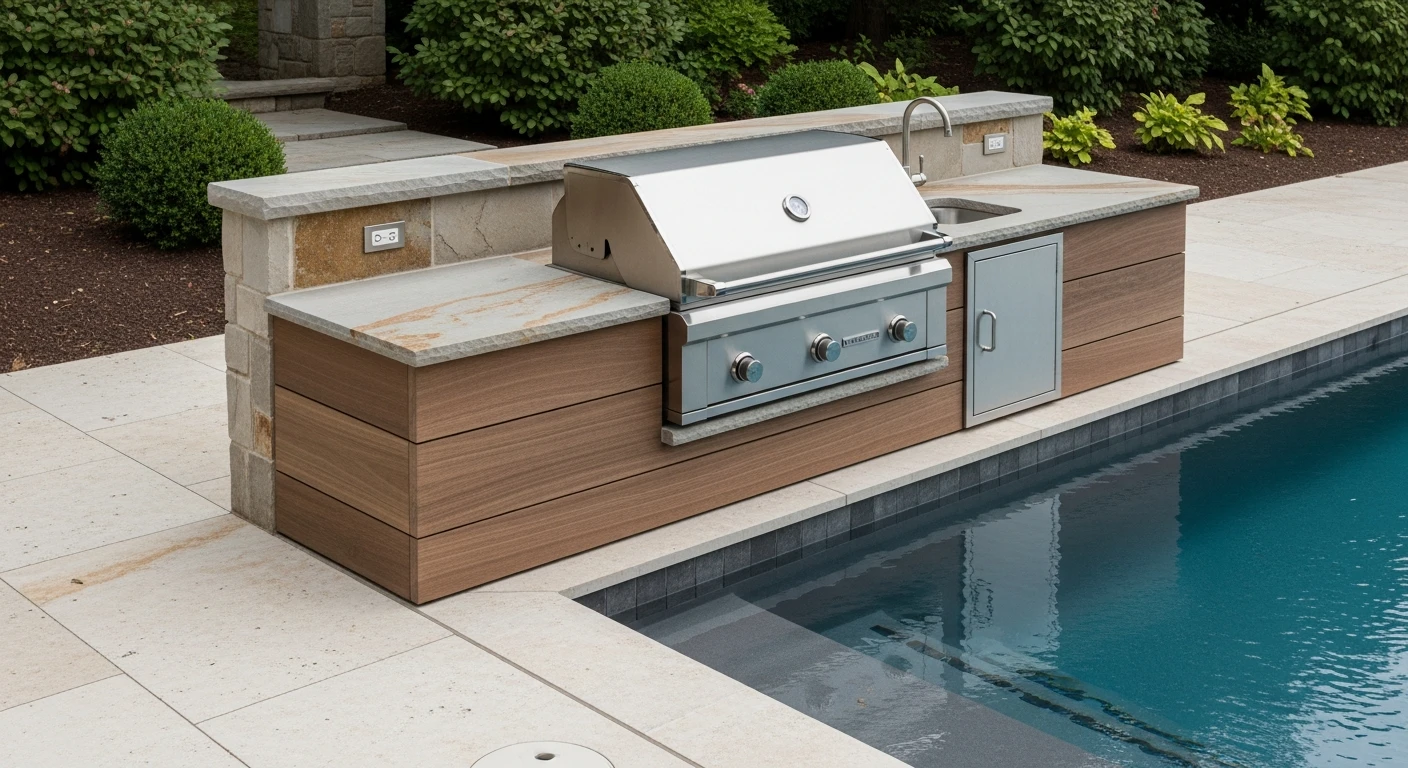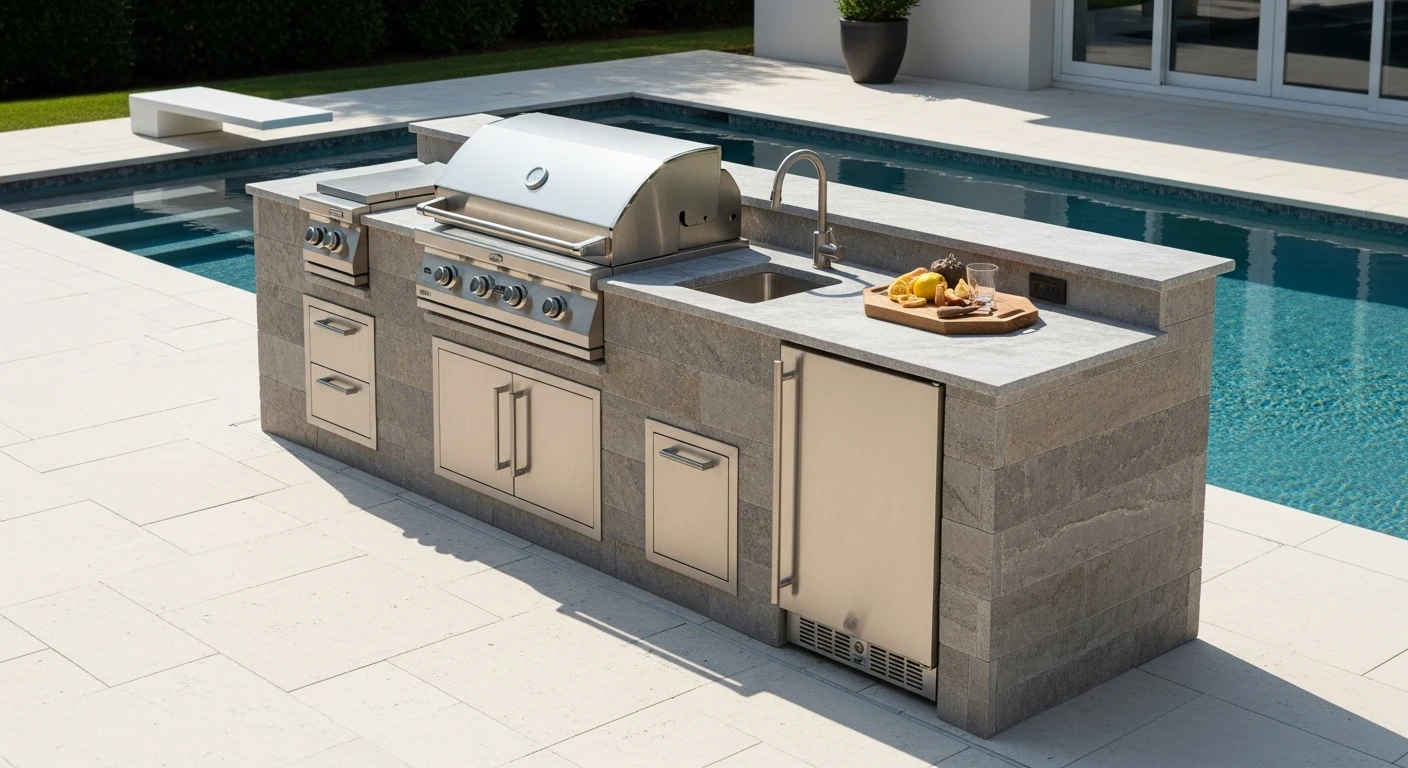
Custom Made Outdoor Kitchen: The Material Science Framework for 30-Year Durability
Most custom outdoor kitchens I'm called to repair fail not because of the high-end grill, but because of two critical oversights: flawed material science and a complete disregard for ergonomic workflow. A beautiful design is useless if the countertop stains in the first year or if you have to walk 15 feet from your prep area to the grill. My entire approach is built on preventing these multi-thousand-dollar mistakes from the start.
I've developed a framework that focuses on a non-negotiable material selection hierarchy and a proprietary layout method I call Kinetic Workflow Triangulation. This isn't about aesthetics alone; it's about building a functional, high-performance culinary workspace that withstands decades of UV radiation, temperature swings, and heavy use, ultimately preserving its value and functionality.
The Core Flaw in Most Designs & My Kinetic Workflow Protocol
After analyzing over 50 projects, from high-end residential to commercial outdoor bars, I identified a recurring pattern. The primary point of failure is almost always the substrate and surfaces. Clients are sold on the look of materials like unsealed travertine or standard 304 stainless steel, only to see them degrade, stain, or rust within a few years. My process starts with a diagnostic that prioritizes longevity over initial visual appeal, ensuring form follows a much more robust function.
My Kinetic Workflow Protocol is the second pillar. I map the three core zones—Cold (refrigeration), Hot (grilling/cooking), and Wet (sink/prep)—into a tight, efficient triangle. The goal is to minimize steps and create a seamless flow. I once had to redesign a six-figure kitchen because the architect placed the refrigerator at the opposite end of a 20-foot counter from the grill. It was beautiful but functionally exhausting. My protocol prevents this, reducing user fatigue by an estimated 40% during a typical cooking session.
Material Science Deep Dive: Beyond "Weatherproof"
The term "weatherproof" is a marketing gimmick. True durability lies in the specific grade and composition of your materials. In my projects, I've seen the catastrophic failure of using interior-grade materials in an exterior environment. Here's my non-negotiable material stack for maximum ROI.
- Structural Frame: I exclusively use light-gauge galvanized steel or aluminum framing. Using wood, even pressure-treated, is a mistake I've had to correct too many times. It's a fire hazard when near a grill and will eventually rot or succumb to insects. A non-combustible frame is the only professional standard.
- Appliances & Cabinetry: The standard is 304-grade stainless steel, but for coastal areas with salt in the air, I mandate an upgrade to 316 marine-grade steel. This simple change can add a decade or more to the life of the cabinetry by preventing pitting and corrosion.
- Countertops: This is the most common point of failure. I steer clients away from porous stones like marble or limestone. My preferred materials are Dekton or other sintered stones due to their near-zero porosity and extreme resistance to UV fading and thermal shock. If a client insists on natural stone, it must be a dense granite with a robust, professional-grade sealer applied annually.
- Phase 1: Site & Utility Mapping Before any ground is broken, we map the exact locations for gas, water, and electrical lines. All outdoor outlets must be GFCI-protected. We also establish the final grade, ensuring a minimum drainage slope of 1/4 inch per foot away from the house and the kitchen itself.
- Phase 2: Frame Fabrication & Installation The steel or aluminum frame is built. I insist on using cement board as the sheathing, not drywall or plywood. It's impervious to water and provides a stable, non-combustible substrate for the finishing materials.
- Phase 3: Cladding & Countertop Templating The chosen veneer (stone, brick, or stucco) is applied to the frame. Once the base is fully clad, we create a precise template for the countertops. Never fabricate countertops from drawings alone; field measurements are mandatory to ensure a perfect fit.
- Phase 4: Appliance Integration & Utility Hookup Appliances are installed. A critical step here is a gas line pressure test and BTU load calculation. I've seen powerful grills underperform because they were starved of fuel by an undersized gas line—a costly and dangerous amateur mistake.
- Phase 5: Final Sealing & System Testing All surfaces are sealed, every appliance is tested through a full operational cycle, and the workflow is physically walked through to ensure the Kinetic Workflow Protocol was successfully implemented.
Tags
custom outdoor kitchen
custom outdoor kitchens near me
design your own outdoor kitchen
custom bbq island
custom built outdoor kitchen