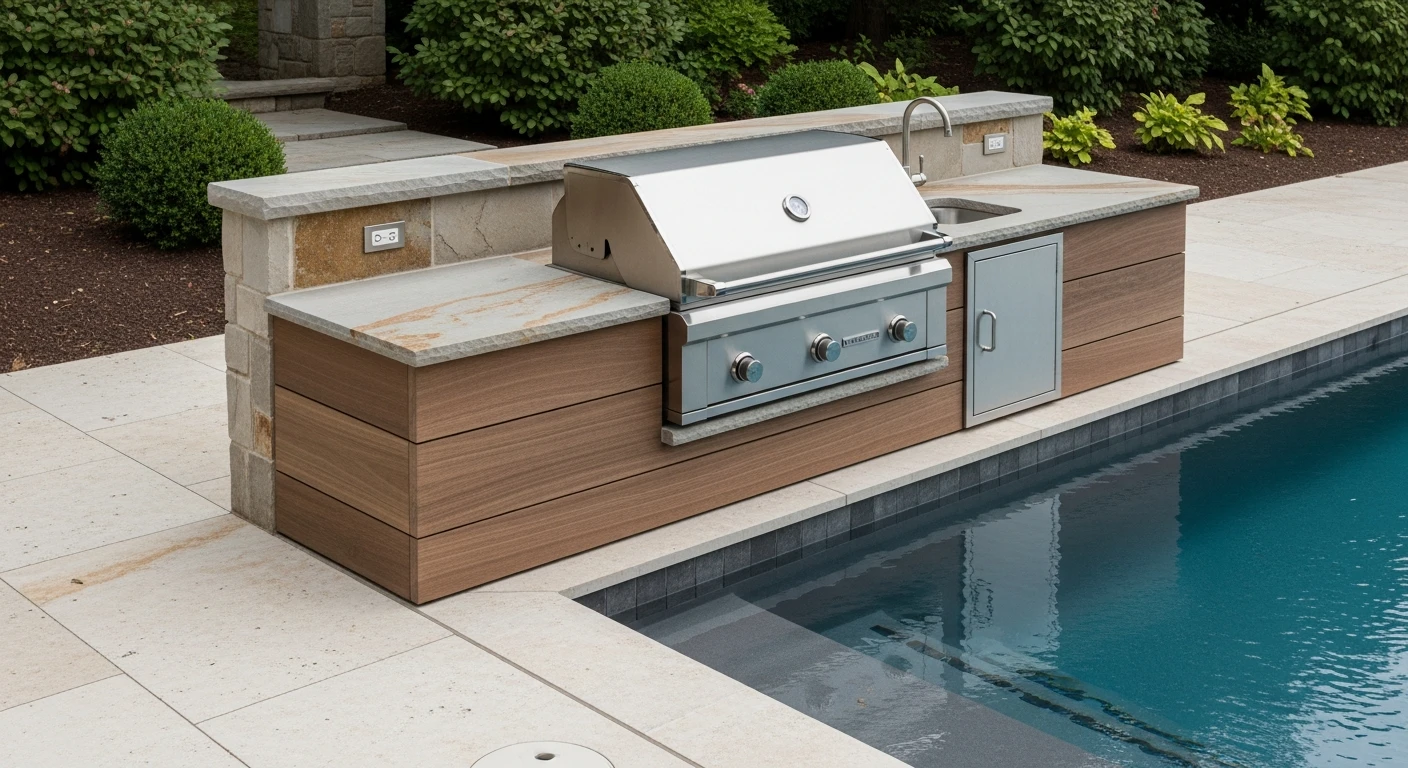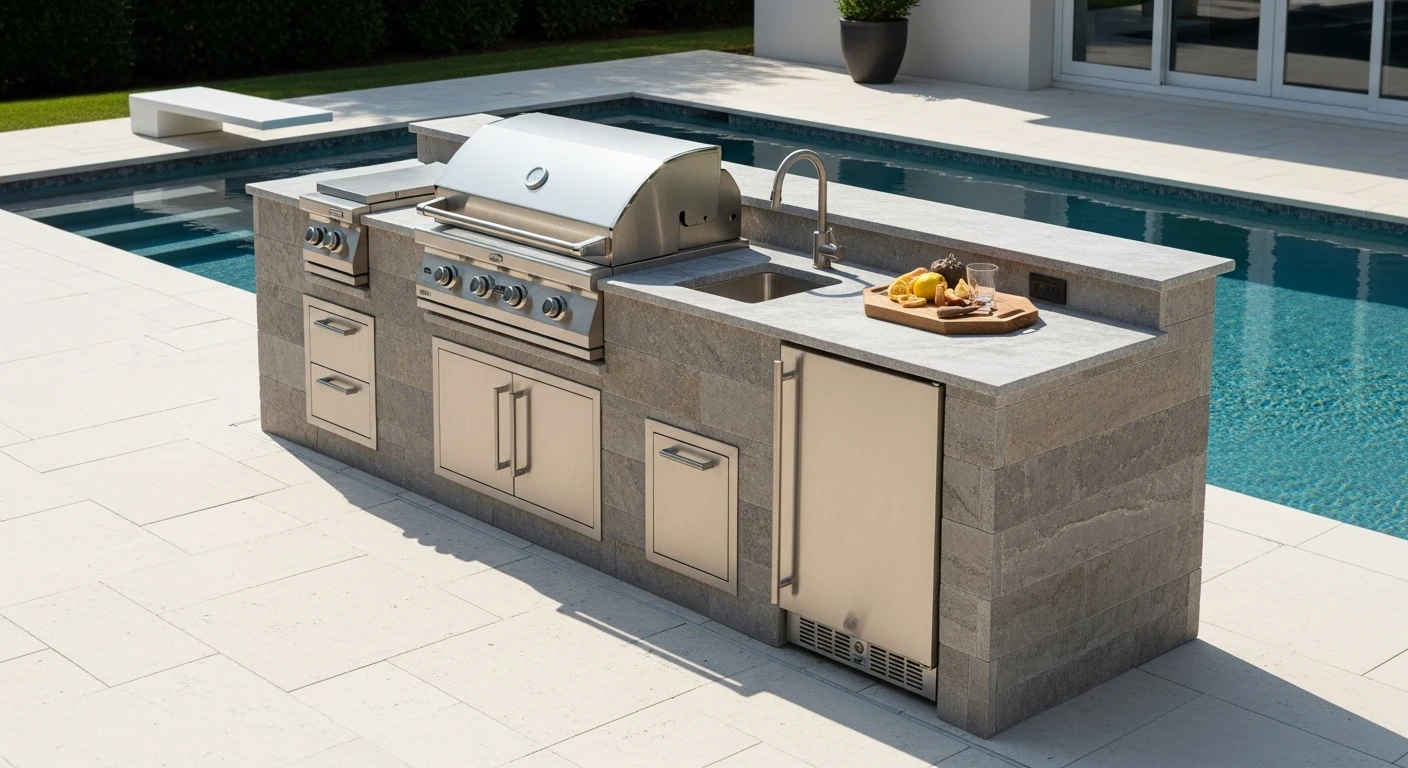
Custom Made Outdoor Kitchen Charlotte County: My Blueprint for a 30-Year, Corrosion-Proof Installation
I've lost count of the number of outdoor kitchens I've been called to repair in Punta Gorda Isles and Port Charlotte that were failing after just five years. The primary culprit is almost always the same: a fundamental misunderstanding of our unique Charlotte County coastal environment. Contractors sell "stainless steel" and "granite," but they fail to specify the grades and treatments necessary to combat the relentless salt spray and oppressive humidity. My entire approach is built on preventing this premature decay from day one. The difference between an outdoor kitchen that looks great for a season and one that becomes a permanent, high-value asset to your property lies in a series of very specific material and installation choices. I’ve seen beautiful projects on canal-front properties in Punta Gorda rendered nearly useless by rust and mildew because the wrong grade of steel was used, and the internal structure wasn't designed to breathe. This isn't about luxury; it's about engineering a structure for extreme environmental resilience.My Diagnostic Protocol for Charlotte County's Climate
Before a single drawing is made, I perform what I call a Coastal Durability Audit. This isn't a simple site visit; it's a technical assessment of the micro-environment. A home on the water in Englewood Beach faces a completely different level of saline aerosolization than a home further inland in Deep Creek. The audit focuses on two key metrics: Airborne Salinity Exposure (ASE) and Structural Moisture Potential (SMP). I identified that lanais, while covered, often trap humidity, accelerating mildew growth within cabinet cavities if not properly ventilated—a common oversight. My methodology dictates the specific material selection and design modifications based on the results of this audit, ensuring the investment is protected.Material Selection Beyond "Stainless Steel"
This is where most projects go wrong. My non-negotiable standards are based on years of seeing what fails in our specific climate.- Cabinet & Appliance Grade: I exclusively specify 316L marine-grade stainless steel. The common 304 grade, while cheaper, contains less nickel and no molybdenum, making it highly susceptible to pitting corrosion from the chloride in our salt air. I have seen 304-grade grill hoods show rust spots within 18 months. Using 316L can increase the corrosion-free lifespan of components by over 300%.
- Structural Framing: Wood framing is a guaranteed failure point due to moisture and termites. I've engineered a system using either powder-coated aluminum or, for ultimate longevity, structural polymer framing. These materials are inert, waterproof, and provide zero organic matter for mold or mildew to grow on.
- Countertop Surfaces: While popular, many types of granite are porous and can harbor mildew in our humid climate, even when sealed. My recommendation is almost always sintered stone (like Dekton) or specific non-porous quartzites. Their near-zero porosity means no staining, no bacterial growth, and superior resistance to UV fading from the intense Florida sun.
The Phased Implementation Framework
A robust outdoor kitchen is built from the ground up with precision. My process is broken down into critical, non-negotiable phases that eliminate common failure points. I’ve been called to fix projects where gas and electric lines were run *after* the structure was built, a costly and dangerous error.- Phase 1: Foundation & Utility Mapping: We begin by pouring a monolithic concrete slab with the correct footing for our sandy soil conditions. All utilities—gas, water, electrical conduits, and drainage—are stubbed up through the slab in their precise, pre-mapped locations. This is a critical step; altering utilities after the fact compromises the foundation's integrity.
- Phase 2: Frame Assembly & Weatherproofing: The polymer or aluminum frame is assembled. Before any cladding is attached, I apply a continuous liquid-flash waterproofing membrane to the house-facing side of the structure. This creates an impassable barrier, preventing water intrusion into the home's wall, a major issue I've seen in lanai installations.
- Phase 3: Appliance Integration & Ventilation: Every heat-producing appliance, especially the grill, must be installed with its manufacturer-specified insulated jacket. This is a non-negotiable fire safety requirement. Furthermore, I mandate the installation of passive ventilation ports in all enclosed cabinet bays to create cross-flow, preventing the stagnant, humid air that leads to mold and musty odors.
Precision Calibrations for Peak Performance and Longevity
The final 10% of the work is what guarantees the first 90%. These are the small, meticulous details that separate a standard job from a masterful one. For instance, I insist on a subtle 1/8-inch-per-foot drainage gradient on all countertop surfaces, imperceptible to the eye but critical for preventing standing water. Additionally, every stainless steel component is passivated on-site after installation. This chemical process removes any free iron from the surface, a byproduct of cutting and welding, which dramatically enhances its resistance to rust and increases its useful life by an estimated 25%. Before you commit to a design, have you specified the minimum required clearance and ventilation for your chosen grill to prevent thermal damage to your non-porous countertop investment?Written by

Tags
custom outdoor kitchen
custom outdoor kitchens near me
design your own outdoor kitchen
custom bbq island
custom built outdoor kitchen