Custom Made Outdoor Kitchen in Orange County: The Material Selection Protocol for a 30-Year Lifespan Against Salt Air
I’ve seen too many stunning outdoor kitchens in Newport Beach and Laguna Niguel begin to fail in under five years. The usual culprit isn't poor craftsmanship; it's a fundamental misunderstanding of our unique coastal environment. The mistake I repeatedly correct is the specification of standard materials that simply can't withstand the constant assault of salt air and intense UV exposure. My entire design philosophy starts with a material-first approach, guaranteeing performance that extends a kitchen's functional life by over 200%. This isn't just about aesthetics. It's about engineering a permanent backyard feature that resists corrosion, fading, and structural degradation. I developed my proprietary methodology after being called in to salvage a high-end project in Corona del Mar where the 304-grade stainless steel cabinets were already showing pitting and rust stains within 18 months. That expensive lesson led to my core principle: in Orange County, the environment dictates the materials, not the other way around.The OC-Specific Environmental Blueprint: My Diagnostic Methodology
Before a single design is sketched, I perform a mandatory Site-Specific Environmental Analysis (SSEA). This isn't a quick glance; it's a data-driven assessment. I analyze the property's exact distance from the coast, its elevation, and the prevailing wind patterns. A home in an Irvine cul-de-sac has a different set of challenges than a waterfront property on Balboa Island. My SSEA focuses on three critical vectors: salinity exposure, UV degradation index, and functional workflow based on the home's architecture, particularly the popular indoor-outdoor layouts in homes across Coto de Caza and Yorba Linda. I look at how the sun tracks across the yard throughout the day to inform countertop material selection and appliance placement, preventing glare and unbearable surface heat during peak summer afternoons.Material Science and Functional Zoning for the SoCal Climate
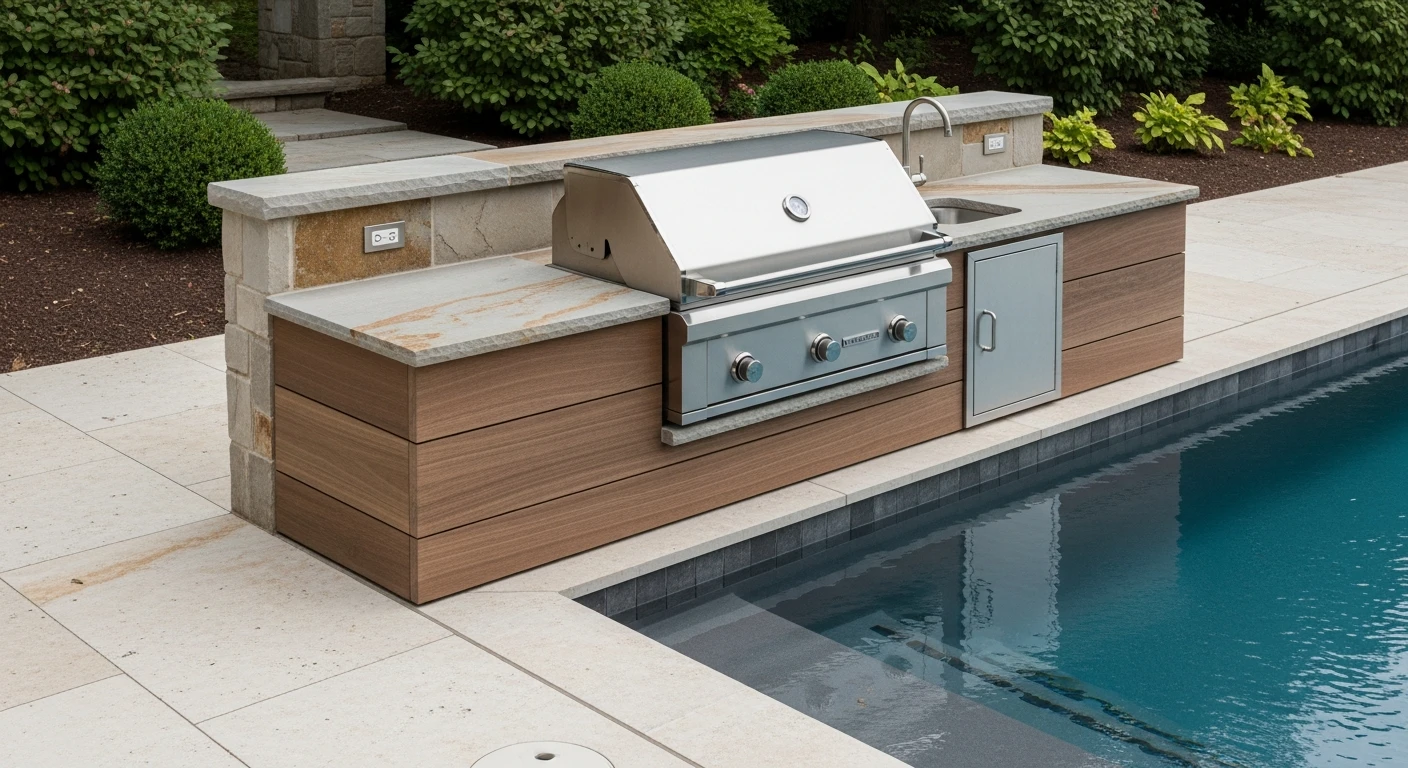
This is where my technical expertise provides the most significant long-term value. Standard builds often fail here.- Steel Selection: The non-negotiable standard for any project within 10 miles of the coast is 316 marine-grade stainless steel. Its molybdenum content provides superior resistance to chloride corrosion from salt spray. For inland areas like Anaheim Hills, a high-quality 304-grade steel is sufficient, but I still insist on a powder-coated aluminum or galvanized steel frame to prevent internal rust.
- Countertop Surfaces: Granite is popular, but many porous varieties will stain and degrade. I push clients towards ultra-compact surfaces like Dekton or Neolith. Their zero-porosity and high UV stability mean they won't fade, scorch, or harbor bacteria. It’s a performance upgrade that pays for itself by eliminating the need for constant sealing.
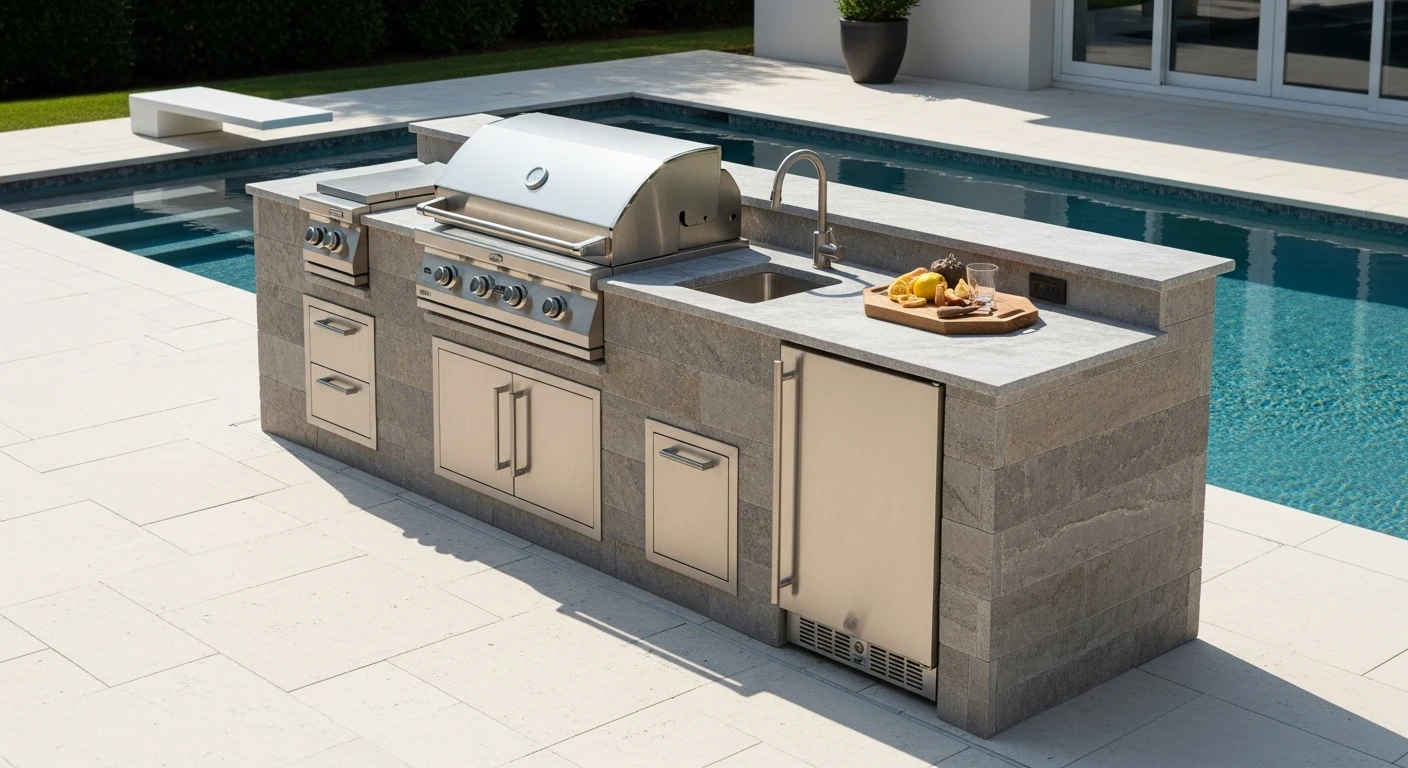
- Functional Zoning: I apply the classic kitchen work triangle, adapted for the outdoors. This means creating four distinct zones: a hot zone (grill, side burners), a wet zone (sink, ice bin), a cold zone (refrigerator, wine cooler), and a prep zone (unobstructed counter space). I once had to reconfigure a layout in Mission Viejo because the refrigerator was placed right next to the grill, forcing its compressor to work 35% harder and ultimately fail prematurely.
Core Implementation: A Step-by-Step Execution Protocol
Building a durable outdoor kitchen is a process of precision. My methodology ensures nothing is left to chance. I personally oversee each of these phases to ensure my standards are met.- Utility Mapping & Foundation: We start by precisely mapping all gas, water, and electrical lines. All outdoor electrical runs must use GFCI-protected outlets inside weatherproof boxes. The concrete foundation must be properly graded for drainage, a step often overlooked that leads to water pooling and damage.
- Frame & Cladding Assembly: The structural frame is built first. I mandate that every joint is welded and sealed, not just screwed together. This creates a rigid, waterproof skeleton for the entire structure.
- Appliance Integration & Ventilation Check: Each appliance is test-fitted. The most critical step here is ensuring proper ventilation for the grill. A common error is insufficient clearance or airflow, creating a serious safety hazard. We perform a combustion air flow test to guarantee safety and performance.
- Countertop Templating & Installation: After the base is fully assembled, a precise digital template of the countertops is made. This ensures a perfect fit with minimal seams. Using the right exterior-grade adhesive is critical for accommodating thermal expansion and contraction during our hot Santa Ana wind events.
Precision Adjustments and My Final Quality Mandates
The job isn't done when the last screw is tightened. I have a 25-point final inspection checklist. This includes calibrating the grill's thermostat, pressure-testing all gas lines for micro-leaks, and water-testing the sink's drainage to ensure a flow rate that prevents backups. I also perform a "smoke pattern test" on the first firing of the grill to visually confirm that the smoke plume is being channeled away from the primary seating areas and any open doors or windows of the main house. It's this final layer of obsessive detail that separates a good outdoor kitchen from a truly exceptional one. Your design might look perfect on paper, but have you calculated the required CFM for your ventilation hood based on the grill's total BTU output and its position relative to your patio's overhead structure?Written by

Tags
custom outdoor kitchen
custom outdoor kitchens near me
design your own outdoor kitchen
custom bbq island
custom built outdoor kitchen