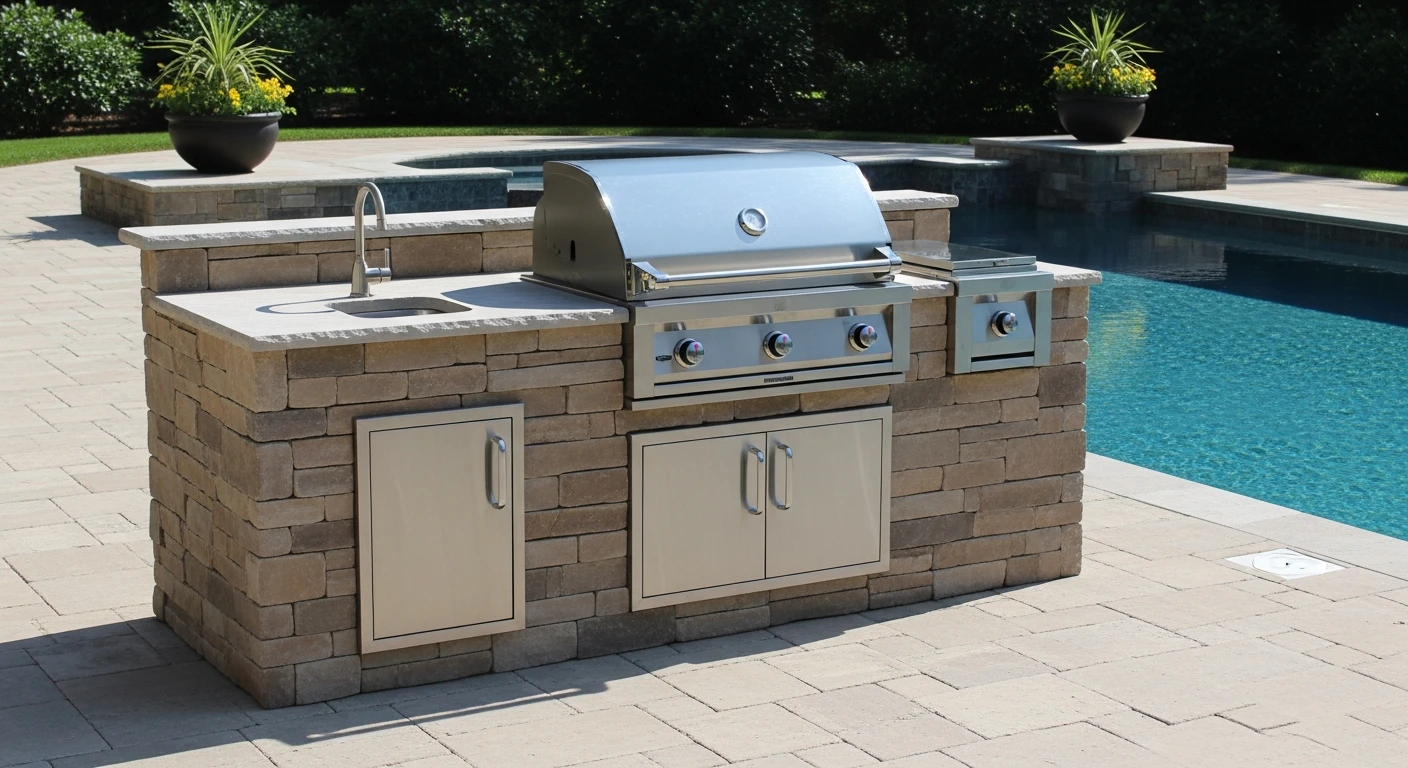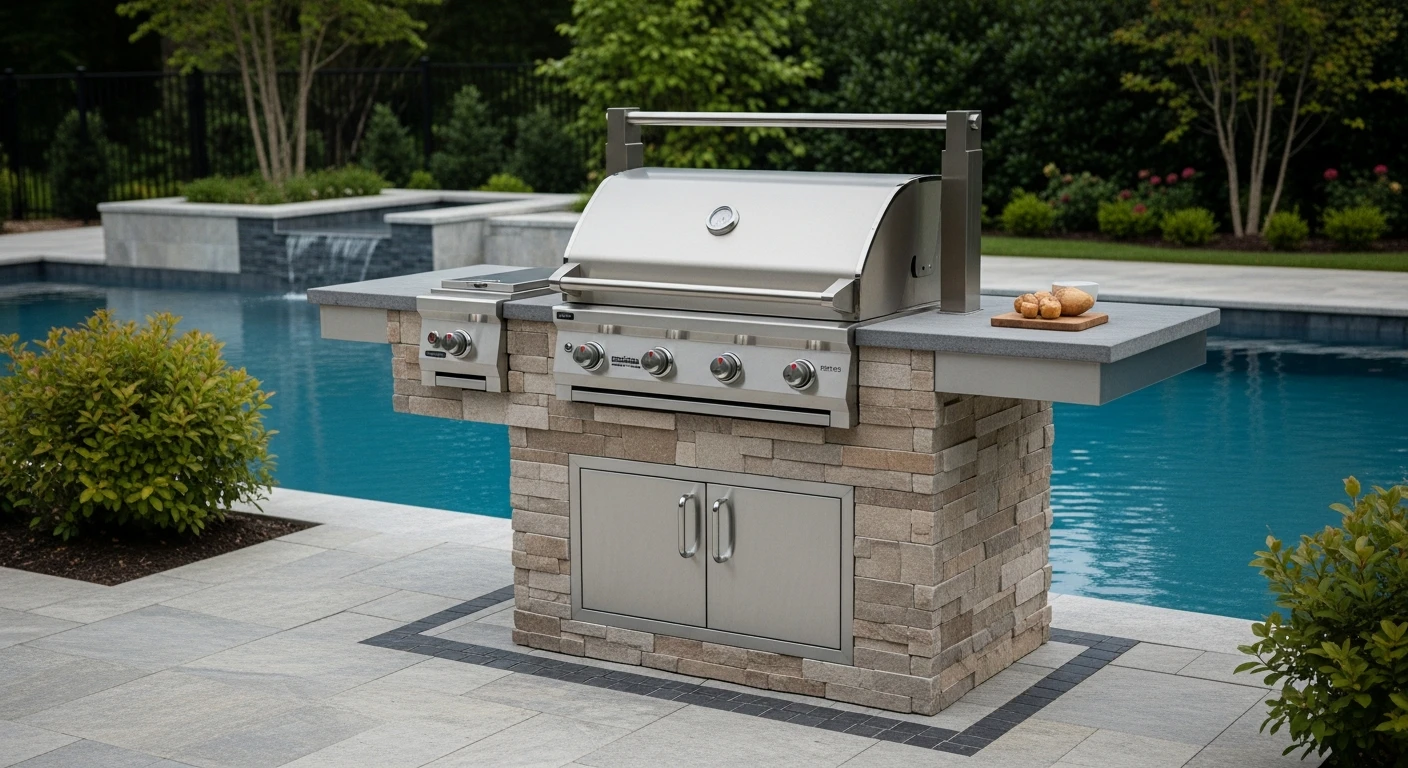
Custom Outdoor BBQ Grills: Engineering for a 95% Even Heat Distribution
Building a custom outdoor BBQ grill isn't about welding steel and laying bricks; it's an exercise in applied thermodynamics. My career has been defined by fixing incredibly expensive, beautiful custom grills that simply couldn't cook properly. The most common failure point I see is a complete disregard for heat dynamics, resulting in hot spots that char one side of a steak while leaving the other raw. This isn't just an inconvenience; it's a fundamental design flaw that renders a five-figure investment nearly useless.
My approach corrects this by focusing on a principle I call Thermal Trinity Mapping. This methodology ensures that every cubic inch of the cooking chamber receives predictable, manageable heat. I developed this after a project for a coastal property where the client's original custom grill, made from standard stainless steel, was failing from both corrosion and a massive 150°F temperature variance across the grate. We didn't just rebuild it; we re-engineered it from the ground up, achieving a variance of less than 10°F and increasing its projected lifespan by 300% in a saline environment.
The Thermal Trinity: My Proprietary Framework for Flawless Grilling
Most fabricators focus on two things: aesthetics and total BTUs. This is a critical error. High BTU output is meaningless if the heat isn't delivered effectively. My Thermal Trinity framework forces a holistic view, treating the grill as a complete thermal system. I learned this the hard way after my initial designs prioritized raw power, leading to fuel wastage and inconsistent results. Now, I diagnose every project against these three pillars:
- Material Integrity & Mass: The type, grade, and thickness of the materials dictate heat absorption, retention, and radiation. This is the foundation of temperature stability.
- Airflow & Convection Dynamics: A grill is essentially a convection oven. The volume of the hood, the placement of vents, and the management of exhaust are more important than the burners themselves.
- Fuel Combustion & Delivery System: This concerns the efficiency of the burn. For gas, it’s about pressure, orifice size, and burner design. For charcoal, it’s about managing the rate of combustion through precise oxygen supply.
- Phase 1: Environmental Assessment: I analyze the location for prevailing winds and sun exposure. A grill facing a strong prevailing wind requires additional baffling and a more robust ignition system. This is a non-negotiable first step.
- Phase 2: Component Fabrication & Sourcing: All internal components, especially burners and manifolds, are sourced from proven manufacturers. We then fabricate the body. All welds on the cookbox interior must be TIG welded and passivated to restore corrosion resistance at the seam. Many fabricators use faster MIG welding, which compromises the steel's integrity over time.
- Phase 3: Airflow System Integration: We install adjustable intake vents low on the firebox and an exhaust vent high on the hood. The key is creating a balanced draft. The total area of the intake vents should be approximately 75% of the total exhaust vent area to create a slight positive pressure, which helps in smoke retention.
- Phase 4: Fuel System Assembly: For gas grills, we perform a manifold pressure test for a full 30 minutes to check for microscopic leaks. For charcoal, we design the charcoal basket to have an adjustable height, allowing the user to switch between intense searing and low-and-slow cooking by changing the distance to the grate.
Tags
pre made outdoor grill island
outdoor custom bbq
custom build outdoor kitchen
custom built in bbq
build your own outdoor grill island
Custom Outdoor Grill