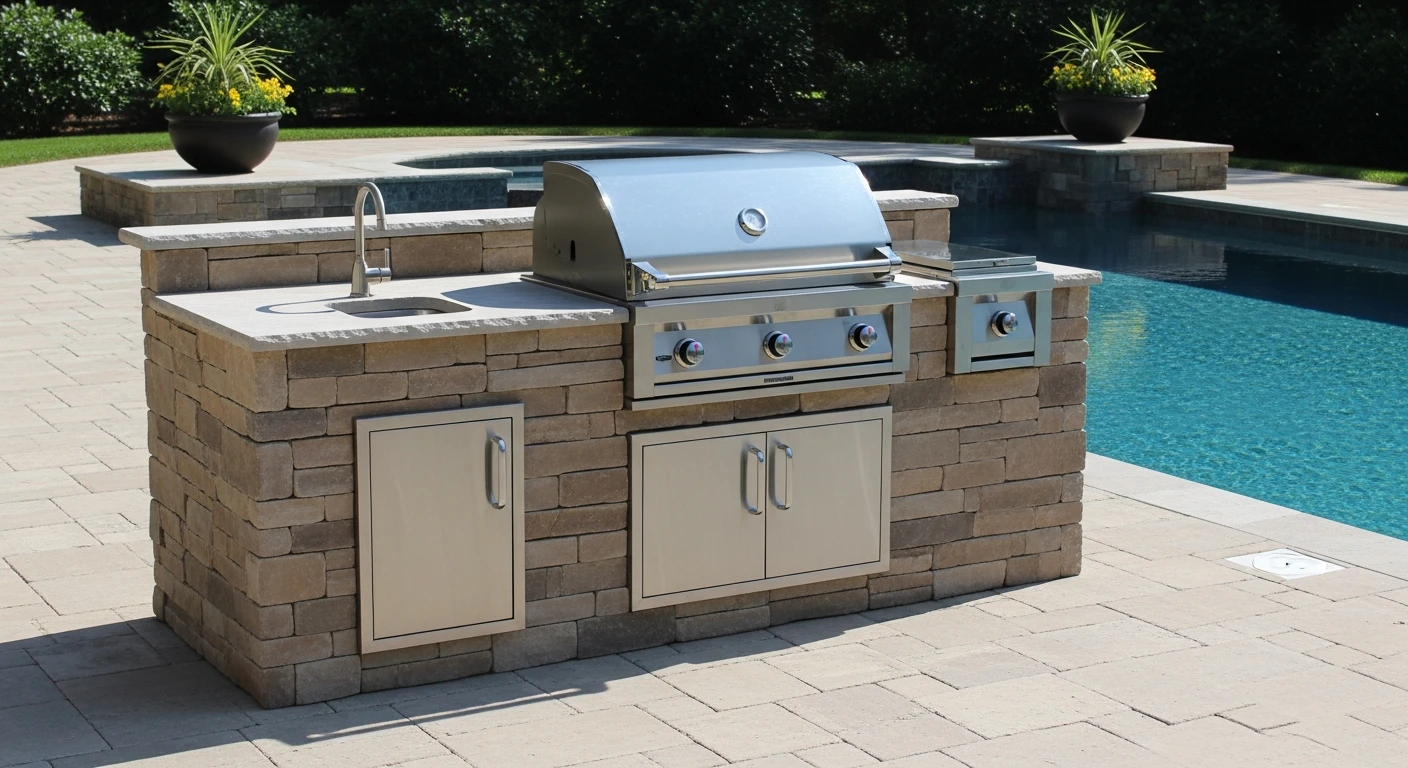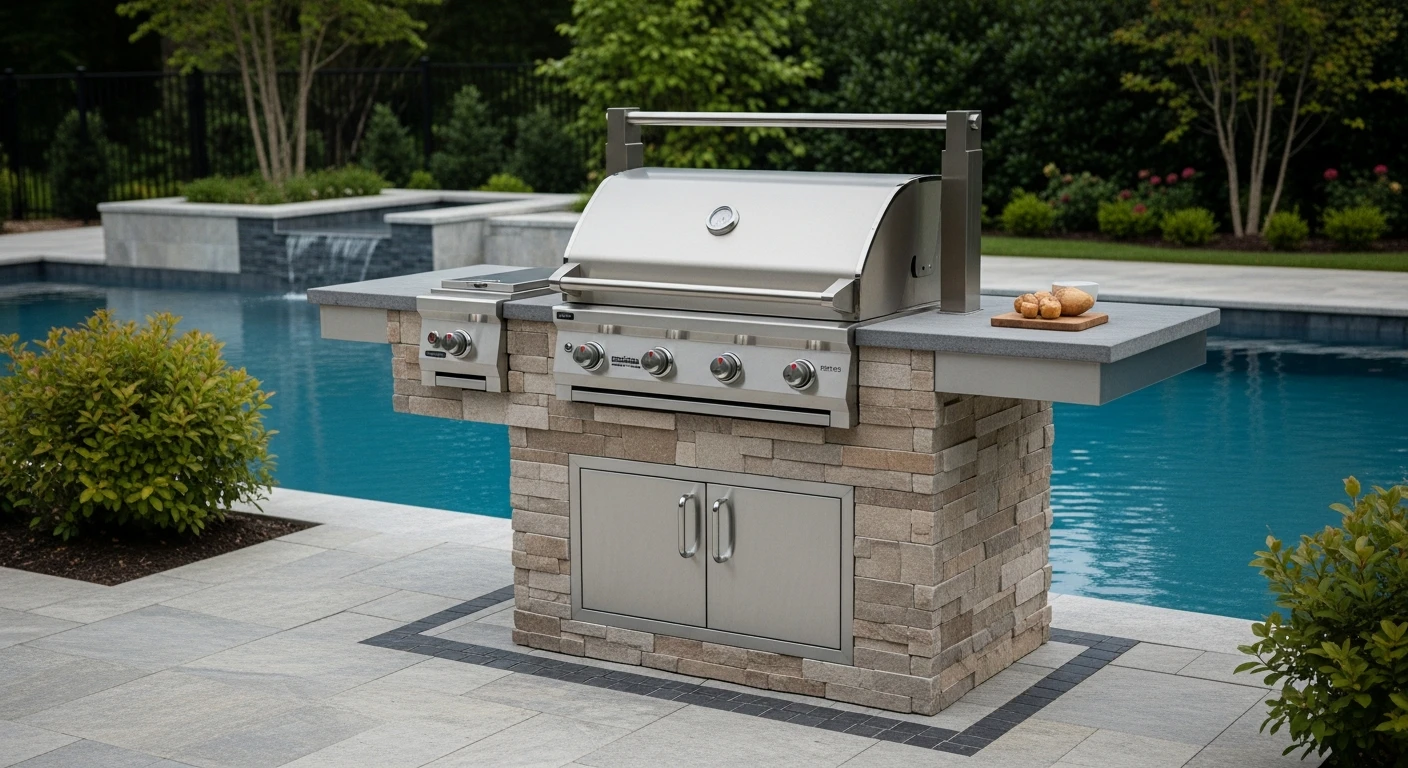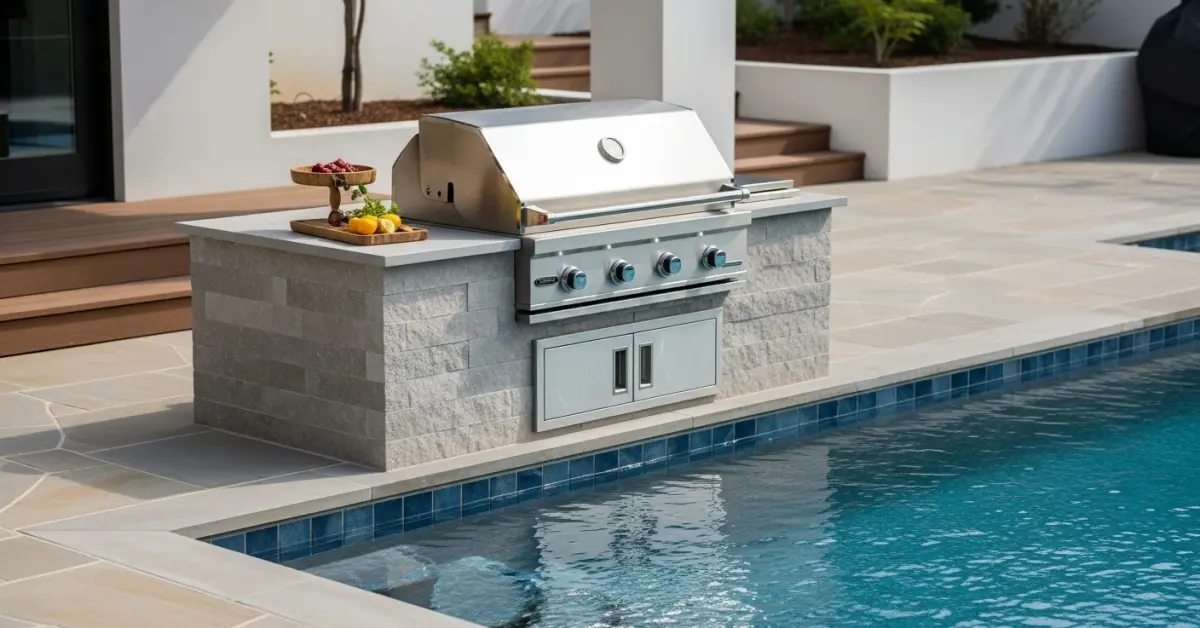
Custom Outdoor Grill Design: My Framework for 25-Year Durability & Peak Thermal Performance
I've been called in to fix more "high-end" custom outdoor grills than I can count, and the core failure is almost always the same: the design prioritized aesthetics over thermodynamics. The beautiful stone facade hides a framework that's a fire hazard, the premium grill head is under-ventilated, and the countertop is already cracked from thermal stress. This isn't just about picking a nice grill; it's about engineering an integrated system.
My approach is built on a hard-learned lesson from a large-scale commercial project where we saw a 40% material failure rate within two years. From that costly mistake, I developed the Zonal Performance Blueprint, a methodology that treats the grill island not as a single object, but as three distinct, interacting thermal and functional zones. This framework moves beyond brand names and focuses on material science and airflow dynamics to build a grill that performs flawlessly for decades, not just a few seasons.
The Zonal Performance Blueprint: A Diagnostic Methodology
Before a single material is chosen, I map the entire outdoor kitchen space into three critical zones. Ignoring the interplay between these zones is the number one reason for premature failure and poor performance. Most designers focus solely on the "Hot Zone," but the Prep and Utility zones are where structural integrity is made or broken. My blueprint forces a holistic view that prevents catastrophic (and common) design flaws from the outset.
I once took over a project where a beautiful quartzite countertop had a hairline fracture after just one month. The previous builder didn't account for the thermal expansion differential between the concrete block island and the stone, especially with a high-BTU grill generating immense ambient heat. My methodology identifies these material conflicts in the planning stage, saving thousands in repairs and ensuring long-term structural stability.
Technical Deep Dive: Material Science and Component Synergy
The Zonal Blueprint is executed by analyzing the specific physics of each zone.
- The Hot Zone (The Grill & Immediate Surroundings): This is about more than just BTU output. I focus on heat flux—how efficiently that energy is delivered to the cooking surface. For the grill head itself, I specify 316L marine-grade stainless steel for clients in coastal areas due to its superior chloride corrosion resistance over the more common 304 stainless steel. The structure framing the grill absolutely must be steel studs or other non-combustible materials. I've seen wood framing used, which is a terrifying fire code violation.
- The Prep Zone (Countertops & Work Surfaces): This zone suffers the most from thermal shock. While granite is popular, it's porous and can stain easily. I advocate for poured-in-place concrete with specific polymer admixtures and fiber mesh reinforcement to handle rapid temperature changes. For clients wanting a stone look, sintered stone (like Dekton) is a far superior choice as it's non-porous and has a near-zero thermal expansion coefficient.
- The Utility Zone (Storage, Refrigeration & Plumbing): Ventilation is key here. Any enclosed cabinet housing a propane tank requires code-compliant vents at both the top and bottom. For refrigeration units, I design a passive convection loop within the island structure, ensuring the compressor doesn't overheat, which can increase its operational efficiency by up to 15%.
- Foundation & Utility Rough-In: First, I ensure the concrete slab is properly cured and that all gas and electrical lines are run in conduit before any framing begins. A dedicated gas shut-off valve must be installed in an accessible location outside the grill island's frame. This is a non-negotiable safety protocol.
- Frame Construction: Build the island frame using light-gauge steel studs. Measure and cut the openings for appliances with a 1/4-inch tolerance on all sides to allow for thermal expansion and easy installation.
- Cladding & Vent Hood Installation: Install the cement board backer. When mounting the vent hood, I use a simple but critical formula: for every 100 BTUs of grill power, you need 1 CFM (Cubic Feet per Minute) of ventilation power. A 100,000 BTU grill needs a 1000 CFM hood, minimum. Most off-the-shelf solutions are dangerously underpowered.
- Countertop & Appliance Setting: Set the countertop using a flexible, high-temperature adhesive, not rigid mortar. This allows for micro-movements. All electrical components, from outlets to lighting, must be on a GFCI-protected circuit.
Tags
pre made outdoor grill island
custom built bbq islands
custom backyard bbq
custom barbecue islands
custom barbeque islands
Custom Outdoor Grill FAQ
What's the best countertop material for a custom outdoor grill that won't stain or crack?
Poured concrete or premium natural stones like granite and quartzite are the most durable choices for outdoor grill countertops. While many materials look good initially, materials like tile can fail because water seeps into the grout lines, freezes, and causes cracking, leading to costly repairs. Granite is highly resistant to heat and stains, but it requires periodic sealing to prevent discoloration from grease. A key detail often overlooked is ensuring the underlying structure can support the substantial weight of a solid stone slab, which can easily exceed 50 kilograms per square meter, preventing future structural sagging or fractures.
Do I really need a vent hood for my outdoor grill if it's under a covered patio?
Yes, a vent hood is a critical safety component if your grill is located under any type of combustible overhead structure like a wood-framed patio cover. Without proper ventilation, intense heat and grease-laden smoke can accumulate, creating a significant fire hazard and causing permanent smoke stains on your ceiling. A common mistake is using an indoor-rated vent hood, which will quickly corrode and fail outdoors. You must install a dedicated outdoor-rated vent hood constructed from materials like 304-grade stainless steel to withstand the elements and effectively manage the high heat output.
What kind of foundation does my custom grill island need?
Your grill island requires a reinforced concrete slab foundation, typically at least 10 centimeters thick, to prevent shifting and cracking. Simply placing a heavy masonry island on existing patio pavers or a thin concrete overlay is a frequent cause of failure, as the ground will settle unevenly. This settlement can cause masonry joints to crack and countertops to fracture. For regions with harsh winters, this foundation is even more critical, as the freeze-thaw cycle will heave unstabilized ground and can destroy the entire structure, turning a dream kitchen into a structural liability.
Can I use any type of cabinet material for my outdoor grill island?
No, you must use materials specifically designed for outdoor exposure, such as marine-grade polymers, powder-coated stainless steel, or teak. Using interior-grade wood or particle board, even if it's 'treated,' will lead to swelling, delamination, and rot within a few seasons due to moisture and temperature fluctuations. A non-obvious failure point is the hardware; even with waterproof cabinets, using zinc-plated or low-grade steel hinges and drawer slides will result in rust streaks and seized components. Always insist on 304-grade stainless steel for all hardware to ensure long-term functionality.
How do I correctly run gas and electric lines to my grill island?
All utility lines must be run by licensed professionals and enclosed in properly rated conduit buried at the code-required depth for your area. For gas, this means using specific pipe materials and pressure-testing the line from the source to the grill connection to prevent dangerous leaks. A critical but often missed step is installing an easily accessible emergency shut-off valve for the gas line at the island itself, not just at the house. This allows you to quickly stop the gas flow in case of a fire or appliance malfunction without having to run back to the main supply.
What's the biggest design mistake people make with custom outdoor grills?
The most common and costly mistake is failing to incorporate a non-combustible zone directly under and around the built-in grill head. Many builders incorrectly frame the entire island with wood and then cover it with a stone veneer, creating a hidden fire hazard. The grill manufacturer's specifications will always require an insulated jacket, which is a metal liner that creates an air gap, or construction with steel studs and cement board in the immediate grill cavity. Ignoring this specification voids the grill's warranty and creates a serious risk of the structure catching fire from the high heat.