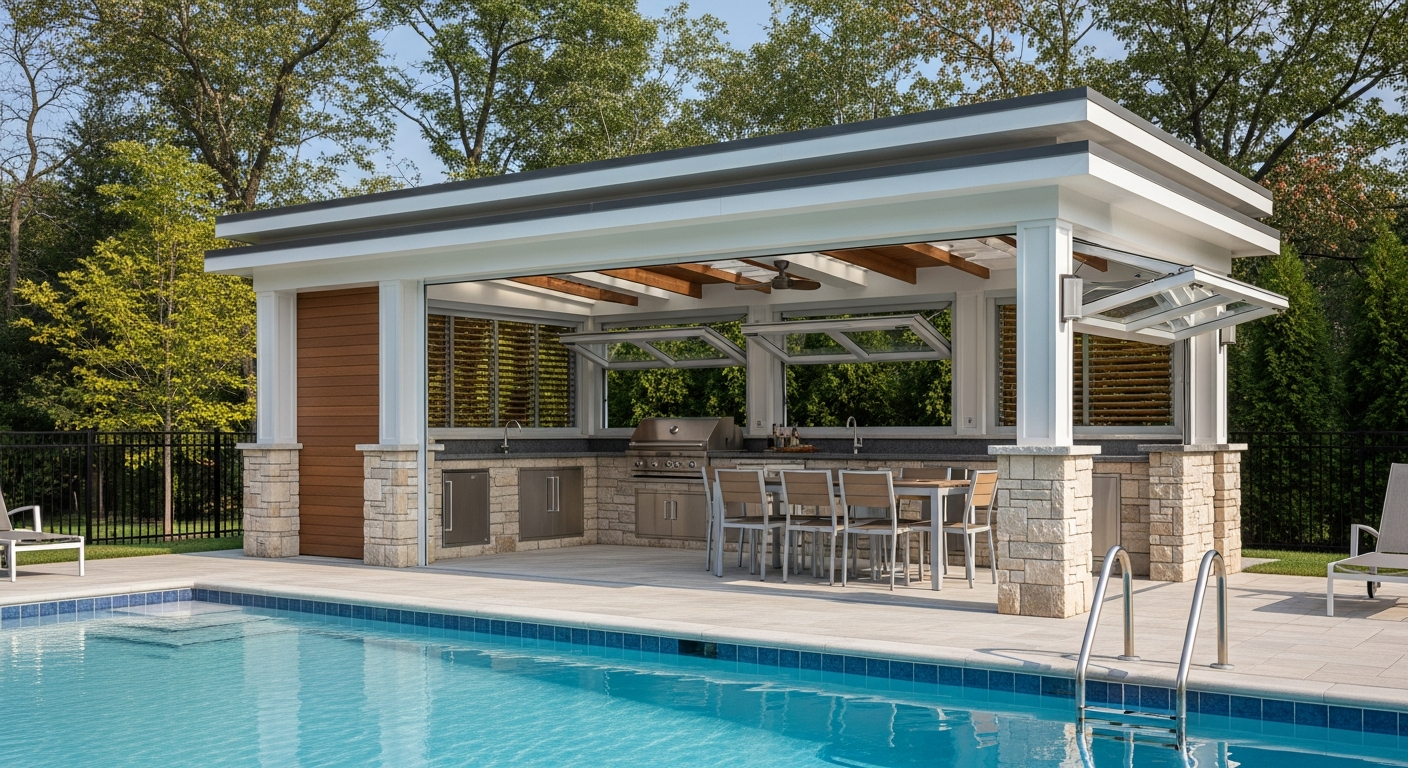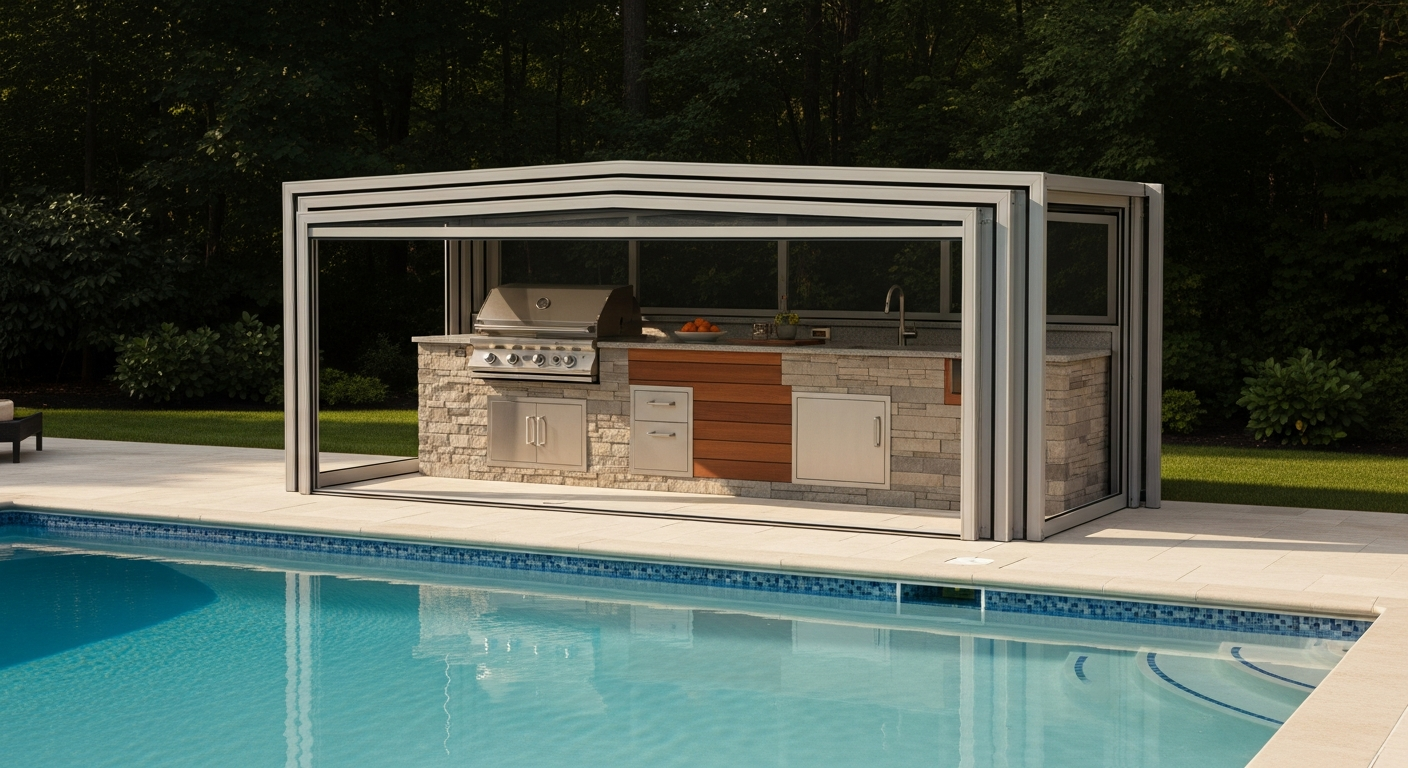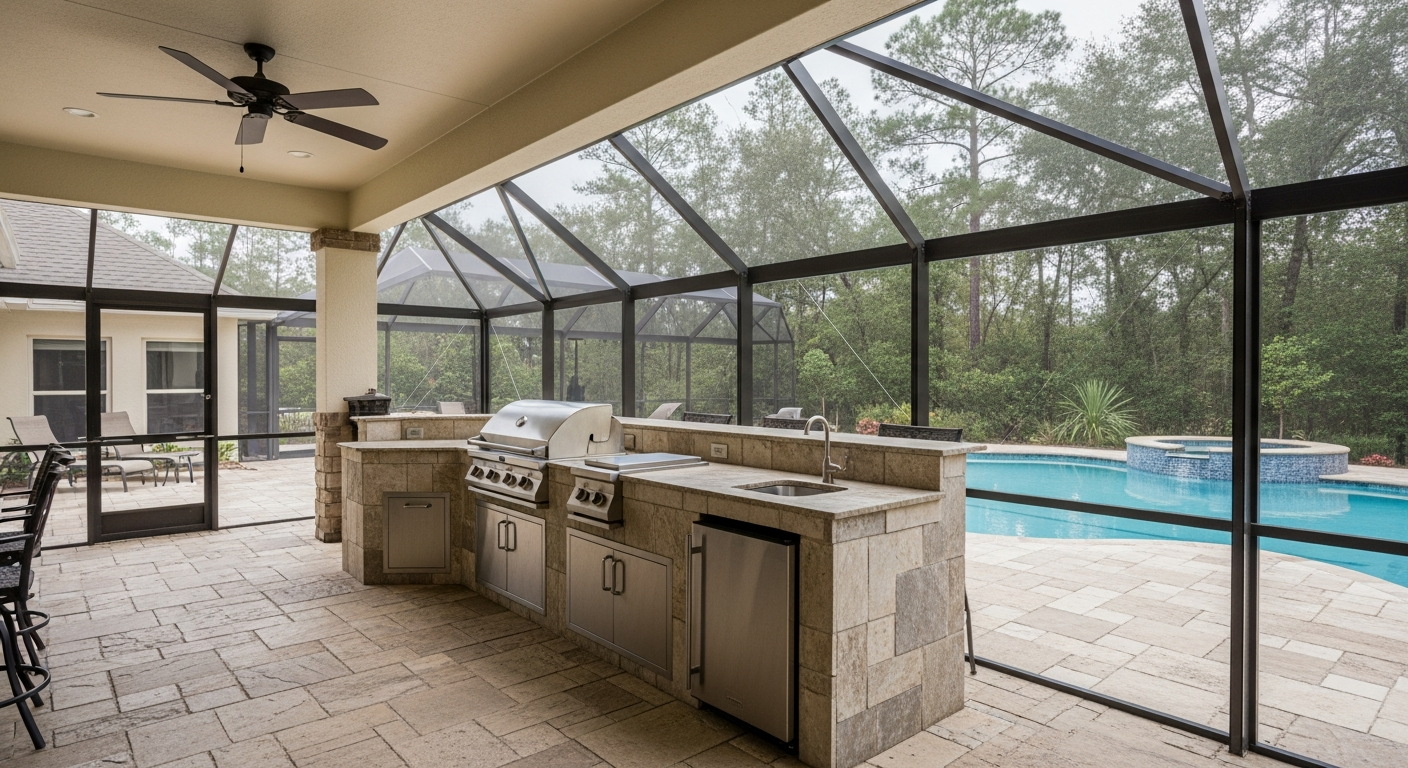
Most enclosed patio kitchens I'm called in to fix fail because of two silent killers: improper ventilation and material degradation due to trapped humidity. Homeowners invest in high-end grills and beautiful cabinetry only to see them corrode or warp within a few seasons. The core mistake is treating the space as either fully "indoors" or fully "outdoors," when it is a unique micro-environment with its own set of physical demands.
Through years of troubleshooting these exact issues, I developed a system that preemptively solves them. My methodology focuses on creating a controlled airflow dynamic using principles borrowed from commercial kitchens and specifying materials based on their performance under thermal cycling and high moisture—not just their looks. This isn't about picking the most expensive options; it's about engineering a cohesive, durable system.
The Hybrid Zone Dilemma: My Zonal Flow Triad MethodologyI stopped thinking about outdoor kitchens in terms of the classic "work triangle." On a patio, especially an enclosed one, the constraints are linear and environmental. This led me to create the Zonal Flow Triad, a planning methodology that prioritizes function and longevity. It divides the kitchen into three distinct zones based on their physical output: the Hot Zone (grill, side burners), the Wet Zone (sink, prep areas), and the Cold Zone (refrigerators, ice makers).
The failure I see most often is a poor layout where the Hot Zone's heat and smoke output directly impacts the Cold Zone's efficiency or the Wet Zone's materials. For instance, placing a smoker next to an outdoor refrigerator forces the compressor to work overtime, leading to a 25% reduction in its lifespan. My triad approach physically and functionally isolates these zones to create a more efficient and durable workspace.
Deconstructing the Triad: Airflow Dynamics and Material ScienceThe technical execution of the Zonal Flow Triad is where the real gains are made. For the Hot Zone, ventilation is non-negotiable. I exclusively specify high-power vent hoods rated for outdoor use, ensuring a minimum of 1200 CFM (Cubic Feet per Minute). Crucially, I engineer a "make-up air" system—a passive vent on an opposing wall—to prevent the negative pressure that can pull smoke back into the space or even extinguish pilot lights. Without this, even the best hood will fail.
For materials, the specs are unforgiving. In the Wet Zone, I avoid porous natural stones like granite, which can harbor mildew in a humid, enclosed environment. Instead, I use GFRC (Glass Fiber Reinforced Concrete) or non-porous sintered stone. For cabinetry, forget standard treated wood. I specify marine-grade polymer (HDPE) cabinets which are impervious to moisture and will not warp. For all hardware and appliances, I mandate 316-grade stainless steel, not the more common 304-grade, due to its superior corrosion resistance from trapped moisture and cleaning agents.
From Blueprint to Reality: The Non-Negotiable Implementation SequenceA successful project depends on a rigid operational sequence. Deviating from this order is the most common cause of budget overruns and functional failures I've encountered on rescue projects. My process is standardized to ensure perfect integration.
- Step 1: Utility Rough-In and Mapping. Before any framing, we map and install all utility lines—gas, water, drainage, and electrical. All exterior-wall electrical must be on GFCI-protected circuits. This step is foundational and modifying it later is costly and compromises structural integrity.
- Step 2: Ventilation and Structural Framing. The vent hood and its ducting are installed simultaneously with the framing. I've seen projects where the hood was an afterthought, resulting in inefficient duct runs and reduced performance. The structural support for the hood must be integrated into the patio roof structure itself.
- Step 3: Cabinet and Appliance Integration. The base cabinets are set first to create the kitchen's footprint. We then dry-fit all appliances to ensure perfect alignment and proper clearance for ventilation as per manufacturer specs. This is where we confirm the Cold Zone appliances have adequate "breathing room" to dissipate heat.
- Step 4: Countertop and Surface Templating. Only after all appliances are in place do we create the template for the countertops. Templating beforehand based on drawings is a rookie mistake that ignores the small dimensional variances of the actual appliances, leading to unsightly gaps or fitment issues.
The job isn't done when the last screw is turned. I perform a series of quality assurance audits to guarantee performance and safety. The most critical is the ventilation smoke test. I use a professional-grade smoke pencil at the grilling surface to visually confirm the hood is capturing 100% of the smoke, with no leakage from the sides. We also conduct a manifold pressure test on the gas line to check for leaks after all appliances are connected.
Finally, I deliver a custom seasonal maintenance schedule to the client. This includes tasks like cleaning the hood's baffle filters, winterizing the water lines in the Wet Zone, and inspecting all seals and gaskets. This simple document is key to turning a high-performance installation into a long-lasting one, effectively extending the functional life of the entire setup.
Now that we've covered the critical interplay of airflow and material science, how do you intend to manage the condensate drainage from both your cold appliances and the vent hood in a way that prevents moisture buildup within the enclosed wall cavities?