Enclosed Patio with Outdoor Kitchen: My Protocol for a Hurricane-Resistant, Humidity-Proof Build in Hillsborough County
After personally overseeing dozens of outdoor living projects from Lutz to Riverview, I’ve pinpointed the single most costly mistake homeowners make: underestimating Hillsborough County's trifecta of high humidity, intense UV radiation, and seasonal wind loads. A beautiful outdoor kitchen can become a moldy, warped, and rusted liability in under two years if the initial material and ventilation strategy is flawed. This isn't about just picking pretty stone; it's about engineering a micro-environment that actively combats our specific local climate. My entire approach is built on a principle I call "Climate-First Material Selection," which dictates that every component, from the cabinet screws to the countertop sealant, must have a documented performance rating against moisture and salt air. I’ve been called in to fix projects in South Tampa where powder-coated steel rusted from the inside out and expensive wood cabinets swelled and delaminated within a single summer. These failures are entirely preventable with the right diagnostic framework before a single paver is laid.My Hillsborough Climate-Stress Audit Methodology
Before I even draft a design, I perform what I call the Hillsborough Climate-Stress Audit. It’s a non-negotiable first step. I’ve seen projects near the Bay, like on Davis Islands, fail because the builder used standard 304-grade stainless steel, which pitted and rusted from the salt spray. My audit focuses on three critical, often-ignored environmental factors specific to our area. It's not just a checklist; it's a predictive failure analysis.Material Science vs. Local Humidity and Salinity
The constant humidity in Hillsborough County is a material killer. My analysis begins by mapping the property's proximity to saltwater and its typical sun exposure.- Proximity to Bay/Gulf: For any project within 5 miles of the coast, I mandate 316L marine-grade stainless steel for all appliances, fasteners, and hardware. This small upfront cost prevents catastrophic rust and adds at least 10 years to the kitchen's functional lifespan.
- Ventilation Dynamics: I calculate the required Cubic Feet per Minute (CFM) for the vent hood based not just on the grill's BTU output, but on the enclosure's total cubic volume. In our humid climate, an undersized hood won't just fail to clear smoke; it will trap moisture, leading directly to mold and mildew growth on ceilings and inside cabinets. A minimum of 1200 CFM is my baseline for most enclosed patio designs in this region.
- Countertop Thermal Resilience: Granite is popular, but I've seen dark-colored granites develop micro-fractures from the intense thermal stress of daily Florida sun exposure followed by afternoon thunderstorms. I often recommend high-density, non-porous materials like Dekton or specific polymer-modified concrete blends that offer superior resistance to thermal shock and UV-fading.
The Implementation Blueprint: From Foundation to First Meal
Executing the build requires a level of precision that goes far beyond standard construction. Every stage is a chance to either fortify the structure against the elements or create a weak point. This is my core installation sequence, refined over years of working on properties from Westchase to Brandon.- Step 1: Foundational Drainage and Utility Mapping: The slab is the most critical element. I require a minimum 2% grade away from the house to ensure water from our torrential downpours never pools. All electrical conduits must be waterproof, and gas lines are pressure-tested for 48 hours, a step many contractors rush. All outdoor outlets must be weather-resistant GFCI protected.
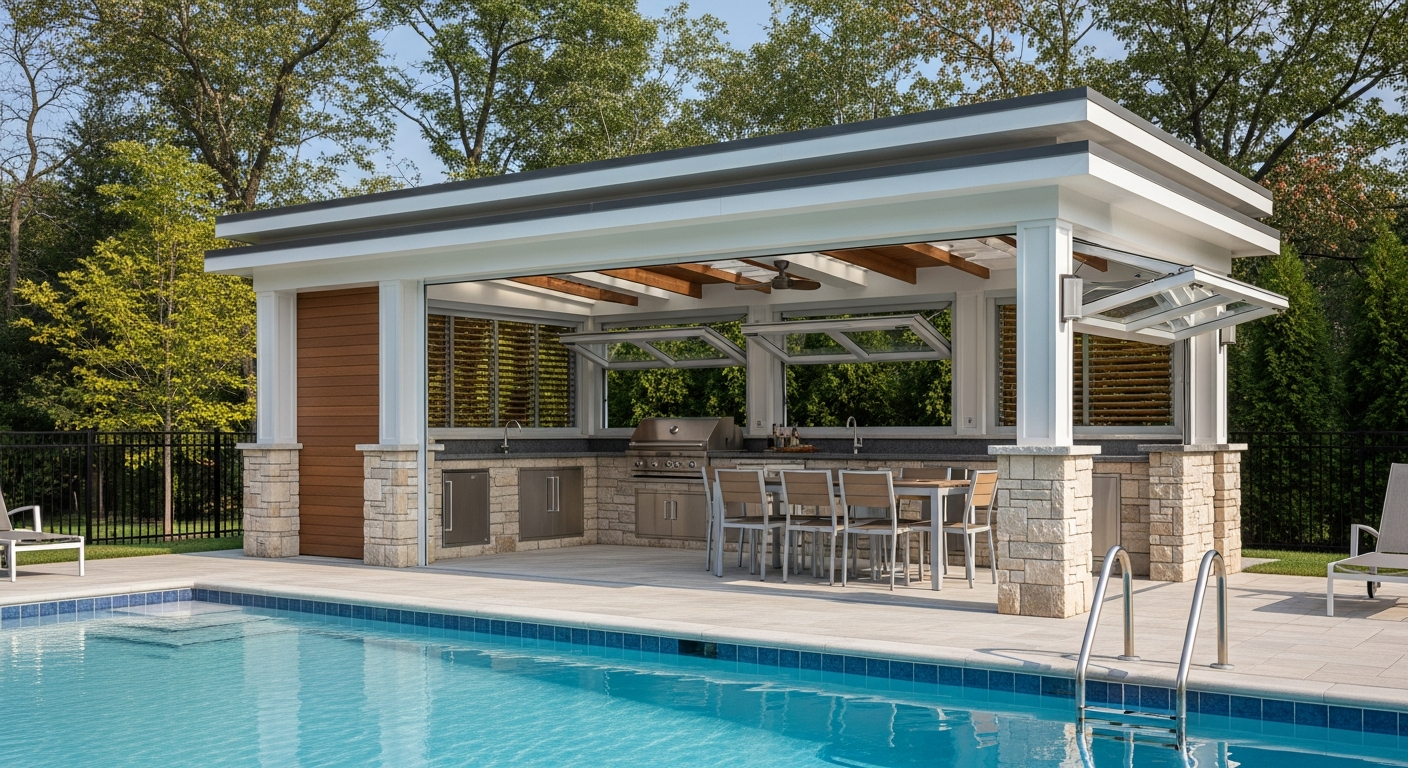
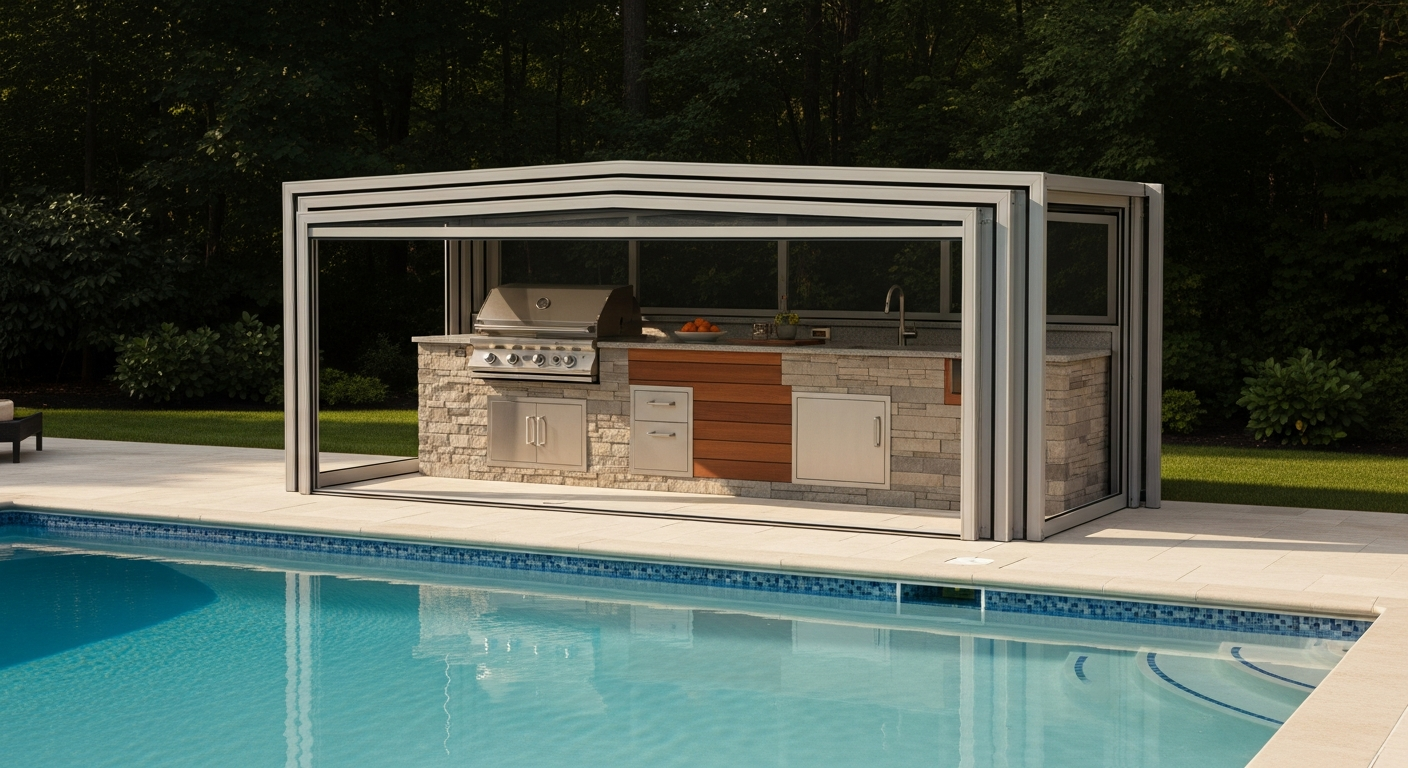
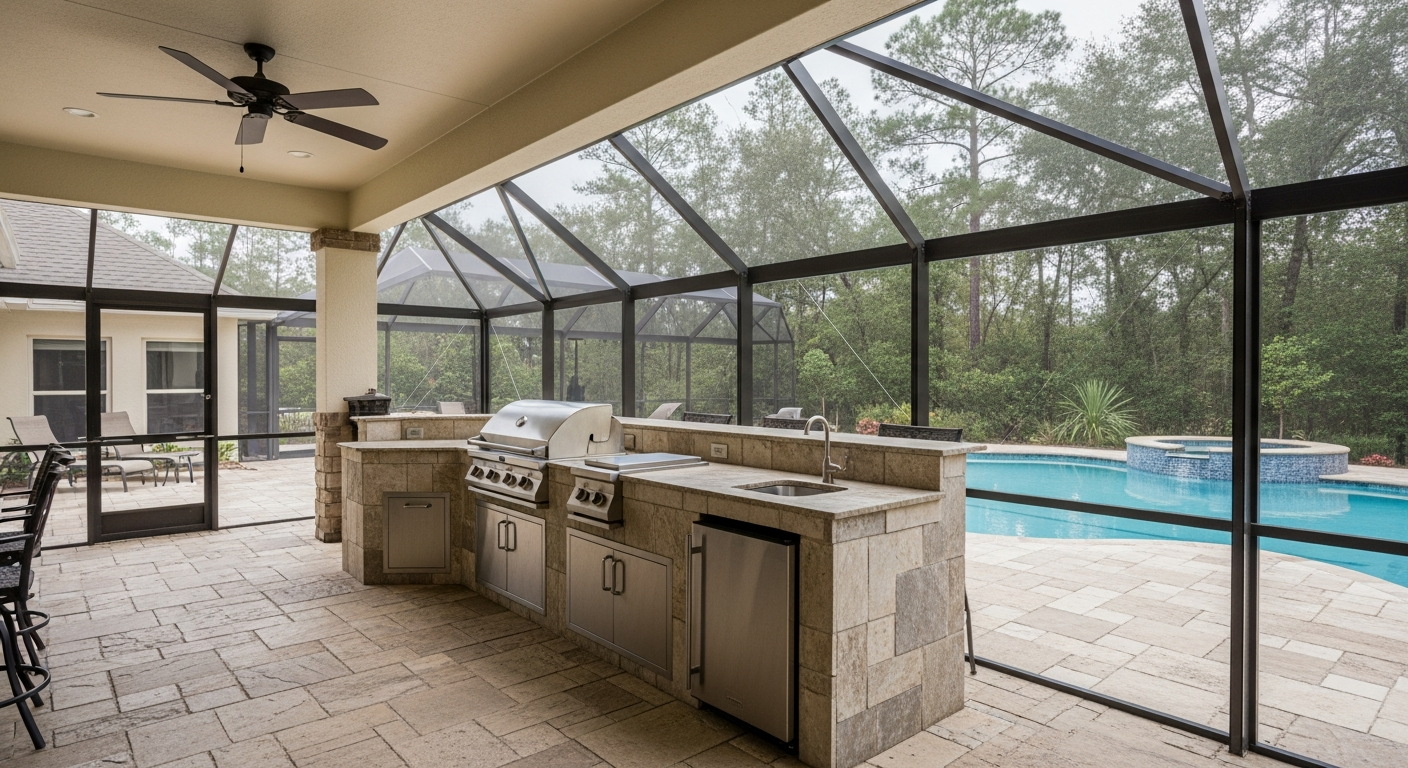
- Step 2: Framing and Enclosure Assembly: I exclusively use powder-coated aluminum or specialized composite framing. Wood framing is a non-starter due to termite risk and moisture absorption. For enclosures, I specify impact-rated screening or glass that meets Hillsborough County's hurricane code requirements. This isn't just for storms; it adds significant structural rigidity to the entire patio.
- Step 3: Cabinet and Appliance Integration: This is where the Climate-First Material Selection pays off. All cabinets are installed with a 1/4-inch air gap from wall surfaces to discourage moisture buildup. Every appliance is meticulously leveled and sealed to the countertop, not with standard caulk, but with a high-performance marine-grade silicone sealant.
Precision Tuning and Quality Control Standards
The final 5% of the work is what guarantees a 20+ year lifespan. After the main installation, I run a series of quality control checks that I've developed after seeing where other projects typically fail. This includes a full-pressure water test on all seals and joints, simulating a heavy rainstorm to identify any potential leaks at the roofline or around windows. I also check the airflow dynamics with the vent hood running to ensure it's creating proper negative pressure and not pulling fumes back into the space. A final calibration of the grill and refrigerator thermostats ensures they operate efficiently in our high ambient temperatures. Have you properly calculated the dew point inside your planned enclosure and how your choice of insulation and ventilation will prevent condensation on your appliances and electronics?Written by

Tags
outdoor kitchen island
modular outdoor kitchen
outdoor bbq kitchen
outdoor kitchens near me
custom outdoor kitchen