Inground Pool Remodeling: The Hydraulic Recalibration Protocol for a 30% Lifespan Increase
An inground pool remodel is far more than a cosmetic facelift; it's a systems engineering project. I've seen countless homeowners spend a fortune on a new pebble finish only to have it fail prematurely because the underlying hydraulic and structural issues were ignored. The real return on investment in a remodel comes from recalibrating the entire system, starting with the unseen components. My approach focuses on re-engineering the pool's "circulatory system" to not only look new but to operate with a 25-30% increase in efficiency and structural longevity.
This isn't about simply choosing a new tile. It's about a holistic diagnosis that prevents you from making the same costly repairs again in seven years. I’ve built my reputation on transforming aging pools into high-performance systems by addressing the root causes of failure—something most cosmetic-focused contractors overlook. This is the difference between a patch job and a genuine asset upgrade.
Beyond the Surface: My Proprietary Diagnostic Protocol
Before a single chip of plaster is removed, I deploy a two-phase diagnostic that forms the foundation of every successful project. I call it the Structural Integrity and Hydraulic Flow Assessment. I developed this after a major commercial project I consulted on experienced a catastrophic delamination failure just two years post-remodel. The cause? A contractor plastered over a compromised bond beam without testing. My methodology ensures this never happens. It’s about understanding the vessel's health before prescribing a cure.
The Nitty-Gritty of Structural & Hydraulic Audits
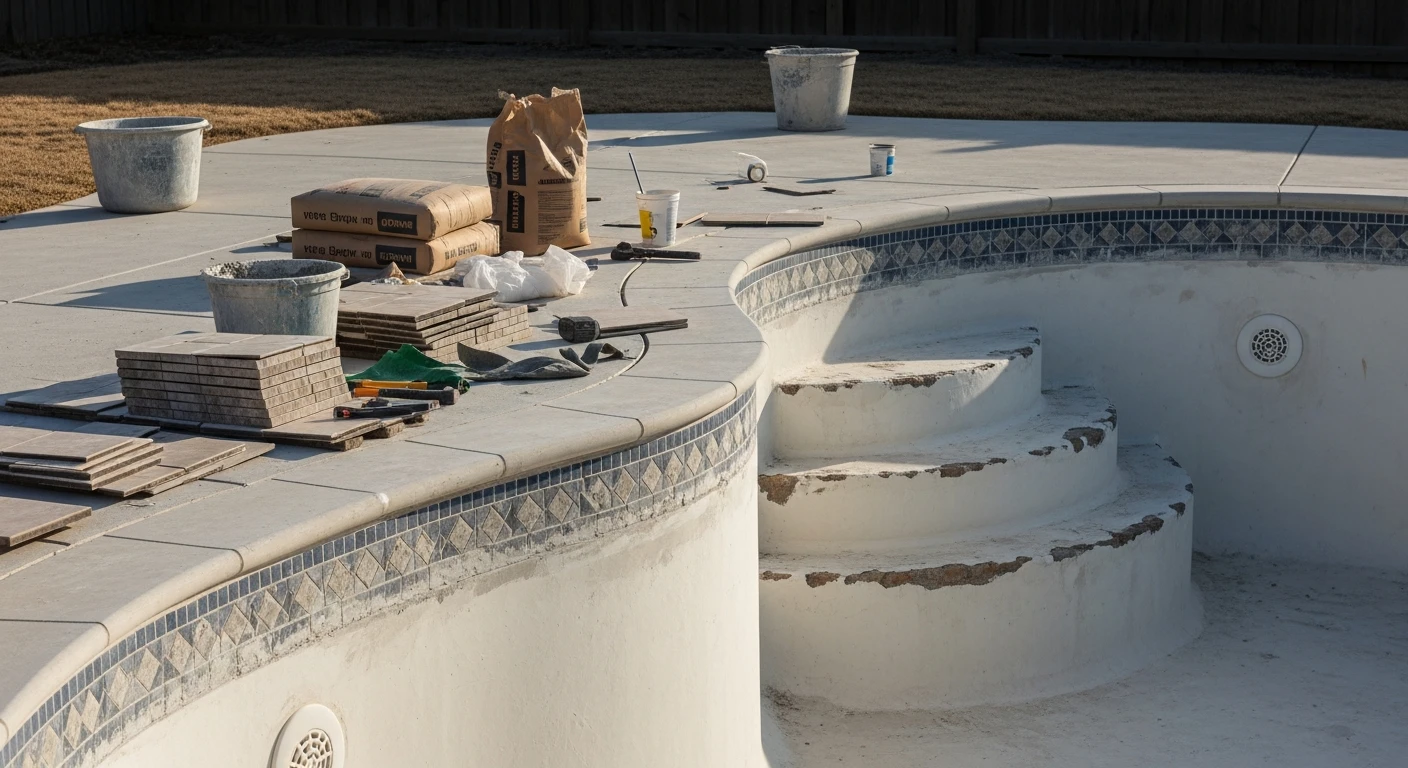
My assessment is non-negotiable and dives deep into the pool’s skeleton and veins. First, I assess the bond beam integrity, the concrete collar at the top of the pool shell. I use a combination of visual inspection for cracks and a sounding hammer to listen for hollow spots, which indicate voids and rebar corrosion. For the shell itself, I’m looking for signs of water weeping or efflorescence on the exterior, a dead giveaway of structural leaks. The second critical step is a full plumbing pressure test. I isolate each line—skimmers, main drains, returns—and apply 25 PSI of pressure for a minimum of 20 minutes. A drop of even 1 PSI indicates a hidden leak that must be located and repaired before any new surface is applied. Finally, I inspect the hydrostatic pressure valve in the main drain; a failed valve can cause a pool to literally pop out of the ground if drained improperly. These are the details that define a project's long-term success.
The Remodeling Blueprint: From Demolition to Recirculation
Once the diagnostics are complete, the implementation phase begins. This is a precise, sequential process where shortcuts lead to failure. My team follows a strict, documented workflow to guarantee quality at every stage.
- Controlled Draining and Hydrostatic Bracing: We monitor the water table and drain the pool slowly. If hydrostatic pressure is high, we implement shell bracing to prevent structural flex.
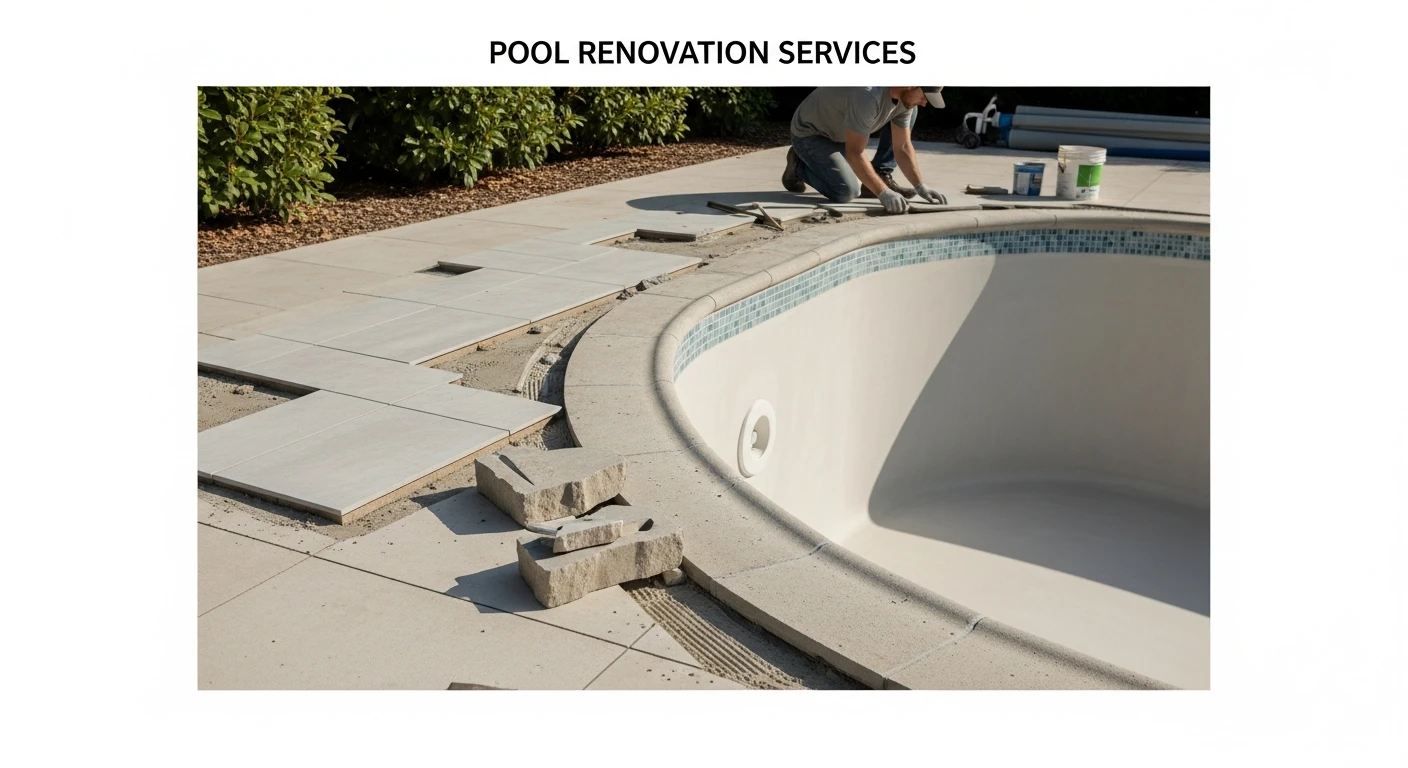
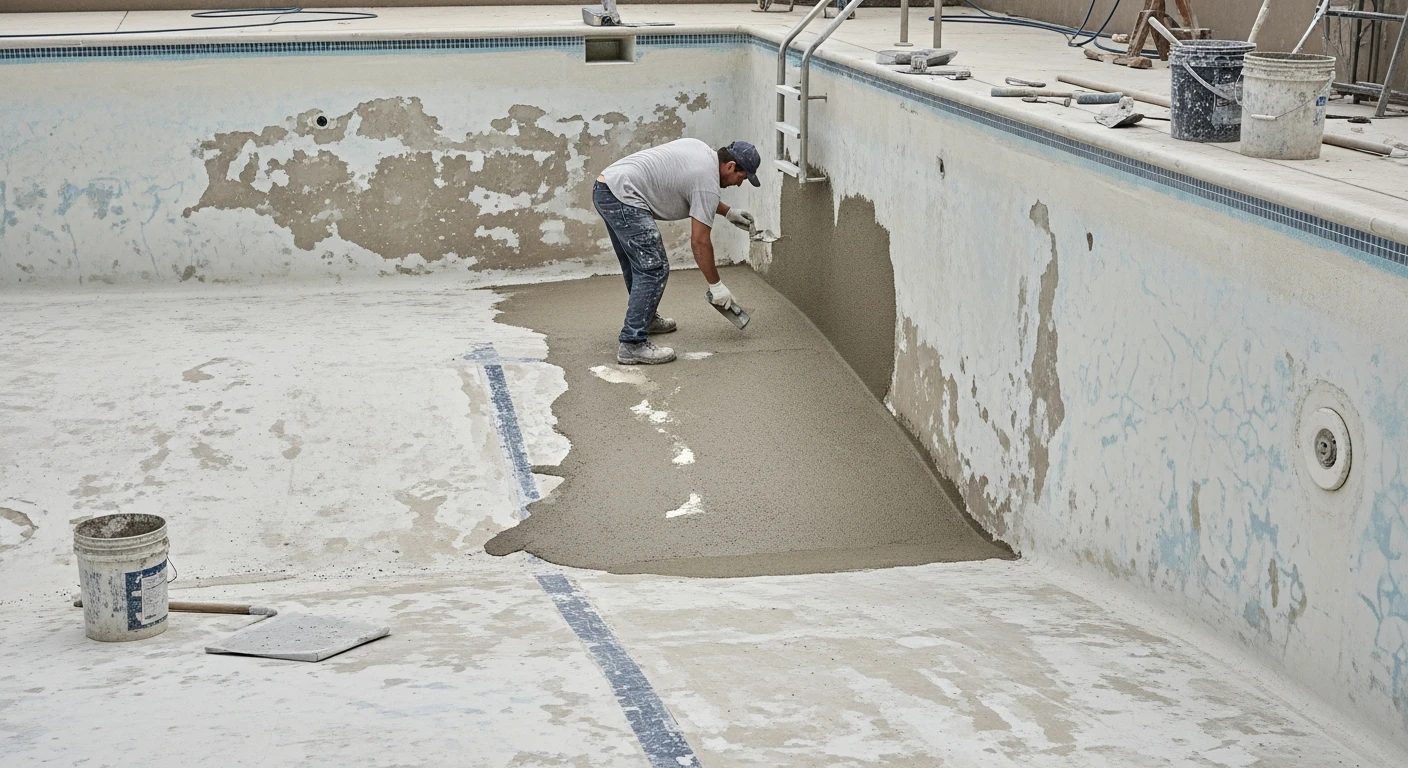
- Aggressive Surface Preparation: We don’t just sand down the old surface. We use hydro-blasting to strip the old plaster down to the original gunite or shotcrete, creating a superior bonding profile for the new material. This step is critical for preventing delamination.
- Structural Reinforcement: Any identified cracks are repaired not with plaster, but with a low-viscosity epoxy injection process that structurally "welds" the concrete back together.
- Plumbing and Fitting Upgrades: All accessible plumbing is refitted. Main drains are upgraded to be VGB-compliant, a critical safety standard. This is the ideal time to add dedicated suction lines for cleaners or water features.
- Meticulous Surface Application: Whether it’s a polymer-modified plaster or a pebble aggregate, the material is applied according to strict temperature and humidity parameters. We then control the curing process, as this dictates the final hardness and stain resistance of the surface. A rushed cure is a soft cure.
- Equipment Set Recalibration: A new surface and plumbing change the system's Total Dynamic Head (TDH). We install and program a Variable Speed Pump (VSP), calibrating its RPMs to achieve the ideal water turnover rate (typically once every 6-8 hours) with minimal energy use. Simply installing a VSP without this calibration negates most of its efficiency benefits.
Tags
inground pool renovation ideas
in ground pool renovations
inground pool resurfacing near me
inground pool remodel cost
Inground Pool Remodeling FAQ
What is inground pool remodeling?
Inground pool remodeling is the process of renovating and updating an existing inground pool to improve its appearance, functionality, and overall value. This can include updates to the pool's surface, walls, floor, and surrounding deck, as well as the installation of new equipment and features.
Why remodel my inground pool?
There are many reasons to consider remodeling your inground pool, including updating its appearance, improving its functionality, increasing its value, and enhancing your outdoor living space. Additionally, a well-designed and well-maintained pool can increase your home's resale value and provide a fun and relaxing space for you and your family to enjoy.
Can I remodel my inground pool myself?
While it may be possible to complete some minor updates to your inground pool on your own, major renovations typically require the expertise and experience of a professional pool remodeling contractor. Attempting to remodel your pool without proper training and equipment can lead to costly mistakes, safety hazards, and decreased pool performance.
What are some common inground pool remodeling projects?
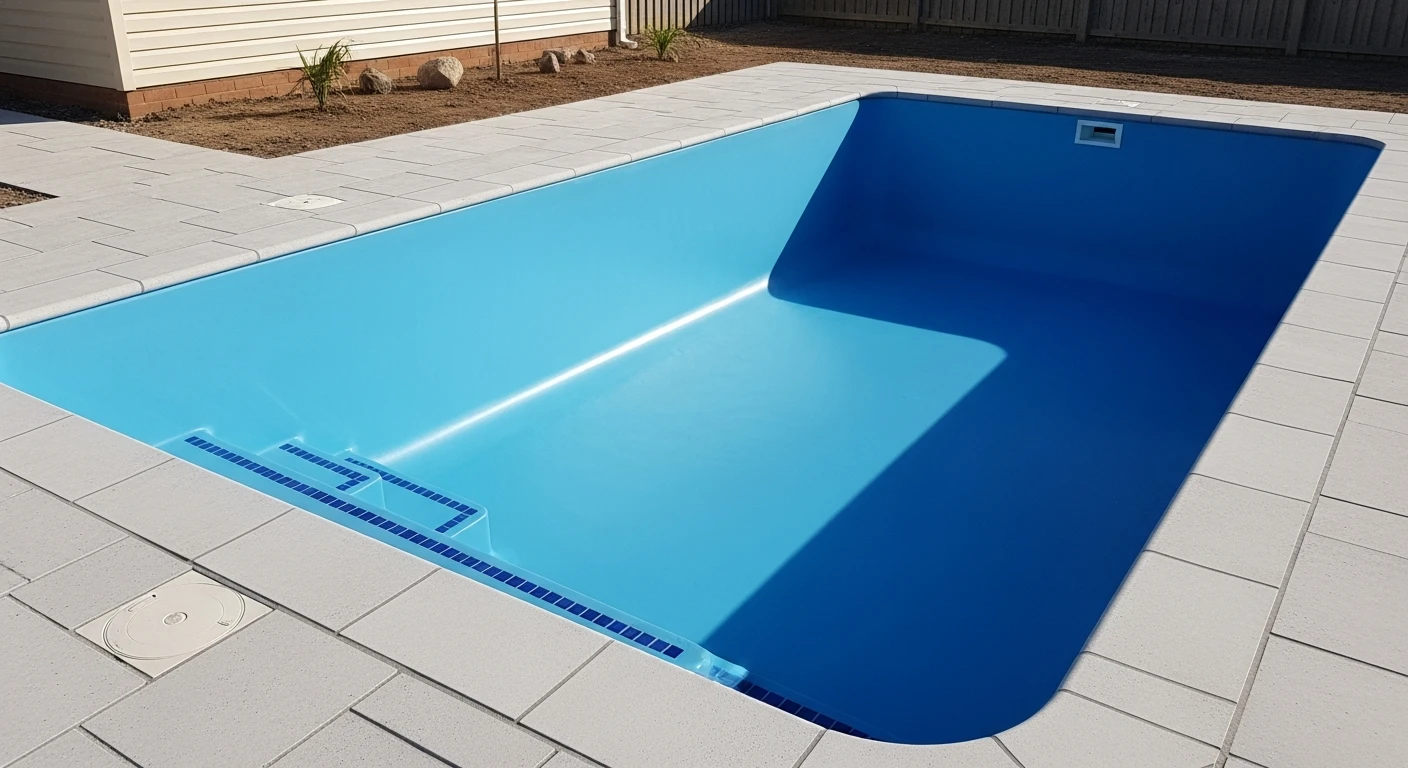
Some common inground pool remodeling projects include updating the pool's surface with new plaster, tile, or fiberglass, replacing old equipment with new and energy-efficient alternatives, installing new lighting and water features, and renovating the surrounding deck and patio area. Depending on your specific needs and goals, your pool remodeling contractor can help you prioritize and plan your project.
How long does inground pool remodeling typically take?
The length of time required for an inground pool remodeling project can vary significantly depending on the scope and complexity of the project. On average, a simple pool renovation may take several weeks to complete, while more extensive projects may take several months or even longer. Your pool remodeling contractor can provide a more accurate estimate of the project timeline based on your specific needs and goals.
How much does inground pool remodeling typically cost?
The cost of inground pool remodeling can vary widely depending on the scope and complexity of the project, as well as the materials and equipment used. On average, a simple pool renovation may cost between $5,000 and $20,000, while more extensive projects may cost $50,000 or more. Your pool remodeling contractor can provide a more accurate estimate of the project cost based on your specific needs and goals.
What are some benefits of hiring a professional pool remodeling contractor?
Hiring a professional pool remodeling contractor can provide numerous benefits, including increased safety, improved pool performance, and a higher level of craftsmanship and attention to detail. A professional contractor will also be able to help you navigate the pool remodeling process, ensuring that your project is completed on time and within budget.
Can I still use my inground pool while it's being remodeled?
It is typically not recommended to use your inground pool during the remodeling process, as this can create safety hazards and compromise the integrity of the pool and its systems. A professional pool remodeling contractor will be able to provide guidance on how to minimize disruptions and ensure a smooth and efficient renovation process.
What kind of permits and inspections are required for inground pool remodeling?
The specific permits and inspections required for inground pool remodeling will depend on your location, the scope and complexity of the project, and local building codes and regulations. Your pool remodeling contractor will be able to help you navigate the permitting and inspection process, ensuring that your project is completed in compliance with all relevant laws and regulations.