Pool Renovation Services: The Substrate Adhesion Framework for a 30% Longer Shell Lifespan
Most pool renovations fail not because of the new surface material, but because of what lies beneath it. I've been called in to fix countless "new" pools that are already showing signs of delamination and hollow spots within two years. The core issue is almost always a catastrophic failure in the bond between the original concrete shell and the new plaster or pebble finish. This is a costly and entirely preventable error.
My entire approach is built around preventing this single point of failure. It's not about slapping on a pretty new surface; it's about engineering a monolithic structure that lasts. My proprietary Substrate Adhesion Framework focuses on achieving a measurable, high-strength bond that can increase the functional lifespan of your pool's surface by up to 30%, saving you a fortune on premature repairs.
Beyond the Visuals: My Diagnostic & Substrate Adhesion Framework
Over my 15 years in this field, I've seen a disturbing trend: contractors treat a replastering job like painting a wall. They drain the pool, acid wash it, and apply the new material. This is a recipe for disaster. My process begins with a diagnostic phase that others skip. I treat the existing pool shell not as a canvas, but as a critical structural foundation. My Substrate Adhesion Framework is a non-negotiable methodology designed to ensure the new finish becomes a permanent, integrated part of the pool shell, rather than a decorative skin waiting to peel off. The goal is to create a monolithic bond that can withstand years of chemical exposure and thermal cycling.
The Technical Deep Dive: Bond Coats and PSI Adhesion Testing
The secret to a lasting renovation lies in the interface layer. After properly preparing the original surface, the application of a high-quality bond coat is the single most critical step. This isn't just a primer; it's a specialized cementitious polymer designed to achieve a chemical and mechanical bond far superior to what new plaster on old gunite can accomplish. In a large commercial project I once salvaged, the previous contractor had skipped this step entirely, resulting in sheets of plaster peeling off. We had to strip it all and start over. I now insist on a bond coat with a minimum tensile strength rating of 250 PSI (pounds per square inch) after a 28-day cure. For a quick on-site validation, I perform a "tap test," listening for hollow sounds that indicate poor adhesion in the existing shell before I even begin my work. This informs how aggressive my surface preparation needs to be.
The Step-by-Step Implementation Protocol
Executing a flawless renovation requires a strict, repeatable process. Deviating from these steps is how failures happen. This is the exact sequence I follow on every single project, from residential spas to olympic-sized pools.
- Phase 1: Hydrostatic Pressure Management. Before a single drop of water is drained, I locate and inspect the pool's hydrostatic relief valve. If it's old or non-functional, it must be replaced. Draining a pool without managing the groundwater pressure is how pool shells crack or even pop out of the ground. This is a non-negotiable first step.
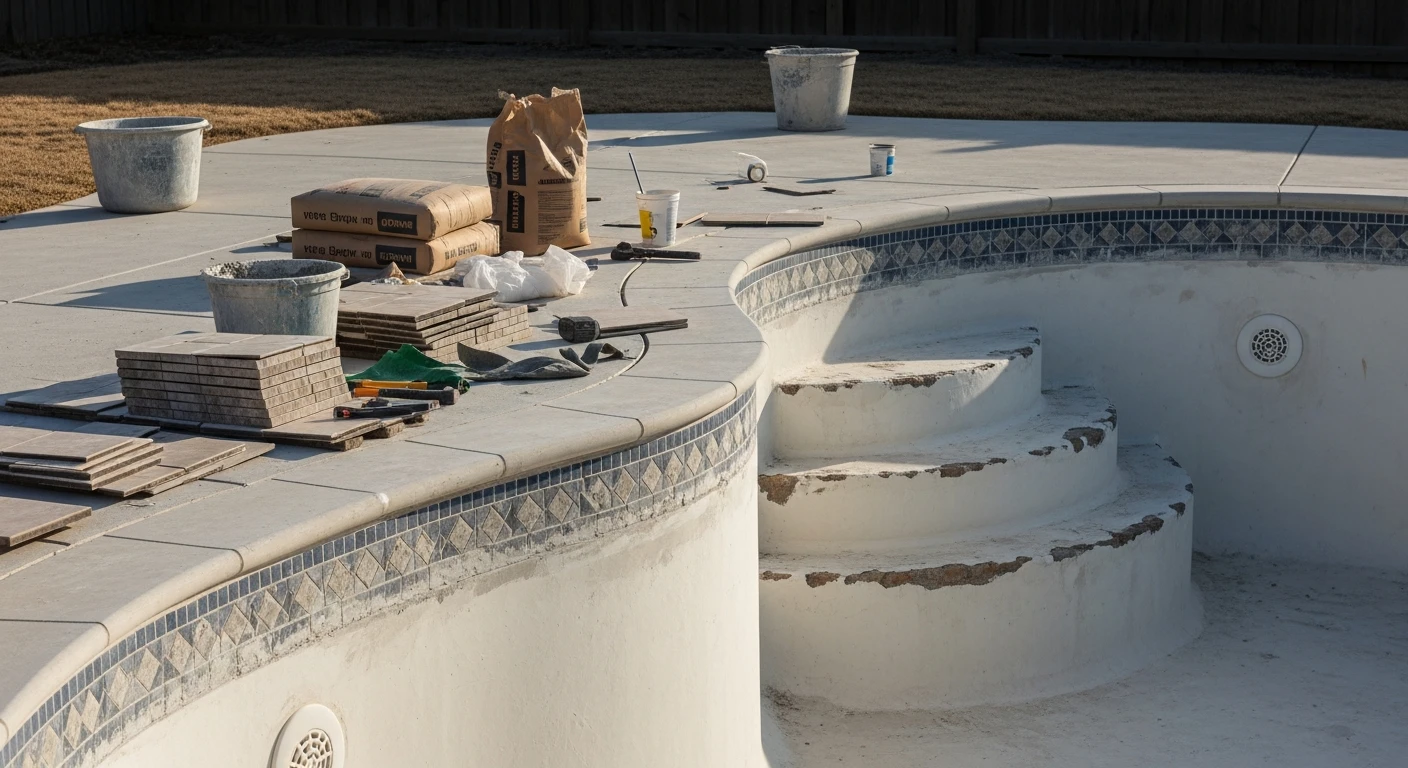
- Phase 2: Abrasive Surface Preparation. An acid wash is not enough. I employ mechanical scarification, using grinders to create a coarse profile on the existing surface. This creates a greater surface area, known as the "tooth," for the bond coat to grab onto, dramatically increasing the bond's mechanical strength.
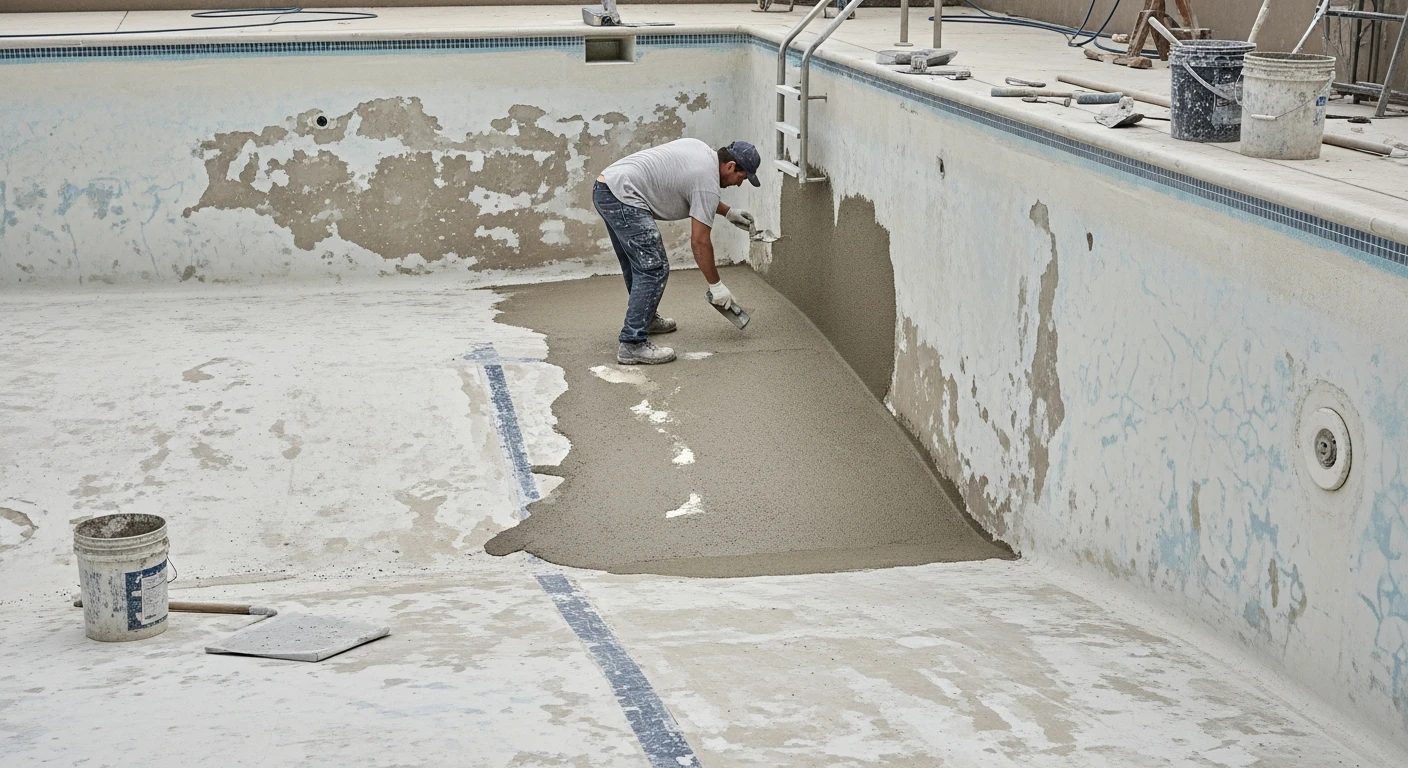
- Phase 3: Bond Coat Application. The bond coat is applied methodically to a saturated-surface-dry (SSD) shell. I ensure a consistent thickness, as specified by the manufacturer, to avoid weak spots. The timing here is critical; the new plaster must be applied while the bond coat is still in its optimal receptive window, before it fully cures.
- Phase 4: Material Application & Troweling. Applying the new finish, whether it's quartz or pebble, requires consistent trowel pressure. Inconsistent pressure is what creates voids and density variations that lead to mottling and weak points. My teams are trained to use a specific arcing motion to compact the material uniformly against the bond coat.
- Phase 5: Controlled Hydration Curing. Once the finish is applied, the work is far from over. We begin a controlled misting process for the first 24-48 hours. This slow-curing method, known as hydration curing, is essential for preventing shrinkage cracks and ensuring the plaster reaches its maximum designed hardness.
Tags
pool resurfacing near me
pool renovation near me
pool deck repair
pool plaster repair
Pool Renovation Services FAQ
What is the process of pool renovation?
Pool renovation is a comprehensive process that involves inspecting, repairing, and upgrading the existing pool structure, equipment, and surrounding areas. Our team of experts will work with you to assess the condition of your pool, identify areas that need improvement, and create a customized plan to meet your needs and budget.
Why should I renovate my pool?
Renovating your pool can increase its value, functionality, and aesthetic appeal. It also provides an opportunity to upgrade outdated equipment, improve energy efficiency, and address any safety concerns. Furthermore, a well-maintained pool can provide years of enjoyment for you and your family.
What are the benefits of hiring a professional pool renovation company?
Hiring a professional pool renovation company ensures that your project is handled by experienced and licensed experts who have the necessary skills and knowledge to complete the job efficiently and effectively. We can help you avoid costly mistakes, ensure compliance with local building codes, and provide a warranty on our work.
Can I renovate my pool myself?
While it may be possible to perform some minor repairs and maintenance tasks on your pool yourself, major renovations require extensive knowledge, specialized equipment, and expertise. Attempting to renovate your pool without proper training and experience can lead to costly mistakes, safety hazards, and potential damage to your pool and surrounding areas.
How long does a pool renovation typically take?
The duration of a pool renovation can vary depending on the scope of the project, the size of the pool, and the complexity of the work involved. On average, a typical pool renovation can take anywhere from a few days to several weeks or even months. Our team will work with you to create a project timeline that meets your needs and schedule.
What are the costs associated with pool renovation?
The costs associated with pool renovation can vary widely depending on the scope of the project, the materials and equipment needed, and the location where the work is being performed. Our team will work with you to create a customized quote that outlines the costs and services included in your project.
Are there any warranties or guarantees offered for pool renovation services?
Yes, our company offers a comprehensive warranty and guarantee on our pool renovation services. We stand behind our work and are committed to ensuring that our customers are completely satisfied with their renovated pool. Our warranty and guarantee provide peace of mind and protection for your investment.
Can I finance my pool renovation?
Yes, we offer financing options for pool renovation projects. Our team can work with you to create a payment plan that fits your budget and financial situation. We also accept various forms of payment and offer special promotions and discounts from time to time.
How do I maintain my newly renovated pool?
Proper maintenance is essential to ensuring the longevity and functionality of your newly renovated pool. Our team will provide you with a comprehensive maintenance plan and training to help you keep your pool clean, safe, and well-maintained. We also offer ongoing maintenance and repair services to keep your pool in top condition.