Inground Pool Remodeling Pasco County: My Protocol to Mitigate Hydrostatic Pressure Damage
In my years remodeling inground pools across Pasco County, from the expansive lots in Trinity to the established neighborhoods of New Port Richey, the single most costly mistake I see stems from a fundamental misunderstanding of our local ground conditions. A standard cosmetic remodel—simply resurfacing and re-tiling—often fails within 5 years because it ignores the immense hydrostatic pressure exerted by our high water table and sandy soil. A beautiful new pebble finish means nothing if it delaminates from a shell that's under constant external stress.
My entire approach is built on a "shell-first" principle. I’ve seen projects where a cheap resurfacing job trapped moisture, leading to catastrophic shell failure a few years later. My proprietary method focuses on ensuring the vessel's structural integrity before a single cosmetic choice is made. This preemptive diagnostic work is what separates a remodel that lasts a decade from one that requires expensive repairs after a few heavy rainy seasons, a common occurrence here in Land O' Lakes.
My Diagnostic Framework for Pasco County Pools
Before I even discuss finish options with a client, I perform a mandatory three-point structural assessment. This isn't an upsell; it's the foundation of a successful project. I developed this process after being called in to fix a major delamination issue on a relatively new remodel in a Wesley Chapel home that was built on a former cypress head, where the water table was exceptionally high. The original contractor had skipped these crucial steps.
Beyond the Surface: Addressing Substrate and Water Table Challenges
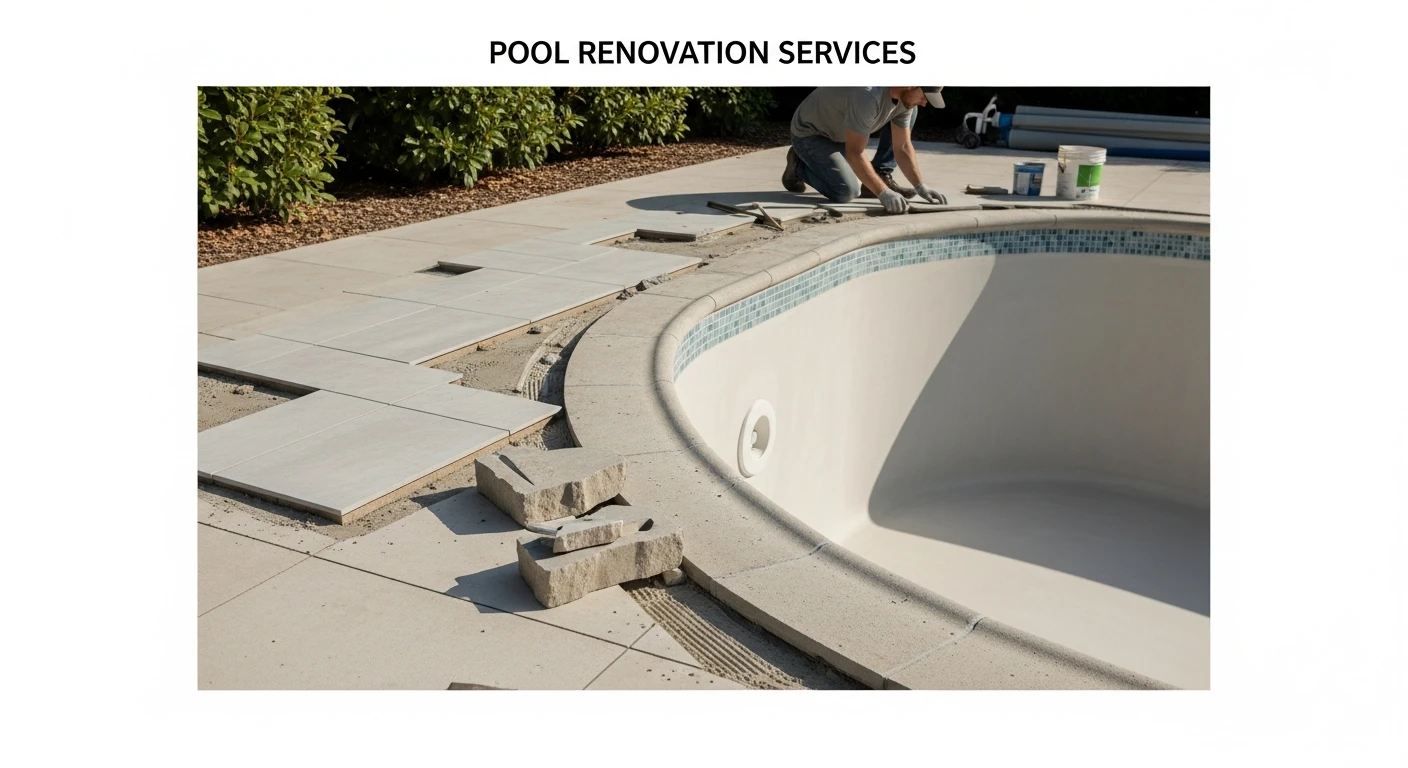
The core of my diagnostic focuses on what you can't see. The intense Florida sun bakes pool decks, causing the mastic joint—the flexible seal between your deck and the pool's coping—to fail. Once this seal is compromised, our heavy summer rains pour directly behind the pool shell, super-saturating the soil and dramatically increasing hydrostatic pressure. I’ve seen this pressure create hairline cracks that lead to persistent water loss, throwing chemical balances completely off and running up water bills. It’s a silent pool killer. My inspection involves a meticulous probe of this joint's integrity and a pressure test of the entire plumbing system to identify unseen leaks that are often misdiagnosed as evaporation.
The Remodeling Sequence for a 20-Year Lifespan
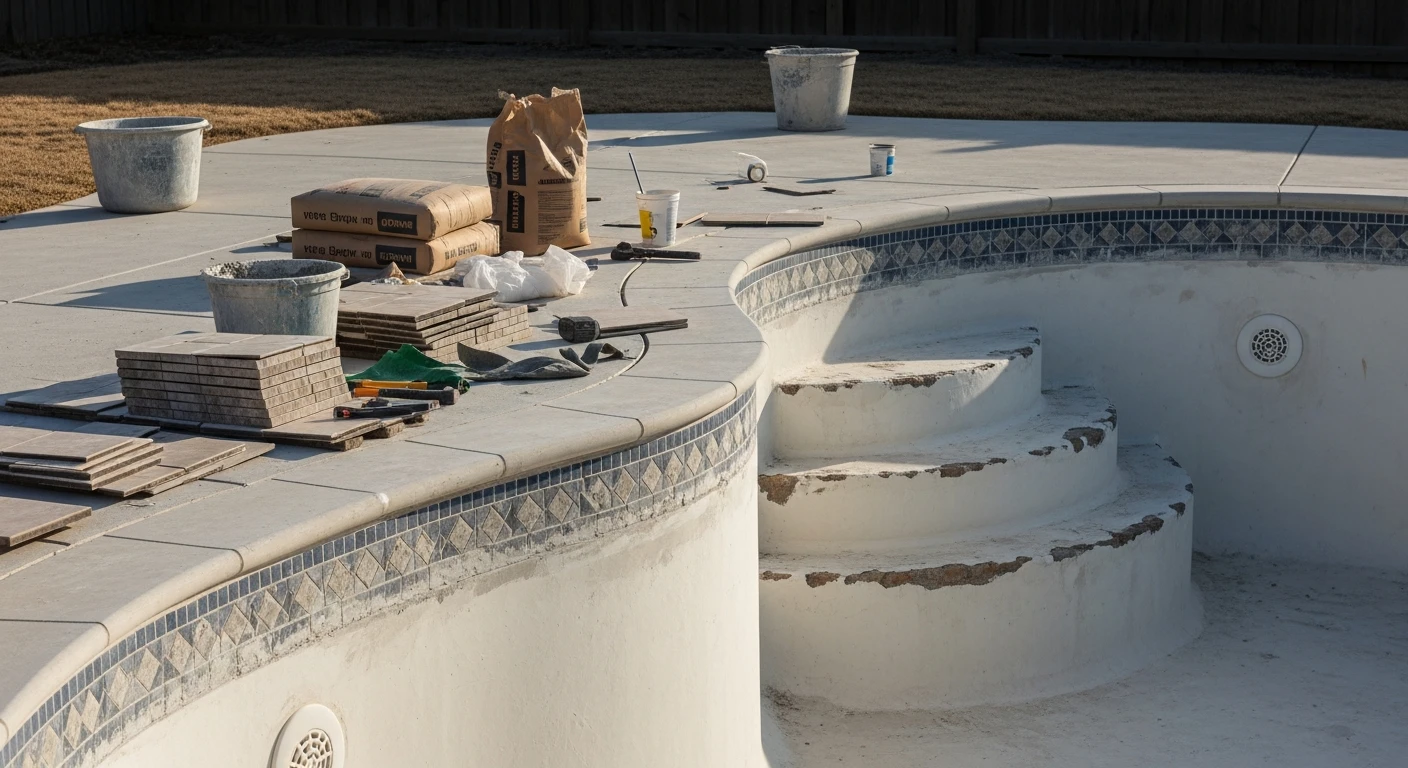
Once the shell's health is verified and all underlying issues are mapped, the physical remodeling process can begin. Every step is sequenced to build upon the last, creating a monolithic structure that resists Pasco County's specific environmental stressors.
- Controlled Draining and Hydrostatic Relief: I never drain a pool without first checking the hydrostatic relief plugs. Draining a pool too quickly in our soil can cause it to literally pop out of the ground. I use a submersible pump and monitor the process closely, ensuring the shell is properly braced.
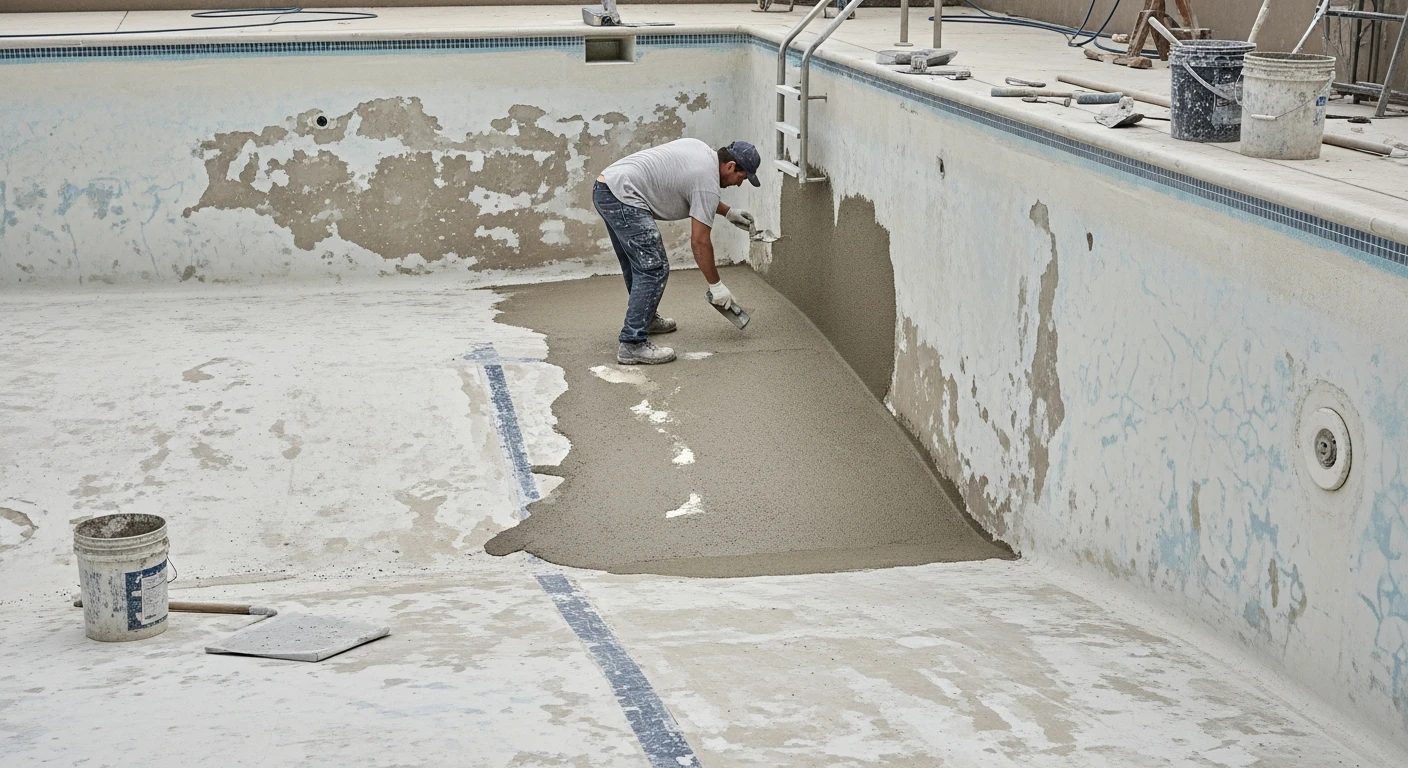
- Aggressive Surface Preparation: The existing surface must be prepared to create a mechanical bond. I use a high-pressure water jetting system over abrasive blasting, as it's less likely to cause micro-fractures in the underlying gunite. The goal is to achieve a concrete surface profile (CSP) of 4-5, which is essential for the bond coat.
- Application of a Polymer-Modified Bond Coat: This is the most critical and often-skipped step. I apply a specialized cementitious bond coat that acts as the ultimate adhesive between the old shell and the new finish. This single step can increase the delamination resistance of the new surface by over 50%.
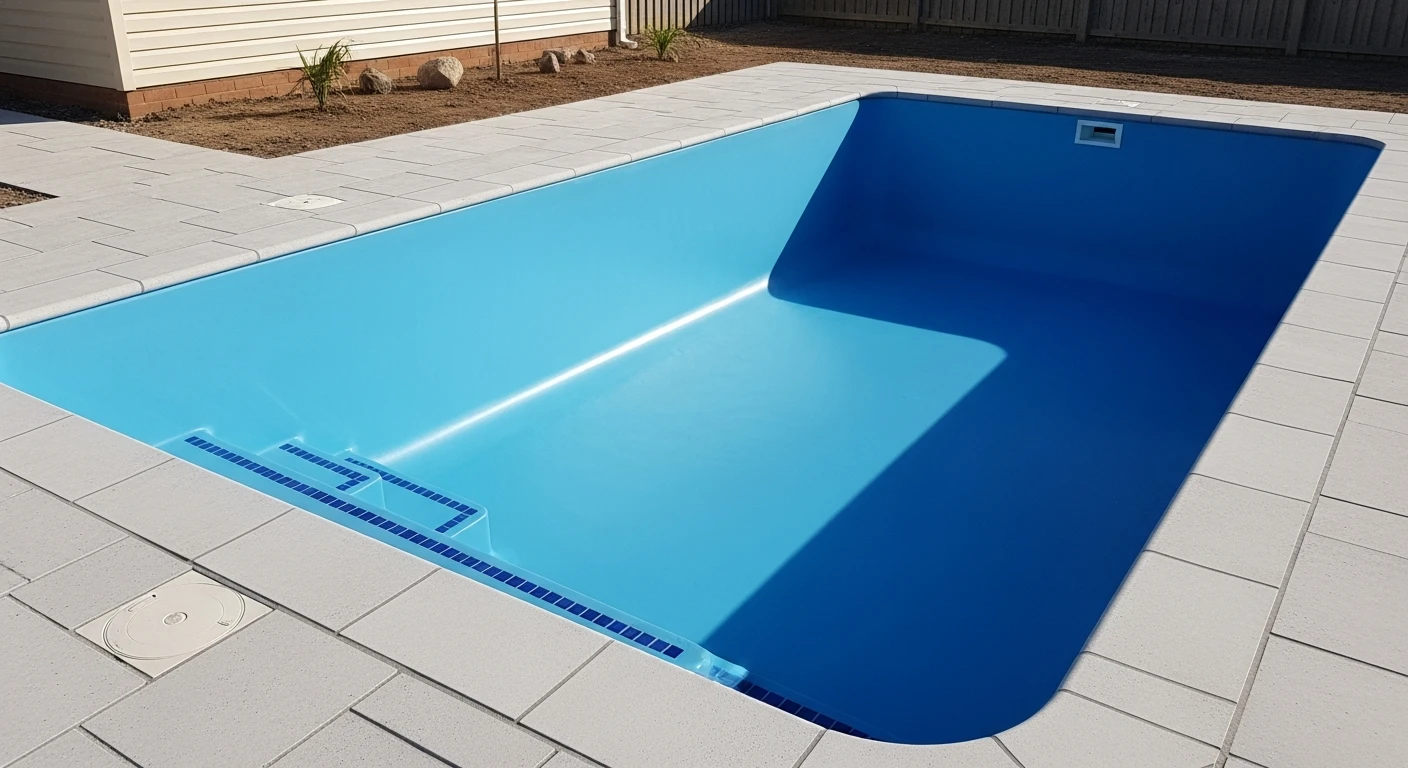
- Pebble Finish Installation: For Pasco County's high UV exposure, I almost exclusively recommend a high-quality pebble aggregate finish over traditional marcite. It is more resistant to chemical etching and fading, and its lifespan is typically double that of plaster-based surfaces.
- Sequenced Filling and Water Balancing: The initial fill must be done without stopping to prevent a "bathtub ring." I use a water filtration system attached to the fill hose to remove minerals present in our local water supply, preventing immediate staining of the fresh surface.
Post-Remodel Calibration for Pasco's Climate
The job isn't finished when the pool is full. The final phase is calibrating the new system for maximum efficiency and longevity. This involves fine-tuning the new variable-speed pump (VSP) for optimal turnover rates, which I’ve found can reduce daily energy consumption by an average of 35%. For saltwater conversions, I meticulously calibrate the saltwater chlorine generator (SWCG) based on the pool's volume and the bather load, ensuring consistent sanitation without over-chlorination, which can degrade equipment and surfaces over time. This precise calibration is what ensures the pool is not only beautiful but also efficient and low-maintenance for years to come.
Have you confirmed if the integrity of your pool's mastic joint is sufficient to prevent water intrusion behind the shell during our next heavy rainstorm?