Outdoor Kitchen Island Design for Lee County: My Framework for 30-Year Structural Integrity Against Salt & Humidity
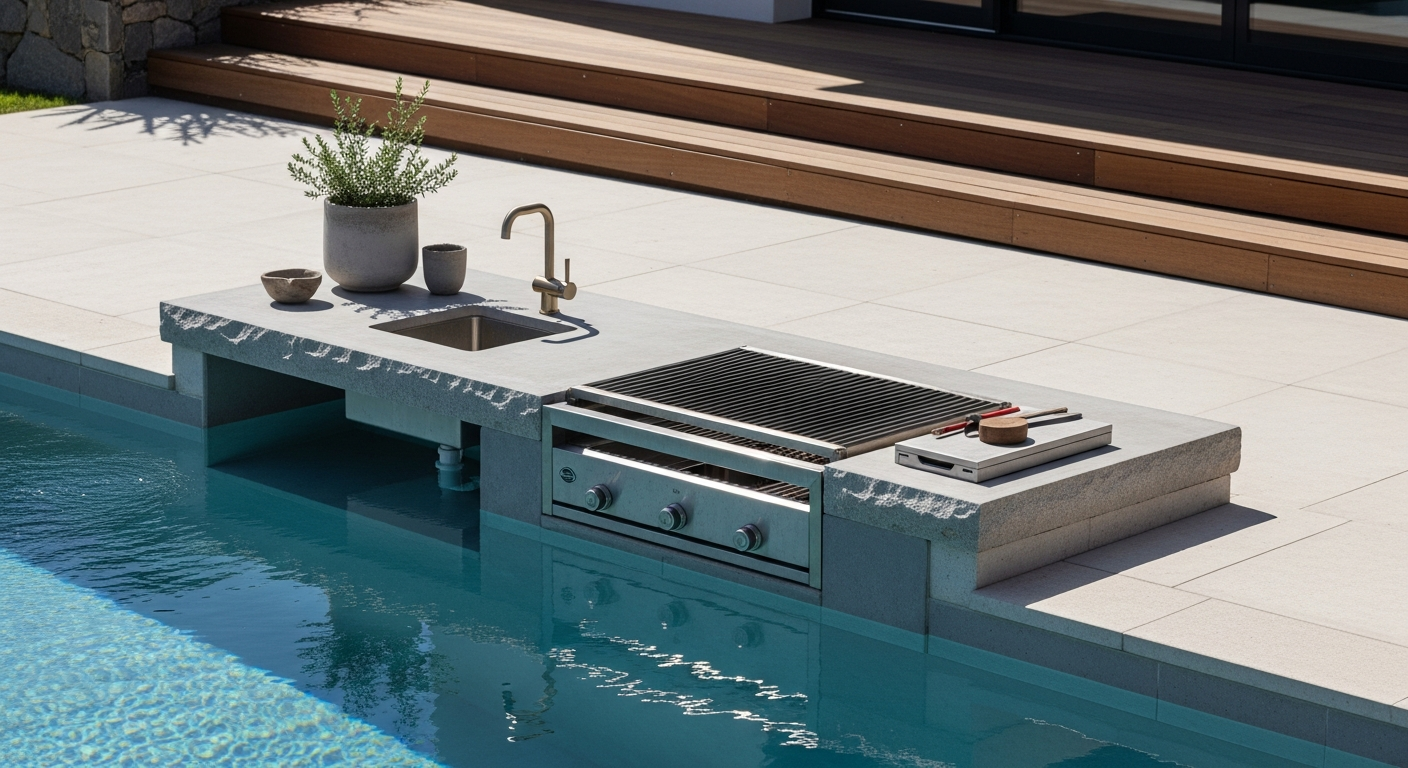
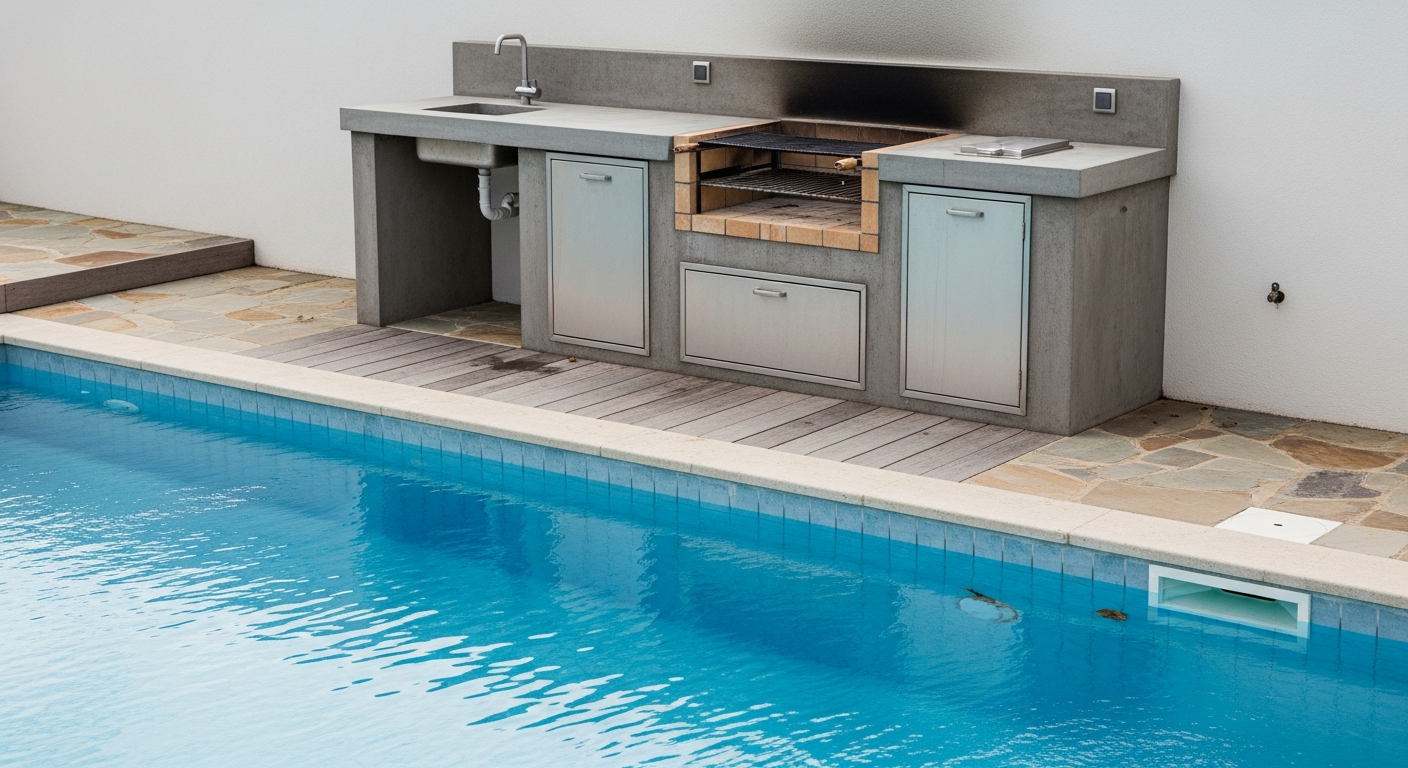
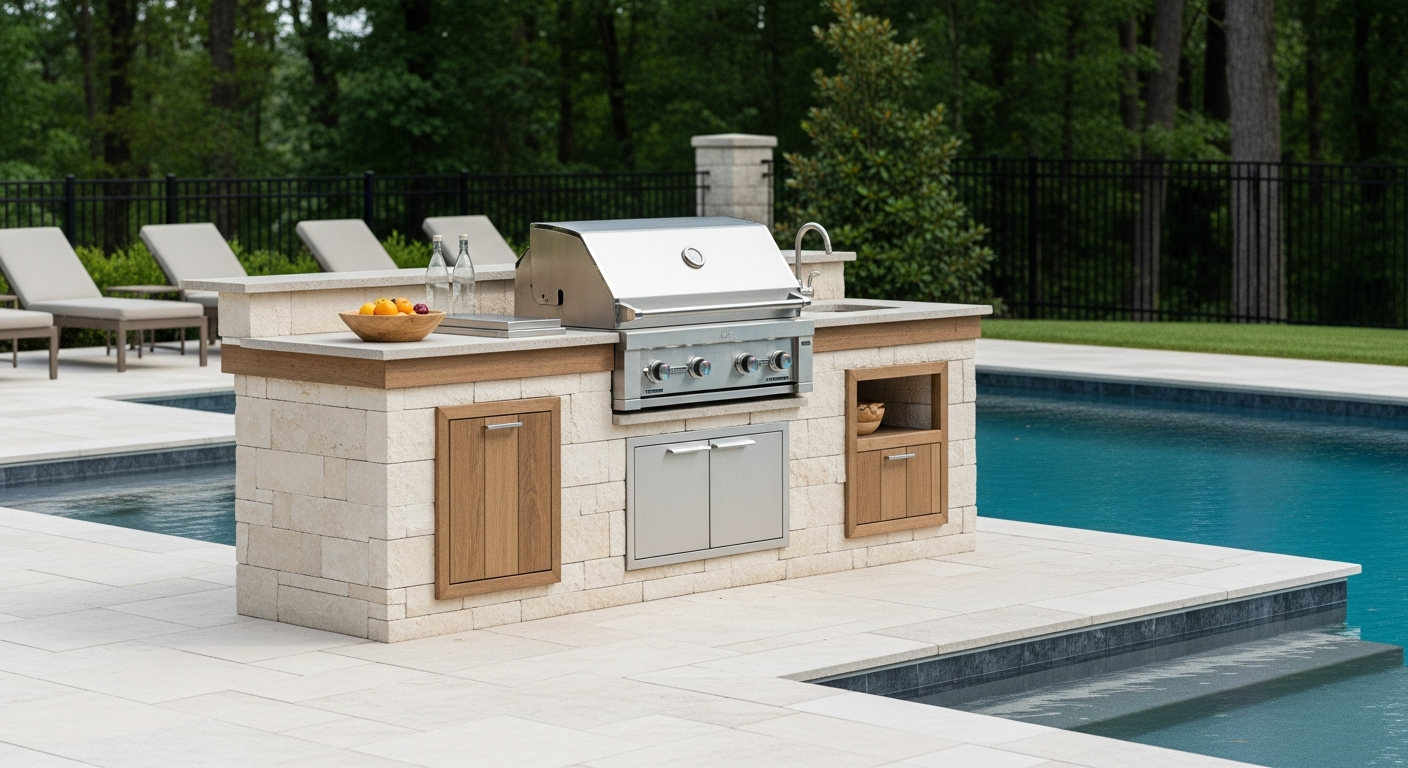
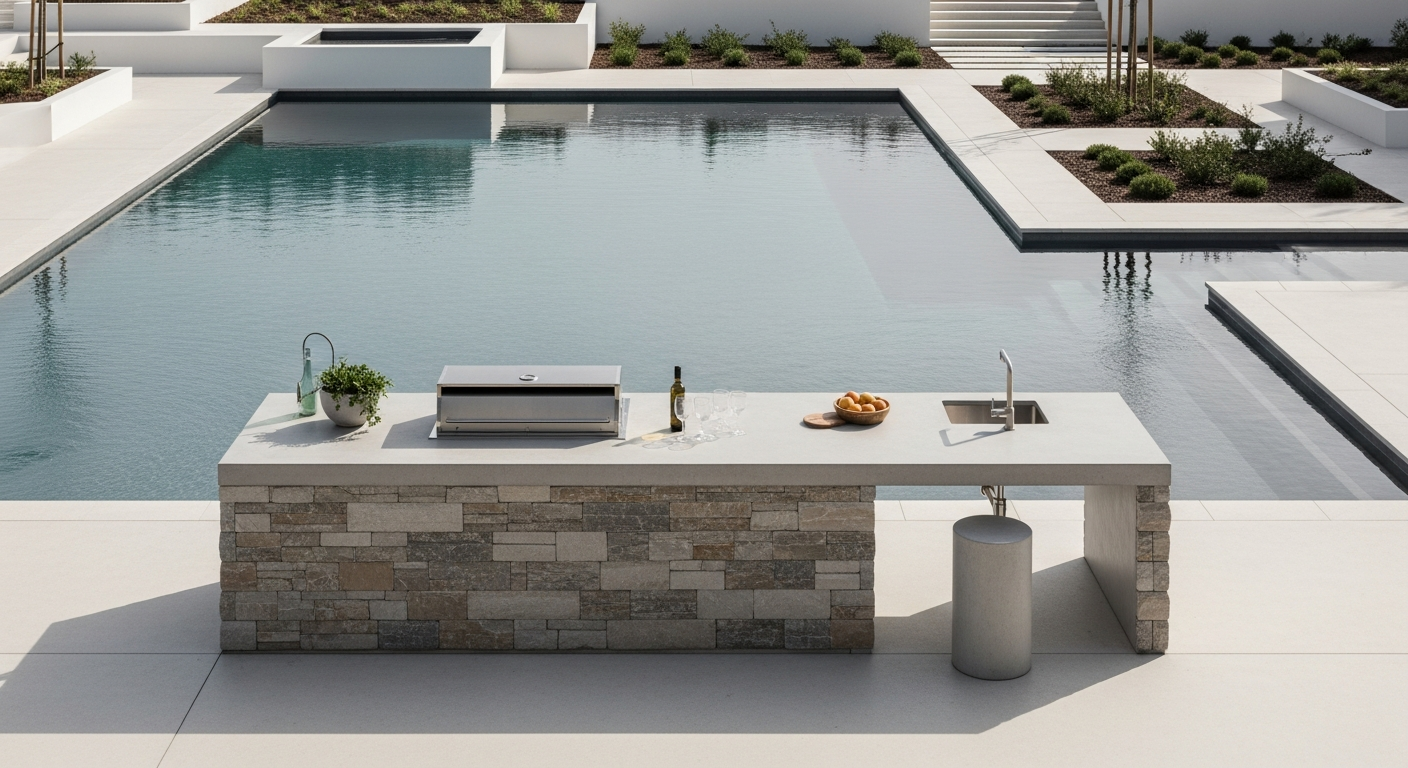
Building an outdoor kitchen island in Lee County isn't just about aesthetics; it's a battle against the elements. I've been called to far too many properties in Fort Myers and Cape Coral where a beautiful, expensive island is failing after just a few years. The culprit is almost always the same: a frame made of galvanized steel studs, completely disintegrated by the humid, salt-rich air. This is a fundamental error in material selection that costs homeowners thousands in premature repairs. My approach is built on a single principle: the island's core structure must be impervious to the specific environmental challenges of coastal Florida. Forget what works in other states. Here, the combination of intense sun, high humidity, and airborne salinity requires a specialized methodology. I focus on creating a sealed, non-corrosive chassis that ensures your investment not only looks good on day one, but performs flawlessly for decades, whether it's on a waterfront lanai in Sanibel or a backyard in Lehigh Acres.My Diagnostic Framework: The Coastal Durability Matrix
Before a single piece of material is ordered, I perform an analysis I call the Coastal Durability Matrix. It's a non-negotiable diagnostic I developed after seeing a large-scale community project fail due to widespread corrosion. The matrix evaluates the project site against three critical failure vectors specific to our Lee County climate. This isn't a simple checklist; it's a predictive assessment that dictates the entire material and construction protocol.A Technical Breakdown of Failure Vectors
The matrix forces a deep dive into the materials that will form the island's skeleton and skin.- Vector 1: Salt Air Corrosion. The standard practice of using galvanized steel studs is a critical mistake here. The zinc coating is no match for our persistent salt spray. My projects exclusively use either a welded T-6061 aluminum frame or, for maximum longevity, a 316L stainless steel frame. The upfront material cost increases by about 15-20%, but it completely eliminates the primary point of structural failure, extending the island's functional life by a factor of 10.
- Vector 2: Substrate Moisture Intrusion. The "guts" of the island are just as important as the frame. I never use standard cement board. Instead, I mandate a hydrophobic, polymer-modified cement backer board. Every seam is then sealed not with mesh tape and thin-set, but with a marine-grade polyurethane sealant. This creates a monolithic, waterproof box, preventing the inevitable moisture from our humid climate from ever reaching the interior frame or electrical components.
- Vector 3: UV & Thermal Stress Degradation. Countertop selection in Lee County goes beyond color. The intense, year-round sun can cause some natural stones and resins to fade or yellow. My material preference is for sintered stone or non-porous quartzite due to their exceptional UV stability and near-zero water absorption rate. I once had to replace a dark granite countertop in a Bonita Springs home because thermal expansion caused it to crack against the grill flange—a problem avoided with the superior thermal coefficient of sintered stone.
Implementation Protocol: Building for Zero-Failure
Executing the build requires precision. Deviating from the protocol re-introduces risk, which is unacceptable. My process follows a strict sequence of operations.- Foundation & Leveling: Most lanais in Lee County feature paver systems with slight slopes for drainage. I start by installing adjustable stainless steel leg levelers at the base of the frame. This ensures perfect leveling without relying on shims that can compress or rot over time.
- Frame Assembly: All connections on an aluminum frame are TIG welded for maximum strength. For mechanical fastening, only 316 stainless steel hardware is used to prevent any dissimilar metal corrosion.
- Substrate Application: The hydrophobic backer board is attached with a 1/8" gap between all panels. This gap is then completely filled with the polyurethane sealant, creating flexible, waterproof expansion joints.
- Venting & Utilities: Proper ventilation is a safety and longevity requirement, not an option. I mandate a minimum of 20 square inches of ventilation per side of the island, using stainless steel vents. All electrical is run through waterproof conduit with sealed junction boxes.
- Finishing & Countertop Installation: The final cladding (stone, stucco, etc.) is applied. For the countertop, I ensure the template includes a 1/4" overhang with a drip edge. This seemingly minor detail is critical for directing water away from the island's face, preventing staining and water intrusion at the cabinet doors.
Precision Adjustments and Quality Control Standards
The difference between a good job and a permanent installation is in the final 5%. Before project completion, I conduct two critical checks. First is the Appliance Flange Seal Verification. I ensure a bead of high-temp, food-safe silicone is applied *behind* the flange of every drop-in appliance, like a grill or side burner. This prevents water from seeping between the appliance and the countertop cutout. Second, I perform a Water Channel Test, pouring a small amount of water on the countertop to confirm the drip edge is functioning correctly and water is shedding away from, not down, the island's surface. These small steps are my signature for guaranteeing a truly weatherproof build. Given the potential for galvanic reactions in our salt-laden air, have you properly isolated your stainless steel appliance fasteners from the aluminum frame, or have you unintentionally created a battery that will corrode your island from the inside out?Written by

Tags
outdoor kitchen island with seating
prefab barbeque islands
prefab outdoor grill island
outdoor kitchen islands prefabricated
outdoor kitchen concepts