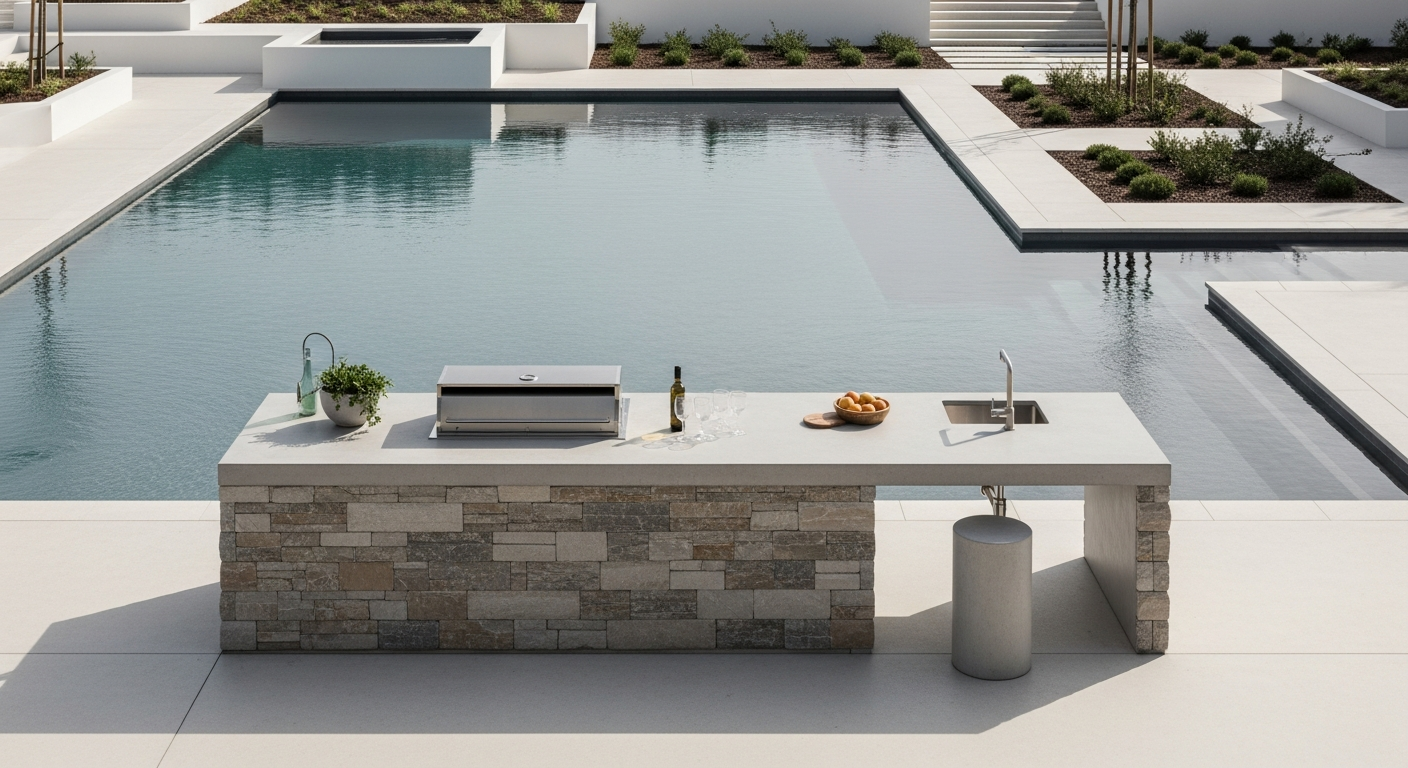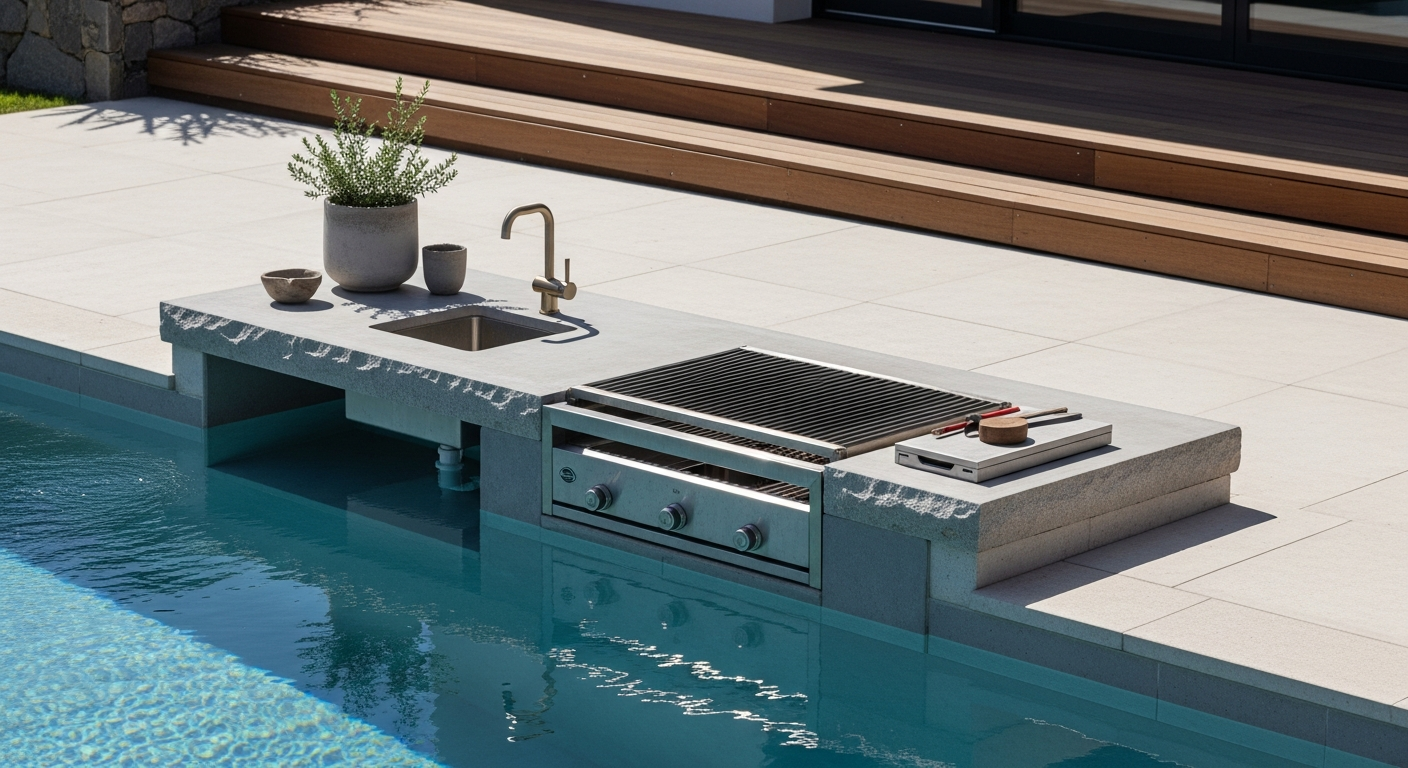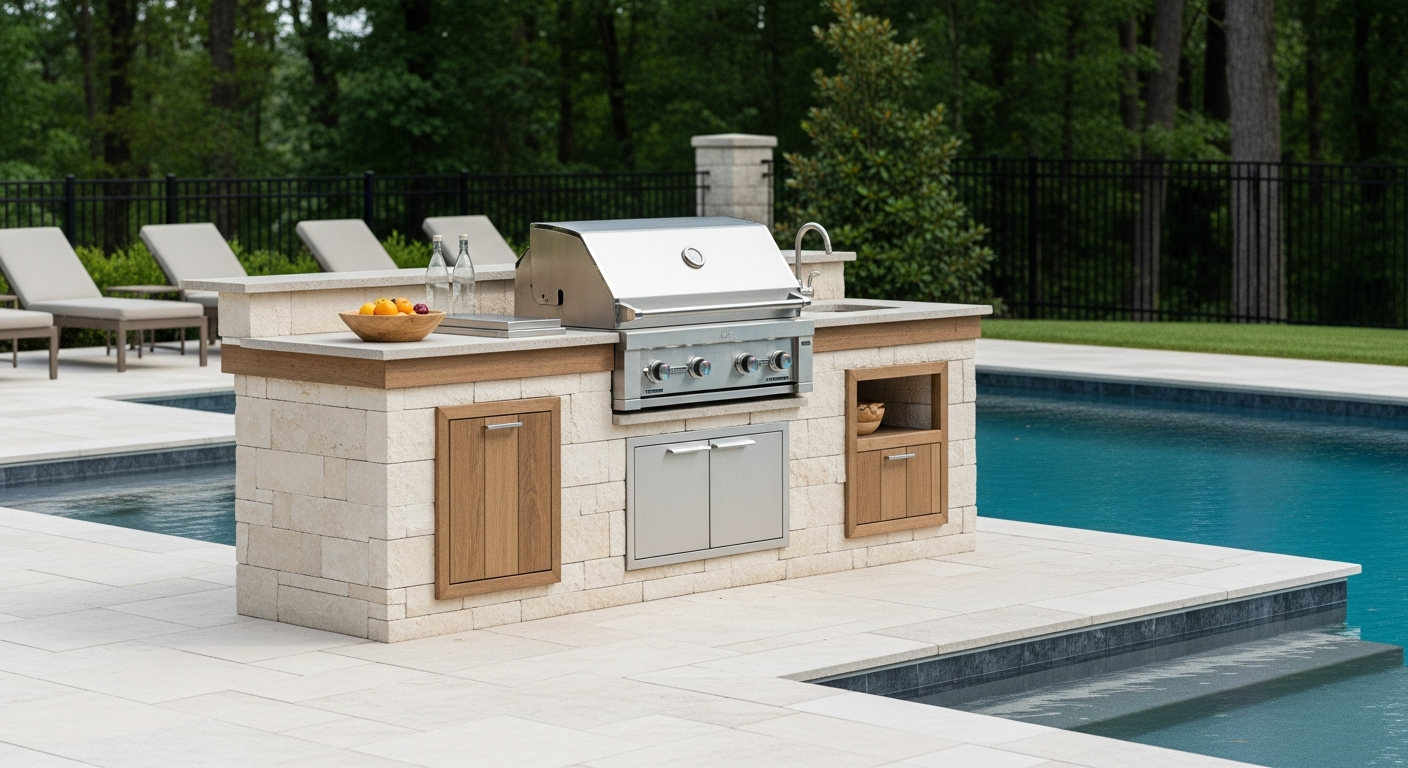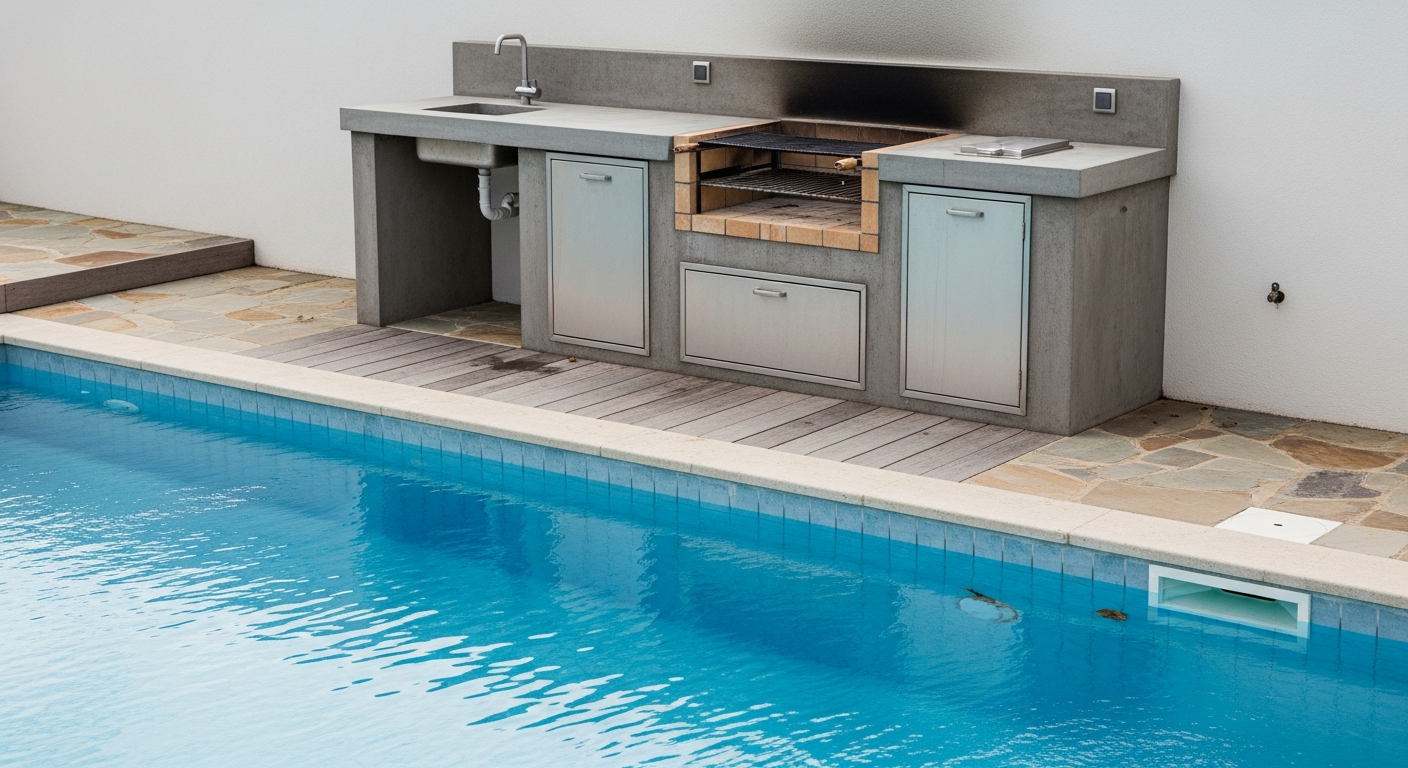
Outdoor Grill Island Lee County: My 3-Layer Protocol to Prevent Salt Air Corrosion
Building an outdoor grill island in Lee County isn't about luxury; it's about longevity. I’ve seen far too many beautiful setups in Fort Myers and Cape Coral homes degrade in under five years due to a fundamental misunderstanding of our coastal climate. The combination of intense humidity, UV radiation, and, most critically, the pervasive salt air, creates a uniquely corrosive environment that standard construction methods simply cannot withstand.
My entire approach is built on preventing premature failure before a single block is laid. The key isn't the granite countertop or the high-end grill; it's the unseen framework and moisture barrier system. A standard galvanized steel frame, which might last decades inland, will show rust bleed-through on a Sanibel lanai in as little as two seasons. This is the critical failure point I design to eliminate from day one.
My Diagnostic Framework: The Coastal Degradation Audit
Before I even sketch a design, I perform what I call a Coastal Degradation Audit. This isn't just about measuring space; it's about assessing micro-environmental factors specific to the property. A home on a waterfront canal in Bonita Springs faces a different level of salt spray than one further inland in Lehigh Acres. My methodology centers on identifying the primary aggressor—be it direct salt spray, persistent high humidity, or intense afternoon sun exposure—and engineering the island's core structure to counteract it directly. I once diagnosed a project where the builder used the wrong type of mortar for the stone veneer, which became saturated with moisture and caused the entire facade to fail. The error was assuming a one-size-fits-all approach works in our unique environment.
The Technical Core: Material Selection and Moisture Mitigation
The success of a Lee County grill island lies in three non-negotiable technical specifications. First is the frame. I exclusively use either 18-gauge G90 hot-dip galvanized steel or, for maximum protection, marine-grade 6061 aluminum tubing. The cost difference is marginal compared to the cost of a full rebuild. Second is the substrate. Standard cement board acts like a sponge in our humidity. I mandate a hydrophobic, polymer-modified cement backer board. This material actively repels water intrusion at the molecular level, protecting the frame. Finally, every single seam, screw penetration, and corner is sealed with a liquid-applied waterproofing and crack-isolation membrane before any finish material is applied. This creates a monolithic, impenetrable barrier—the single most important factor for a 25+ year lifespan.
Implementation Protocol: From Foundation to Finish
Building a resilient outdoor kitchen is a sequence of critical steps. Deviating from this order or using substandard materials at any stage compromises the entire structure. I've refined this process over dozens of local projects, from compact lanais to expansive outdoor entertaining areas.
Step-by-Step Structural Assembly
- Foundation: The island must be anchored to a dedicated, reinforced concrete slab, never directly onto existing patio pavers which can shift. All anchors must be 316 stainless steel to prevent corrosion.
- Frame Construction: I mandate a maximum stud spacing of 16 inches on-center to handle the weight of granite or concrete countertops without any flex. All connections are made with stainless steel fasteners.
- Utility Cutouts: Openings for gas lines, electrical conduits, and water pipes are sealed with high-grade silicone and waterproofing membrane *before* the appliance is installed. This is a commonly missed step that allows moisture directly into the core.
- Appliance Isolation: To prevent galvanic corrosion, I ensure no two dissimilar metals are in direct contact. This often involves using nylon washers or gaskets to separate stainless steel grill housings from the aluminum or galvanized frame.
Precision Finishing and Quality Control
The final stage is where durability meets aesthetics. My quality standards are based on performance, not just looks. For countertops, I specify a minimum 1.5-inch cantilever support for every 12 inches of overhang, using hidden steel brackets bolted directly to the frame. For ventilation, which is a critical safety component, I calculate the required airflow based on the total grill BTU output, mandating a minimum of two passive vent panels installed in opposite sides of the cabinet base for proper cross-flow, preventing gas buildup. Every material, from the stone veneer to the mortar, must acclimate on-site for at least 48 hours to Lee County's ambient humidity before installation to prevent expansion cracks.
Now that you understand the internal components, have you asked your builder what specific gauge and grade of steel they intend to use for your island's frame?