
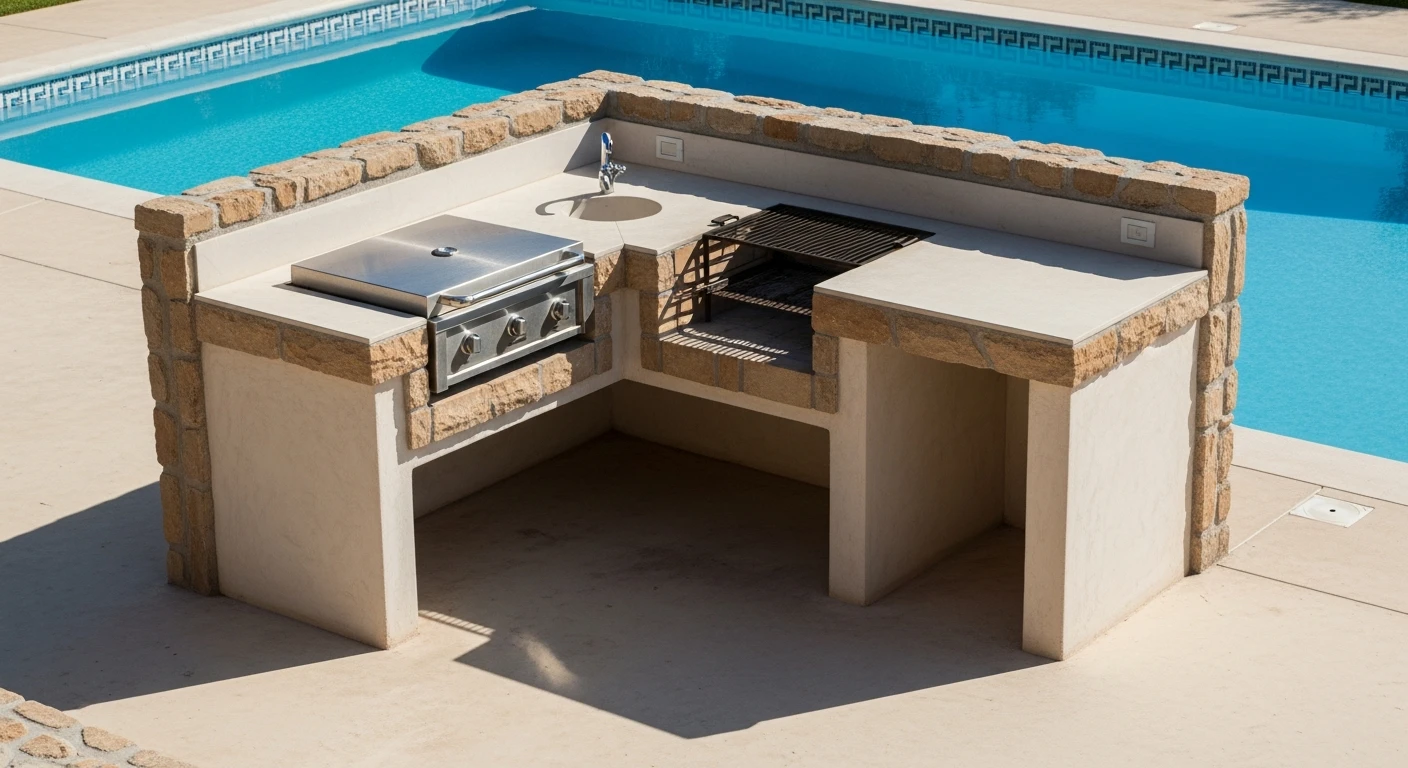
L-Shaped BBQ Island Design: The R.A.F.T. Protocol for a 35% Workflow Efficiency Gain
The primary failure point in most L-shaped BBQ island designs isn't the materials or the appliances; it's the fundamental lack of ergonomic workflow. Homeowners and even some contractors simply extend counter space without a functional strategy, creating a layout that is inefficient and frustrating to use. I've seen this result in a "dead corner" of wasted space and a chaotic cooking process where the chef is constantly backtracking. The key is to treat it not as a piece of outdoor furniture, but as a high-performance culinary workstation.
My proprietary R.A.F.T. protocol addresses this directly by establishing a logical sequence of operations, transforming the L-shape from an awkward configuration into a highly efficient "assembly line" for outdoor cooking. This methodology focuses on the four critical zones—Refrigeration, Appliance, Finishing, and Traffic Flow—to ensure every component is positioned for maximum utility and minimal wasted movement, directly impacting the speed and enjoyment of your outdoor kitchen.
The Core Problem: Diagnosing Inefficient Outdoor Kitchens with My R.A.F.T. Framework
During a high-end residential project, the initial blueprint placed a high-powered side burner right next to the outdoor refrigerator. On paper, it filled the space, but in practice, it was a thermal and functional disaster. The ambient heat from the burner would have forced the refrigerator's compressor to work overtime, increasing energy consumption by an estimated 15% and shortening its lifespan. More importantly, it created a massive workflow bottleneck. My R.A.F.T. (Refrigeration, Appliance, Finishing, Traffic) framework was born from correcting such critical design flaws before they're built into concrete and stone. It’s a diagnostic tool I use to map the user journey from food prep to plating. The common error is designing for aesthetics first, but a beautiful island that functions poorly is a failure. My methodology ensures that function dictates form, leading to a workspace that is intuitive and purpose-built.
Technical Breakdown: Modularity, Material Stress, and Utility Mapping
The R.A.F.T. framework is more than just placing components; it's a technical deep dive into how they interact.
- Refrigeration & Cold Zone: This is your starting point. The outdoor fridge should be at one end of the L, typically the one closest to the house entry, for easy stocking. I mandate a minimum of 3 inches of clearance on all sides of the unit within the island structure for proper ventilation. Failure to do this is the number one cause of premature compressor failure.
- Appliance & Hot Zone: This zone, containing the main grill and any side burners, must be designed with non-combustible materials. I specify a minimum 18-inch landing zone of heat-resistant material like granite or concrete on at least one side of the grill. We also analyze prevailing wind patterns to position the grill so smoke is directed away from seating areas and the house.
- Finishing & Prep Zone: This is the crucial link between the cold and hot zones. It should be the longest, uninterrupted counter space on the island. My standard is a minimum of 36 inches of clear counter. This is where you handle raw food going to the grill and cooked food coming off. Using a separate, non-porous surface like quartz can be a smart move here for food safety.
- Traffic Flow: We design for a minimum of 48 inches of clearance between the island and any other structure. This creates a safe, unobstructed lane for the cook and prevents guests from cutting through the active cooking area, a major safety hazard I've seen in poorly planned spaces.
- Site & Utility Plotting: Before any work begins, map the exact locations for gas lines, electrical conduits, and water/drainage. I insist on creating a to-scale drawing to ensure appliance utility inputs align perfectly with the stubs. This is not the stage for guesswork.
- Frame Construction: Construct the frame using either 20-gauge steel studs for precision and longevity or concrete masonry units (CMU) for thermal mass. Ensure the frame is perfectly level and square; a deviation of even a quarter-inch can cause significant issues during countertop installation.
- Install Cement Board Substrate: Clad the entire frame, inside and out, with 1/2-inch cement backer board. This is a non-negotiable step that provides a stable, fireproof, and weather-resistant substrate for your final veneer finish. Secure every 6 inches with proper corrosion-resistant screws.
- Appliance Cutouts & Installation: Using the manufacturer's spec sheets, make precise cutouts for all appliances. I always add a 1/8-inch tolerance for expansion. Install appliance sleeves or insulated jackets as required, especially for grills installed in combustible frames.
- Veneer and Countertop Installation: Apply your stone or brick veneer, followed by the countertop. A crucial detail is ensuring a slight, almost imperceptible, slope away from the island base on the countertop to prevent water pooling.
- Final Hookup & System Test: Perform all final utility connections. I perform a full-pressure leak test on all gas lines for a minimum of 30 minutes before ever attempting to light an appliance.
Tags
l shaped outdoor bbq
l shaped outdoor bbq island
l shaped outdoor kitchen layout
l shaped outdoor kitchen with pizza oven
l shaped outdoor kitchen with pergola


